





Changzhou Veidt Weighing Co., Ltd. © 2022 ALL RIGHTS RESERVED Privacy Policy | Calibration Weight | Test Weights | Cast Iron Weights | Standard Weights | Laboratory Weights | XML | SITEMAP
Product Category
Standard Weight
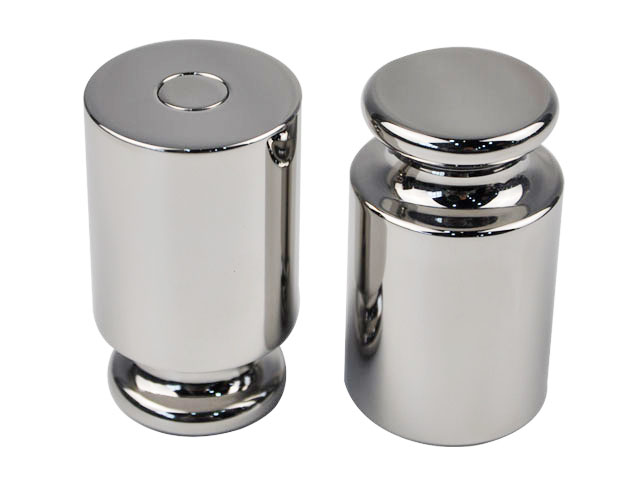
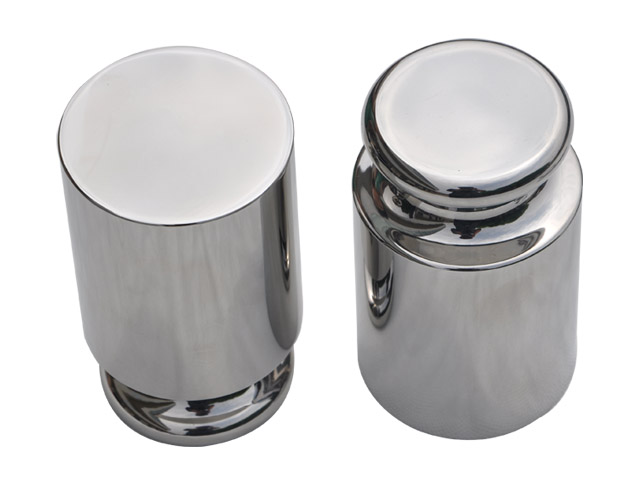
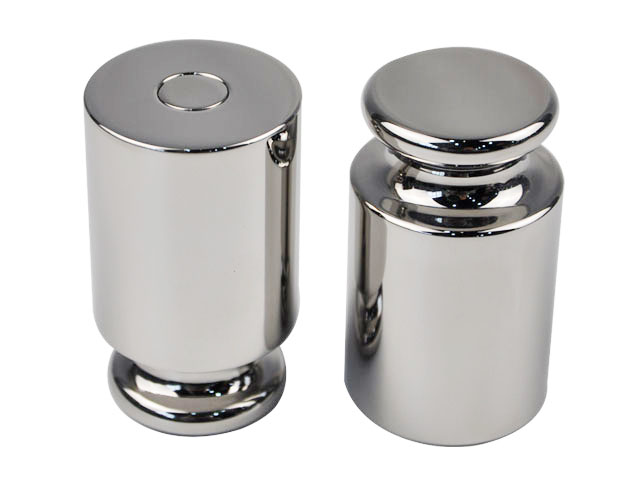
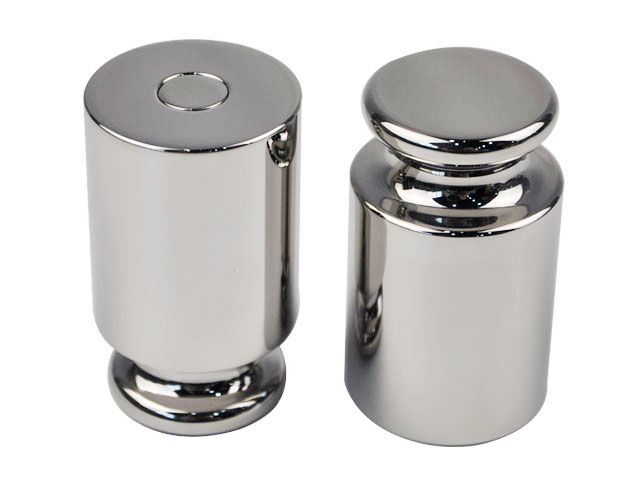
Veidt Weighing is a Standard Weight factory in china. Standard weights are benchmark tools for quality measurement, playing an indispensable role in scientific experiments, industrial production, commercial trade, and daily life. These precision manufactured metal blocks represent known and rigorously calibrated quality values, forming the cornerstone of modern measurement systems. From the most precise micro analysis in the laboratory to the weighing of large cargo at ports, standard weights ensure the accuracy and consistency of mass measurements worldwide.
Standard weights can be classified into multiple categories based on their accuracy level, meeting the measurement needs of different scenarios:
E-grade weight: the highest precision standard, used in national metrology institutions and precision laboratories, with extremely small relative errors
F-grade weight: a high-precision working standard used for calibrating other weights and precision scales
M-grade weight: a general working standard widely used in industrial production and commercial fields
Ordinary commercial weights: used for daily commercial weighing, such as in markets, supermarkets, and other places
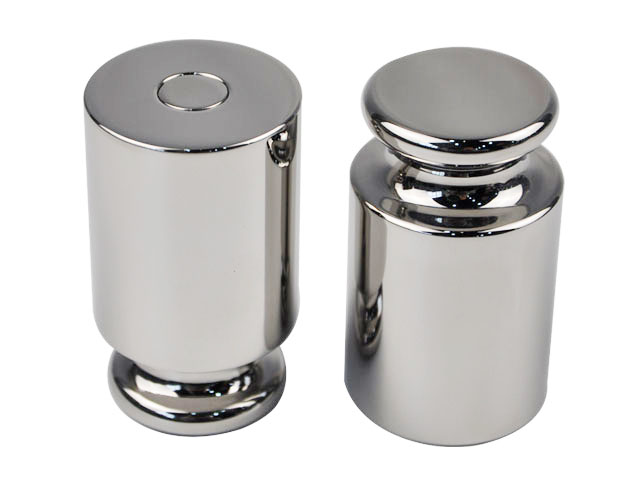
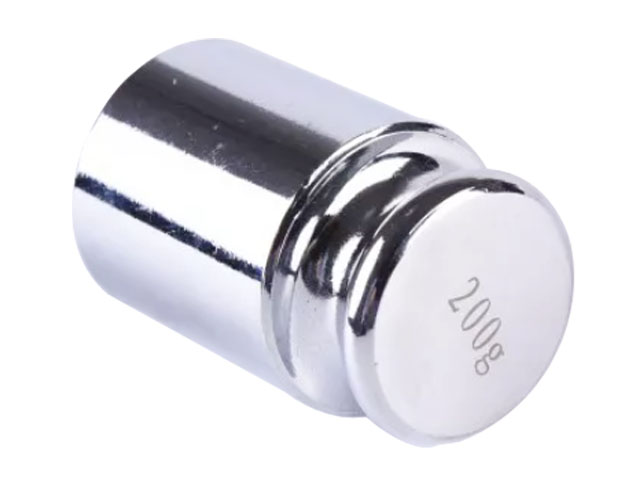
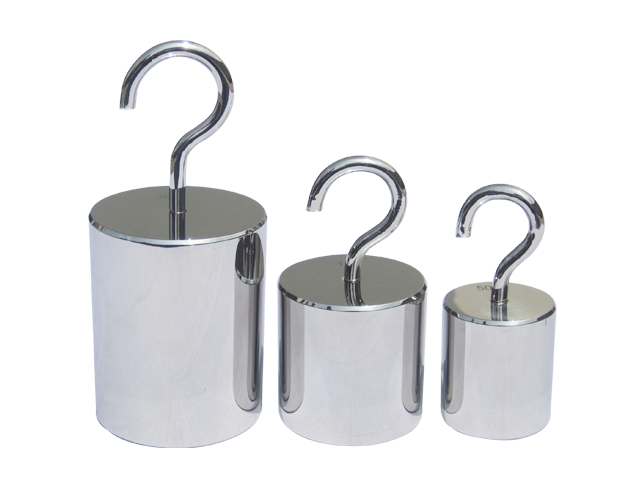
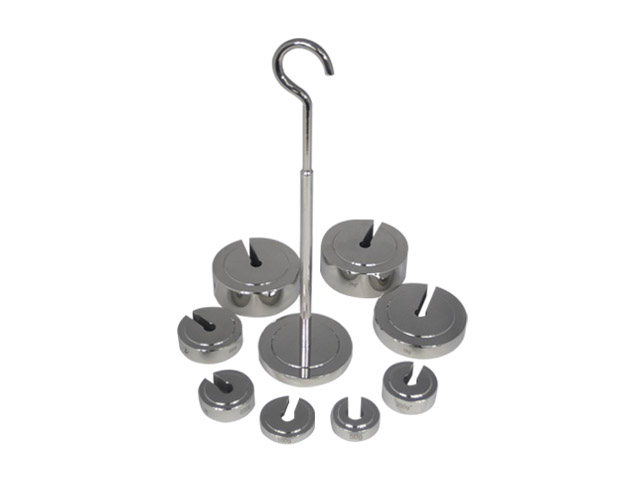
In terms of form, weights can be divided into various designs such as sheet, column, block, and special shapes. Different shapes are suitable for different types of weighing equipment and measurement scenarios.
Modern standard weights are usually made of special alloy materials to ensure long-term stability and corrosion resistance:
Stainless steel: The most commonly used material, especially 316L stainless steel, has excellent corrosion resistance and stability
Brass chrome plating: economical choice, surface coating enhances durability
Platinum iridium alloy: used for the highest standard kilogram prototype, extremely stable but expensive
Titanium alloy: an emerging material with high strength, light weight, and corrosion resistance
The manufacturing process includes precision casting, mechanical processing, surface treatment, and strict quality inspection. High grade weights often require months or even years of aging treatment to ensure their quality stability. Modern manufacturing technology also uses laser engraving and special marking methods to prevent tampering and forgery.
Proper use and maintenance of standard weights are crucial for ensuring measurement accuracy:
Operating standards:
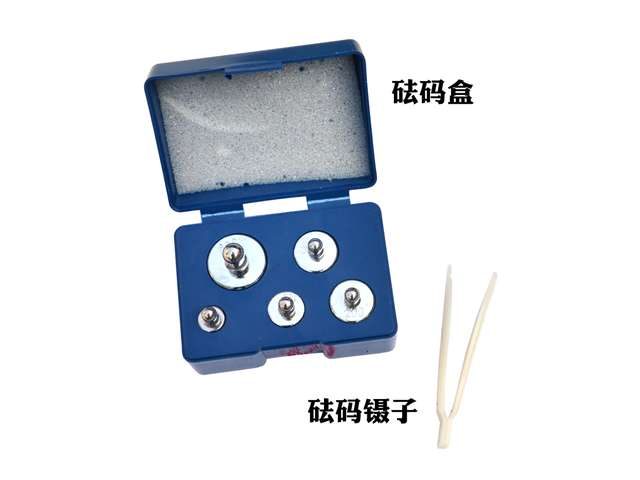
Use specialized tweezers or gloves to remove and place, avoiding direct contact with hands
Handle with care to prevent collisions and drops
Place on a stable plane, away from the vibration source
Environmental control:
Maintain a constant temperature and humidity environment (usually 20 ± 1 ℃, humidity around 50%)
Avoid direct sunlight and strong magnetic field interference
When measuring with high precision, it is necessary to consider the influence of air buoyancy
Cleaning and maintenance:
Regularly clean the surface with anhydrous ethanol and a soft cloth
Check for scratches, corrosion, or contamination
Store in a dedicated box to avoid dust accumulation
Calibration cycle:
E-grade weight: calibrated once every 1-2 years
F-grade weight: calibrated every 2-3 years
M-grade weights: calibrated every 3-5 years
When used frequently or in harsh environments, the calibration cycle should be shortened
The application range of standard weights is extremely wide, covering almost all fields that require precise measurement:
Scientific research: physics and chemistry experiments, material analysis, drug development
Industrial production: Quality control in automobile manufacturing, aerospace, and electronic product production
Medical health: drug preparation, medical equipment calibration, and validation of physical examination instruments
Trade and commerce: commodity weighing, trade settlement, market supervision
Legal Enforcement: Metrological Supervision and Inspection by Law Enforcement Departments
Education field: Quality standards for physics teaching and laboratory courses
In the era of global trade and intelligent manufacturing, standard weights are one of the most fundamental and important measuring tools, and their accuracy and reliability directly affect product quality, scientific discovery, and business integrity. Understanding and correctly using standard weights is the first step in ensuring measurement accuracy and an important link in maintaining social fairness and justice.
Learn more about standard unit weight, standard weight per square meter, standard weight specification, standard weight tolerance, standard weight calculation formula, standard weight measurement, standard body weight, standard weight verification, standard weight calibration, standard gross weight, standard net weight, standard package weight, standard weight per linear meter, standard weight deviation, standard weight for industrial components, standard weight reference table, standard weight compliance, standard shipping weight, standard tare weight, standard weight benchmark, standard weight for sandwich panels, standard weight adjustment, standard weight testing standard, standard weight for pu sandwich panels, standard weight for steel products, standard weight for construction materials, standard weight for packaging materials, standard weight for laboratory equipment, standard weight for measuring instruments, standard weight for logistics shipment, standard weight for export goods, standard weight for fire-resistant panels, standard weight for thermal insulation materials, standard weight comparison, standard weight for production line components, standard weight for conveyor systems, standard weight for fasteners, standard weight for structural panels, standard weight for customized products, standard weight load capacity, standard weight traceability, standard weight maintenance, standard weight for international trade, standard weight for retail products, standard weight for heavy-duty machinery, standard weight for precision components, standard weight for agricultural equipment, standard weight for marine engineering parts, pls contact us.
In every field that relies on accurate weight measurement—from scientific research and laboratory analysis to industrial manufacturing, commercial trade, and educational demonstration—two core tools stand as the backbone of reliable data: standard weight and calibration weight. These two terms are closely intertwined, yet they carry distinct roles in the global system of mass metrology, working together to ensure that every weighing reading is consistent, traceable, and free from avoidable error. To understand their importance, one must first move beyond basic definitions and explore their design, functionality, application, maintenance, and the far-reaching impact they have on daily operations across countless sectors. Without these precision-crafted mass pieces, the modern world’s systems of measurement would lack a universal reference point, leading to discrepancies, inefficiencies, and a breakdown in trust between producers, researchers, and consumers.
A standard weight is a precisely manufactured physical artifact that embodies a fixed, known mass value, serving as a reference for mass measurement across different settings. It is crafted to meet strict dimensional and material specifications, designed to maintain its mass stability over extended periods of use and storage, resisting changes caused by environmental factors, physical handling, and gradual wear. Standard weights are developed to represent specific mass increments, ranging from tiny milligram units used in micro-analysis to large kilogram and tonne units deployed in heavy industrial weighing. Each standard weight is engineered with a uniform density and surface finish to minimize variables that could alter its effective mass, such as air buoyancy, surface contamination, or structural damage. Unlike general counterweights used for simple balancing tasks, a standard weight is not a generic mass piece; it is a standardized tool that adheres to consistent manufacturing principles, ensuring that a standard weight of the same nominal value will perform consistently regardless of where or when it is used. This uniformity is what makes standard weights the foundational reference for all mass-related measurements, creating a common language for weight across laboratories, factories, and commercial spaces worldwide.
A calibration weight, while sharing many physical characteristics with a standard weight, serves a more targeted, operational purpose: it is specifically used to calibrate, verify, and adjust weighing instruments to ensure their readings align with the established standard mass values. Calibration is the process of comparing the output of a weighing device—such as an analytical balance, bench scale, floor scale, or portable weighing unit—against a known, reliable mass source, and correcting any deviations that appear between the device’s displayed value and the actual mass of the calibration weight. In this sense, calibration weights act as the critical link between abstract mass standards and real-world weighing equipment, translating universal mass references into actionable accuracy for everyday tools. Every weighing instrument, no matter how well-built, will gradually drift from its initial accuracy over time due to mechanical wear, electronic drift, temperature changes, vibration, or frequent use. Calibration weights are the solution to this natural drift, providing a tangible, verifiable way to reset and validate equipment performance, ensuring that measurements remain reliable throughout the device’s operational life.
The relationship between standard weights and calibration weights is complementary and hierarchical, forming a seamless chain of mass traceability that spans from global reference standards to frontline weighing tools. At the highest level, primary standard weights serve as the ultimate reference for mass values, maintained in controlled metrological environments to preserve their absolute stability. These primary standards are used to calibrate secondary standard weights, which in turn are used to calibrate working standard weights, and finally, working standard weights are used to produce and verify calibration weights for everyday industrial and laboratory use. This layered system ensures that every calibration weight used in the field can trace its mass value back to the primary global mass standard, eliminating arbitrary measurements and guaranteeing consistency across borders, industries, and applications. A calibration weight cannot fulfill its purpose without the foundation laid by standard weights, and standard weights would hold little practical value without calibration weights to translate their reference values into usable accuracy for everyday equipment. Together, they create a closed, reliable loop that upholds the integrity of mass measurement across all sectors.
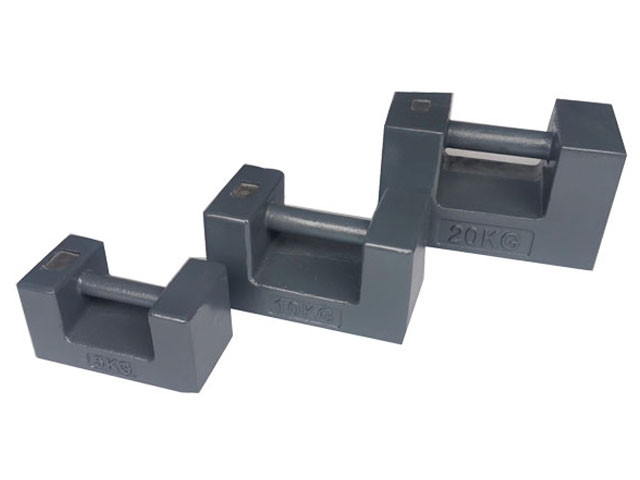
The materials used to manufacture standard weights and calibration weights are carefully selected to prioritize stability, durability, and resistance to environmental degradation, as material properties directly impact the long-term accuracy of these mass pieces. Common materials include high-grade stainless steel, which is favored for its corrosion resistance, non-magnetic properties, and ability to maintain a smooth, contamination-resistant surface; stainless steel weights are widely used in laboratory and industrial settings where precision and longevity are critical. Other materials include hardened alloys, brass, and coated cast iron, each chosen for specific use cases—brass offers good density and stability for mid-range weights, while coated cast iron is suitable for larger, heavy-duty weights used in industrial environments where ruggedness is a priority. Small, ultra-precise weights for micro-analysis may use specialized low-wear materials to prevent mass loss from handling, while larger weights feature reinforced structures to withstand lifting, transportation, and repeated placement on heavy-duty scales. The manufacturing process involves precise machining, balancing, and fine-tuning to ensure that the finished weight matches its nominal mass value within a narrow tolerance range, with no excess material or structural flaws that could compromise its performance. Surface finishing is also a key step, as smooth, non-porous surfaces prevent the accumulation of dust, oils, or moisture that could add unintended mass and create measurement errors.
Design and physical form are tailored to the intended use of standard weights and calibration weights, with different shapes and features optimized for specific weighing scenarios. Small weights in the milligram and gram ranges are often flat, circular, or polygonal with a slim profile, designed to be handled with specialized tools to avoid direct contact with human hands, which can leave oils, sweat, or skin particles that alter mass. Mid-range weights from a few grams to several kilograms may feature a small handle or recessed grip for safe, controlled placement on balance pans, reducing the risk of dropping or scratching. Larger weights, used for calibrating industrial scales and heavy-duty weighing systems, are often cylindrical, rectangular, or equipped with lifting points for easy transport using manual or mechanical tools, with a sturdy build to resist impact and deformation. Some precision weights feature a sealed adjustment cavity that allows metrology experts to fine-tune the mass if minor deviations occur over time, ensuring the weight can remain in service for years without losing its accuracy. Regardless of size or shape, all standard and calibration weights are designed to have a consistent center of gravity, ensuring that their weight is distributed evenly and that they provide a stable, reliable load when placed on a weighing device. This attention to design detail eliminates variables that could cause inconsistent readings, making every weight a dependable reference tool.
Proper handling and storage practices are essential to preserving the accuracy and lifespan of standard weights and calibration weights, as even minor mishandling can lead to permanent mass changes that render the tool unreliable. One of the most fundamental rules is avoiding direct skin contact with precision weights; human hands contain natural oils, salts, and moisture that can corrode the surface of the weight or leave a thin residue that adds extra mass. Instead, small weights should be handled with non-abrasive, lint-free tweezers or specialized handling tools, while larger weights should be lifted with clean, dry gloves or dedicated lifting equipment. Weights should always be placed on clean, flat, stable surfaces, never dropped or slid across rough materials, as impacts can cause dents, scratches, or internal structural damage that reduces mass. When not in use, weights should be stored in a dedicated, protective case lined with soft, non-abrasive material to prevent dust accumulation and physical damage, in a storage area with stable temperature and humidity levels to avoid condensation or corrosion. Exposure to harsh chemicals, extreme temperatures, direct sunlight, or high-moisture environments should be avoided at all times, as these conditions can degrade the material and alter the mass of the weight over time. Regular gentle cleaning with a mild, non-abrasive cleaning agent and a lint-free cloth is recommended for weights used frequently, to remove surface contaminants without damaging the finish; aggressive cleaning methods or harsh chemicals should never be used, as they can erode the surface and cause permanent mass loss.
The application scope of standard weights and calibration weights is incredibly broad, covering every industry and field that depends on accurate weight measurement, with each sector relying on these tools to meet its unique precision requirements. In scientific and research laboratories, ultra-precise standard and calibration weights are indispensable for analytical chemistry, pharmaceutical research, material science, and physical testing, where even a tiny measurement error can skew experimental results, compromise data integrity, or lead to incorrect conclusions. Analytical balances used in these settings require regular calibration with micro-gram and milligram weights to ensure that measurements of chemicals, samples, and sensitive materials are exact, as researchers rely on these readings to develop new products, conduct experiments, and publish valid scientific data. In the pharmaceutical industry, precise weighing is critical for formulating medications, where accurate dosages are essential for patient safety and product efficacy; calibration weights ensure that every ingredient is measured correctly, preventing under-dosing or over-dosing that could have serious health consequences. Similarly, in the food and beverage industry, standard and calibration weights are used to calibrate scales for ingredient measurement, portion control, and packaging verification, ensuring that products meet consistent quality standards and that consumers receive the stated quantity of goods.
In industrial manufacturing and production, standard weights and calibration weights play a vital role in quality control, process optimization, and compliance with internal and industry-wide measurement standards. Manufacturing facilities rely on accurate weighing for raw material intake, component production, assembly line processes, and finished product inspection; even a small margin of error in weighing raw materials can lead to large-scale product defects, material waste, and production delays. Calibration weights are used to regularly calibrate bench scales, floor scales, conveyor belt scales, and counting scales used throughout the production process, ensuring that every step of manufacturing adheres to precise weight specifications. Heavy industries such as construction, metallurgy, and logistics use large-scale calibration weights to verify the accuracy of heavy-duty scales used for weighing bulk materials, equipment, and shipped goods, preventing errors in inventory management, order fulfillment, and shipping logistics. In commercial trade, whether in retail, wholesale, or international shipping, calibrated scales are required to ensure fair transactions between buyers and sellers, with calibration weights serving as the independent reference that guarantees transparency and equity. Without these tools, commercial weighing would be subjective, leading to disputes, financial losses, and a lack of trust in trade practices.
Educational and training environments also rely heavily on standard weights and calibration weights to teach fundamental principles of mass, measurement, and metrology to students and aspiring technicians. In physics and chemistry classrooms, standard weights are used to demonstrate the concept of mass versus weight, teach proper balance operation, and introduce students to the importance of precision in scientific measurement. Vocational training programs for metrology technicians, laboratory analysts, and industrial quality control staff use calibration weights to train learners on proper calibration techniques, equipment verification, and error correction, preparing them to maintain accurate measurement systems in professional settings. These educational applications help build a foundational understanding of metrology, ensuring that the next generation of professionals recognizes the critical role of standard and calibration weights in upholding measurement accuracy. Additionally, research and development facilities focused on improving weighing technology use standard weights as a benchmark to test and validate new weighing instruments, ensuring that new equipment meets industry accuracy standards before being released to the market.
One of the most critical aspects of standard weights and calibration weights is their role in minimizing measurement error and maintaining measurement traceability, two cornerstones of reliable metrology. Measurement error is an unavoidable reality in all weighing processes, arising from equipment limitations, environmental factors, and human operation; however, most systematic errors—those caused by equipment drift or misalignment—can be corrected through regular calibration with reliable weights. Calibration weights allow technicians to identify and quantify deviations in a weighing device’s readings, then adjust the device to align with the known mass of the calibration weight, eliminating systematic error and ensuring that random errors remain within an acceptable range. Traceability, meanwhile, refers to the ability to link a measurement result to a primary standard through an unbroken chain of calibrations, each documented and verified. Standard weights form the base of this traceability chain, with each calibration weight’s accuracy validated against a higher-level standard weight, creating a clear path from the primary global mass standard to the final measurement taken in the field. This traceability is essential for cross-industry and cross-border consistency, ensuring that a measurement taken in one laboratory or factory is comparable to a measurement taken anywhere else in the world, using the same reference standards.
The impact of neglecting regular calibration with proper calibration weights extends far beyond minor measurement discrepancies, affecting operational efficiency, product quality, financial stability, and regulatory compliance across all sectors. When weighing instruments are not calibrated regularly, their readings gradually drift, leading to consistent over-measurement or under-measurement that accumulates over time. In manufacturing, this can result in defective products, wasted raw materials, and increased production costs, as batches of goods fail quality control checks due to incorrect ingredient or component weights. In laboratories, uncalibrated equipment can produce invalid research data, wasting time, resources, and effort on experiments that cannot be replicated or trusted. In commercial trade, inaccurate scales can lead to unfair pricing, lost revenue for businesses, or overcharging for consumers, damaging reputations and leading to disputes. In sectors such as pharmaceuticals and healthcare, inaccurate weighing can have severe consequences for product safety and patient well-being, highlighting that the role of calibration weights is not just about precision, but about responsibility and public trust. Even in small-scale operations, the cost of neglected calibration far outweighs the effort required to maintain regular calibration schedules with reliable standard and calibration weights.
Over time, standard weights and calibration weights will naturally experience minor changes in mass due to regular use, environmental exposure, and gradual wear, making periodic verification and re-calibration essential. Even the most well-maintained weight will develop minor deviations from its nominal mass value after months or years of use, and these small changes can compound into significant measurement errors if left unaddressed. Periodic verification involves comparing the weight against a higher-level standard weight in a controlled metrological setting, measuring any deviation, and determining if the weight still falls within acceptable tolerance limits for its intended use. If a weight falls outside the acceptable tolerance, it can be carefully re-calibrated and adjusted by trained metrology professionals to restore its accurate mass value, extending its usable life. The frequency of verification depends on the level of use, environmental conditions, and precision requirements; weights used in high-precision laboratories or heavy industrial settings may require more frequent checks, while those used in low-frequency, general-purpose settings can be verified less often. Establishing a consistent verification schedule is a key part of responsible weight management, ensuring that these tools remain reliable and that measurement accuracy is never compromised.
It is important to distinguish between standard weights and calibration weights in practical use, to avoid misuse and ensure optimal performance. While all calibration weights are a type of standard weight in the broad sense, not all standard weights are designed for direct calibration use. Primary and secondary standard weights are intended for metrological reference and calibration of other weights, not for daily, repeated use on production floor scales or field balances, as frequent handling could compromise their long-term stability. Calibration weights, by contrast, are designed for regular, practical use, built to withstand repeated placement on weighing equipment and occasional transport between workstations, while still maintaining the precision required for valid calibration. Selecting the right weight for a specific task involves considering the weighing device’s capacity, precision level, and intended use, as well as the environment in which it will be used. A high-precision analytical balance requires a small, ultra-precise calibration weight with tight tolerance limits, while a large industrial floor scale requires a heavy-duty calibration weight with a robust design and appropriate mass range. Using an inappropriate weight for calibration—such as a low-precision weight on a high-precision balance—will result in ineffective calibration and persistent measurement errors, underscoring the importance of matching weight specifications to equipment requirements.
The evolution of standard weights and calibration weights has paralleled advancements in metrology and manufacturing technology, with modern designs and materials offering improved stability, precision, and durability compared to older models. Traditional weights were often made from cast iron or basic brass, with wider tolerance limits and greater susceptibility to rust and wear; modern manufacturing techniques, including precision machining, computerized balancing, and advanced material coatings, have allowed for the production of weights with extremely narrow tolerance ranges, better environmental resistance, and longer lifespans. Digital metrology tools have also enhanced the calibration process for weights themselves, allowing for more precise measurement of mass deviations and more accurate adjustments. Despite these technological advancements, the core purpose of standard weights and calibration weights remains unchanged: to provide a fixed, reliable reference for mass measurement. Even with the rise of automated weighing systems and digital calibration tools, physical standard and calibration weights remain irreplaceable, as they provide a tangible, independent reference that cannot be replicated by electronic sensors or software alone. They serve as a physical check against digital drift and system errors, ensuring that automated systems remain grounded in accurate, verifiable mass values.
In summary, standard weight and calibration weight are indispensable pillars of global precision measurement, each fulfilling a unique yet interconnected role in maintaining accurate, consistent, and traceable mass readings across every industry and scientific discipline. Standard weights establish the universal reference for mass values, creating a unified system of measurement that transcends geographical and industrial boundaries. Calibration weights bridge the gap between these universal standards and everyday weighing equipment, ensuring that devices remain accurate despite wear, environmental changes, and regular use. Together, they form a system that supports fair trade, reliable scientific research, safe manufacturing, quality product development, and effective education. Proper selection, handling, storage, and periodic verification of these weights are essential practices that protect measurement integrity and prevent the costly consequences of inaccurate weighing. As technology continues to advance and global standards for precision become more stringent, the demand for high-quality standard weights and calibration weights will only grow, reinforcing their status as essential tools in the modern world. Their quiet, consistent work behind the scenes ensures that every measurement we rely on—from a laboratory’s chemical analysis to a store’s product weighing, from a factory’s production line to a shipping company’s cargo verification—is accurate, trustworthy, and consistent. Without standard weights and calibration weights, the foundation of modern measurement would crumble, leading to a world of uncertainty, inefficiency, and lost trust in the data that guides our daily decisions and professional operations.
Looking ahead, the role of standard weights and calibration weights will continue to adapt to new industry demands, including the push for greater sustainability, miniaturization of precision tools, and global harmonization of metrological standards. Manufacturers will continue to refine materials and designs to create weights that are more durable, environmentally resistant, and suitable for emerging industries such as advanced electronics, biotechnology, and renewable energy, where ultra-precise weighing is critical. Metrology professionals will continue to refine calibration protocols to streamline the process while maintaining the highest levels of accuracy, making regular calibration more accessible for businesses of all sizes. For end-users, from laboratory technicians to industrial managers, the core takeaway remains the same: investing in high-quality standard weights and calibration weights, and adhering to consistent maintenance and calibration practices, is not just a technical requirement, but a strategic investment in operational efficiency, product quality, and long-term success. The true value of these small but powerful tools lies in their ability to turn abstract mass standards into practical, reliable accuracy, ensuring that measurement remains a cornerstone of progress, fairness, and excellence in every field.
