





Changzhou Veidt Weighing Co., Ltd. © 2022 ALL RIGHTS RESERVED Privacy Policy | Calibration Weight | Test Weights | Cast Iron Weights | Standard Weights | Laboratory Weights | XML | SITEMAP
Product Category
Luggage Scale
Traveling, whether for leisure, business, or long-term relocation, has evolved dramatically over the past few decades, with modern journeys growing more frequent, diverse, and detail-oriented than ever before. Amidst the excitement of exploring new destinations, closing professional deals abroad, or reconnecting with distant loved ones, travelers often overlook a small yet impactful detail that can make or break the entire travel experience: luggage weight management. Many people invest heavily in durable suitcases, travel accessories, and travel insurance to ensure a smooth trip, yet they neglect the simple step of verifying their luggage weight before heading to transportation hubs. This seemingly minor oversight frequently leads to unexpected troubles, ranging from last-minute frantic repacking at check-in counters and wasted travel time to unplanned extra charges that disrupt travel budgets. In this context, the luggage scale emerges as an essential, underrated travel tool that addresses a universal pain point for all types of travelers, turning chaotic packing and uncertain luggage preparation into a precise, stress-free routine. Far from being a trivial accessory, it serves as a reliable checkpoint for every journey, bridging the gap between casual packing habits and standardized travel requirements, and bringing unprecedented stability and predictability to modern travel life.
The most immediate and practical value of a luggage scale lies in its ability to eliminate the risk of excess luggage weight charges, a common and frustrating issue that plagues countless travelers each year. Most transportation carriers enforce strict luggage weight restrictions for both checked baggage and carry-on items, with even minor excess weight enough to trigger additional fees or force travelers to abandon or repack their belongings on the spot. What makes this situation more troublesome is that ordinary travelers rarely have an accurate perception of their luggage weight through visual judgment or simple manual lifting. A suitcase filled with daily clothing, electronic devices, travel toiletries, and personal souvenirs can easily exceed the allowable limit without the traveler’s awareness, especially during return trips when extra gifts, local specialties, and newly purchased items add unanticipated weight to luggage. Without a portable weighing tool, travelers can only rely on the public weighing equipment at transportation terminals, which are often crowded, inconvenient to access, and unable to provide advance preparation time. A luggage scale completely reverses this passive situation by allowing users to measure their luggage weight accurately at home, in hotel rooms, or at any temporary accommodation before departure, ensuring every bag stays within the acceptable weight range and completely avoiding unnecessary financial losses and embarrassing on-site adjustments.
Beyond avoiding extra fees, regular use of a luggage scale cultivates more scientific and minimalist packing habits, fundamentally optimizing the entire travel preparation process. Most casual packers tend to adopt a “just in case” mindset, stuffing their suitcases with redundant items out of fear of missing necessary belongings during travel. This impulsive packing method not only leads to overweight luggage but also results in bulky, cumbersome suitcases that are difficult to carry, drag, or store during trips. When travelers have access to real-time, accurate weight data from a luggage scale, they gain a clear quantitative reference for their packing decisions. They can intuitively observe how each additional item affects the total luggage weight, helping them distinguish between essential travel necessities and non-essential redundant goods. For example, travelers can rationally reduce the number of spare clothing items, avoid carrying oversized toiletries, and replace heavy electronic devices with lightweight alternatives after checking the current weight of their luggage. Gradually, this process helps travelers form a refined packing habit, enabling them to carry only what is truly needed, reduce the overall burden of travel, and make their luggage more portable and organized. This shift from blind packing to data-driven packing greatly improves the efficiency of travel preparation and enhances the overall comfort of the journey.
Portability and ease of use are core design advantages that make modern luggage scales suitable for all travel scenarios, distinguishing them from traditional bulky weighing equipment. Unlike household floor scales that are fixed in position, large in size, and inconvenient to carry, mainstream luggage scales are designed with travel mobility in mind, featuring ultra-lightweight bodies, compact structures, and space-saving shapes that can be easily tucked into suitcase side pockets, handbags, or backpacks without occupying valuable luggage space or adding noticeable extra weight. Their operation logic is extremely simple and user-friendly, requiring no complex installation, professional calibration, or tedious learning processes. Most luggage scales adopt a straightforward hook-and-lift design: users only need to hang the luggage handle on the scale’s sturdy hook, lift the scale steadily for a few seconds, and the high-definition display screen will immediately show the accurate weight data. This simple operation is accessible to people of all ages, from young frequent travelers to elderly travelers who are not familiar with complex electronic devices. Whether at home before departure, in a temporary hotel room during a multi-stop trip, or at a roadside rest stop during a self-driving journey, travelers can complete luggage weight measurement in seconds, achieving efficient and convenient weight checking at any time and anywhere.
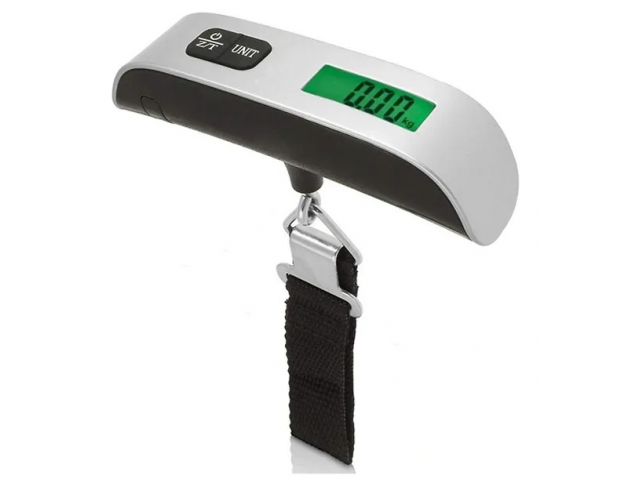
The functional refinement of modern luggage scales further enhances their practicality and adaptability to complex travel environments, making them a multi-functional travel helper rather than a single-purpose tool. Most premium luggage scales are equipped with sensitive sensing modules that ensure high measurement accuracy within a reasonable weight range, effectively avoiding the subtle weight errors that could still lead to excess weight problems. Many models feature intuitive backlit display screens, which solve the problem of unclear data reading in dim environments such as early morning departures, night hotel rooms, or dimly lit terminal corridors. Practical intelligent functions are also widely integrated into luggage scale designs, including automatic zeroing to eliminate the weight of suitcase ropes or auxiliary hanging tools, automatic overload alarm to remind users of excessive luggage weight in a timely manner, and automatic shutdown technology to reduce unnecessary battery consumption and extend the service life of replaceable batteries. Some luggage scales also support dual-unit switching, allowing users to switch between different weight measurement units according to personal usage habits and travel scenarios, adapting to diverse travel needs in different environments. These humanized functional designs fully cater to the fine-grained needs of modern travelers, greatly improving the practical value and user experience of the product.
For frequent travelers, including business professionals, long-term expatriates, and avid travel enthusiasts, a luggage scale is not merely a convenient accessory but a long-term travel investment that continuously optimizes travel quality. Business travelers often need to take sudden business trips with tight schedules, leaving little time for repeated packing and adjustment. A luggage scale allows them to quickly complete standardized luggage weighing during hurried preparation, ensuring their business suits, office supplies, and travel essentials are packed within the weight limit, avoiding delays caused by last-minute luggage adjustments and ensuring punctual and smooth business travel arrangements. Long-term travelers and expatriates often carry more personal belongings, daily supplies, and living necessities, making luggage weight control more challenging. Regular weighing with a luggage scale helps them reasonably distribute items among multiple suitcases, balance the weight of different bags, avoid overloading a single suitcase that may cause structural damage to the luggage, and reduce physical burden during carrying and transportation. For travel lovers who pursue flexible and free travel experiences, the luggage scale supports random travel adjustments, whether it is a short weekend trip or a long cross-region journey, allowing them to control luggage weight freely and travel more lightly and freely.
Luggage scales also play a vital role in solving the unique weight management problems of return journeys, a scenario that is often overlooked in daily packing preparation. Outbound travel packing is usually planned and predictable, with travelers able to arrange luggage items in advance according to travel duration and itinerary needs. However, return journeys are always accompanied by uncertain weight increases, as travelers often purchase local specialties, handmade souvenirs, gifts for relatives and friends, and new daily necessities during their trips. These unplanned items are randomly added to the luggage, making it difficult to estimate the total weight in advance, and most travelers only discover their luggage is overweight when checking in for the return trip. Carrying a portable luggage scale during travel allows travelers to check their luggage weight at any time during their stay. They can appropriately adjust their purchased items according to the remaining available weight, such as choosing to mail some heavy items home in advance, abandoning unnecessary bulky souvenirs, or redistributing items between different luggage bags, effectively avoiding the dilemma of overweight luggage during the return trip. This real-time weight management capability fills the gap in traditional travel preparation and makes the whole journey more complete and secure.
The durable and wear-resistant design of qualified luggage scales ensures stable long-term use, making them a cost-effective travel tool for long-term travel enthusiasts. As a travel accessory that needs to be carried and used frequently, luggage scales are inevitably exposed to friction, minor collisions, and accidental drops during travel, so structural durability is a key factor in product quality. High-quality luggage scales usually adopt reinforced structural materials for the main body and load-bearing hooks, with strong tensile resistance and impact resistance, which can withstand the weight of fully loaded suitcases and resist daily wear and tear during travel. The connection parts of the hooks and the main body are precisely processed to avoid looseness or deformation after long-term repeated use, ensuring stable load-bearing and accurate measurement results every time. The surface of the scale body is usually treated with anti-slip and anti-wear coating, which can prevent scratches and keep the equipment intact even after long-term carrying in luggage. Unlike disposable travel accessories that are easily damaged and need frequent replacement, a qualified luggage scale can maintain stable performance for years of travel use, bringing long-term convenience and value to users.
Using a luggage scale also helps reduce travel stress and improve the overall sense of travel security, bringing psychological comfort to travelers throughout the journey. Travel preparation is often accompanied by subtle anxiety: travelers worry about forgetting important items, missing transportation schedules, or encountering unexpected terminal problems. The uncertainty of luggage weight is one of the most common sources of travel anxiety, as no one wants to face unexpected extra charges, forced item abandonment, or public embarrassment at the check-in counter. By weighing luggage accurately in advance with a luggage scale, travelers can completely eliminate this uncertainty and gain clear and definite luggage weight data before departure. This sense of certainty greatly reduces pre-travel anxiety, allowing users to arrange their travel plans more calmly and focus on the fun and purpose of the trip rather than worrying about trivial luggage problems. Whether traveling alone, with family members, or in a group, the stable guarantee brought by a luggage scale makes the travel preparation process more orderly and relaxed, laying a solid foundation for a pleasant travel experience.
In family travel scenarios, luggage scales play an even more prominent role in optimizing group travel arrangements and improving travel efficiency. Family travel usually involves multiple people’s luggage, including children’s daily supplies, elderly care items, family travel equipment, and shared travel goods, making the total luggage volume and weight far larger than individual travel. It is easy to have uneven weight distribution among different suitcases, with some bags severely overweight and others half-empty. By using a luggage scale to weigh each suitcase separately, family members can reasonably redistribute items according to the weight limit standard, balance the weight of each luggage bag, avoid excessive local load-bearing, and make each suitcase easy to carry and transport. At the same time, accurate weight checking can avoid the situation where the whole family’s travel plan is delayed due to a single overweight luggage. For family trips with children, refined luggage weight management also avoids carrying excessive redundant items, reduces the overall travel burden, and allows parents to spend more energy on taking care of their children and enjoying the trip, rather than dealing with cumbersome luggage problems.
With the continuous development of the travel industry and the increasing refinement of travel consumption concepts, the status of luggage scales in modern travel accessories is becoming increasingly prominent. In the past, travelers mostly focused on large travel equipment such as suitcases, backpacks, and travel bedding, ignoring the value of small auxiliary tools. However, as travel scenarios become more diverse and travel requirements become more standardized, travelers gradually realize that small, professional travel tools can greatly improve travel quality and avoid unnecessary losses. The luggage scale is a typical representative of this kind of refined travel equipment. It has no exaggerated volume or complicated functions, but it targets the most universal and easily overlooked pain point in travel preparation, bringing precise, efficient, and reliable solutions to luggage weight management. It adapts to the fast-paced, high-efficiency needs of modern travel and conforms to the minimalist, refined travel lifestyle pursued by contemporary travelers, becoming an indispensable small partner for more and more people’s travel lives.
In conclusion, the luggage scale is a practical, durable, and multi-functional travel accessory that integrates convenience, economy, and practicability. It not only solves the most intuitive problem of excess luggage weight and extra travel costs but also optimizes travel packing habits, reduces travel pressure, improves travel efficiency, and adapts to various personal and group travel scenarios. For every traveler who pursues a smooth, relaxed, and high-quality travel experience, investing in a portable luggage scale is a simple and effective way to upgrade travel preparation standards. It turns uncertain luggage weight risks into controllable data, makes every travel preparation more rigorous and standardized, and allows every journey to start with sufficient preparation and full confidence, letting travelers bid farewell to luggage troubles and focus on enjoying every wonderful moment of their travel journey.
