





Changzhou Veidt Weighing Co., Ltd. © 2022 ALL RIGHTS RESERVED Privacy Policy | Calibration Weight | Test Weights | Cast Iron Weights | Standard Weights | Laboratory Weights | XML | SITEMAP
Product Category
Mechanical Body Scale
The mechanical body scale stands as one of the most enduring and practical household devices designed for daily personal weight tracking, embodying the simplicity of classic mechanical engineering in everyday life. Unlike modern electronic weighing devices that rely on circuit boards, sensors, and digital displays, this traditional scale operates entirely through physical mechanical movements, requiring no external power sources, no battery replacements, and no complex software calibration. For generations, it has occupied a steady place in bathrooms, bedrooms, and home fitness corners, serving as a reliable tool for people to monitor physical changes, maintain healthy living habits, and track daily body weight fluctuations. Its timeless design and straightforward functionality have allowed it to withstand the rapid iteration of smart electronic products, remaining a favored choice for households that prioritize stability, durability, and ease of use. Even as intelligent digital scales flood the consumer market with diverse auxiliary functions, the pure mechanical working mode of the mechanical body scale still holds irreplaceable practical value and unique charm in daily life.
The core working principle of a mechanical body scale revolves around the physical properties of elastic deformation and mechanical force transmission, a basic mechanical principle that has been applied and optimized for decades. Every time a user steps onto the flat platform of the scale, the downward gravitational force generated by the human body’s weight is evenly transmitted to the internal elastic components, primarily high-tensile metal springs. These precision-made springs undergo controllable compression deformation under the action of external force, and the degree of compression is directly proportional to the weight applied on the platform. This subtle physical deformation cannot be observed directly by the naked eye, so the scale is equipped with an elaborate lever and gear linkage system to convert linear compression movement into rotational movement. The linked mechanical structure drives the pointer on the dial to rotate steadily, pointing to the corresponding scale value on the calibrated dial, thus converting invisible physical force into intuitive and readable weight data. The entire measurement process is completed in an instant through pure mechanical transmission, with no delay or data deviation caused by electronic signal processing, achieving immediate and direct weight feedback.
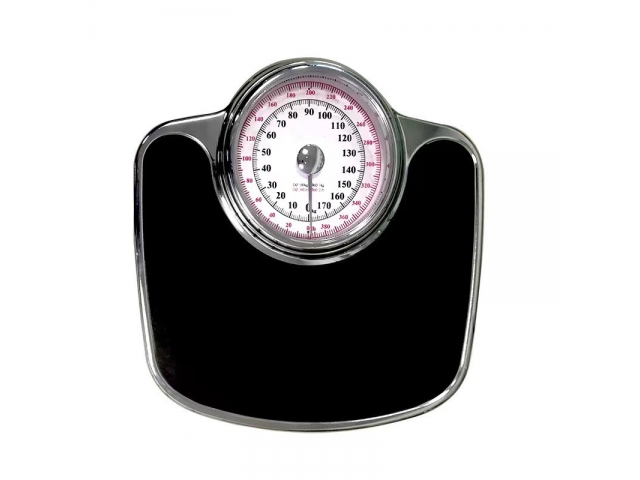
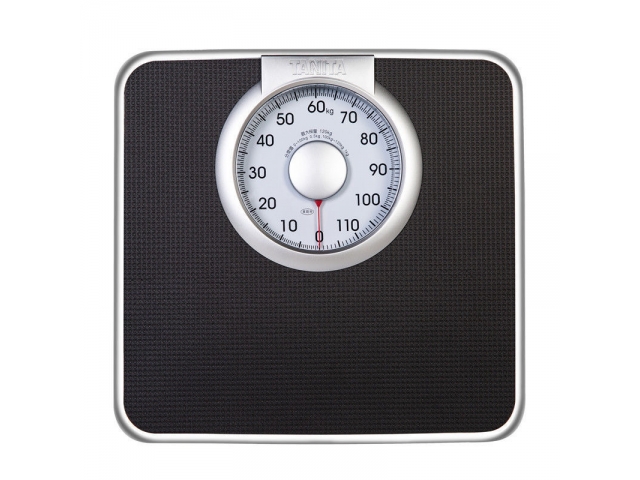
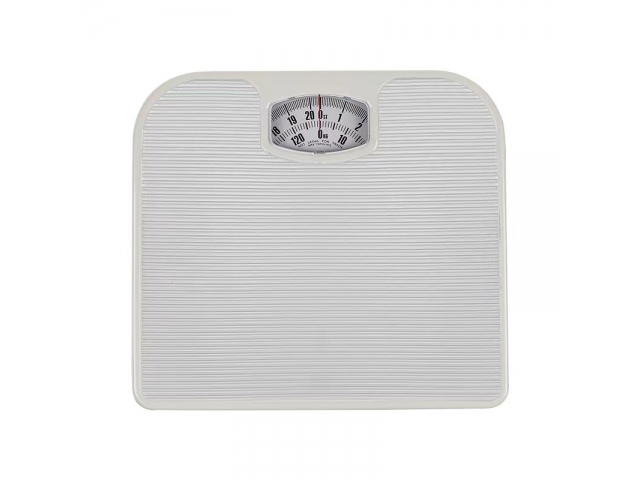
The overall structural design of a mechanical body scale follows the concepts of simplicity, stability, and durability, with every component tailored to adapt to long-term daily household use. The outermost part is a load-bearing platform, usually made of thickened high-strength materials, with a smooth or slightly textured surface to ensure stable standing and prevent slipping during weighing. The size and flatness of the platform are carefully designed to fit the standing posture of most adults, dispersing body pressure evenly to avoid local stress concentration that may affect measurement accuracy. Beneath the platform lies the core mechanical transmission assembly, including precision springs, multi-group balance levers, miniature rack and pinion sets, and fixed rotating shafts. All internal mechanical parts are processed with high precision and assembled tightly to minimize mechanical friction and structural looseness. The upper part of the scale body is equipped with a circular or square dial with clear and uniform scale markings, paired with a slender and flexible pointer that can respond sensitively to tiny mechanical movements. The bottom of the scale is fitted with anti-slip foot pads to enhance overall stability, preventing the scale from sliding or tilting on smooth floors during use, which effectively guarantees the consistency of each weighing measurement environment.
One of the most prominent advantages of the mechanical body scale is its complete independence from power supply and electronic equipment, making it extremely adaptable to various usage environments. Digital weighing scales often face usage limitations due to dead batteries, circuit failures, electromagnetic interference, or humid environment damage, while mechanical body scales are free from all these troubles. Whether in a humid bathroom, a dry bedroom, a temporary rental house, or an outdoor temporary fitness space, the mechanical scale can work stably at any time without pre-charging, battery replacement, or signal connection. This zero-power working feature also makes it an extremely energy-saving and environmentally friendly household device, producing no electronic waste during long-term use and consuming no electric energy, which conforms to the simple and low-carbon living concept. For users who pursue minimalist life and reliable practicality, this independence and stability are far more valuable than the redundant intelligent functions of electronic products, as it can maintain stable working performance for years without frequent maintenance and troubleshooting.
In terms of usage operation, the mechanical body scale features extremely low operation thresholds and highly intuitive man-machine interaction, suitable for users of all age groups. The entire weighing process requires no button operation, no function switching, and no parameter setting. Users only need to place the scale on a flat and hard ground, stand steadily in the center of the scale platform with their feet naturally separated, and keep their bodies upright and stationary for one to two seconds. At this moment, the internal mechanical structure completes force transmission and pointer positioning instantly, and users can directly read the weight value indicated by the pointer on the dial. The dial scale is designed with clear spacing and legible markings, avoiding the blurry display, screen flickering, or digital jumping problems that often occur with electronic screens. Elderly users with poor eyesight and children with insufficient operation ability can easily complete independent weighing and data reading without auxiliary guidance. The simple and straightforward operation logic eliminates the learning cost of use, making daily weight monitoring a convenient and effortless routine.
The durability and service life of a mechanical body scale are far superior to most ordinary electronic weighing equipment, thanks to its all-mechanical structural design and high-quality material selection. Electronic scales are vulnerable to moisture, static electricity, circuit aging, and component damage, and their service life is often limited by the attenuation of electronic sensors and circuit boards. In contrast, the core components of mechanical scales are metal elastic parts and mechanical transmission structures, which have strong wear resistance, compression resistance, and aging resistance. High-quality metal springs can withstand tens of thousands of compression and rebound cycles without obvious elastic fatigue, and the precision gear and lever structures are not prone to failure under normal household use conditions. As long as it is used and maintained correctly, a mechanical body scale can maintain stable measurement performance for many years, and its overall service life is several times that of ordinary digital scales. Even after long-term use, there will be no sudden functional failure or complete scrapping, only slight zero drift that can be corrected through simple manual calibration, greatly reducing the frequency of household product replacement and daily use cost.
Measurement stability and repeatability are core strengths of mechanical body scales in daily weight monitoring. For users who need to track subtle body weight changes for a long time, the stability of repeated measurement data is more important than ultra-high transient accuracy. Many digital scales are prone to data deviation due to ground flatness, ambient temperature, electromagnetic interference, and sensor sensitivity changes, resulting in inconsistent weighing data for the same user in the same state. Mechanical body scales rely on pure mechanical elastic force balance for measurement, with stable internal force transmission logic and no interference from external electromagnetic signals and temperature changes. As long as placed on a flat and stable ground, the data measured each time has high repeatability, which can accurately reflect the real daily weight fluctuation range of the human body. This stable data performance is very suitable for long-term weight management, helping users accurately judge the physical changes brought by diet adjustment, exercise training, and work and rest rules, avoiding misjudgment caused by random data deviation of electronic equipment.
Like all precision household measuring devices, mechanical body scales also require standardized use methods to ensure long-term accurate measurement, and irregular usage habits are the main cause of data deviation. Many users habitually place the scale on soft ground such as carpets, floor mats, and bedding for weighing, which will cause the scale body to sink slightly under pressure, making the internal mechanical structure unable to achieve complete force balance and resulting in low measurement data. In addition, standing on the edge of the scale platform, leaning the body during weighing, or placing extra items on the scale will change the uniform stress state of the platform, affecting the accuracy of pointer indication. Frequent violent impact, sudden heavy pressure, and arbitrary squeezing of the scale body will also cause irreversible elastic fatigue of the internal spring structure and loose transmission gaps, damaging the original precision of the scale. Therefore, standardizing daily use behaviors is the most basic and effective way to maintain the measurement performance of mechanical scales, ensuring that each weighing data can truly reflect the user’s physical condition.
Simple daily maintenance and regular calibration can effectively extend the service life of mechanical body scales and maintain long-term measurement accuracy. The daily maintenance work is extremely simple, mainly including keeping the scale body clean and dry, avoiding long-term accumulation of dust, water stains, and oil stains on the platform and dial surface, and preventing humid air from corroding internal metal parts. Users can wipe the scale surface with a dry soft cloth regularly, and avoid flushing the scale body with a large amount of water to prevent moisture from entering the internal mechanical gaps and causing rust and jamming of parts. In terms of calibration, after long-term use, the pointer of the mechanical scale may have a slight zero drift, that is, the pointer cannot point exactly to the zero scale when no load is applied. Most mechanical body scales are equipped with a hidden zero calibration knob at the bottom or side of the scale body. Users only need to gently rotate the knob to adjust the pointer back to the zero position, completing accurate calibration without any professional tools and technical knowledge. Regular calibration every one to two months can always keep the scale in the best working state.
In terms of applicable scenarios and user groups, mechanical body scales have extremely high universality and inclusiveness, covering almost all household daily weighing needs. For ordinary family users, it can meet the daily weight monitoring needs of all family members, helping adults manage body weight, adolescents track physical development changes, and the elderly grasp physical health status. For fitness enthusiasts and people with weight management needs, its stable and repeatable measurement data can provide reliable reference for long-term exercise and diet plans. For temporary living scenarios such as student dormitories and short-term rentals, the mechanical scale’s portable structure, simple operation, and no power supply requirement make it a very convenient portable household device. Moreover, due to its no-electronic and no-radiation characteristics, it is also very suitable for sensitive groups such as pregnant women and infants, with no potential electronic radiation risks during use, achieving safer and healthier daily use experience.
Although mechanical body scales have many inherent advantages, they also have certain functional limitations compared with modern intelligent electronic scales, which are also objective factors that users need to understand rationally. Unlike digital scales that can integrate multiple functions such as body fat detection, muscle mass analysis, and data recording and sharing, mechanical body scales only retain the most core single weight measurement function, with no auxiliary health data analysis and intelligent data storage functions. In terms of reading accuracy, the dial reading method belongs to manual visual reading, and there may be tiny subjective reading errors compared with the precise digital display of electronic scales. In addition, the elastic components of mechanical scales will have natural aging and fatigue after ultra-long-term use, and the zero drift frequency will increase accordingly, requiring more frequent manual calibration to maintain accuracy. These limitations make mechanical scales unable to meet the professional and multi-dimensional health detection needs of high-precision scenarios, but for daily household ordinary weight monitoring, these functional deficiencies will not affect its core practical value.
Throughout the development of household weighing equipment, the mechanical body scale has always adhered to the most essential product logic: returning to the core demand of accurate, stable, and convenient weight measurement. It abandons redundant intelligent functions, complex operation logic, and dependent power supply modes, and focuses all structural design and performance optimization on the most basic weighing function. In an era where electronic products are increasingly pursuing intelligence, diversification, and high-tech iteration, the mechanical body scale retains the simplicity and pragmatism of traditional mechanical equipment, bringing users a stable and reliable use experience that is not easy to be replaced. Its enduring popularity in the consumer market proves that the most practical household products are often those that can accurately meet core needs, with stable performance, simple operation, and low maintenance cost. For every user who pursues a simple and healthy life, the mechanical body scale is not only a daily weighing tool, but also a reliable companion for long-term physical health management, witnessing every subtle change in the body with stable and true data all the year round.
