





Changzhou Veidt Weighing Co., Ltd. © 2022 ALL RIGHTS RESERVED Privacy Policy | Calibration Weight | Test Weights | Cast Iron Weights | Standard Weights | Laboratory Weights | XML | SITEMAP
Product Category
Truck Scale
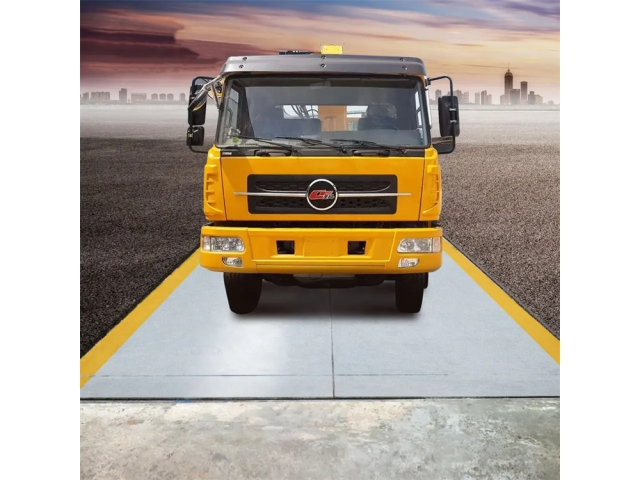
In modern industrial production, logistics transportation, and bulk material management scenarios, the truck scale stands as one of the most fundamental and indispensable weighing devices, undertaking the core task of accurately measuring the total weight of vehicles and their loaded goods. As a large-scale industrial weighing system tailored for heavy-duty vehicle measurement, it differs significantly from small civilian weighing equipment in terms of structural design, load-bearing capacity, operational logic, and environmental adaptability. Its core positioning is to provide objective, accurate, and repeatable weight data for the circulation, settlement, and management of bulk materials, covering almost all industrial links involving truck transportation and material weighing. Unlike portable weighing tools, truck scales are mostly fixed or semi-fixed integrated systems, which can stably complete the weighing of various heavy trucks, cargo trucks, and engineering vehicles, effectively solving the weight measurement pain points of bulk goods such as minerals, grains, building materials, and industrial raw materials. In the entire industrial chain from raw material procurement, production and processing to finished product outbound transportation and inventory reconciliation, the truck scale acts as a key data entry point, laying a reliable data foundation for enterprise cost accounting, inventory management, and operational standardization. With the continuous improvement of industrial automation and digital construction, the functional attributes of truck scales have gradually expanded from a single weighing tool to a comprehensive data collection and management terminal, and their application value in modern industrial systems has become increasingly prominent.
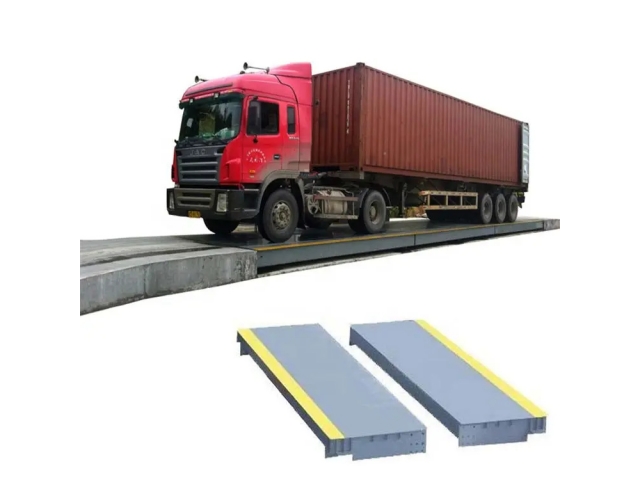
The complete composition of a modern truck scale system is systematic and sophisticated, consisting of multiple core components and auxiliary supporting structures that coordinate with each other to ensure stable and accurate weighing operation. The most intuitive core component is the weighing platform, which is usually made of high-strength steel or reinforced concrete materials, with excellent pressure resistance, impact resistance, and deformation resistance. As the direct bearing structure for vehicles and goods, the platform needs to maintain flatness and structural stability under long-term heavy load and frequent impact, avoiding structural deformation that affects weighing accuracy. Beneath the weighing platform are the core sensing components—load cells, which are the key devices to realize mechanical and electrical signal conversion. Distributed at multiple key stress points of the platform, load cells can sense the pressure changes generated by vehicle loads in real time, and convert the mechanical pressure into continuous and measurable electrical signals through internal strain gauge structures. In addition, the system is equipped with professional weighing terminals, signal transmission modules, data processing units, and dedicated junction boxes. The junction box undertakes the signal convergence and preliminary filtering work of multiple load cells, eliminating interference signals generated by environmental vibration and structural friction. The weighing terminal is responsible for receiving and analyzing electrical signals, calculating and converting them into accurate weight values, and realizing real-time data display. Auxiliary structures such as fixed foundations, limit devices, and drainage and dust-proof structures also play an important role in the system, ensuring that the entire weighing equipment can adapt to complex on-site environments and long-term continuous operation conditions.
According to different installation forms and structural designs, truck scales can be divided into multiple mainstream types, each with unique application advantages and applicable scenario characteristics, meeting the differentiated weighing needs of different industrial sites. Pit-mounted truck scales are a common type, which are installed in pre-built foundation pits, with the weighing platform flush with the ground. This structure has the advantages of flat passage, no height difference, convenient vehicle entry and exit, and no need for auxiliary slope structures, which is suitable for sites with frequent vehicle access and limited space such as factory warehouses, logistics parks, and urban freight terminals. Surface-mounted truck scales are installed directly on the ground foundation without deep pit construction, equipped with special entry and exit slopes. This type of equipment has low construction difficulty, short installation cycle, and convenient later maintenance, and is mostly used in open-air mining sites, construction sites, and temporary freight yards. In addition, according to structural combination forms, there are integrated and modular truck scales. The integrated structure has overall firmness and good stability, suitable for long-term fixed use scenarios; the modular design adopts spliced platform structures, which is convenient for disassembly, transportation, and secondary assembly, and can adapt to temporary operation sites and frequently replaced working scenarios. Different types of truck scales have no essential difference in core weighing principles, but differ greatly in site adaptability, construction cost, maintenance difficulty, and service life, providing diversified choices for industrial weighing configuration.
Truck scales have extremely wide application coverage, penetrating almost all industrial fields involving bulk material transportation and weight settlement, and becoming an essential basic equipment for industrial and logistics operation. In the mining industry, truck scales are used for the weighing of mined ores, coal, and tailings, realizing accurate measurement of mined output and outbound volume, providing data support for mine output statistics and resource management. In the grain and agricultural product industry, they undertake the weighing of grain purchasing, warehousing, and outbound transportation, standardizing the weight settlement of bulk agricultural products and avoiding measurement errors in the trading process. In the construction material industry, equipment is used to weigh cement, sand, stone, and steel transported by trucks, ensuring accurate reconciliation of material incoming and outgoing quantities for construction projects and controlling project material costs effectively. In the chemical industry, truck scales complete the weighing of bulk chemical raw materials and finished products, realizing standardized management of chemical material circulation and ensuring the accuracy of enterprise material accounting. At the same time, in port logistics, highway freight stations, and large-scale logistics distribution centers, truck scales are used for vehicle load detection and cargo weight statistics, assisting in standardizing freight transportation management, avoiding overloading operations, and ensuring transportation safety. In all these scenarios, the accurate data provided by truck scales is the core basis for enterprise transaction settlement, inventory counting, cost control, and safety supervision.
With the rapid development of industrial digitalization and intelligent technology, traditional manual weighing truck scales have been continuously upgraded to intelligent unmanned weighing systems, greatly improving the efficiency and standardization of weighing work. Modern intelligent truck scale systems integrate automatic license plate recognition, radio frequency identification, infrared vehicle detection, and remote data transmission technologies to realize fully unmanned weighing operations. When a vehicle enters the weighing area, the infrared sensing device automatically triggers the weighing program, the license plate recognition system quickly captures and binds vehicle information, and the load cell system completes weight data collection and calculation in real time. The whole process does not require on-duty staff to operate manually, and the vehicle can complete weighing, data storage, and bill generation in a single pass. The intelligent system also supports automatic comparison of vehicle tare weight data, abnormal weight early warning, and repeated weighing identification, effectively avoiding manual operation errors, human favoritism, and data falsification problems existing in traditional manual weighing. In addition, the intelligent truck scale can realize real-time interconnection with enterprise management systems, upload weighing data to the cloud platform synchronously, support remote data query, statistical analysis, and scheduling management, realizing the integration of on-site weighing and background management, and greatly improving the informatization level of enterprise material management and freight settlement.
Daily maintenance and regular maintenance are crucial to ensuring the long-term stable operation and lasting weighing accuracy of truck scales, and scientific maintenance management can effectively extend the service life of equipment and reduce operational failure risks. As large-scale mechanical and electrical integrated equipment, truck scales work in complex environments for a long time, facing the erosion of dust, rainwater, sediment, and the impact of frequent heavy-load vehicle rolling, so daily routine maintenance is essential. On a daily basis, staff need to clean the weighing platform regularly to remove accumulated dust, sediment, and residual materials, avoid foreign matter accumulation affecting the flatness of the platform and the stress transmission effect, and check whether the platform has obvious deformation, cracks, or loose connecting parts. It is also necessary to inspect the wiring of load cells, junction boxes, and signal transmission lines to ensure that the lines are intact, well-connected, and free from water ingress and aging damage. For outdoor equipment, waterproof, dust-proof, and anti-corrosion maintenance should be strengthened in rainy and humid seasons to prevent internal circuit failure and component corrosion. Regular professional maintenance includes regular calibration of weighing accuracy, detection of load cell sensitivity, debugging of signal transmission stability, and inspection of foundation firmness and limit device flexibility. Timely removal of foundation sediment and adjustment of structural balance can avoid weighing errors caused by foundation settlement and structural displacement. Scientific and standardized maintenance management can effectively reduce equipment failure rates, maintain long-term weighing stability, and reduce enterprise equipment replacement and maintenance costs.
Weighing accuracy stability and error control are the core performance indicators of truck scales, and the generation and control of weighing errors run through the whole life cycle of equipment operation. In actual use, the errors of truck scales mainly come from environmental factors, equipment factors, and operational factors. Environmental factors include temperature changes, wind force interference, ground vibration, and rainy and snowy weather. Extreme temperature changes will affect the sensitivity of load cell strain gauges, strong wind will cause slight vibration of the weighing platform, and rainy and snowy accumulation will increase the extra load of the platform, resulting in temporary weighing deviation. Equipment factors include component aging, structural deformation, line failure, and inaccurate calibration. Long-term heavy-load operation will lead to slight fatigue deformation of load cells and platform structures, and component aging will reduce signal conversion accuracy, forming cumulative errors. Operational factors mainly include non-standard vehicle parking, such as the vehicle not being fully parked on the weighing platform, wheel pressure on the edge of the platform, or vehicle vibration during weighing, which will affect the uniformity of stress transmission and lead to inaccurate weight data. In order to control errors effectively, it is necessary to establish a complete error prevention mechanism: keep the weighing site flat and clean, avoid environmental interference; carry out regular equipment calibration and component detection to eliminate equipment cumulative errors; standardize vehicle weighing operation specifications to ensure stable parking and uniform stress; optimize system signal filtering programs to improve the ability to resist external interference, so as to ensure that each weighing data is accurate and effective.
The popularization and application of truck scales bring profound economic and management value to industrial production and logistics transportation industries, and become an important tool for enterprises to reduce costs and improve efficiency. For material trading enterprises, accurate weighing data avoids economic losses caused by measurement errors in bulk material transactions, ensures the fairness and accuracy of upstream and downstream trading settlement, and standardizes enterprise trading behavior. For production enterprises, truck scale weighing data can realize real-time statistics of raw material incoming volume and finished product outgoing volume, help enterprises accurately reconcile inventory data, avoid material loss and inventory backlog, and realize refined inventory management. In terms of operational efficiency, the intelligent weighing system greatly shortens the single weighing time, realizes continuous and efficient vehicle weighing, solves the problems of long queuing time and low efficiency of traditional manual weighing, and effectively improves the throughput efficiency of freight yards and warehouses. At the same time, standardized weighing management can effectively screen overloaded vehicles, reduce the safety risks of road transportation and equipment operation, and reduce vehicle failure rate and road damage losses. In addition, the cloud storage and statistical analysis functions of weighing data can provide accurate data support for enterprise production scheduling, procurement planning, and sales analysis, help enterprises optimize production and operation strategies, and improve overall operational benefits and market competitiveness.
Enterprises need to comprehensively consider multiple key factors when selecting and configuring truck scale equipment to ensure that the equipment matches actual application scenarios and meets long-term operational needs. First of all, the load-bearing range of the equipment should be matched according to the maximum load of daily weighing vehicles and goods, and a reasonable margin should be reserved on the basis of meeting conventional weighing needs to avoid long-term overload operation affecting equipment life and accuracy. Secondly, the installation type should be selected according to the site conditions: flat and compact sites with high vehicle passage frequency can choose pit-mounted structures, while open-air temporary sites and sites with poor foundation conditions are suitable for surface-mounted modular equipment. In terms of functional configuration, conventional fixed weighing scenarios can choose basic static weighing systems, while high-frequency, high-efficiency continuous weighing scenarios need to be equipped with intelligent unmanned weighing modules, automatic identification systems, and cloud data management functions. At the same time, the environmental adaptability of the equipment should be considered. Equipment used in outdoor open-air, high-dust, and humid environments needs to have excellent dust-proof, waterproof, anti-corrosion, and impact resistance to adapt to harsh working conditions. In addition, the convenience of later maintenance and after-sales service support should be taken into account to ensure that equipment faults can be dealt with in a timely manner and daily maintenance can be carried out smoothly, so as to guarantee the long-term stable operation of the weighing system.
Driven by the continuous progress of industrial technology and the continuous upgrading of market demand, the technological development of truck scales is moving towards higher precision, stronger intelligence, better environmental adaptability, and more comprehensive data management. In terms of precision technology, new sensor materials and optimized signal conversion algorithms are continuously applied to truck scale systems, which can realize more sensitive pressure induction and more accurate signal conversion, effectively reducing subtle weighing errors and improving the overall measurement accuracy of equipment. In terms of intelligent upgrading, the integration of Internet of Things, big data, and artificial intelligence technology enables truck scales to have more powerful data analysis and intelligent early warning functions. The system can automatically count daily, monthly and annual weighing data, analyze material flow rules, predict equipment failure risks, and realize predictive maintenance of equipment. In terms of structural optimization, new high-strength and anti-corrosion materials are used to improve the durability and environmental adaptability of equipment, and modular and integrated structural designs reduce installation and maintenance difficulties. In the future, with the in-depth development of smart factories and smart logistics, truck scales will further realize seamless connection with industrial Internet platforms, realize full-data linkage of weighing, transportation, inventory, and trading, and become an important intelligent terminal supporting the digital and intelligent transformation of the industrial chain.
As a basic and core industrial weighing equipment, the truck scale has gone through continuous technological iteration and functional upgrading, and its application scope and industrial value have been continuously expanded and deepened. From the initial single manual weighing function to the current intelligent unmanned weighing and digital data management system, truck scales have completely changed the traditional bulk material weighing and management mode, solving many pain points such as low efficiency, easy error, difficult supervision, and inconvenient data statistics in industrial weighing links. It not only provides accurate and reliable weight measurement services for various industrial and logistics scenarios, but also builds a solid data foundation for enterprise refined management, standardized operation, and intelligent decision-making. In the future, with the continuous innovation of industrial technology and the continuous improvement of industrial operation requirements, truck scale technology will continue to progress, and its functions will be more perfect, its performance will be more stable, and its integration with industrial digital systems will be closer. It will always be an indispensable basic equipment in modern industrial production, bulk material trading, and logistics transportation, and continuously create stable and reliable value for the standardized, efficient, and intelligent development of the industrial economy.
