





Changzhou Veidt Weighing Co., Ltd. © 2022 ALL RIGHTS RESERVED Privacy Policy | Calibration Weight | Test Weights | Cast Iron Weights | Standard Weights | Laboratory Weights | XML | SITEMAP
Product Category
Jewelry Scale
Veidt Weighing is a Jewelry Scale factory in china. In the intricate world of jewelry, where every detail matters and value is often measured in milligrams, precision becomes the cornerstone of trust and accuracy. Among the various tools that uphold this precision, the jewelry scale stands out as an unsung hero. Unlike ordinary scales designed for everyday use, jewelry scales are engineered to detect the finest variations in weight, making them essential for jewelers, collectors, artisans, and anyone involved in the trade or appreciation of precious metals and gemstones. From determining the value of a gold necklace to ensuring the consistency of gemstone settings, the role of a reliable jewelry scale extends far beyond mere measurement. This article delves into the significance of jewelry scales, explores the different types available, offers guidance on selecting the right one, and shares insights on proper usage and maintenance to ensure long-term accuracy.
The Significance of Precision in Jewelry: Why Jewelry Scales Matter
Jewelry, by its very nature, involves materials of high value that are often used in small quantities. Precious metals such as gold, silver, and platinum are priced based on their weight, with even a tiny discrepancy in measurement leading to significant differences in value. For instance, a 0.1-gram error in weighing a gold bracelet could result in a financial loss or gain that impacts both the seller and the buyer. Similarly, gemstones, whether diamonds, rubies, sapphires, or semi-precious stones like amethyst or turquoise, are often valued partially based on their carat weight (a unit equivalent to 200 milligrams). A slight miscalculation here could misclassify a gemstone, leading to incorrect pricing and potential disputes.
Beyond financial implications, precision in weighing is crucial for the artistry and craftsmanship of jewelry making. Artisans rely on accurate weight measurements to ensure that components of a piece—such as the links of a chain or the prongs holding a gemstone—are consistent in size and weight. This consistency not only enhances the aesthetic appeal of the finished product but also ensures its structural integrity. For example, an uneven distribution of weight in a pair of earrings could make them uncomfortable to wear, while an incorrectly weighted clasp might fail to secure a necklace properly.
For collectors and enthusiasts, jewelry scales are invaluable tools for verifying the authenticity and quality of pieces. Many counterfeit jewelry items use inferior metals that are lighter than genuine precious metals. By weighing a piece and comparing it to the expected weight of a genuine item of the same size and composition, collectors can spot potential fakes. Additionally, when restoring or repairing antique jewelry, jewelers need precise scales to match the weight of replacement parts to the original, preserving the piece’s historical integrity and value.
Types of Jewelry Scales: Understanding the Options
Jewelry scales come in a variety of types, each designed to meet specific needs and preferences. The choice of scale depends on factors such as the required precision, the materials being weighed, portability needs, and budget. Below are the most common types of jewelry scales available today:
1. Digital Pocket Scales
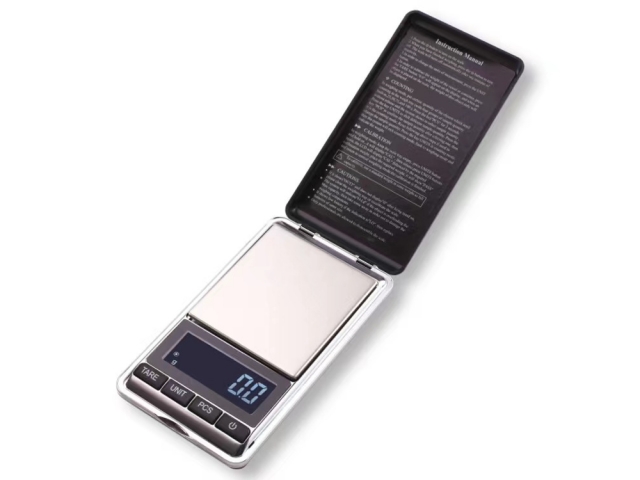
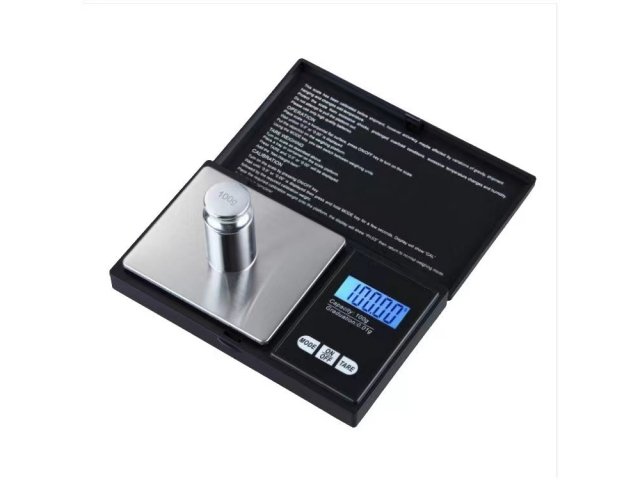
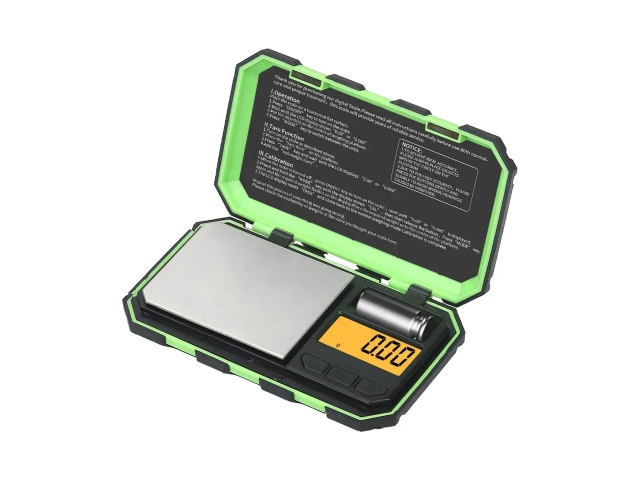
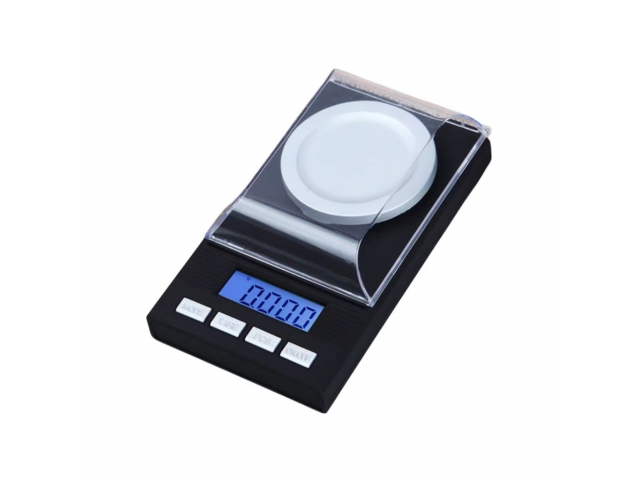
Digital pocket scales are among the most popular options for jewelers and enthusiasts due to their portability and ease of use. As their name suggests, these scales are compact enough to fit in a pocket or a small tool kit, making them ideal for on-the-go measurements—such as at gem shows, client meetings, or when traveling. Most digital pocket scales have a weighing capacity ranging from 0.1 grams to 500 grams, with a precision level of 0.001 grams (1 milligram) to 0.1 grams.
These scales typically feature a digital display that shows the weight in multiple units, including grams, carats, ounces, and pennyweights—adding to their versatility. They are powered by batteries, which makes them convenient for use in locations without access to electricity. However, their compact size means that they have a smaller weighing platform, which may not be suitable for larger jewelry pieces. Additionally, while they offer good precision for most everyday tasks, they may not be as accurate as larger, more advanced scales for extremely precise measurements.
2. Benchtop Digital Scales
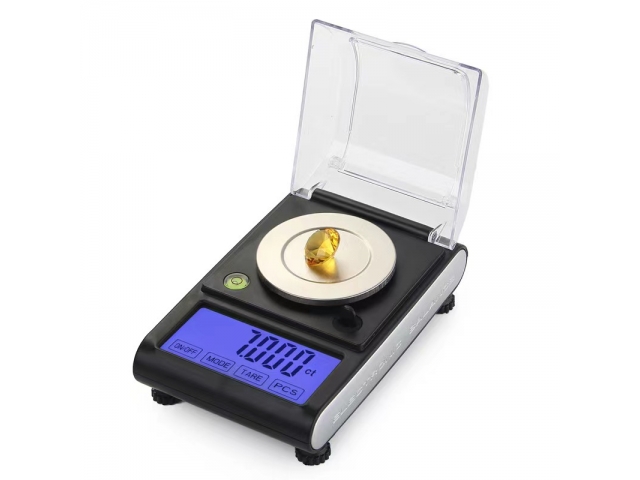
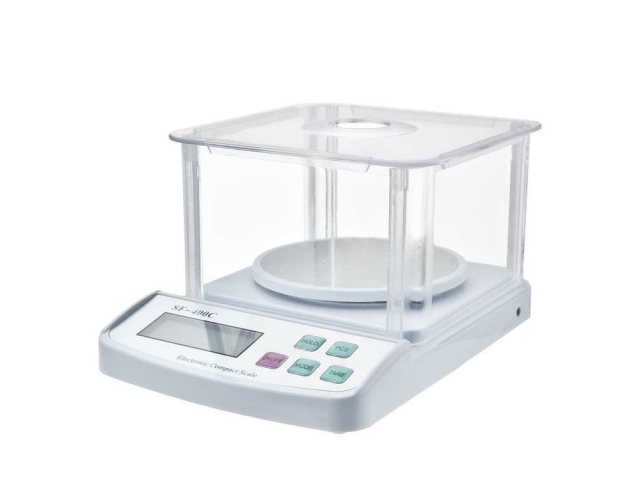
Benchtop digital scales are designed for stationary use in a workshop or store. They are larger and more robust than pocket scales, with a larger weighing platform that can accommodate bigger jewelry pieces, such as bracelets, necklaces, or even small batches of gemstones. Benchtop scales offer higher precision, often with a readability of 0.0001 grams (0.1 milligrams), making them suitable for professional jewelers who need the utmost accuracy.
Many benchtop scales come with additional features that enhance their functionality, such as tare function (which allows the user to subtract the weight of a container), unit conversion, and automatic shut-off to conserve battery life (though some models can also be plugged into an electrical outlet). They are also more durable than pocket scales, with a sturdy construction that can withstand regular use in a busy workshop. However, their size and weight make them impractical for portability.
3. Mechanical Balance Scales
Mechanical balance scales, also known as beam scales, are traditional weighing tools that have been used in jewelry making for centuries. These scales work by balancing the weight of the object being measured against a set of known weights. They consist of a beam with a fulcrum in the center, a pan on one end for the object, and a set of weights that are placed on the other end or along the beam to achieve balance.
While mechanical balance scales lack the convenience of digital displays, they are valued for their reliability and durability. They do not require batteries or electricity, making them useful in areas with inconsistent power supply. Additionally, many jewelers and collectors appreciate the tactile nature of using a mechanical scale, which allows for a more hands-on approach to measurement. However, they are slower to use than digital scales and require a higher level of skill to operate accurately. They also tend to be larger and heavier than digital pocket scales, though some smaller models are available for personal use.
4. Analytical Balances
Analytical balances are the most precise type of jewelry scale, designed for applications that require extremely accurate measurements—such as weighing very small gemstones or determining the purity of precious metals. These scales have a readability of 0.00001 grams (0.01 milligrams) and are often used in laboratories and high-end jewelry workshops.
Analytical balances are highly sensitive to environmental factors, such as temperature changes, air currents, and vibrations. As a result, they are typically housed in a glass enclosure to protect them from these influences. They also require a stable, level surface to operate correctly. Due to their high precision and specialized design, analytical balances are more expensive than other types of jewelry scales, making them impractical for casual users or those with a limited budget.
How to Choose the Right Jewelry Scale: Key Factors to Consider
Selecting the right jewelry scale requires careful consideration of several factors to ensure that it meets your specific needs. Below are the key factors to keep in mind when making a purchase:
1. Precision and Readability
The most important factor to consider when choosing a jewelry scale is its precision, which is determined by its readability (the smallest unit of weight that the scale can detect). For most casual users, such as hobbyists or collectors who weigh jewelry occasionally, a scale with a readability of 0.01 grams (10 milligrams) may be sufficient. However, professional jewelers who work with precious metals and gemstones on a daily basis will need a scale with higher precision—ideally 0.001 grams (1 milligram) or better. If you plan to weigh very small items, such as tiny gemstones or thin gold wires, an analytical balance with a readability of 0.0001 grams (0.1 milligrams) may be necessary.
2. Weighing Capacity
Weighing capacity refers to the maximum weight that the scale can measure. It is important to choose a scale with a capacity that is appropriate for the items you plan to weigh. For example, if you primarily weigh small items like rings or earrings, a scale with a capacity of 100 grams may be sufficient. However, if you need to weigh larger pieces like necklaces or bracelets, you will need a scale with a higher capacity—such as 500 grams or 1 kilogram. It is also a good idea to choose a scale with a capacity that is slightly higher than the maximum weight of the items you plan to measure, to avoid overloading the scale (which can damage it and affect its accuracy).
3. Portability
Consider how often you will need to use the scale away from your workshop or home. If you frequently attend gem shows, meet clients off-site, or travel with your tools, a portable digital pocket scale is the best option. These scales are lightweight and compact, making them easy to carry in a bag or pocket. On the other hand, if you only need to use the scale in a fixed location, a benchtop or analytical balance may be more suitable, as they offer higher precision and a larger weighing platform.
4. Features and Functionality
Different jewelry scales come with a variety of features that can enhance their usability. Some of the most useful features to look for include:
- Tare function: This allows you to place a container on the scale, reset the display to zero, and then weigh the contents of the container without including the weight of the container itself. This is particularly useful for weighing loose gemstones or small pieces of metal that are difficult to place directly on the scale.
- Unit conversion: The ability to switch between different units of weight (grams, carats, ounces, pennyweights) is essential for versatility, especially if you work with clients or suppliers who use different measurement systems.
- Digital display: A clear, easy-to-read digital display ensures that you can quickly and accurately read the weight measurement. Some displays also have backlighting, which is useful for working in low-light conditions.
- Automatic shut-off: This feature conserves battery life by turning the scale off after a period of inactivity. However, it is important to choose a scale with an adjustable shut-off time, as some models may turn off too quickly during extended use.
5. Durability and Build Quality
A jewelry scale is an investment, so it is important to choose one that is durable and well-built. Look for scales made from high-quality materials, such as stainless steel or heavy-duty plastic, that can withstand regular use. The weighing platform should be smooth and flat, with no scratches or dents that could affect the accuracy of measurements. Additionally, check the quality of the buttons or controls—they should be responsive and easy to use.
6. Environmental Considerations
If you plan to use the scale in an environment with temperature fluctuations, air currents, or vibrations (such as a busy workshop or a outdoor gem show), it is important to choose a scale that can withstand these conditions. Benchtop scales and analytical balances often come with features to minimize the impact of environmental factors, such as glass enclosures or anti-vibration feet. Digital pocket scales are more susceptible to environmental interference, so they may not be the best choice for use in unstable conditions.
Proper Usage and Maintenance of Jewelry Scales: Ensuring Long-Term Accuracy
Even the most high-quality jewelry scale will lose accuracy over time if it is not used and maintained properly. Below are some tips to help you get the most out of your scale and ensure that it remains accurate for years to come:
1. Use the Scale on a Stable, Level Surface
The surface on which you place the scale has a significant impact on its accuracy. Always use the scale on a flat, stable surface that is free from vibrations. Avoid placing the scale on uneven surfaces, such as a wobbly table or a carpeted floor, as this can cause the measurements to be inaccurate. If you are using a benchtop or analytical balance, consider using a anti-vibration mat to further stabilize the scale.
2. Calibrate the Scale Regularly
Calibration is the process of adjusting the scale to ensure that it measures weight accurately. Over time, factors such as temperature changes, wear and tear, and transportation can cause the scale to drift out of calibration. It is recommended to calibrate your jewelry scale at least once every few months, or more frequently if you use it heavily or transport it often.
Most digital scales come with a calibration function and a set of calibration weights. To calibrate the scale, follow the manufacturer’s instructions: typically, you will turn on the scale, press the calibration button, place the appropriate calibration weight on the platform, and wait for the scale to adjust. Mechanical balance scales can be calibrated by adjusting the fulcrum or the zero point of the beam.
3. Keep the Scale Clean
Dirt, dust, and residue from jewelry or metals can accumulate on the weighing platform, affecting the accuracy of measurements. It is important to clean the scale regularly using a soft, dry cloth or a small brush (such as a makeup brush) to remove any debris. Avoid using water or harsh chemicals to clean the scale, as this can damage the electronics or the mechanical components. If the scale has a glass enclosure (like an analytical balance), you can clean it with a mild glass cleaner and a soft cloth.
4. Avoid Overloading the Scale
Overloading the scale beyond its maximum capacity can cause permanent damage to the load cell (the component that detects weight) or the beam (in mechanical scales). This damage will result in inaccurate measurements and may render the scale unusable. Always check the maximum capacity of the scale before weighing an item, and never place an item that is heavier than the scale’s capacity on the platform.
5. Store the Scale Properly
Proper storage is essential to protect the scale from damage when it is not in use. Digital pocket scales should be stored in a protective case or pouch to prevent scratches and damage from impact. Benchtop and analytical balances should be covered with a dust cover when not in use. Avoid storing the scale in extreme temperatures, humidity, or dusty environments, as these can damage the electronics or the mechanical components.
6. Handle the Scale with Care
Jewelry scales are delicate instruments that require careful handling. Avoid dropping or knocking the scale, as this can damage the internal components and affect its accuracy. When transporting the scale, use a protective case and avoid placing heavy objects on top of it. Additionally, avoid touching the weighing platform with your fingers as much as possible, as oils and moisture from your skin can leave residue and affect measurements.
The Future of Jewelry Scales: Technological Advancements
As technology continues to advance, jewelry scales are becoming more sophisticated and user-friendly. One of the most notable trends in recent years is the integration of smart features into digital scales. Some modern jewelry scales can connect to smartphones or tablets via Bluetooth, allowing users to store and track measurements digitally. This is particularly useful for professional jewelers who need to keep records of their work or share measurements with clients.
Another advancement is the development of more compact and portable high-precision scales. Manufacturers are now able to produce pocket scales with readabilities as low as 0.001 grams, combining the portability of traditional pocket scales with the precision of benchtop models. Additionally, improvements in battery technology have extended the battery life of digital scales, making them more convenient for on-the-go use.
Environmental sustainability is also becoming a focus in the design of jewelry scales. Many manufacturers are now using eco-friendly materials and energy-efficient components in their scales, reducing their carbon footprint. Some models also come with rechargeable batteries, eliminating the need for disposable batteries and reducing waste.
Conclusion
Jewelry scales are more than just measuring tools—they are essential instruments that uphold the integrity, accuracy, and value of the jewelry industry. Whether you are a professional jeweler, a collector, an artisan, or a casual enthusiast, choosing the right jewelry scale and using it properly is crucial for ensuring accurate measurements, avoiding financial losses, and maintaining the quality of your work.
By understanding the different types of jewelry scales available, considering the key factors when making a purchase, and following proper usage and maintenance practices, you can select a scale that meets your specific needs and enjoy reliable, accurate measurements for years to come. As technology continues to advance, the future of jewelry scales looks promising, with even more precise, portable, and user-friendly models set to emerge—further enhancing the precision and efficiency of the jewelry trade.
Learn more about digital jewelry scale, pocket jewelry scale, mini jewelry scale, jewelry weighing scale, precision jewelry scale, digital pocket jewelry scale, electronic jewelry scale, gram jewelry scale, small jewelry scale, high precision jewelry scale, portable jewelry scale, jewelry scale digital, mini digital jewelry scale, jewelry scale for gold, compact jewelry scale, digital jewelry weighing scale, jewelry scale grams, pocket digital jewelry scale, jewelry scale for diamonds, jewelry scale with lcd display, micro jewelry scale, jewelry scale battery operated, usb rechargeable jewelry scale, jewelry scale for gemstones, professional jewelry scale, jewelry scale accurate, digital gram jewelry scale, jewelry scale for silver, pocket scale for jewelry, jewelry scale stainless steel, mini pocket jewelry scale, jewelry scale with tare function, electronic digital jewelry scale, jewelry scale for coins, jewelry scale lightweight, jewelry scale for precious metals, digital precision jewelry scale, jewelry scale easy to carry, small digital jewelry scale, jewelry scale for jewelry making, jewelry scale backlight display, jewelry scale for weighing gems, multi-function jewelry scale, jewelry scale for home use, jewelry scale for retail, digital jewelry scale for gold, jewelry scale non-slip, jewelry scale for small items, high accuracy jewelry scale, pls contact us.
