





Changzhou Veidt Weighing Co., Ltd. © 2022 ALL RIGHTS RESERVED Privacy Policy | Calibration Weight | Test Weights | Cast Iron Weights | Standard Weights | Laboratory Weights | XML | SITEMAP
Product Category
Density Balance
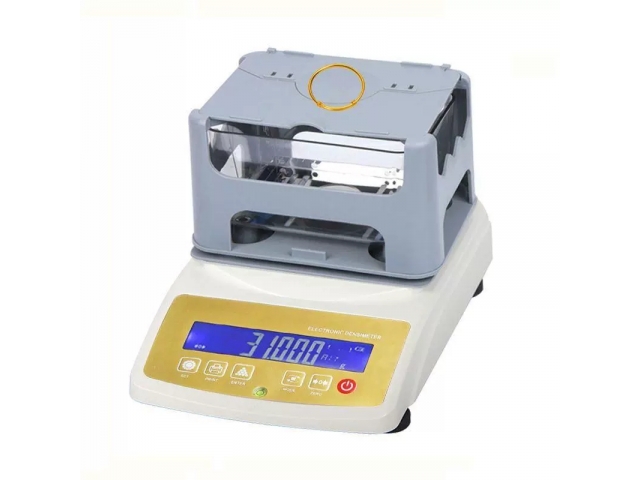
Veidt Weighing is a Density Balance factory in china. A density balance is a precision instrument specifically used to measure the density of solids and liquids. It calculates the density of a substance by combining the principles of mass measurement and volume measurement. Unlike ordinary scales that can only measure mass, density balances integrate weighing systems and volume measurement devices, which can directly provide the density value of substances, greatly simplifying the tedious process of measuring mass and volume separately in traditional density measurements.
The core working principle of modern density balances is based on Archimedes' principle - an object immersed in a fluid will experience upward buoyancy, which is equal to the weight of the object displacing the fluid. A density balance automatically calculates the volume of an object by measuring the difference between its weight in air and its weight when immersed in a known density liquid (usually water or alcohol), and then combines it with mass data to obtain its density.
The main types and technical characteristics of density balances
Electronic density balance
The electronic density balance is currently the most advanced density measurement equipment, using high-precision weighing sensors and microprocessor control systems. This type of balance usually has the following characteristics:
The resolution can reach 0.0001g, meeting the high-precision measurement requirements
Built in temperature compensation system to reduce the impact of environmental temperature changes on measurement
Equipped with dedicated software, it can achieve automatic data recording and analysis
Most models support automatic conversion of multiple density units (g/cm ³, kg/m ³, etc.)
Desktop and portable density balances
According to different usage scenarios, density balances can be divided into:
Laboratory desktop density balance: high accuracy, comprehensive functions, suitable for scientific research and quality inspection departments
Portable density balance: small in size and light in weight, suitable for on-site testing and teaching demonstrations
Multi functional density balance
High end density balances often integrate multiple measurement functions:
Solid density measurement mode
Liquid density measurement mode
Measurement of apparent density of porous materials
Specific gravity measurement function
Concentration measurement function
When choosing a density balance, attention should be paid to the following technical indicators:
Weighing range: ranging from a few grams to several thousand grams, depending on the sample size
Accuracy: typically 0.001g to 0.0001g
Repeatability: The repeatability error of a high-quality density balance should be less than 0.005g/cm ³
Temperature control: Some high-end models have a constant temperature function to ensure measurement stability
Data interface: USB, Bluetooth and other connection methods facilitate data transmission
Application areas of density balance
Materials Science Research
Density is one of the fundamental physical properties of materials, and researchers use density balances to accurately measure the density characteristics of new materials, providing key data for material development.
Quality Control and Testing
In industries such as plastics, rubber, metals, ceramics, etc., density measurement is an important part of product quality control, and a density balance can quickly detect whether a product meets standards.
Jewelry appraisal and precious metal testing
The jewelry industry uses density balances to distinguish the authenticity of gemstones and the purity of precious metals, with different gemstones and metals having characteristic density values.
Food and pharmaceutical industry
Monitoring changes in the density of food raw materials can evaluate quality, while the pharmaceutical industry uses density balances to ensure the accuracy of drug excipient ratios.
Teaching and Research
University laboratories use density balances for physics and chemistry experimental teaching, cultivating students' cognitive ability towards material properties.
Operation steps for using a density balance
Preparation work:
Calibrate the balance to ensure that the instrument is level
Prepare a liquid with a known density (usually distilled water or alcohol)
Clean the measuring container and sample holder
Solid density measurement:
Place the sample on the weighing plate and measure the weight in the air (W ₁)
Immerse the sample in liquid and measure the apparent weight (W ₂)
Instrument automatically calculates density: ρ=W ₁/(W ₁ - W ₂) × ρ liquid
Liquid density measurement:
Use specialized liquid measuring devices
Measure the weight of an empty container and the weight after filling it with liquid
Instrument calculates liquid density based on known volume
Data recording and analysis:
Record measurement results and environmental conditions
Perform necessary repeated measurements to ensure data reliability
Export data to computer for further analysis
To ensure the long-term stability and measurement accuracy of the density balance, the following maintenance work needs to be carried out regularly:
Daily cleaning: Clean the measuring platform and accessories promptly after use to prevent sample residue
Regular calibration: Perform professional calibration according to the manufacturer's recommended cycle, or recalibrate when the usage environment changes significantly
Environmental control: Keep the laboratory temperature constant (recommended 20-25 ℃), avoid direct sunlight and strong airflow
Accessory inspection: Regularly check whether the hanging basket, bracket and other accessories are deformed or damaged
Seismic protection: Avoid severe vibrations, turn off the power and cover with a dust cover when not in use
Before purchasing a density balance, the following factors should be considered:
Measurement requirement: Clearly define the type, size, and density range of frequently tested samples
Accuracy requirement: Choose the appropriate accuracy level according to the application scenario, without blindly pursuing high accuracy
Budget constraints: Balancing price and performance, considering long-term usage costs
Brand and Service: Choose a reputable brand to ensure after-sales service and parts supply
Extended functionality: Evaluate potential additional features that may be needed in the future, such as data interfaces, special measurement modes, etc
As a precision physical property measuring instrument, the proper use and maintenance of a density balance are crucial for obtaining accurate and reliable measurement results. With the increasing demand for materials science and industrial testing, density balance technology will continue to develop, providing more accurate and convenient density measurement solutions for scientific research and industrial production.
Learn more about electronic density balance, digital density balance, laboratory density balance, density balance calibration, high precision density balance, density balance for solids, density balance for liquids, density balance weight, density balance accuracy, portable density balance, density balance calibration standard, density balance specification, density balance maintenance, density balance verification, density balance for plastic, density balance accessories, density balance calibration procedure, density balance for glass, density balance sensitivity, density balance price, density balance for rubber, density balance error, density balance calibration weight, density balance user manual, density balance for chemicals, density balance calibration service, density balance parts, density balance for pharmaceutical, density balance for metal, density balance traceability, density balance for food, density balance calibration frequency, density balance for beverage, density balance calibration method, density balance for oil, density balance calibration kit, density balance for cosmetics, density balance calibration check, density balance for textile, density balance repeatability test, density balance for building materials, density balance temperature compensation, density balance for quality control, density balance calibration record, density balance for research laboratory, density balance anti-corrosion, density balance linear calibration, density balance calibration verification standard, pls contact us.
In the vast field of precision measurement and material analysis, density stands as one of the most fundamental physical properties of matter, carrying critical information about material composition, internal structure, purity, and physical state. Whether in scientific research laboratories, industrial production lines, material quality inspection, or daily experimental teaching, the accurate acquisition of density data lays a solid foundation for scientific judgment, process optimization, and quality control. Among various tools designed for density testing, the density balance has become an indispensable instrument in multiple industries due to its stable performance, straightforward operation logic, and high compatibility with different sample types. Unlike simple weighing equipment that only measures mass, the density balance integrates the core principles of physics and modern precision mechanics, realizing the seamless conversion between mass, volume, and density, and solving the long-standing difficulties in measuring the density of irregular solids, viscous liquids, porous materials, and other special samples.
To understand the working mechanism of the density balance, we must first return to the basic physical laws that support its core functions, namely Archimedes' principle and the fundamental definition of density. Density is defined as the ratio of the mass of a substance to its volume, and mathematically, it can be expressed as a simple relational formula, but in actual measurement, the volume of many substances is difficult to measure directly with conventional tools, which is the biggest obstacle to manual density calculation. The emergence of the density balance perfectly breaks through this bottleneck by combining the traditional balance weighing function with the physical principle of buoyancy, converting the difficult volume measurement into an easy-to-operate weighing process. According to Archimedes' principle, an object immersed in a stationary fluid will receive an upward buoyant force, and the magnitude of this buoyant force is equal to the weight of the fluid displaced by the object. Based on this law, the density balance designs a set of dedicated measurement components, allowing operators to quickly obtain two sets of key data: the mass of the sample in the air and the apparent mass of the sample when completely immersed in a standard liquid with known density. Through the fixed calculation logic inside the instrument, these two sets of data can be quickly converted into accurate density values without manual complex calculation, greatly improving the efficiency and accuracy of density measurement.
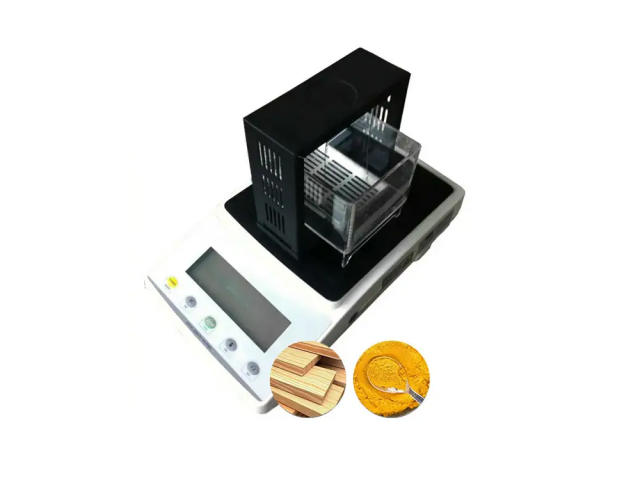
The structural design of the density balance is carefully optimized around its measurement needs, integrating stability, precision, and ease of operation into one. At its core, the instrument consists of several key modules: the main weighing body, the dedicated density measurement accessory set, the data processing system, and the environmental adaptation component. The main weighing body inherits the high-precision weighing characteristics of professional precision balances, equipped with sensitive sensing elements that can capture tiny mass changes, ensuring the reliability of the initial weighing data. The density measurement accessory set is the most distinctive part of the density balance, including sample brackets, immersion hooks, liquid carrying containers, anti-bubble tools, and other parts. These accessories are made of materials with stable physical and chemical properties, which will not react with common samples and standard liquids, nor will they affect the measurement results due to their own weight changes or deformation. For different sample forms, the accessory design has strong flexibility: for solid samples, whether they are massive, granular, or powdery, there are corresponding bearing structures to ensure complete immersion without contact with the inner wall of the liquid container; for liquid samples, special sampling devices can avoid liquid volatilization and splashing during the measurement process, ensuring the consistency of each measurement.
The data processing system of the density balance is another highlight of its performance improvement. Early mechanical density balances required operators to record weighing data manually and then substitute them into formulas for calculation, which was not only inefficient but also prone to human errors such as recording mistakes and calculation deviations. With the continuous integration of electronic technology and measurement equipment, modern density balances are mostly equipped with intelligent data processing modules, which can automatically complete data collection, calculation, and display after the operator completes the fixed operation steps. Some advanced models can also store multiple sets of measurement data, support repeated viewing and comparison, and reduce the workload of data sorting. In addition, the instrument is also designed with a humanized operation interface, with clear indication prompts and simple operation buttons, so that even operators without professional and in-depth theoretical background can quickly master the use skills after simple training, reducing the impact of human factors on measurement results. The environmental adaptation component mainly includes a level adjustment device and a shockproof base, which can offset the impact of slight environmental vibrations and uneven placement on the measurement, maintaining the stability of the instrument during operation and further improving the accuracy of density detection.
The operation process of the density balance follows a standardized and step-by-step logic, and strict compliance with operational norms is the key to obtaining accurate measurement data. Before starting the formal measurement, the preparatory work is particularly important, which directly determines the validity of the subsequent data. First, the operator needs to place the density balance in a stable, dry, and ventilated environment, away from direct sunlight, heat sources, and air flow areas, to avoid environmental temperature changes and air disturbances affecting the sensitivity of the instrument. Then, adjust the level of the instrument through the base adjustment feet until the level indicator is in the standard position, ensuring that the weighing system is in a horizontal state. Next, preheat the instrument according to the usage requirements, allowing the internal sensing elements to enter a stable working state, and perform zero calibration to eliminate the influence of the instrument's own accessories and residual errors on the measurement. After the preparatory work is completed, select the appropriate standard liquid according to the properties of the sample to be tested, ensuring that the standard liquid does not react with the sample, has stable density, and can fully immerse the sample without causing dissolution or swelling of the sample.
For solid sample measurement, the operation steps are more detailed and require careful operation. First, place the solid sample on the weighing pan of the density balance to measure its mass in the air, wait for the data to stabilize and record the value; then, transfer the sample to the dedicated immersion bracket, gently immerse it into the standard liquid, and use a special tool to remove the bubbles attached to the surface of the sample, because the existence of bubbles will increase the buoyancy received by the sample, leading to deviations in the apparent mass measurement and ultimately affecting the accuracy of the density result. After confirming that there are no bubbles on the sample surface and the sample is completely suspended in the liquid without touching the bottom and inner wall of the container, read and record the apparent mass value of the sample in the liquid. At this point, the internal system of the density balance will automatically calculate the density value of the sample based on the built-in formula and the input standard liquid density, and display it on the operation interface in a clear form. For liquid sample measurement, the principle is similar but the operation details are different: usually use a standard solid with fixed density and volume as the reference medium, measure the buoyancy of the standard solid in the liquid to be tested, and then reverse calculate the density of the liquid to be tested through the system, which is suitable for the density detection of various transparent, translucent, and viscous liquids.
One of the outstanding advantages of the density balance is its wide range of application scenarios, covering almost all fields related to material density testing, and playing an irreplaceable role in different industrial chains and research directions. In the field of scientific research and teaching, density balances are basic equipment in physics, chemistry, materials science, geology, and other laboratories. In scientific research, researchers rely on accurate density data to analyze the composition changes of new materials, study the relationship between material density and mechanical properties, thermal properties, and other physical indicators, and provide data support for the research and development of new materials and the optimization of material formulas. In experimental teaching, density balances are intuitive teaching tools that help students understand and verify Archimedes' principle, master the definition and measurement method of density, connect theoretical physical knowledge with practical operation, and cultivate students' practical ability and scientific thinking. For irregular samples that cannot be measured by conventional volume tools, the density balance can easily complete the measurement, allowing students to deeply understand the practical application value of physical principles.
In the field of industrial production and quality control, the density balance is a key instrument for ensuring product quality and stabilizing production processes. In the building materials industry, the density of raw materials such as cement, sand, stone, and ceramic blanks is closely related to the strength, compactness, and durability of finished building materials. By detecting the density of raw materials and semi-finished products, production enterprises can adjust the production formula in a timely manner, control the proportion of raw materials, and avoid quality problems such as insufficient strength and easy cracking of finished products. In the polymer material industry, including plastics, rubber, fiber, and other products, density changes reflect the uniformity of material mixing, the degree of cross-linking, and the content of additives. Strict density detection can help enterprises screen unqualified raw materials, optimize the processing technology, and ensure that the performance of finished products meets production requirements. In the metal and alloy processing industry, density detection is an important means to judge the purity of metals and the uniformity of alloy composition; even slight changes in density may indicate the presence of impurities, pores, or uneven smelting inside the metal, which helps enterprises find potential quality hazards in advance and avoid losses caused by unqualified products flowing into the market.
In addition, the density balance also has important application value in the fields of gemstone identification, food processing, and environmental detection. In gemstone identification, different types of gemstones have fixed density ranges, and density detection through a density balance is an auxiliary method to distinguish natural gemstones, artificial imitations, and mixed gemstones, providing objective data support for gemstone value evaluation. In the food processing industry, the density of liquid products such as beverages, syrup, and edible oil is related to the concentration of products, the proportion of raw materials, and the stability of the product state. Regular density detection can help food production enterprises control the concentration of products within a qualified range, ensure the taste and quality consistency of products, and meet production and consumption standards. In environmental detection, density measurement of soil, water samples, and pollutants can help testing personnel analyze the composition of environmental samples, judge the content of impurities and pollutants in soil and water, and provide basic data for environmental monitoring and pollution control work. The multi-scenario adaptability of the density balance stems from its flexible measurement design and stable data output, which can meet the diversified density testing needs of different fields without excessive transformation of the instrument.
Although the density balance has stable performance, long-term use and improper operation may lead to data deviation and instrument damage, so scientific daily maintenance and regular calibration are essential to extend the service life of the instrument and maintain measurement accuracy. Daily maintenance mainly focuses on the cleaning and protection of the instrument and accessories. After each use, the weighing pan, immersion bracket, liquid container, and other parts should be cleaned in a timely manner to remove residual samples, liquid stains, and dust, avoiding corrosion of accessories and cross-contamination of subsequent samples. When cleaning, use mild cleaning agents and soft tools to avoid scratching the surface of precision parts and affecting the sensitivity of the instrument. The instrument should be kept in a dry environment when not in use, and a dust cover can be added to prevent dust from entering the internal sensing system; at the same time, avoid placing heavy objects on the weighing pan to prevent permanent deformation of the sensing element.
Regular calibration is a key link to ensure the accuracy of density balance measurement data. With the increase of service time, the internal sensing elements of the instrument may have slight drift, and the accuracy of measurement will be affected if not calibrated in a timely manner. Calibration work needs to be carried out according to a fixed cycle, using standard weights and standard density samples for calibration, to ensure that the weighing data and density calculation results of the instrument are within the allowable error range. During calibration, strictly follow the instrument's operating instructions, complete each calibration step in strict accordance with the norms, and record the calibration data for future reference. If the instrument is moved, dropped, or shows obvious data deviation during use, calibration should be carried out immediately instead of waiting for the regular calibration cycle, so as to avoid inaccurate measurement data affecting the normal progress of work. In addition, regular inspection of the instrument's level device, connection parts of accessories, and data display system is also necessary. Timely detection and handling of loose parts, abnormal display, and other small faults can prevent small faults from expanding into large-scale damage to the instrument and reduce maintenance costs.
With the continuous development of science and technology and the increasing demand for precision measurement in various industries, the density balance is also constantly upgrading and iterating, moving towards a more intelligent, efficient, and precise direction. In terms of technical optimization, the sensing system of the density balance is constantly improving, with higher sensitivity and stronger anti-interference ability, which can adapt to more complex working environments and further reduce the measurement error. The intelligent degree of the data processing system is also continuously enhanced: some new models can realize automatic identification of sample types, automatic selection of measurement modes, automatic data storage and transmission, and even realize remote data viewing and instrument parameter adjustment through connection with external devices, greatly improving the convenience of measurement work. In terms of material and structural design, the use of more wear-resistant, corrosion-resistant, and stable materials optimizes the structure of accessories, making the instrument suitable for measuring more special samples, such as highly corrosive chemicals, ultra-fine powder materials, and soft easily-deformable solids, expanding the application boundaries of the density balance.
At the same time, the development of density balances also pays more attention to the integration of ergonomics and environmental protection. The operation interface is more user-friendly, reducing the complexity of operation and reducing the work intensity of operators; the energy consumption of the instrument is further reduced, meeting the requirements of low-carbon and energy-saving work. In the future, with the deep integration of artificial intelligence, Internet of Things technology and measurement equipment, density balances are likely to realize automatic sample feeding, automatic measurement, automatic data analysis and other integrated functions, further reducing the involvement of manual operation and improving the efficiency and accuracy of density measurement. For various industries, the continuous progress of density balance technology means more reliable measurement data, more efficient work processes, and stronger support for material research, production optimization, and quality control.
Looking back at the application and development of density measurement technology, the density balance has evolved from a simple mechanical measurement tool to a precision instrument integrating physics, electronics, and intelligent technology, which is a microcosm of the progress of modern measurement industry. It does not rely on complex and cumbersome operation processes, nor does it need expensive supporting equipment, but relies on solid physical principles and optimized structural design to solve the core pain point of accurate density measurement of various substances. In every link of scientific research, production, teaching, and testing, the density balance silently provides accurate and reliable data support, helping relevant workers make scientific decisions, optimize processes, and control quality.
In the context of the continuous improvement of industrialization and scientific research standards, the importance of precision measurement is increasingly prominent, and the density balance, as a core equipment in the field of density measurement, will continue to play its unique advantages. For operators and managers, mastering the working principle, operational norms, and maintenance methods of density balances, using the instrument correctly and maintaining it scientifically, can give full play to the performance of the instrument and ensure the smooth progress of various measurement work. For instrument research and development personnel, the continuous exploration of technical optimization and function upgrading based on actual application needs will promote the density balance to better adapt to the changing market and work needs. From basic experimental teaching to cutting-edge material research, from daily industrial production testing to professional environmental and quality inspection, the density balance will always be an important tool in the field of precision measurement, promoting the development of various industries with stable performance and accurate measurement, and witnessing the continuous progress of modern measurement technology.
In summary, the density balance is not only a conventional instrument for measuring material density, but also a carrier of physical measurement principles and a booster for industrial and scientific research progress. Its simple and efficient measurement logic, wide application scenarios, and continuous technical iteration make it occupy a stable position in the field of precision measurement. In future development, with the continuous improvement of measurement demand and technology, the density balance will continue to optimize and upgrade, bring more convenient and accurate measurement services to various fields, and continue to contribute to the improvement of material research and production quality standards. Every operator and researcher who uses the density balance should recognize its core value, standardize operation and maintenance, and make this classic precision instrument better serve the development of modern industry and scientific research.
