





Changzhou Veidt Weighing Co., Ltd. © 2022 ALL RIGHTS RESERVED Privacy Policy | Calibration Weight | Test Weights | Cast Iron Weights | Standard Weights | Laboratory Weights | XML | SITEMAP
Product Category
Wheelchair Scale
Veidt Weighing is a Wheelchair Scale factory in china. In the realm of healthcare and daily living support for individuals with mobility impairments, the wheelchair scale stands as a pivotal yet often underrecognized tool. Unlike conventional scales that require users to stand upright, wheelchair scales are engineered to accommodate wheelchairs directly, enabling accurate weight measurement without imposing physical strain on the user. This functionality not only safeguards the dignity and comfort of people with limited mobility but also plays a critical role in clinical diagnosis, treatment planning, and long-term care management. As societies worldwide increasingly prioritize accessibility and inclusive healthcare, the development and refinement of wheelchair scales have become more important than ever.
The fundamental importance of wheelchair scales lies in their ability to address a longstanding gap in weight measurement accessibility. For individuals who rely on wheelchairs due to spinal cord injuries, muscular dystrophy, cerebral palsy, or other conditions that limit ambulation, traditional standing scales are often unusable. Attempting to transfer from a wheelchair to a standing scale can be physically demanding, risky, and embarrassing. Wheelchair scales eliminate these barriers by allowing the user to remain in their wheelchair throughout the measurement process. This not only reduces the risk of falls or injuries associated with transfers but also preserves the user’s sense of autonomy and dignity. In healthcare settings, accurate weight data is indispensable for a wide range of clinical activities. Medication dosages, for instance, are frequently calculated based on body weight, and inaccuracies can lead to ineffective treatment or adverse drug reactions. For patients with chronic conditions such as kidney disease or heart failure, regular weight monitoring is essential to track fluid retention and adjust treatment plans promptly. Wheelchair scales ensure that these critical measurements are obtained reliably, enabling healthcare providers to deliver personalized and effective care.
Beyond clinical applications, wheelchair scales also have significant implications for daily living and quality of life. In residential care facilities, group homes, and even private residences, these scales allow for convenient and regular weight checks, helping individuals and their caregivers monitor overall health and detect potential issues early. For example, unexpected weight loss or gain can be an early indicator of underlying health problems, such as malnutrition, infection, or changes in mobility status. By facilitating easy access to weight measurement, wheelchair scales empower individuals with disabilities to take a more active role in managing their health. Additionally, in public spaces such as airports, train stations, and fitness centers, the availability of wheelchair scales can enhance accessibility and inclusivity, ensuring that people with mobility impairments have the same access to services as others. This broader integration of wheelchair scales into public and private environments reflects a growing societal commitment to breaking down barriers for people with disabilities.
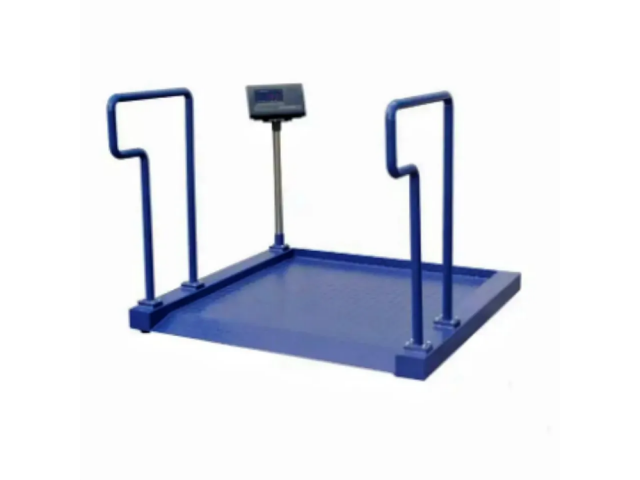
The design of wheelchair scales is a complex process that requires careful consideration of multiple factors, including user safety, measurement accuracy, ease of use, and durability. One of the primary design considerations is the platform size and weight capacity. Wheelchair scales must feature a platform large enough to accommodate a wide range of wheelchair sizes, from standard manual wheelchairs to larger power wheelchairs or bariatric wheelchairs. The weight capacity of the scale is equally important; while standard models typically support weights up to 300 kg, bariatric models may need to handle weights exceeding 500 kg to meet the needs of larger users. The platform surface is another critical element. It must be non-slip to prevent the wheelchair from sliding during measurement, reducing the risk of accidents. Many scales also feature raised edges or curbs around the platform to further enhance stability.
Accessibility to the platform is another key design aspect. Wheelchair scales should have a low profile, with a minimal height difference between the floor and the platform, to allow for easy rolling onto the scale without the need for ramps or lifts. Some models are equipped with built-in ramps, while others are designed to be flush with the floor, creating a seamless transition. The control interface of the scale is also designed with accessibility in mind. Buttons should be large and easy to press, and displays should be clear and easy to read, with large fonts and high contrast. For users with visual impairments, some scales may include audio feedback to announce the measurement results. Additionally, the scale should be easy to clean and maintain, as it is often used in healthcare environments where hygiene is a top priority. Materials such as stainless steel are commonly used for the platform and frame due to their durability, resistance to corrosion, and ease of cleaning.
Accuracy is, of course, a fundamental requirement for any scale, and wheelchair scales are no exception. To ensure precise measurements, these scales are equipped with high-quality load cells—sensors that convert force (weight) into an electrical signal. The number and placement of load cells are critical factors in ensuring accuracy, particularly when the wheelchair is not perfectly centered on the platform. Many modern wheelchair scales feature multiple load cells distributed across the platform, allowing for accurate measurements even if the weight is unevenly distributed. Calibration is also an important aspect of maintaining accuracy. Wheelchair scales should be calibrated regularly to ensure that their measurements remain reliable over time. Some models are equipped with automatic calibration features, while others require manual calibration by a trained technician.
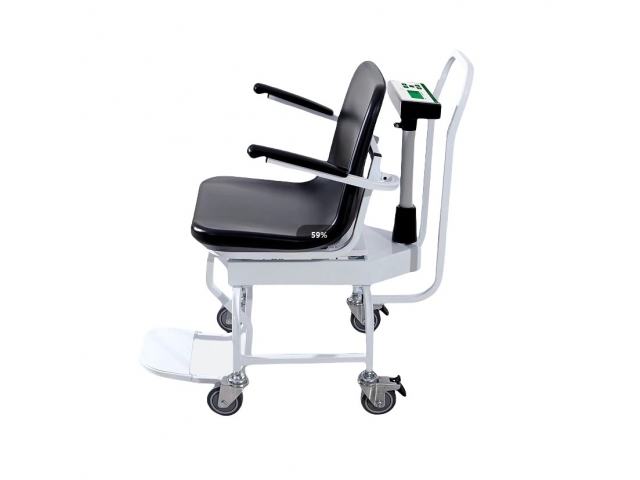
The technological evolution of wheelchair scales has been marked by significant advancements that have enhanced their functionality, accuracy, and user-friendliness. Early wheelchair scales were often large, heavy, and cumbersome, with limited features. They typically required manual operation, and measurements were displayed on analog dials, which were prone to human error. The introduction of digital technology revolutionized wheelchair scales, bringing with it greater accuracy, easier readability, and additional features. Digital displays replaced analog dials, providing clear, precise readings that were easier to interpret. Many digital scales also include features such as tare function, which allows the user to subtract the weight of the wheelchair, providing the user’s net weight directly. This eliminates the need for manual calculations, reducing the risk of error and saving time for healthcare providers and caregivers.
In recent years, the integration of wireless technology has further transformed wheelchair scales. Wireless wheelchair scales can transmit measurement data directly to electronic health record (EHR) systems, computers, or mobile devices. This eliminates the need for manual data entry, reducing the risk of transcription errors and streamlining the documentation process. For healthcare facilities, this integration improves efficiency by allowing providers to access weight data quickly and easily, facilitating better coordination of care. Wireless scales also enable remote monitoring, allowing caregivers to track a patient’s weight from a distance. This is particularly beneficial for individuals receiving home care, as it allows for regular weight checks without the need for frequent home visits by healthcare providers. Some wireless scales also include alerts that notify caregivers if a patient’s weight changes beyond a predetermined range, enabling early intervention.
Another significant technological advancement is the development of portable wheelchair scales. Traditional wheelchair scales were often fixed in place, limiting their usability to specific locations. Portable models, however, are lightweight and easy to transport, making them ideal for home care, mobile clinics, and other settings where mobility is required. These scales are typically foldable or designed to be disassembled for easy storage and transportation. Despite their portability, modern portable wheelchair scales maintain high levels of accuracy and durability, ensuring that they can be used effectively in a variety of environments. Some portable models also feature battery-powered operation, further enhancing their versatility by allowing use in areas without access to electrical outlets.
Wheelchair scales find applications in a wide range of settings, each with unique requirements and challenges. In hospitals and clinics, wheelchair scales are a standard piece of equipment in examination rooms, emergency departments, and rehabilitation centers. They are used to measure the weight of patients during routine check-ups, before and after surgical procedures, and during treatment for chronic conditions. In rehabilitation centers, weight measurement is particularly important for tracking progress during physical therapy, as changes in weight can indicate improvements in muscle mass or changes in mobility status. Wheelchair scales in these settings must be durable, easy to clean, and capable of handling high volumes of use.
Long-term care facilities, such as nursing homes and assisted living facilities, also rely heavily on wheelchair scales. Residents in these facilities often have complex health needs and require regular weight monitoring to manage chronic conditions and detect potential health issues early. Wheelchair scales in long-term care facilities must be accessible to residents with a wide range of mobility impairments, including those using power wheelchairs or bariatric equipment. They must also be easy to use for staff, who may have varying levels of training. Some facilities may also use wireless wheelchair scales to integrate weight data into resident care plans, improving the efficiency and quality of care.
Home care is another important application area for wheelchair scales. Many individuals with mobility impairments prefer to receive care in their own homes, and wheelchair scales allow for convenient weight monitoring in this setting. Portable wheelchair scales are particularly well-suited for home use, as they can be easily stored when not in use and transported if the user moves to a different location. Home care providers can use these scales to track a patient’s weight during home visits, ensuring that treatment plans are adjusted as needed. For individuals who are able to manage their own care, home wheelchair scales empower them to take control of their health by allowing for regular self-monitoring.
Public spaces and specialized facilities are also increasingly incorporating wheelchair scales to enhance accessibility. Airports, for example, may use wheelchair scales to weigh passengers with mobility impairments who require special assistance, ensuring that aircraft weight limits are respected. Fitness centers and sports facilities may also install wheelchair scales to help athletes with disabilities monitor their weight as part of their training programs. The integration of wheelchair scales into these public spaces reflects a growing recognition of the need to accommodate the diverse needs of all individuals.
Looking to the future, several emerging trends are likely to shape the development of wheelchair scales. One of the most prominent trends is the integration of artificial intelligence (AI) and machine learning technologies. AI-powered wheelchair scales could potentially analyze weight data over time, identifying patterns and trends that may indicate changes in health status. For example, an AI system could detect a gradual increase in weight that might signal fluid retention in a patient with heart failure, alerting healthcare providers to potential issues before they become severe. AI could also be used to improve the accuracy of measurements by compensating for factors such as uneven weight distribution or movement during measurement.
The continued miniaturization and轻量化 of components are also likely to drive the development of more compact and portable wheelchair scales. Advances in sensor technology have already made it possible to create smaller, more accurate load cells, and further improvements in this area could lead to wheelchair scales that are even easier to transport and store. This would be particularly beneficial for home care providers and mobile clinics, who often need to carry equipment to multiple locations. Additionally, the development of more energy-efficient batteries could extend the battery life of portable wheelchair scales, reducing the need for frequent recharging.
Another emerging trend is the focus on user-centered design, with greater emphasis on the needs and preferences of individuals with disabilities. This could involve incorporating features such as voice control for users with limited hand function, or customizable displays that can be adjusted to meet the needs of users with visual impairments. User-centered design could also lead to the development of wheelchair scales that are more aesthetically pleasing, reducing the stigma often associated with medical equipment. By involving individuals with disabilities in the design process, manufacturers can create products that are not only functional but also more inclusive and user-friendly.
The integration of wheelchair scales into broader healthcare ecosystems is also likely to expand in the future. As healthcare systems increasingly adopt digital health technologies, wheelchair scales will play a key role in the collection of real-time health data. This data can be integrated with other health metrics, such as blood pressure, blood glucose levels, and activity levels, to provide a more comprehensive picture of a patient’s health. This integrated approach to health monitoring could lead to more personalized and proactive care, improving outcomes for individuals with mobility impairments. Additionally, the use of blockchain technology could potentially enhance the security and privacy of weight data, ensuring that sensitive health information is protected.
Despite the many advancements in wheelchair scale technology, there are still challenges that need to be addressed. One of the main challenges is affordability. High-quality wheelchair scales can be expensive, making them inaccessible to many individuals and healthcare facilities in low- and middle-income countries. This lack of access can compromise the quality of care for people with mobility impairments in these regions. To address this issue, manufacturers may need to develop more cost-effective models that do not compromise on accuracy or safety. Governments and non-profit organizations can also play a role by providing funding or subsidies to make wheelchair scales more accessible.
Another challenge is the lack of standardization in some regions. While many countries have established standards for the accuracy and safety of wheelchair scales, there are still areas where such standards are lacking. This can lead to the availability of low-quality, inaccurate scales that do not meet the needs of users. Establishing and enforcing global standards for wheelchair scales would help ensure that all products on the market are safe, accurate, and reliable. Additionally, training for healthcare providers and caregivers on the proper use and maintenance of wheelchair scales is essential to ensure that they are used effectively and that measurements are accurate.
In conclusion, wheelchair scales are an essential tool that plays a critical role in enhancing accessibility and improving healthcare outcomes for individuals with mobility impairments. Their design, which prioritizes safety, accuracy, and user-friendliness, has evolved significantly over time, driven by technological advancements and a growing focus on inclusive healthcare. From hospitals and long-term care facilities to homes and public spaces, wheelchair scales are used in a wide range of settings, providing reliable weight measurement that is essential for clinical care and daily health management. Looking to the future, the integration of AI, wireless technology, and user-centered design will continue to improve the functionality and accessibility of wheelchair scales. However, challenges such as affordability and standardization must be addressed to ensure that these vital tools are accessible to all who need them. By continuing to invest in the development and refinement of wheelchair scales, we can take an important step toward creating a more inclusive and equitable healthcare system that meets the needs of all individuals, regardless of their mobility status.
Learn more about digital wheelchair scale, medical wheelchair scale, portable wheelchair scale, wheelchair weighing scale, electronic wheelchair scale, bariatric wheelchair scale, wheelchair scale for hospital, wheelchair scale for clinic, foldable wheelchair scale, wheelchair scale with ramp, wheelchair scale with lcd display, wheelchair scale for home care, heavy duty wheelchair scale, wheelchair scale for nursing home, wheelchair scale with bmi calculation, wheelchair scale with weight tracking, stainless steel wheelchair scale, wheelchair scale for rehabilitation center, wheelchair scale with bluetooth, wheelchair scale with printer, low profile wheelchair scale, wheelchair scale for disabled, wheelchair scale easy to clean, wheelchair scale with anti-slip platform, wheelchair scale battery operated, usb rechargeable wheelchair scale, wheelchair scale for pediatric use, wheelchair scale for elderly care, wheelchair scale with data logging, wheelchair scale with overload protection, wheelchair scale for outpatient clinic, wheelchair scale lightweight, wheelchair scale for assisted living facility, wheelchair scale with backlight, wheelchair scale for sports medicine, wheelchair scale for vet clinic (pet wheelchairs), wheelchair scale multi-functional, wheelchair scale for community hospital, wheelchair scale with auto-calibration, wheelchair scale for physical therapy, wheelchair scale for home health, wheelchair scale for long-term care facility, wheelchair scale for mobility impaired, wheelchair scale with side rails, wheelchair scale durable, wheelchair scale for emergency room, wheelchair scale for dialysis center, wheelchair scale for hospice care, wheelchair scale for international medical supply, pls contact us.
