





Changzhou Veidt Weighing Co., Ltd. © 2022 ALL RIGHTS RESERVED Privacy Policy | Calibration Weight | Test Weights | Cast Iron Weights | Standard Weights | Laboratory Weights | XML | SITEMAP
Product Category
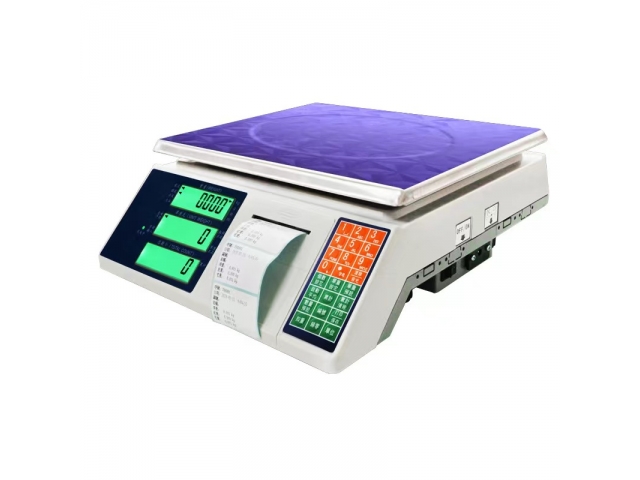
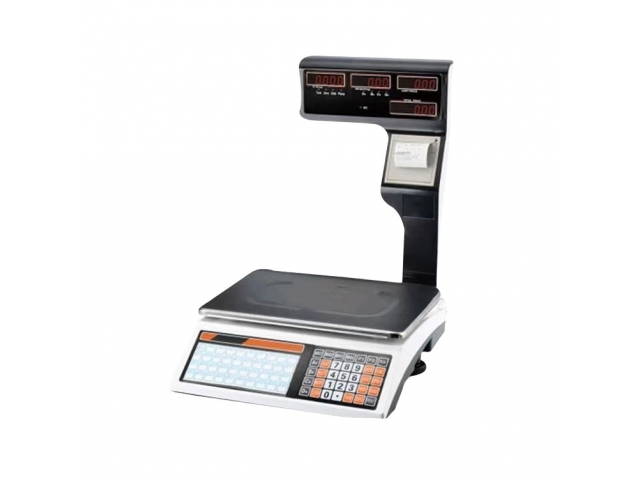
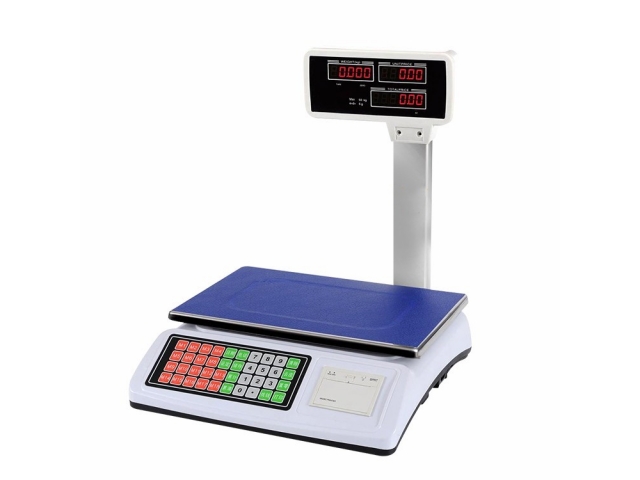
Printer Scale
In the evolving landscape of commercial and industrial operational tools, the printer scale has emerged as an indispensable integrated device that redefines the standard of weighing and data documentation workflows. Unlike traditional standalone weighing devices that only provide real-time digital weight readings or independent printers designed for general document output, this specialized equipment merges high-precision weight detection modules with compact, high-speed printing systems into a single streamlined unit, creating a seamless closed-loop process from physical weight measurement to tangible data output. This integrated design addresses a longstanding operational pain point across countless sectors: the disconnect between accurate weight acquisition and reliable, immediate record-keeping, which has historically led to manual transcription errors, delayed data filing, and inconsistent operational documentation. As modern businesses and industrial facilities increasingly prioritize standardized processes, data traceability, and operational efficiency, the printer scale has transitioned from a niche auxiliary tool to a core foundational device that supports daily operational standardization and data management across retail, logistics, manufacturing, warehousing, and quality inspection fields. Its core value lies not merely in combining two separate functions, but in optimizing the coordination between weighing sensing and printing execution to adapt to high-frequency, high-precision, and high-standard recording scenarios that modern operations demand.
The internal working mechanism of a printer scale relies on the precise coordination of multiple core functional modules, with weight sensing and signal processing serving as the primary operational foundation of the entire device. At the heart of the weighing system is a high-sensitivity load cell, a precision sensing component that converts the physical pressure generated by placed objects into continuous electrical signal fluctuations. When an object is stably positioned on the scale’s weighing platform, the load cell captures subtle pressure changes, and the device’s built-in microprocessing unit filters, amplifies, and calibrates these raw electrical signals through professional algorithm programs. This systematic signal processing eliminates interference from minor environmental vibrations, platform static, and subtle placement deviations, ultimately converting unstable analog signals into accurate, stable digital weight data. Once the weight data is confirmed and stabilized by the system, the internal control module instantly transmits the validated data to the integrated printing component, triggering automatic printing operations without the need for manual data entry or secondary device connection. This fully internalized signal transmission and functional linkage eliminates data loss and deviation caused by manual intermediate operations, fundamentally ensuring the consistency between measured weight data and printed document content.
Complementing its precision weighing system is the mature, optimized printing module embedded within the printer scale, which is specially adapted to the device’s operational characteristics and usage scenarios. Most mainstream printer scale models adopt advanced thermal printing technology, a low-energy, high-efficiency printing solution tailored for on-site data recording and label output. This technology utilizes a precision thermal print head that generates targeted heat to act on heat-sensitive printing media, including thermal receipt paper and thermal label stickers, forming clear, stable text and pattern marks without the need for ink cartridges, toner, or ribbon supplies. The structural design of the printing module prioritizes compactness and durability, allowing it to be seamlessly integrated into the scale’s overall frame without increasing excessive equipment volume or compromising the stability of the weighing platform. Meanwhile, the printing mechanism is optimized for frequent short-burst printing, which perfectly matches the high-frequency intermittent weighing and recording needs of daily operations, enabling the device to complete a full data reading and printing cycle in mere seconds. The embedded printing component also features adaptive media sensing, automatically identifying the specification and placement status of printing paper to avoid blank printing, incomplete printing, or paper jams, further improving the stability of continuous operation.
One of the most prominent practical advantages of the printer scale is its ability to eliminate human error in data recording and documentation, a common vulnerability in traditional weighing and manual recording workflows. In conventional operational modes, staff are required to observe real-time weight readings on the scale display, manually record the data on paper documents or electronic forms, and then organize and file the records uniformly. This multi-step manual process involves multiple links of data reading, transcription, and sorting, each carrying the risk of human misreading, wrong transcription, missing records, or delayed filing. In batch weighing scenarios involving a large number of items, repeated manual operations can easily lead to fatigue-induced errors, resulting in inconsistent operational data, inaccurate inventory statistics, or disputed transaction records. The printer scale completely bypasses these manual intermediate links by directly converting electronically measured weight data into printed documents, ensuring that every printed record fully corresponds to the actual weight of the measured object. Each printed receipt or label serves as an objective, authentic data voucher that locks in measurement information in real time, effectively standardizing operational recording behaviors and improving the authenticity and integrity of business data.
Operational efficiency improvement constitutes another core competitive strength of the printer scale, bringing profound optimization to the daily workflow of various application scenarios. Traditional weighing and recording processes involve independent operation of weighing equipment and printing equipment: after completing weight measurement, staff need to record data manually, then operate a separate printer to input data and print documents, a process that consumes a large amount of time in repeated equipment switching and data entry. In high-throughput operational environments such as logistics sorting centers, supermarket bulk weighing areas, and factory finished product inspection workshops, this fragmented workflow severely restricts operational speed and limits daily processing capacity. The integrated all-in-one design of the printer scale realizes one-step completion of weighing and printing. After the object weight stabilizes, the device automatically triggers printing, and staff only need to replace measured items and collect printed documents without redundant manual operations. This streamlined workflow greatly shortens the single-item processing cycle, significantly improves the overall efficiency of batch weighing and recording work, and enables enterprises and institutions to complete more operational tasks within fixed working hours, optimizing human resource allocation and reducing time costs in repetitive mechanical work.
The printer scale boasts extremely strong scenario adaptability, capable of meeting the differentiated operational needs of multiple industries through flexible functional expansion and structural optimization. In commercial retail scenarios, especially fresh food sales, bulk commodity weighing, and specialty retail fields, the device can print detailed transaction records including item weight, unit pricing, total amount, and transaction time, providing standardized consumption vouchers for customers while facilitating merchants’ daily sales statistics and financial reconciliation. In logistics and express delivery industries, the printer scale supports the output of shipping weight labels, which can be attached directly to parcels to record actual weighing data, providing accurate basis for parcel billing, sorting classification, and transit tracking. In industrial manufacturing and production processing links, the device is used for finished product weighing, semi-finished product inspection, and raw material incoming inspection, printing quality inspection records and batch weight data to support production process monitoring and product quality traceability. In warehousing and inventory management scenarios, batch weighing and printing of inventory goods helps staff complete inventory counting and data archiving efficiently, ensuring the consistency between physical inventory and system data.
In terms of structural design and user operation experience, modern printer scales fully prioritize practicality, stability, and ease of use, adapting to long-term high-intensity on-site operational environments. The overall equipment structure adopts a reinforced and dustproof design, with a sturdy weighing platform that can withstand long-term frequent placement and handling of items of different weights, effectively resisting daily wear and tear, impact, and dust accumulation. The body shell is made of high-strength, corrosion-resistant materials, which can maintain stable working performance in complex environments such as supermarket sales floors, humid factory workshops, and dusty warehousing spaces. The operation interface is designed to be simple and intuitive, with clear digital display screens and simplified function keys, allowing ordinary operational staff to master basic weighing, printing parameter setting, and equipment debugging operations through simple training. The paper replacement structure of the printing module is optimized for rapid disassembly and assembly, enabling staff to complete paper roll replacement in a short time without professional technical support, avoiding long-term equipment shutdown caused by media replacement. In addition, the device is equipped with an automatic sleep and wake-up function, which can reduce energy consumption during standby while ensuring rapid response when operational needs arise.
Data standardization and traceability, as key demands of modern refined operational management, are fully satisfied by the systematic functional design of printer scales. Traditional manual recording methods often lead to non-standard document formats, inconsistent recorded information dimensions, and disordered data filing, making it difficult to form a unified and traceable data system. The printer scale supports customized editing of printed content and format, allowing users to set fixed printing templates according to industry characteristics and operational specifications. The customizable information dimensions cover core data such as accurate weighing value, measurement time, serial number, and operational batch, as well as extended information such as operational remarks and category labels. Each printed document carries standardized and complete data information, forming unified-format operational records. Meanwhile, many printer scale models support real-time data storage and serial number coding, enabling each weighing record to correspond to an independent unique serial number. When subsequent data query, operational review, and problem tracing are required, staff can quickly locate the corresponding weighing process and printed voucher through the serial number, realizing full-process traceability of operational data and providing solid data support for enterprise refined management and operational standardization construction.
Compared with traditional weighing and recording modes, printer scales show significant advantages in operational cost control and long-term economic benefits. Although the integrated all-in-one equipment has higher functional integration than single weighing equipment, it effectively reduces the comprehensive operational cost of enterprises in the long-term use cycle. First, it eliminates the procurement cost of independent printers and auxiliary recording tools, realizing one-time equipment deployment to meet dual functional needs. Second, it greatly reduces human resource investment in manual data transcription, sorting, and filing, freeing staff from repetitive mechanical recording work and allowing them to focus on core operational links such as quality inspection, customer service, and goods sorting, improving the overall utilization efficiency of human resources. In addition, the high accuracy and error-free recording characteristics of the device avoid economic losses and operational disputes caused by manual data errors, including inconsistent settlement data, inaccurate inventory statistics, and untraceable quality problems. The stable and durable equipment performance also reduces the frequency of equipment failure maintenance and replacement, lowering daily operational maintenance costs and bringing stable and long-term economic benefits to users.
With the continuous development of intelligent technology, modern printer scales are evolving toward intelligent linkage and multi-functional integration, further expanding their operational value and application boundaries. Traditional printer scales mainly complete independent weighing and printing work, with relatively single functional output and weak data interaction capability. New-generation intelligent printer scales are equipped with diversified data interface modules, supporting stable data transmission and linkage with external management systems such as inventory management systems, cash register systems, and industrial production management platforms. The weight data measured by the device and printed record information can be automatically synchronized to the cloud or local management system in real time, realizing automatic digital archiving of operational data and eliminating manual entry of electronic data. Some advanced models also support intelligent identification and data matching, which can cooperate with peripheral identification equipment to complete automatic matching of product information and weight data, further improving the intelligence level of weighing and recording operations. The intelligent upgrade enables printer scales to change from single operational tools to important terminal nodes of enterprise digital management systems, helping enterprises realize data-based operational management.
In daily use and maintenance, printer scales feature low threshold and high stability, suitable for long-term popularization and application in various operational scenarios. The daily maintenance work of the equipment is extremely simple, mainly including regular cleaning of the weighing platform and printing outlet, inspection of the remaining amount of printing media, and regular zero calibration of the weighing system. The dustproof and anti-fouling structural design avoids the impact of daily dust and residual sundries on equipment operation, and the thermal printing module has no vulnerable consumables such as ink and toner, reducing daily maintenance and replacement work. The equipment is equipped with a perfect self-inspection function, which can automatically detect abnormal problems such as unstable weighing signals, blocked printing channels, and insufficient paper volume during operation, and feed back prompt information through the display screen, facilitating staff to quickly troubleshoot and solve problems. In terms of service life, the core sensing and printing components have excellent stability and wear resistance, which can adapt to long-term high-frequency continuous operation, ensuring long-term stable output of equipment performance and reducing the operational risks caused by equipment failure.
As all walks of life continue to advance operational standardization, digitalization, and refinement transformation, the application value and market demand of printer scales will continue to rise, becoming an essential basic equipment for modern commercial and industrial operations. The integrated design of weighing and printing perfectly fits the efficient and standardized operational needs of the new era, solving many pain points of traditional manual recording and separate equipment operation, and providing reliable technical support for data authenticity, standardization, and traceability. From retail transaction settlement and logistics parcel billing to industrial quality inspection and warehouse inventory management, printer scales are penetrating into more refined operational links, continuously optimizing enterprise workflow and improving the overall level of operational management. In the future, with the continuous innovation of intelligent sensing technology and data linkage technology, printer scales will further realize functional upgrading and scenario expansion, develop toward higher precision, stronger intelligence, and better system compatibility, and continue to empower the efficient and standardized development of various industry operations, becoming an indispensable part of modern intelligent operational systems.
