





Changzhou Veidt Weighing Co., Ltd. © 2022 ALL RIGHTS RESERVED Privacy Policy | Calibration Weight | Test Weights | Cast Iron Weights | Standard Weights | Laboratory Weights | XML | SITEMAP
Product Category
In modern industrial production, commercial circulation, and daily operational management, floor scales have evolved from simple auxiliary measuring tools into indispensable core equipment that supports standardized and efficient material management. Unlike small desktop weighing devices designed for lightweight objects, floor scales are engineered to bear heavy loads, adapt to complex placement environments, and deliver stable and consistent weighing data for bulk materials, large goods, and heavy equipment. Their widespread application has fundamentally solved the inaccuracy and inefficiency of traditional manual weighing and primitive mechanical weighing methods, laying a solid foundation for refined inventory management, standardized production processes, and safe cargo transportation in various industries. As social productivity continues to improve and industrial operation standards become increasingly rigorous, the performance, structural design, and functional expansion of floor scales are constantly optimized, making them more adaptable to diverse and complex weighing scenarios while maintaining the most essential attribute of measuring accuracy.
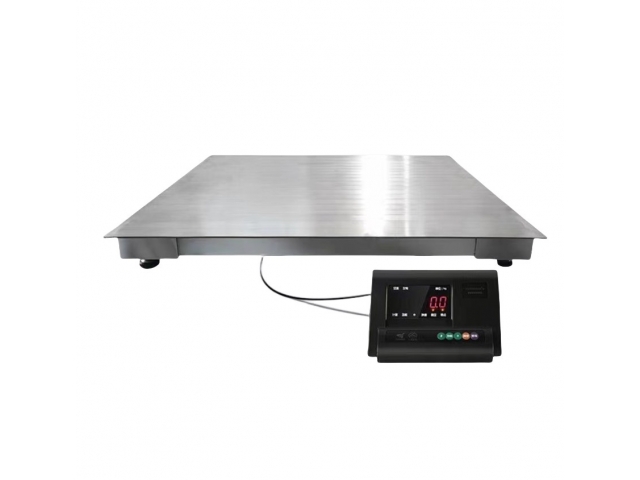
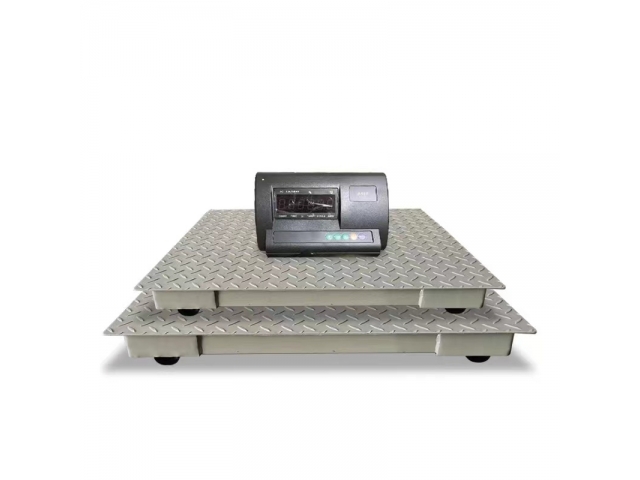
The basic structural composition of a floor scale is simple yet highly scientific, with every component designed to serve stable load bearing and precise data acquisition. The main body of the floor scale is a sturdy weighing platform, which is usually made of high-strength metal materials with excellent compression resistance, impact resistance, and corrosion resistance. This platform is required to maintain flatness and structural stability under long-term heavy pressure, avoiding deformation or tilt that may cause weighing deviations. Below the platform, the core sensing components are arranged evenly and reasonably, which are responsible for sensing the pressure generated by the placed objects and converting mechanical pressure signals into identifiable electrical signals. Supporting legs and fixed buffer structures are equipped at the bottom of the equipment, which can adjust the horizontal level of the scale body and buffer the vibration generated during placement and weighing, effectively reducing the interference of external mechanical vibration on weighing results. The matching display and data processing terminal is connected to the sensing components, responsible for amplifying, filtering, calculating, and displaying the collected electrical signals, and finally converting them into intuitive weight data for users to read and record.
The working principle of modern electronic floor scales follows a mature and reliable physical induction and signal conversion logic, which is the core guarantee of their accurate measurement performance. When an object is stably placed on the weighing platform, the gravity of the object acts uniformly on the internal sensing load cells of the scale body, causing tiny elastic deformation of the strain gauge structure inside the load cells. This subtle deformation will change the internal resistance value of the sensor, and the change of resistance will generate a corresponding weak electrical signal that is positively correlated with the weight of the object. The original electrical signal is often affected by environmental interference and has low definition, so it needs to be transmitted to the internal processor for amplification, noise reduction, and digital processing. After a series of precise algorithm calculations, the analog signal is converted into accurate digital weight information, which is presented on the display terminal in real time. The whole process is completed in a very short time, realizing instant weighing and real-time data output, and the high-sensitivity sensing design ensures that even subtle weight changes can be accurately captured and reflected.
Floor scales have extremely high scene adaptability, covering almost all industrial and commercial scenarios that require heavy-duty weighing and bulk material measurement. In industrial production workshops, floor scales are used for weighing raw materials entering the factory, semi-finished products in the production process, and finished products leaving the factory, helping production personnel accurately count material consumption and product output, and realizing precise control of production costs and output indicators. In warehousing and logistics links, they are used for incoming and outgoing cargo inspection weighing and inventory regular weighing, which facilitates enterprises to establish accurate inventory data accounts, avoid material loss and inventory deviation, and improve the efficiency of warehouse resource scheduling. In agricultural production and product circulation, floor scales can weigh bulk grain, feed, and agricultural products, providing accurate data support for agricultural product transaction settlement and material proportioning. In addition, they also play an important role in building material processing, mechanical equipment manufacturing, and waste recycling industries, meeting the heavy-duty weighing needs of different types of bulk and heavy goods.
Compared with traditional mechanical weighing equipment, modern floor scales have obvious comprehensive performance advantages in accuracy, stability, and operational convenience. Traditional mechanical scales rely on lever balance and pointer mechanical transmission for weighing, which are prone to mechanical wear, pointer jitter, and balance deviation after long-term use, resulting in gradual decline in weighing accuracy. In contrast, electronic floor scales adopt non-contact signal induction and digital calculation, with no mechanical transmission wear problem, and can maintain long-term weighing stability. In terms of operation, mechanical scales require manual observation of pointer scales and manual recording of data, which is inefficient and prone to human reading errors, while floor scales support automatic digital display, with clear and intuitive data, and can be matched with data storage and transmission functions to realize automatic recording and batch sorting of weighing data. In terms of load capacity, floor scales can be customized with different load ranges according to user needs, which can meet the weighing requirements of both medium-weight goods and super-heavy equipment, with stronger application flexibility.
Environmental adaptability is a key design dimension of floor scales, and excellent environmental resistance enables them to work stably in various harsh working conditions. Many industrial production and warehousing sites have complex environmental factors such as dust accumulation, humidity changes, and temperature fluctuation, which pose great challenges to the stability of weighing equipment. Modern floor scale products adopt sealed structural design for core sensing components and circuit parts, which can effectively block the invasion of dust, moisture, and corrosive substances, avoiding circuit short circuit, sensor failure, and data distortion caused by environmental pollution. The surface of the weighing platform is treated with special anti-corrosion and anti-rust process, which can resist the erosion of humid air, chemical volatile substances, and material residue, and maintain the flat and intact state of the platform for a long time. At the same time, the internal program of the equipment is optimized for temperature adaptation, which can automatically compensate the data deviation caused by ambient temperature changes, ensuring that the weighing accuracy will not be greatly affected in low-temperature cold environments and high-temperature hot environments.
Data processing and intelligent expansion functions are important development directions of modern floor scales, greatly improving the intelligent level of industrial weighing management. Traditional weighing equipment can only realize single weight data display, with no data storage and sorting capability, and all data statistics rely on manual work, which is difficult to adapt to the needs of modern intelligent factory management. New-type floor scales are equipped with intelligent microprocessor modules, which can automatically store a large number of weighing records, including weighing time, weight data, and material information. The equipment can also be connected with external management systems through data transmission interfaces, realizing real-time upload of weighing data to the enterprise management platform, facilitating managers to remotely view weighing information and conduct data statistics and analysis. Some advanced models support automatic tare deduction, zero tracking, and error alarm functions, which can automatically eliminate the influence of container weight and platform residual weight, and timely remind users of abnormal weighing states such as unstable placement and equipment failure, effectively reducing the occurrence of erroneous data.
Standardized installation and debugging are the prerequisites to ensure the optimal performance of floor scales, and scientific operation can maximize the equipment’s service life and weighing accuracy. Before installation, the placement ground needs to be leveled and compacted to ensure that the ground has sufficient bearing capacity and flatness, avoiding uneven ground leading to tilting of the scale body and inconsistent stress on internal sensors. During installation, the scale body should be placed stably, the supporting legs should be adjusted to make the platform completely horizontal, and the connecting lines of sensors and terminals should be arranged neatly and fixed firmly to prevent line looseness and signal interference caused by external pulling and vibration. After the installation is completed, professional debugging and calibration are required. The equipment is preheated first to make the internal circuit and sensor reach a stable working state, then the zero point is calibrated to eliminate the dead weight interference of the scale body itself, and standard weight objects are used for multiple weighing tests to adjust the internal parameters until the weighing data is completely accurate and stable. Subsequent regular debugging and calibration can offset the subtle performance drift of the equipment caused by long-term use and environmental changes, and maintain long-term measurement accuracy.
Daily maintenance and maintenance management directly determine the service life and stable operation effect of floor scales, and standardized maintenance can effectively reduce equipment failure rate and use cost. Daily cleaning is the most basic maintenance work; the surface of the weighing platform should be wiped regularly to remove accumulated dust, material residues, and dirt, avoiding long-term residue corrosion on the platform surface and blocking the sensor induction area. It is necessary to avoid using strong corrosive cleaning agents during cleaning to prevent damage to the surface anti-corrosion layer and internal circuit components. In daily use, it is forbidden to place overweight objects beyond the equipment’s load range for weighing, and avoid violent impact, stacking, and rolling on the platform, so as to prevent permanent deformation of the platform and damage to internal sensors caused by excessive instantaneous pressure. Regular inspection of equipment lines, connectors, and supporting structures is required to check for line aging, interface looseness, structural rust, and component damage, and deal with hidden dangers in a timely manner. For battery-powered floor scales, the battery power status should be checked regularly, and insufficient power should be supplemented or replaced in time to avoid inaccurate data caused by unstable power supply.
Common abnormal problems and targeted troubleshooting methods help users quickly solve equipment faults and ensure continuous and stable operation of weighing work. In daily use, the most common problem is unstable weighing data, which is usually caused by unstable placement of the scale body, foreign matter stuck at the bottom of the platform, excessive environmental vibration, or sensor dust accumulation. At this time, it is necessary to re-level the scale body, clean the foreign matter at the bottom and around the platform, and avoid working in a strong vibration environment. Another common fault is inaccurate weighing data; besides the need for recalibration, it may also be caused by long-term overload use leading to sensor performance attenuation or line signal attenuation. Users can first perform zero calibration and standard weight verification, and if the deviation still exists, professional personnel are required to inspect and replace the aging components. In addition, the failure of the display terminal to display normally is mostly due to power supply failure or line disconnection, which can be solved by checking the power connection and line connectivity. Timely troubleshooting according to abnormal phenomena can effectively reduce the downtime of equipment and ensure the continuity of production and management work.
With the continuous progress of industrial intelligence and digital technology, floor scale products are constantly iterating and upgrading, showing new development trends in performance, function, and application. In terms of performance optimization, new sensor materials and signal processing technologies are continuously applied, further improving the weighing accuracy and response speed of the equipment, and enhancing the anti-interference ability in complex environments. In terms of functional intelligence, floor scales are gradually integrated with Internet of Things technology, realizing remote equipment monitoring, automatic fault diagnosis, and unattended weighing operation, which greatly reduces manual intervention costs. In terms of structural design, the equipment is developing towards lightweight, modular, and portable design; while ensuring load-bearing performance, it is more convenient for handling, installation, and maintenance, and can adapt to mobile weighing scenarios such as temporary cargo inspection and field operation. In addition, personalized customized design has become a mainstream development direction, and enterprises can customize platform size, load range, and functional modules according to their actual application scenarios to meet diversified and differentiated weighing needs.
As a basic and important measuring device, floor scales run through all links of industrial production, commercial circulation, and material management, and their performance stability and data accuracy are closely related to the operational efficiency and management level of enterprises. From traditional mechanical weighing to modern intelligent electronic weighing, the iterative upgrading of floor scales reflects the progress of industrial measurement technology and also meets the increasingly refined market demand. In future industrial development, with the further popularization of intelligent manufacturing and digital management, floor scales will no longer be a single weighing tool, but will become an important part of enterprise data collection and intelligent management system. Through continuous technical optimization, structural improvement, and functional expansion, floor scales will provide more accurate, efficient, and intelligent weighing services for various industries, help enterprises realize fine cost control, standardized process management, and efficient resource scheduling, and continuously empower the high-quality development of modern industrial and commercial economies.
