





Changzhou Veidt Weighing Co., Ltd. © 2022 ALL RIGHTS RESERVED Privacy Policy | Calibration Weight | Test Weights | Cast Iron Weights | Standard Weights | Laboratory Weights | XML | SITEMAP
Product Category
Spoon Scale
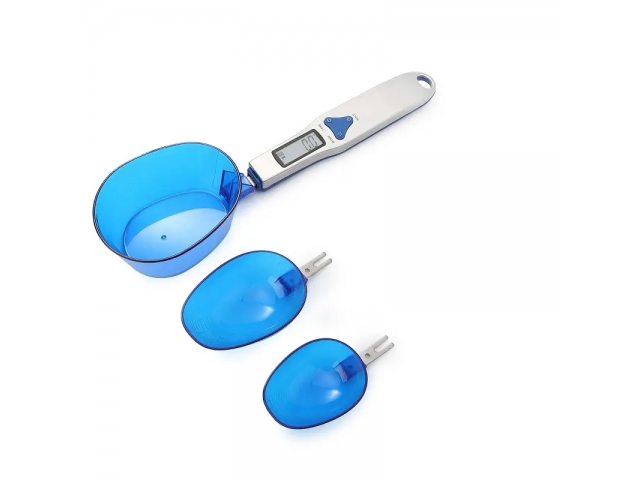
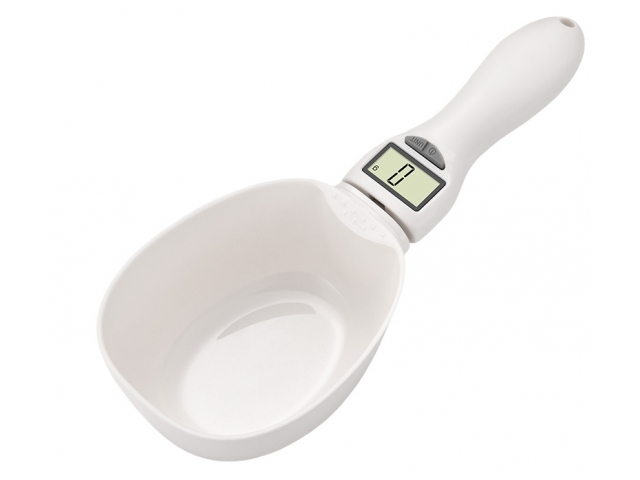
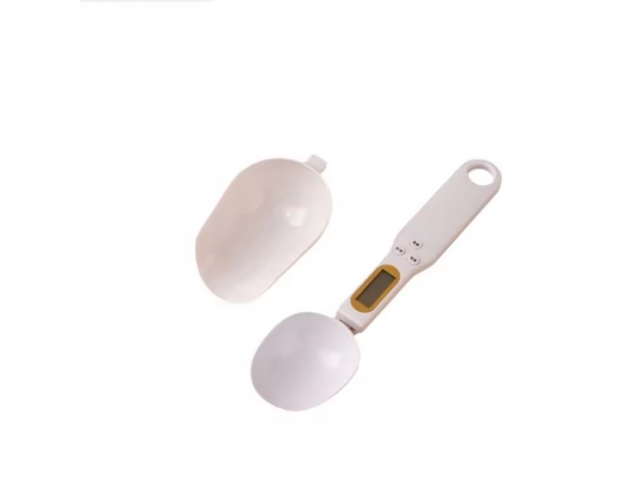
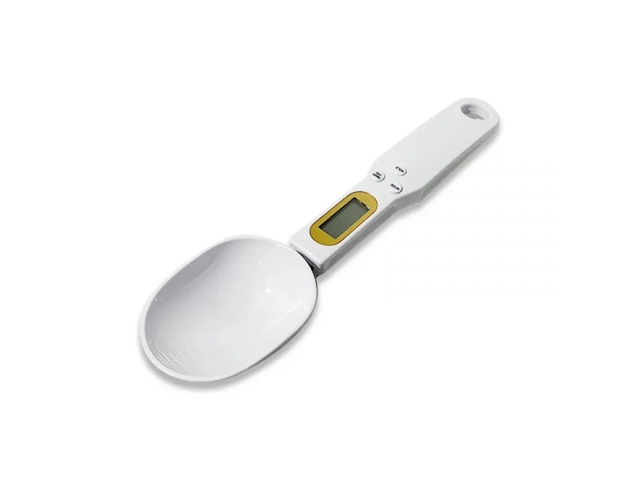
In the landscape of modern measuring tools designed for small-batch substance quantification, the spoon scale has emerged as a uniquely practical and innovative device that bridges the gap between conventional volumetric measuring utensils and high-precision weighing equipment. Unlike traditional measuring spoons that rely entirely on volume estimation and visual judgment, this specialized tool integrates a compact weighing sensor system with an ergonomic spoon-shaped container, creating an all-in-one solution for weighing powders, granules, fine particles, and low-volume liquids. Its core design philosophy centers on solving the long-standing inaccuracy problems of small-dose measurement in daily life and professional scenarios, delivering tangible improvements in operational efficiency and result consistency. Crafted with miniaturized electronic sensing components and intuitive display modules, the spoon scale is engineered to capture subtle weight changes that ordinary kitchen tools cannot detect, making it an indispensable auxiliary tool for scenarios where even minor measurement deviations can alter final outcomes. The rise of this device coincides with the growing public pursuit of refined life management and standardized professional operation, as modern users increasingly reject rough empirical measurement and demand data-supported accuracy in every dosing step.
To fully understand the value of the spoon scale, it is essential to compare its performance and applicability with traditional measuring tools that have dominated small-dose measurement for decades. Conventional plastic or metal measuring spoons, the most commonly used household tools, are manufactured with fixed volumetric specifications, yet they suffer from inherent flaws that compromise measurement accuracy. Powdered ingredients such as flour, cocoa powder, and yeast can be compacted or loosely piled when scooped, leading to significant weight discrepancies even with the same volumetric filling level; fine granules like salt, sugar, and spices are prone to gap formation during filling, further amplifying measurement errors. In contrast, the spoon scale directly measures the actual weight of substances rather than relying on volume conversion, completely eliminating the errors caused by material density differences, filling tightness, and particle stacking states. Compared with full-size desktop electronic scales, another mainstream precision measuring device, the spoon scale boasts unparalleled portability and operational convenience. Desktop scales require independent weighing trays and flat placement surfaces, and they are cumbersome to operate for tiny doses, often resulting in ingredient waste during transfer. The spoon scale’s integrated scooping and weighing structure allows users to complete sampling, weighing, and direct feeding in one continuous motion, simplifying the measurement process while avoiding material loss in transfer links, a unique advantage that makes it irreplaceable in small-dose measurement scenarios.
Household culinary scenarios represent the most extensive application field of spoon scales, thoroughly upgrading the refinement of daily cooking and baking. In traditional home cooking, the dosing of seasonings has always relied on personal experience and subjective judgment, leading to unstable flavor consistency of dishes even with the same recipe. A slight excess of salt, monosodium glutamate, or spice powder can make dishes overly strong, while insufficient dosing results in bland taste, and it is difficult for ordinary cooks to replicate stable flavor standards each time they cook. With the assistance of a spoon scale, users can accurately control the weight of various powdered and granular seasonings, realizing standardized seasoning and consistent dish flavor regardless of repeated production. This precision is even more critical in home baking, a craft that relies heavily on strict material ratio standards. Baking formulas require precise proportional collocation of flour, yeast, baking powder, sugar, and milk powder, where tiny weight deviations can directly affect the fermentation degree, expansion effect, taste texture, and appearance of finished products. Excessive yeast will cause abnormal fermentation and peculiar taste, while insufficient yeast leads to poor dough rising; inaccurate baking powder dosing results in either overly fluffy or dense cake textures. The high-precision measurement capability of the spoon scale allows home bakers to strictly follow formula ratios, effectively reducing the failure rate of baking production and enabling ordinary families to complete professional-level baking works with stable quality.
Beyond ordinary household use, the spoon scale plays a vital role in high-end catering and specialty beverage production, where stable product quality and standardized production processes are core operational requirements. In specialty coffee preparation, precise dosing of ground coffee powder is the key to controlling extraction concentration and flavor layering. Different coffee brewing methods, including hand drip, immersion brewing, and espresso production, have strict requirements for the weight of coffee powder corresponding to water volume. Deviations in powder dosage will directly change the powder-water ratio, leading to over-extraction with bitter and astringent taste or under-extraction with thin and weak flavor. Professional baristas rely on spoon scales to accurately weigh small batches of ground coffee, ensuring that every cup of coffee maintains consistent flavor, concentration, and taste, realizing standardized batch production. In cocktail and craft beverage modulation, various powdered additives, flavoring essences, and nutritional supplements require ultra-small-dose precise weighing, and the spoon scale’s high-sensitivity sensing system can accurately capture these micro-weight changes that conventional tools cannot identify. In boutique dessert making, the precise dosing of decorative powder, freeze-dried fruit powder, and functional additives also depends on spoon scales to ensure consistent taste and appearance of each dessert, helping catering brands maintain stable product quality and good market reputation.
The functional design of modern spoon scales is continuously optimized around user pain points in actual measurement scenarios, forming a complete set of practical and user-friendly core functions. The tare zeroing function is one of the most foundational and widely used features, allowing users to zero out the weight of residual ingredients or container accessories at any time during continuous measurement. When measuring multiple ingredients in sequence, users can directly add the second and third ingredients on the basis of the first measured material, with the device automatically deducting the existing weight and displaying only the weight of the newly added substance. This function greatly improves the efficiency of mixed ingredient measurement and avoids repeated cleaning and zeroing operations. Most spoon scales are equipped with high-definition digital display screens with high contrast and wide viewing angles, enabling users to clearly read measurement data in various light environments, including bright indoor light and dim soft light. The automatic power-off protection function is another essential design, which automatically cuts off the power after a period of inactivity to reduce battery energy consumption and extend the device’s service life. Some upgraded models also feature unit switching functions, supporting multiple common weight units to adapt to different recipe standards and user usage habits, further enhancing the product’s universal applicability in diverse usage scenarios.
The operational logic and usage details of spoon scales are designed to be extremely simple and friendly, lowering the threshold of precision measurement for all types of users. For new users, the entire measurement process requires no professional operation skills or complicated parameter setting, and the device can be put into use after simple power activation. Before measurement, users only need to keep the spoon measuring cavity clean and dry to avoid the interference of residual moisture and sundries on sensor accuracy. When measuring powdered or granular ingredients, users can directly scoop materials with the spoon scale, gently shake off excess materials to ensure a flat filling state, and then place the device stably for real-time weight data display. For liquid substances, the enclosed spoon cavity structure can effectively prevent liquid overflow and splashing, achieving safe and accurate low-volume liquid weighing. In daily maintenance, the non-porous and smooth surface of the spoon cavity allows users to clean residual materials with soft wipes or clean water, avoiding bacterial growth and cross-contamination of ingredients. The simple operation and convenient maintenance design enable the spoon scale to be easily used and maintained by the elderly, children, and inexperienced novice users, realizing the popularization of precision measurement technology.
While spoon scales have outstanding application advantages, they also have objective usage limitations, and rational understanding of these limitations helps users exert their maximum value in matching scenarios. Restricted by miniaturized structural design and sensor specifications, the weighing range of spoon scales is mainly concentrated in small and micro-dose intervals, making them unable to meet the measurement needs of large-weight and large-volume materials. For bulk ingredients such as kilograms of flour, rice, and grains, traditional desktop scales still have irreplaceable advantages in weighing range and efficiency. In addition, although the precision of spoon scales is far higher than that of volumetric tools, the measurement accuracy will be affected by extreme usage environments. Strong vibration, violent air flow, and extreme temperature and humidity changes will interfere with the sensitivity of the high-precision sensor, resulting in slight data fluctuations. During long-term continuous use, residual fine materials attached to the sensor gap will also cause subtle accuracy attenuation if not cleaned in time. It is precisely based on a clear grasp of these limitations that the iterative upgrading of spoon scale products has a clear direction, with manufacturers continuously optimizing sensor anti-interference performance, structural stability, and easy-cleaning design to expand the product’s applicable boundary and improve overall measurement stability.
The portable and space-saving structural design of spoon scales endows them with unique application value in mobile and intermittent measurement scenarios, breaking the spatial restrictions of traditional precision weighing tools. Different from bulky desktop scales that occupy fixed counter space, the spoon scale features an integrated miniaturized structure with ultra-small overall volume and light weight, making it easy to store in kitchen drawers, storage boxes, and portable travel bags. This portability enables users to carry out precise measurement anytime and anywhere, no longer limited to fixed kitchen operation spaces. In outdoor baking, picnic catering, and field coffee making scenarios, users can carry spoon scales to complete accurate ingredient dosing, ensuring the standardization of production processes even in mobile environments. For families with limited kitchen space, the compact size of the spoon scale avoids the space occupation of large weighing equipment, perfectly adapting to the storage and usage needs of small kitchens. In addition, the lightweight design reduces operational fatigue during long-term continuous use, making it more comfortable for users to complete frequent small-batch measurement operations, whether in household repeated use or professional batch production.
From the perspective of user experience optimization, the popularization of spoon scales has profoundly changed people’s measurement habits and improved the overall quality of refined life management. In the past, daily small-dose measurement relied entirely on empirical estimation, resulting in unstable production effects and low repeatability of handmade food and products. Users often faced problems such as failed baking, inconsistent dish flavor, and unbalanced nutritional ratio due to inaccurate dosing, which wasted ingredients and time while reducing the sense of life ritual and accomplishment. The spoon scale brings data-based precision to daily operation, enabling every ingredient dosing to have accurate digital support, greatly improving the repeatability and stability of handmade production. For users who pursue healthy diet management, the spoon scale can accurately control the intake of sugar, salt, oil, and various nutritional powders, helping formulate scientific and standardized dietary plans and realize quantitative health management. For hobbyists who love handmade creation, including baking, beverage modulation, and handmade craft production, the stable and accurate measurement effect reduces the uncertainty of creation processes, allowing creative ideas to be perfectly presented through standardized operation, greatly enhancing user experience and creation satisfaction.
With the continuous progress of microelectronic sensing technology and intelligent manufacturing technology, spoon scale products are undergoing rapid technological iteration and performance upgrading, moving towards higher precision, stronger stability, and more intelligent functions. Early spoon scale products had single functions, limited precision, and poor anti-interference ability, with obvious data fluctuation in complex environments. Modern upgraded products adopt optimized high-sensitivity micro-sensors and digital signal processing technology, which can filter environmental interference in real time, effectively improving the stability and accuracy of measurement data. In terms of structural optimization, the integrated seamless molding process avoids material residue gaps, improves the ease of cleaning and sanitation level, and enhances the durability of the device. In terms of intelligent function expansion, new-generation spoon scales have begun to combine data recording and intelligent matching functions, which can record daily measurement data for users and match corresponding ingredient ratio suggestions according to measurement habits. Some innovative models also realize low-power intelligent detection, which can automatically identify material changes and optimize data update frequency, further improving the intelligence level of measurement operation. The continuous technological iteration makes the spoon scale evolve from a single functional measuring tool to a comprehensive intelligent measurement auxiliary device.
In the entire tool system of refined production and daily life, the spoon scale occupies an indispensable niche position and provides important basic support for the standardization of small-batch fine operation. Many daily production and creation links involve small-dose ingredient dosing, and the accuracy of these tiny links often determines the success or failure of the final product and the stability of quality. Traditional measurement tools have long restricted the improvement of operation standards due to insufficient accuracy, while large professional precision equipment is too bulky and costly for daily small-dose scenarios, resulting in a long-standing gap in the market of portable high-precision small-dose measurement tools. The emergence of the spoon scale perfectly fills this market gap, providing a cost-effective, convenient, and efficient precision measurement solution for civilian and light professional scenarios. It not only improves the operational efficiency and product quality of household production and casual creation but also provides reliable basic technical support for the standardized operation of small-batch production in catering, beverage, and handmade industries, promoting the overall refinement development of related industries.
Looking ahead, the development potential and application boundary of spoon scales will continue to expand with the continuous improvement of public refined life awareness and the continuous upgrading of industrial refined production standards. In the civilian field, with the popularization of scientific diet, standardized baking, and personalized handmade creation concepts, more users will abandon traditional empirical measurement methods and choose data-based precise operation, driving the further popularization of spoon scale products in ordinary families. In the professional field, light industrial production, laboratory small-batch testing, pet nutrition dosing, and other emerging scenarios will continuously put forward new precision and functional requirements for spoon scales, promoting the continuous optimization of product performance and functional expansion. In terms of technological development, future spoon scales will integrate more intelligent sensing and data interaction technologies, realizing more accurate measurement, more convenient operation, and more diverse scenario adaptation. As a small but sophisticated precision measuring tool, the spoon scale will continue to exert unique value in refining daily life and standardizing small-batch production, becoming an essential practical tool for modern refined life and lightweight professional production.
