





Changzhou Veidt Weighing Co., Ltd. © 2022 ALL RIGHTS RESERVED Privacy Policy | Calibration Weight | Test Weights | Cast Iron Weights | Standard Weights | Laboratory Weights | XML | SITEMAP
Product Category
Textile balance stands as one of the most fundamental yet indispensable analytical instruments in the entire textile manufacturing and research ecosystem, serving as the cornerstone for precise quantitative analysis of all textile fiber, yarn, and fabric materials. Unlike conventional weighing tools designed for general commercial measurement, textile balance is engineered specifically to adapt to the unique physical characteristics of textile materials, which are typically lightweight, porous, hygroscopic, and prone to subtle dimensional and mass changes under varying environmental conditions. Every stage of textile production, from raw fiber sorting and yarn spinning to fabric weaving, finishing, and quality inspection, relies heavily on the accurate mass data captured by textile balance to standardize material proportioning, stabilize product performance, and eliminate random quality deviations. The core value of this precision instrument lies not merely in its ability to record numerical weight values, but in its capacity to convert subtle mass differences of textile materials into actionable production and quality control references, laying a solid data foundation for the refinement and standardization of textile processing technologies. Even with the rapid iteration of intelligent detection technologies in the modern textile industry, the textile balance remains irreplaceable, as high-precision mass measurement is the most intuitive, reliable, and original means to judge the basic material properties of textiles.
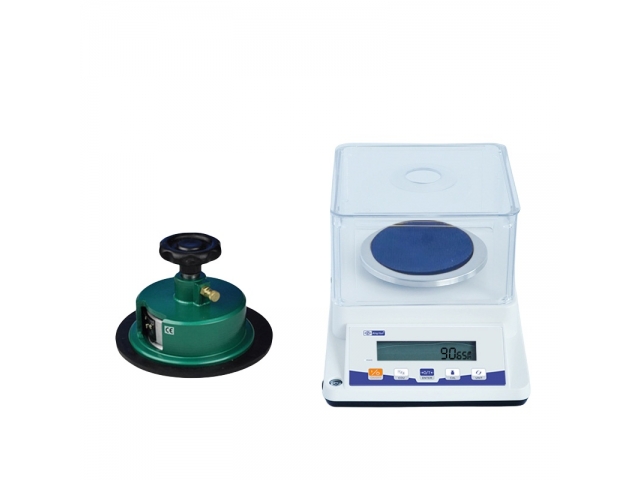
The structural design of professional textile balance is highly specialized, tailored to solve the inherent measurement challenges of textile materials that ordinary electronic balances cannot address. The overall structure consists of a high-sensitivity weighing sensor, a constant-temperature and constant-humidity weighing chamber, an anti-static placement platform, a shock-absorbing base, and a precision data acquisition and processing module. The most distinctive feature is the enclosed weighing chamber, which isolates the measuring area from external air flow, temperature fluctuation, and dust interference—factors that exert extremely obvious impacts on lightweight textile samples. Textile fibers and fine yarns are easily blown by slight air currents, and their hygroscopic nature enables them to rapidly absorb or release moisture in response to ambient humidity changes, leading to real-time mass fluctuations during measurement. The anti-static platform further eliminates static adsorption generated by friction during sample placement, a common issue in textile testing that often causes tiny fiber fragments to adhere to the weighing area and distort final data. The shock-absorbing base filters out micro-vibrations from factory equipment and environmental movements, ensuring that the sensor captures only the effective mass of the textile sample rather than external interference signals.
Environmental adaptability is the core advantage that distinguishes textile balance from ordinary weighing equipment, as textile material mass is inherently closely linked to ambient temperature and humidity conditions. Natural fibers such as cotton, wool, silk, and linen contain a large number of hydrophilic molecular groups inside their fiber structures, while chemical fibers also retain trace moisture and undergo slight thermal expansion and contraction under temperature changes. These characteristics mean that the same textile sample will show distinct mass differences when measured in different environments, which directly affects the accuracy of textile parameter calculations such as fiber fineness, yarn count, and fabric areal density. Professional textile balance is equipped with intelligent environmental monitoring and compensation functions, which track real-time changes in temperature and humidity within the weighing chamber and automatically correct measured data according to the hygroscopic expansion and contraction rules of different textile materials. This environmental compensation mechanism ensures that all measurement results maintain consistent reference significance, enabling horizontal comparison of test data for different batches of materials and different production processes.
In the raw material pretreatment stage of textile production, textile balance undertakes the key task of fiber component analysis and blending ratio verification, which directly determines the uniformity and stability of subsequent finished products. Most textile products on the market are made of blended fibers, and the mixing proportion of different fibers is the core factor affecting fabric softness, air permeability, wear resistance, wrinkle resistance, and color fastness. Before formal spinning production, technicians need to extract representative samples from bulk fiber raw materials, conduct precise weighing through textile balance, and verify the actual blending ratio against the designed process ratio. For natural fiber raw materials with uneven batch quality, the balance is also used to weigh single fiber components after manual sorting and impurity removal, providing accurate data support for raw material grading and batch grouping. Slight deviations in fiber blending ratios will be continuously amplified in subsequent spinning, weaving, and finishing processes, leading to inconsistent hand feel and performance among different batches of fabrics, making high-precision weighing in the pretreatment stage a critical barrier to controlling product quality stability.
Yarn parameter testing is one of the most frequent application scenarios of textile balance, and almost all core yarn performance indicators are calculated based on its accurate weighing data. Yarn count, the most basic parameter for characterizing yarn thickness and fineness, is defined by the mass of yarn per unit length, and its accuracy entirely depends on the precision of textile balance. In actual testing work, technicians intercept standard-length yarn samples through professional sampling equipment, place the dried and balanced samples on the textile balance for weighing, and then calculate the actual yarn count, count deviation, and evenness degree through professional formulas. For fine-count high-quality yarns used in high-end apparel and home textiles, the allowable range of count deviation is extremely narrow, requiring the textile balance to reach milligram-level or even sub-milligram-level measurement accuracy. In addition, the balance is also used to test yarn hairiness weight, residual impurity weight after yarn cleaning, and waxing attachment amount on yarn surfaces, providing comprehensive data support for optimizing yarn spinning processes and improving yarn quality grade.
Fabric areal density detection, an essential link in textile finished product inspection, also relies entirely on textile balance for accurate data acquisition. Fabric areal density, namely the weight per unit area of the fabric, is a key indicator for judging fabric thickness, compactness, and grade, and is closely related to the warmth, thickness, durability, and wearing comfort of textile products. During detection, standard-sized fabric samples are cut from different positions of finished fabrics to avoid detection errors caused by local weaving unevenness. After removing surface dust and balancing moisture, the samples are weighed by textile balance, and the average areal density of the fabric is calculated by combining the sample area data. For woven fabrics, knitted fabrics, and non-woven fabrics of different textures, the balance can adapt to different sample sizes and weights, and match different data calculation modes. Deviations in fabric areal density will directly affect the subsequent finishing effect of fabrics, as well as the cutting and matching of garment processing, making standardized weighing testing an indispensable part of fabric quality certification.
Textile balance also plays an irreplaceable role in textile finishing process monitoring, helping technicians quantify the effect of various finishing treatments and optimize process parameters. Common textile finishing processes such as dyeing, printing, softening, waterproofing, and anti-wrinkle finishing will cause changes in fabric mass due to the attachment of finishing agents, fiber moisture changes, and slight fiber loss during processing. By weighing fabric samples before and after finishing with textile balance, technicians can accurately calculate the attachment rate of finishing agents, judge the uniformity of finishing treatment, and identify process abnormalities such as excessive agent usage, incomplete cleaning, or local uneven finishing. For functional textiles with special finishing requirements, precise mass change data can help adjust finishing solution concentration, processing time, and temperature parameters, ensuring that the functional indicators of finished products reach a stable and consistent state. This quantitative monitoring method based on textile balance effectively avoids the uncertainty of traditional subjective judgment and realizes the digital and refined control of finishing processes.
In textile scientific research and new product development, textile balance serves as a basic experimental tool, providing accurate data support for material innovation and process optimization. The research and development of new fiber materials, blended textile formulas, and novel fabric structures all require repeated weighing tests to verify the performance changes of materials under different formulas and processes. When developing new blended fabrics, researchers use textile balance to configure fiber samples with different mixing ratios, test the mass changes of samples before and after stretching, washing, and friction tests, and explore the optimal material proportion scheme. In the research of environmentally friendly textile finishing technologies, the balance is used to detect the residual amount of green finishing agents on fabric surfaces and the mass loss rate of fabrics after multiple washing cycles, evaluating the durability and environmental friendliness of new processes. All innovative textile research conclusions must be based on reliable and repeatable weighing data, and the high stability and precision of textile balance ensure the scientificity and authenticity of experimental results.
The standardized operation of textile balance is the key to ensuring consistent and accurate measurement results, and every operational detail is formulated based on the physical characteristics of textile materials. Before testing, the equipment needs to be preheated for a fixed period to stabilize the internal sensor performance, and horizontal calibration and zero resetting are carried out to eliminate systematic errors caused by equipment placement and long-term operation. The textile samples to be tested must undergo standard moisture balance treatment to ensure that the moisture content of the samples reaches a stable state consistent with the test environment, avoiding measurement errors caused by inconsistent moisture absorption. During sample placement, technicians need to handle samples gently to prevent fiber stretching, falling off, or static adhesion, and ensure the samples are placed flat in the center of the weighing platform without contact with the inner wall of the weighing chamber. After the data stabilizes, the reading is recorded, and multiple parallel tests are required for each group of samples to eliminate accidental errors, with the average value taken as the final test result. Standardized operational specifications fully adapt to the easy-to-change characteristics of textile materials and maximize the accuracy and repeatability of test data.
Daily maintenance and calibration of textile balance are crucial to maintaining its long-term measurement precision and service life, as the high-precision sensor and enclosed weighing structure are extremely sensitive to external pollution and mechanical wear. Daily maintenance mainly includes regular cleaning of the weighing chamber and anti-static platform to remove residual fiber fragments, dust, and finishing agent particles left by previous tests, which can effectively avoid interference with subsequent sample weighing. The shock-absorbing base needs to be regularly checked for stability to prevent equipment tilt caused by long-term vibration. In terms of calibration, regular professional calibration is required to correct sensor drift errors caused by long-term operation, temperature changes, and component aging. Unlike ordinary weighing scales, textile balance focuses more on micro-calibration of lightweight samples, ensuring accurate response to tiny mass changes of textile fibers and yarns. Good maintenance habits can not only extend the service life of the equipment but also ensure the long-term stability of test data, avoiding quality risks caused by inaccurate detection data in mass production.
With the continuous upgrading of textile industry intelligence, modern textile balance has achieved intelligent iteration on the basis of traditional precision weighing, further improving the efficiency and intelligence level of textile detection work. Traditional textile balance only realizes basic weighing and data display functions, requiring manual recording, calculation, and data sorting by technicians. Modern intelligent textile balance is integrated with automatic data storage, formula calculation, data comparison, and abnormal data early warning functions, which can automatically complete yarn count, areal density, and blending ratio calculation after obtaining sample weighing data, and automatically store test data for traceability management. Some advanced models are also equipped with data transmission interfaces, which can upload test data to the production quality management system in real time, realizing the integration of on-site detection data and production process data. While maintaining high-precision measurement performance, intelligent optimization greatly reduces manual operational errors and labor costs, and improves the overall efficiency of textile quality inspection and process monitoring.
As a basic precision testing instrument running through the entire textile industry chain, textile balance carries the fundamental guarantee of textile product quality stability and technological progress. From raw material screening and process optimization in production to finished product inspection and innovative research and development, every link of textile industry development cannot be separated from the accurate data support provided by textile balance. Although it is a seemingly simple weighing instrument, its adaptation to the unique physical properties of textile materials, professional environmental anti-interference design, and continuous intelligent upgrading make it an indispensable core equipment in textile quality control. In the future, with the continuous development of high-performance textiles, functional textiles, and green textile technologies, the performance requirements for textile balance will continue to improve, driving further innovation in precision measurement, intelligent detection, and data linkage functions. The continuous optimization of textile balance technology will also continue to empower the high-quality development of the textile industry, promoting the entire industry to move towards higher precision, more standardization, and greater intelligence.
