
You are here: Home  »  Commercial Scale  »  Dial Spring Scale

Veidt Weighing is a Dial Spring Scale factory in china. In the realm of measurement tools, dial spring scales stand out as a blend of simplicity, reliability, and versatility. From the bustling markets of local towns to the precision-focused workshops of artisans, from household kitchens to outdoor adventure gear, these devices play an indispensable role in quantifying weight across diverse scenarios. Unlike complex digital instruments that rely on electronic components, dial spring scales operate on a fundamental mechanical principle, making them durable, easy to use, and less susceptible to environmental disruptions.

At the core of every dial spring scale lies a straightforward mechanical mechanism rooted in Hooke’s Law, a fundamental concept in physics that describes the behavior of elastic materials. Hooke’s Law states that the force required to extend or compress a spring by a certain distance is proportional to that distance, provided the elastic limit of the spring is not exceeded. This law serves as the backbone of dial spring scales, translating the weight of an object into a visible reading on a calibrated dial.

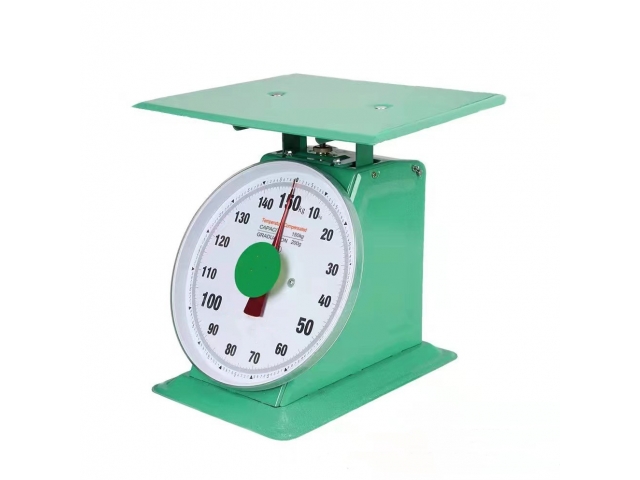
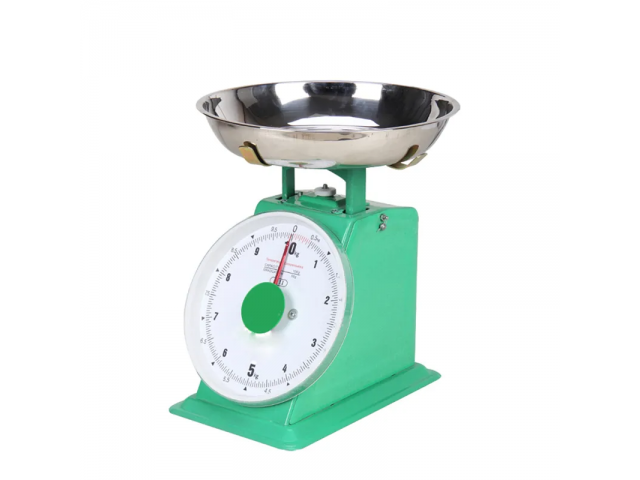
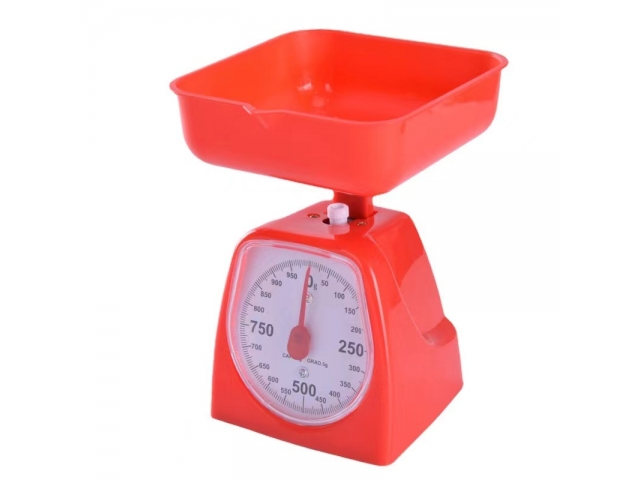
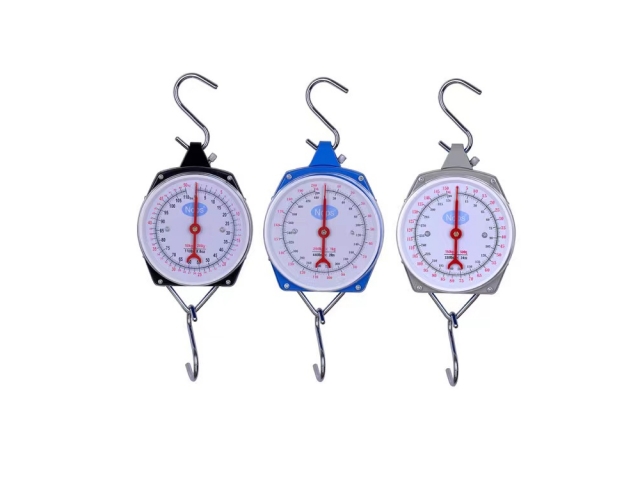
To understand the mechanism in detail, let’s break down the key components of a typical dial spring scale. The primary parts include a coiled spring, a load-bearing hook or platform, a system of levers or a direct linkage, a pointer, and a calibrated dial. When an object is attached to the hook or placed on the platform, its weight exerts a downward force on the spring. This force causes the spring to stretch (or compress, depending on the design). The amount of stretching is directly proportional to the weight of the object, as dictated by Hooke’s Law. The stretching spring then transfers this motion to the pointer via a series of levers or a direct connection. The pointer moves across the dial, which is marked with weight units—such as grams, kilograms, pounds, or ounces—allowing the user to read the weight at a glance.

What makes this mechanism so effective is its simplicity. There are no batteries to replace, no electronic sensors to calibrate regularly, and no complex software to troubleshoot. This simplicity also contributes to the scale’s durability. Most dial spring scales are constructed with robust materials like metal for the spring and housing, and a shatter-resistant cover for the dial. These materials can withstand rough handling, exposure to dust, moisture, and temperature variations, making the scales suitable for use in harsh or unpredictable environments where digital scales might fail.

Another advantage of the mechanical design is its instantaneous response. Unlike some digital scales that require a moment to process and display the weight, dial spring scales provide an immediate reading as soon as the object is placed on the load-bearing surface. This quick response is particularly valuable in fast-paced environments, such as busy markets or production lines, where efficiency is paramount.

The versatility of dial spring scales is evident in their wide range of applications across various sectors. One of the most common uses is in retail and commercial settings, especially in fresh produce markets, butcher shops, and grocery stores. Vendors rely on these scales to quickly and accurately weigh fruits, vegetables, meats, and other bulk items for customers. The clear, easy-to-read dial ensures that both the vendor and the customer can verify the weight, promoting transparency in transactions. In many cases, the scales are mounted on a stand for convenience, allowing the vendor to place large or heavy items on the platform without straining.

Household use is another major application area for dial spring scales. In the kitchen, compact dial spring scales are a staple for home bakers and cooks who require precise measurements of ingredients like flour, sugar, butter, and spices. Baking, in particular, demands accuracy, as even small deviations in ingredient weights can affect the texture and consistency of the final product. Unlike volume measurements (using cups or spoons), which can be imprecise due to variations in how ingredients are packed, weight measurements with a dial spring scale ensure consistency batch after batch. Additionally, larger dial spring scales are used in households for weighing laundry (to avoid overloading washing machines), luggage (to comply with airline weight restrictions), or even small pets.

Industrial and workshop environments also benefit greatly from the use of dial spring scales. In manufacturing facilities, these scales are used to weigh raw materials, components, and finished products to ensure they meet quality control standards. For example, in the automotive industry, small dial spring scales may be used to weigh small parts like bolts or washers, while larger scales are used to weigh assembled components. In woodworking and metalworking workshops, artisans use dial spring scales to measure the weight of materials, ensuring that they are within the required specifications for a project. The durability of these scales makes them ideal for use in industrial settings, where they may be exposed to heavy machinery, dust, and other harsh conditions.

Outdoor enthusiasts and adventurers also rely on dial spring scales for a variety of purposes. Anglers, for example, use compact, waterproof dial spring scales to weigh their catch, allowing them to track the size of fish and comply with local fishing regulations that may have minimum weight limits. Hikers and campers use lightweight dial spring scales to weigh their backpacks, ensuring that they do not carry more than they can comfortably handle and that their gear meets the weight restrictions for certain trails or transportation. The fact that these scales do not require batteries is a major advantage in outdoor settings, where access to power may be limited.

Agricultural settings also utilize dial spring scales for tasks such as weighing livestock feed, seeds, and harvested crops. Farmers and ranchers need accurate weight measurements to ensure that their animals are receiving the correct amount of feed, that seeds are planted at the right density, and that harvested crops are properly quantified for sale or storage. Dial spring scales are well-suited for these tasks because they can be used in outdoor areas, are easy to transport, and can handle the rough handling that is common in agricultural environments.

When selecting a dial spring scale, there are several key factors to consider to ensure that it meets your specific needs. The first and most important factor is the weight capacity of the scale. Scales are available in a wide range of capacities, from small scales that can weigh up to 500 grams (for kitchen use) to large industrial scales that can handle weights of 500 kilograms or more. It is essential to choose a scale with a capacity that is appropriate for the items you will be weighing. Using a scale with a capacity that is too small can damage the spring (by exceeding its elastic limit) and lead to inaccurate readings. Conversely, using a scale with a capacity that is too large for light items will result in poor accuracy, as the spring will not stretch enough to produce a meaningful reading.

Accuracy is another critical factor to consider. The accuracy of a dial spring scale is typically expressed as a percentage of the full-scale weight. For example, a scale with an accuracy of ±1% means that the reading can deviate by up to 1% of the maximum weight capacity. For applications that require high precision, such as baking or laboratory work (though lab work often uses more precise instruments), it is important to choose a scale with a high level of accuracy. For general use, such as weighing groceries or laundry, a lower accuracy rating may be sufficient.

The size and portability of the scale are also important considerations. If you need to use the scale in multiple locations (such as a vendor who travels to different markets or an angler who moves from one fishing spot to another), a compact, lightweight scale is ideal. Conversely, if the scale will be used in a fixed location (such as a kitchen or workshop), a larger, more stable scale may be preferable. Some scales come with a handle or a hook for easy carrying, while others are designed to be mounted on a stand or wall.

The material and construction of the scale should also be taken into account. For use in harsh environments (such as industrial settings, outdoor areas, or wet conditions), a scale made with durable, waterproof materials is essential. Metal springs and housings are more durable than plastic ones, though plastic scales may be lighter and more affordable for light-duty use. The dial should be protected by a shatter-resistant cover to prevent damage from drops or impacts, and the pointer should be easy to read, even in low-light conditions. Some scales have a backlit dial or large, bold markings to enhance readability.

Finally, it is important to consider the units of measurement provided by the scale. Most dial spring scales are calibrated in either metric units (grams, kilograms) or imperial units (pounds, ounces), but some scales offer dual units, which can be useful if you need to switch between systems. Make sure that the scale provides the units that are most relevant to your needs.

Proper maintenance is essential to ensure that a dial spring scale remains accurate and functional over time. One of the most important maintenance tasks is to keep the scale clean. Dust, dirt, and debris can accumulate in the spring mechanism and around the pointer, causing friction that can affect the accuracy of the readings. To clean the scale, use a soft, dry cloth to wipe down the housing and the dial. For more stubborn dirt, you can use a slightly damp cloth, but be careful not to get water inside the mechanism, as this can cause rust. If the scale is waterproof, you can rinse it with water, but make sure to dry it thoroughly afterward.

Another key maintenance tip is to avoid overloading the scale. Exceeding the maximum weight capacity can permanently damage the spring, leading to inaccurate readings or complete failure of the scale. Always check the weight capacity of the scale before using it, and never attempt to weigh an object that is heavier than the specified limit.

Calibration is also important to maintain accuracy. Over time, the spring may stretch slightly, leading to deviations in the readings. Most dial spring scales come with a calibration screw that allows you to adjust the pointer to the zero mark when no weight is applied. To calibrate the scale, place it on a flat, level surface, ensure that no weight is attached to the hook or platform, and use a small screwdriver to turn the calibration screw until the pointer aligns perfectly with the zero mark. It is a good idea to calibrate the scale regularly, especially if it is used frequently or in harsh conditions.

Proper storage is also essential to protect the scale from damage. When not in use, store the scale in a dry, clean environment away from extreme temperatures, humidity, and direct sunlight. Extreme temperatures can cause the spring to expand or contract, affecting its elasticity, while humidity can lead to rust. If the scale is portable, store it in a case or bag to protect it from bumps and scratches during transport.

In conclusion, dial spring scales are simple yet highly effective measurement tools that have stood the test of time. Their reliance on Hooke’s Law and mechanical components makes them durable, reliable, and easy to use, while their versatility allows them to be used in a wide range of applications, from households and retail stores to industrial facilities and outdoor environments. By considering factors such as weight capacity, accuracy, size, and construction when selecting a scale, and by following proper maintenance practices, users can ensure that their dial spring scale provides accurate readings for years to come. In an age where digital technology is increasingly prevalent, dial spring scales remain a valuable and trusted tool for anyone in need of a reliable way to measure weight.In the realm of measurement tools, dial spring scales stand out as a blend of simplicity, reliability, and versatility. From the bustling markets of local towns to the precision-focused workshops of artisans, from household kitchens to outdoor adventure gear, these devices play an indispensable role in quantifying weight across diverse scenarios. Unlike complex digital instruments that rely on electronic components, dial spring scales operate on a fundamental mechanical principle, making them durable, easy to use, and less susceptible to environmental disruptions.

At the core of every dial spring scale lies a straightforward mechanical mechanism rooted in Hooke’s Law, a fundamental concept in physics that describes the behavior of elastic materials. Hooke’s Law states that the force required to extend or compress a spring by a certain distance is proportional to that distance, provided the elastic limit of the spring is not exceeded. This law serves as the backbone of dial spring scales, translating the weight of an object into a visible reading on a calibrated dial.

To understand the mechanism in detail, let’s break down the key components of a typical dial spring scale. The primary parts include a coiled spring, a load-bearing hook or platform, a system of levers or a direct linkage, a pointer, and a calibrated dial. When an object is attached to the hook or placed on the platform, its weight exerts a downward force on the spring. This force causes the spring to stretch (or compress, depending on the design). The amount of stretching is directly proportional to the weight of the object, as dictated by Hooke’s Law. The stretching spring then transfers this motion to the pointer via a series of levers or a direct connection. The pointer moves across the dial, which is marked with weight units—such as grams, kilograms, pounds, or ounces—allowing the user to read the weight at a glance.

What makes this mechanism so effective is its simplicity. There are no batteries to replace, no electronic sensors to calibrate regularly, and no complex software to troubleshoot. This simplicity also contributes to the scale’s durability. Most dial spring scales are constructed with robust materials like metal for the spring and housing, and a shatter-resistant cover for the dial. These materials can withstand rough handling, exposure to dust, moisture, and temperature variations, making the scales suitable for use in harsh or unpredictable environments where digital scales might fail.

Another advantage of the mechanical design is its instantaneous response. Unlike some digital scales that require a moment to process and display the weight, dial spring scales provide an immediate reading as soon as the object is placed on the load-bearing surface. This quick response is particularly valuable in fast-paced environments, such as busy markets or production lines, where efficiency is paramount.

The versatility of dial spring scales is evident in their wide range of applications across various sectors. One of the most common uses is in retail and commercial settings, especially in fresh produce markets, butcher shops, and grocery stores. Vendors rely on these scales to quickly and accurately weigh fruits, vegetables, meats, and other bulk items for customers. The clear, easy-to-read dial ensures that both the vendor and the customer can verify the weight, promoting transparency in transactions. In many cases, the scales are mounted on a stand for convenience, allowing the vendor to place large or heavy items on the platform without straining.

Household use is another major application area for dial spring scales. In the kitchen, compact dial spring scales are a staple for home bakers and cooks who require precise measurements of ingredients like flour, sugar, butter, and spices. Baking, in particular, demands accuracy, as even small deviations in ingredient weights can affect the texture and consistency of the final product. Unlike volume measurements (using cups or spoons), which can be imprecise due to variations in how ingredients are packed, weight measurements with a dial spring scale ensure consistency batch after batch. Additionally, larger dial spring scales are used in households for weighing laundry (to avoid overloading washing machines), luggage (to comply with airline weight restrictions), or even small pets.

Industrial and workshop environments also benefit greatly from the use of dial spring scales. In manufacturing facilities, these scales are used to weigh raw materials, components, and finished products to ensure they meet quality control standards. For example, in the automotive industry, small dial spring scales may be used to weigh small parts like bolts or washers, while larger scales are used to weigh assembled components. In woodworking and metalworking workshops, artisans use dial spring scales to measure the weight of materials, ensuring that they are within the required specifications for a project. The durability of these scales makes them ideal for use in industrial settings, where they may be exposed to heavy machinery, dust, and other harsh conditions.

Outdoor enthusiasts and adventurers also rely on dial spring scales for a variety of purposes. Anglers, for example, use compact, waterproof dial spring scales to weigh their catch, allowing them to track the size of fish and comply with local fishing regulations that may have minimum weight limits. Hikers and campers use lightweight dial spring scales to weigh their backpacks, ensuring that they do not carry more than they can comfortably handle and that their gear meets the weight restrictions for certain trails or transportation. The fact that these scales do not require batteries is a major advantage in outdoor settings, where access to power may be limited.

Agricultural settings also utilize dial spring scales for tasks such as weighing livestock feed, seeds, and harvested crops. Farmers and ranchers need accurate weight measurements to ensure that their animals are receiving the correct amount of feed, that seeds are planted at the right density, and that harvested crops are properly quantified for sale or storage. Dial spring scales are well-suited for these tasks because they can be used in outdoor areas, are easy to transport, and can handle the rough handling that is common in agricultural environments.

When selecting a dial spring scale, there are several key factors to consider to ensure that it meets your specific needs. The first and most important factor is the weight capacity of the scale. Scales are available in a wide range of capacities, from small scales that can weigh up to 500 grams (for kitchen use) to large industrial scales that can handle weights of 500 kilograms or more. It is essential to choose a scale with a capacity that is appropriate for the items you will be weighing. Using a scale with a capacity that is too small can damage the spring (by exceeding its elastic limit) and lead to inaccurate readings. Conversely, using a scale with a capacity that is too large for light items will result in poor accuracy, as the spring will not stretch enough to produce a meaningful reading.

Accuracy is another critical factor to consider. The accuracy of a dial spring scale is typically expressed as a percentage of the full-scale weight. For example, a scale with an accuracy of ±1% means that the reading can deviate by up to 1% of the maximum weight capacity. For applications that require high precision, such as baking or laboratory work (though lab work often uses more precise instruments), it is important to choose a scale with a high level of accuracy. For general use, such as weighing groceries or laundry, a lower accuracy rating may be sufficient.

The size and portability of the scale are also important considerations. If you need to use the scale in multiple locations (such as a vendor who travels to different markets or an angler who moves from one fishing spot to another), a compact, lightweight scale is ideal. Conversely, if the scale will be used in a fixed location (such as a kitchen or workshop), a larger, more stable scale may be preferable. Some scales come with a handle or a hook for easy carrying, while others are designed to be mounted on a stand or wall.

The material and construction of the scale should also be taken into account. For use in harsh environments (such as industrial settings, outdoor areas, or wet conditions), a scale made with durable, waterproof materials is essential. Metal springs and housings are more durable than plastic ones, though plastic scales may be lighter and more affordable for light-duty use. The dial should be protected by a shatter-resistant cover to prevent damage from drops or impacts, and the pointer should be easy to read, even in low-light conditions. Some scales have a backlit dial or large, bold markings to enhance readability.

Finally, it is important to consider the units of measurement provided by the scale. Most dial spring scales are calibrated in either metric units (grams, kilograms) or imperial units (pounds, ounces), but some scales offer dual units, which can be useful if you need to switch between systems. Make sure that the scale provides the units that are most relevant to your needs.

Proper maintenance is essential to ensure that a dial spring scale remains accurate and functional over time. One of the most important maintenance tasks is to keep the scale clean. Dust, dirt, and debris can accumulate in the spring mechanism and around the pointer, causing friction that can affect the accuracy of the readings. To clean the scale, use a soft, dry cloth to wipe down the housing and the dial. For more stubborn dirt, you can use a slightly damp cloth, but be careful not to get water inside the mechanism, as this can cause rust. If the scale is waterproof, you can rinse it with water, but make sure to dry it thoroughly afterward.

Another key maintenance tip is to avoid overloading the scale. Exceeding the maximum weight capacity can permanently damage the spring, leading to inaccurate readings or complete failure of the scale. Always check the weight capacity of the scale before using it, and never attempt to weigh an object that is heavier than the specified limit.

Calibration is also important to maintain accuracy. Over time, the spring may stretch slightly, leading to deviations in the readings. Most dial spring scales come with a calibration screw that allows you to adjust the pointer to the zero mark when no weight is applied. To calibrate the scale, place it on a flat, level surface, ensure that no weight is attached to the hook or platform, and use a small screwdriver to turn the calibration screw until the pointer aligns perfectly with the zero mark. It is a good idea to calibrate the scale regularly, especially if it is used frequently or in harsh conditions.

Proper storage is also essential to protect the scale from damage. When not in use, store the scale in a dry, clean environment away from extreme temperatures, humidity, and direct sunlight. Extreme temperatures can cause the spring to expand or contract, affecting its elasticity, while humidity can lead to rust. If the scale is portable, store it in a case or bag to protect it from bumps and scratches during transport.

In conclusion, dial spring scales are simple yet highly effective measurement tools that have stood the test of time. Their reliance on Hooke’s Law and mechanical components makes them durable, reliable, and easy to use, while their versatility allows them to be used in a wide range of applications, from households and retail stores to industrial facilities and outdoor environments. By considering factors such as weight capacity, accuracy, size, and construction when selecting a scale, and by following proper maintenance practices, users can ensure that their dial spring scale provides accurate readings for years to come. In an age where digital technology is increasingly prevalent, dial spring scales remain a valuable and trusted tool for anyone in need of a reliable way to measure weight.In the realm of measurement tools, dial spring scales stand out as a blend of simplicity, reliability, and versatility. From the bustling markets of local towns to the precision-focused workshops of artisans, from household kitchens to outdoor adventure gear, these devices play an indispensable role in quantifying weight across diverse scenarios. Unlike complex digital instruments that rely on electronic components, dial spring scales operate on a fundamental mechanical principle, making them durable, easy to use, and less susceptible to environmental disruptions.

At the core of every dial spring scale lies a straightforward mechanical mechanism rooted in Hooke’s Law, a fundamental concept in physics that describes the behavior of elastic materials. Hooke’s Law states that the force required to extend or compress a spring by a certain distance is proportional to that distance, provided the elastic limit of the spring is not exceeded. This law serves as the backbone of dial spring scales, translating the weight of an object into a visible reading on a calibrated dial.

To understand the mechanism in detail, let’s break down the key components of a typical dial spring scale. The primary parts include a coiled spring, a load-bearing hook or platform, a system of levers or a direct linkage, a pointer, and a calibrated dial. When an object is attached to the hook or placed on the platform, its weight exerts a downward force on the spring. This force causes the spring to stretch (or compress, depending on the design). The amount of stretching is directly proportional to the weight of the object, as dictated by Hooke’s Law. The stretching spring then transfers this motion to the pointer via a series of levers or a direct connection. The pointer moves across the dial, which is marked with weight units—such as grams, kilograms, pounds, or ounces—allowing the user to read the weight at a glance.

What makes this mechanism so effective is its simplicity. There are no batteries to replace, no electronic sensors to calibrate regularly, and no complex software to troubleshoot. This simplicity also contributes to the scale’s durability. Most dial spring scales are constructed with robust materials like metal for the spring and housing, and a shatter-resistant cover for the dial. These materials can withstand rough handling, exposure to dust, moisture, and temperature variations, making the scales suitable for use in harsh or unpredictable environments where digital scales might fail.

Another advantage of the mechanical design is its instantaneous response. Unlike some digital scales that require a moment to process and display the weight, dial spring scales provide an immediate reading as soon as the object is placed on the load-bearing surface. This quick response is particularly valuable in fast-paced environments, such as busy markets or production lines, where efficiency is paramount.

The versatility of dial spring scales is evident in their wide range of applications across various sectors. One of the most common uses is in retail and commercial settings, especially in fresh produce markets, butcher shops, and grocery stores. Vendors rely on these scales to quickly and accurately weigh fruits, vegetables, meats, and other bulk items for customers. The clear, easy-to-read dial ensures that both the vendor and the customer can verify the weight, promoting transparency in transactions. In many cases, the scales are mounted on a stand for convenience, allowing the vendor to place large or heavy items on the platform without straining.

Household use is another major application area for dial spring scales. In the kitchen, compact dial spring scales are a staple for home bakers and cooks who require precise measurements of ingredients like flour, sugar, butter, and spices. Baking, in particular, demands accuracy, as even small deviations in ingredient weights can affect the texture and consistency of the final product. Unlike volume measurements (using cups or spoons), which can be imprecise due to variations in how ingredients are packed, weight measurements with a dial spring scale ensure consistency batch after batch. Additionally, larger dial spring scales are used in households for weighing laundry (to avoid overloading washing machines), luggage (to comply with airline weight restrictions), or even small pets.

Industrial and workshop environments also benefit greatly from the use of dial spring scales. In manufacturing facilities, these scales are used to weigh raw materials, components, and finished products to ensure they meet quality control standards. For example, in the automotive industry, small dial spring scales may be used to weigh small parts like bolts or washers, while larger scales are used to weigh assembled components. In woodworking and metalworking workshops, artisans use dial spring scales to measure the weight of materials, ensuring that they are within the required specifications for a project. The durability of these scales makes them ideal for use in industrial settings, where they may be exposed to heavy machinery, dust, and other harsh conditions.

Outdoor enthusiasts and adventurers also rely on dial spring scales for a variety of purposes. Anglers, for example, use compact, waterproof dial spring scales to weigh their catch, allowing them to track the size of fish and comply with local fishing regulations that may have minimum weight limits. Hikers and campers use lightweight dial spring scales to weigh their backpacks, ensuring that they do not carry more than they can comfortably handle and that their gear meets the weight restrictions for certain trails or transportation. The fact that these scales do not require batteries is a major advantage in outdoor settings, where access to power may be limited.

Agricultural settings also utilize dial spring scales for tasks such as weighing livestock feed, seeds, and harvested crops. Farmers and ranchers need accurate weight measurements to ensure that their animals are receiving the correct amount of feed, that seeds are planted at the right density, and that harvested crops are properly quantified for sale or storage. Dial spring scales are well-suited for these tasks because they can be used in outdoor areas, are easy to transport, and can handle the rough handling that is common in agricultural environments.

When selecting a dial spring scale, there are several key factors to consider to ensure that it meets your specific needs. The first and most important factor is the weight capacity of the scale. Scales are available in a wide range of capacities, from small scales that can weigh up to 500 grams (for kitchen use) to large industrial scales that can handle weights of 500 kilograms or more. It is essential to choose a scale with a capacity that is appropriate for the items you will be weighing. Using a scale with a capacity that is too small can damage the spring (by exceeding its elastic limit) and lead to inaccurate readings. Conversely, using a scale with a capacity that is too large for light items will result in poor accuracy, as the spring will not stretch enough to produce a meaningful reading.

Accuracy is another critical factor to consider. The accuracy of a dial spring scale is typically expressed as a percentage of the full-scale weight. For example, a scale with an accuracy of ±1% means that the reading can deviate by up to 1% of the maximum weight capacity. For applications that require high precision, such as baking or laboratory work (though lab work often uses more precise instruments), it is important to choose a scale with a high level of accuracy. For general use, such as weighing groceries or laundry, a lower accuracy rating may be sufficient.

The size and portability of the scale are also important considerations. If you need to use the scale in multiple locations (such as a vendor who travels to different markets or an angler who moves from one fishing spot to another), a compact, lightweight scale is ideal. Conversely, if the scale will be used in a fixed location (such as a kitchen or workshop), a larger, more stable scale may be preferable. Some scales come with a handle or a hook for easy carrying, while others are designed to be mounted on a stand or wall.

The material and construction of the scale should also be taken into account. For use in harsh environments (such as industrial settings, outdoor areas, or wet conditions), a scale made with durable, waterproof materials is essential. Metal springs and housings are more durable than plastic ones, though plastic scales may be lighter and more affordable for light-duty use. The dial should be protected by a shatter-resistant cover to prevent damage from drops or impacts, and the pointer should be easy to read, even in low-light conditions. Some scales have a backlit dial or large, bold markings to enhance readability.

Finally, it is important to consider the units of measurement provided by the scale. Most dial spring scales are calibrated in either metric units (grams, kilograms) or imperial units (pounds, ounces), but some scales offer dual units, which can be useful if you need to switch between systems. Make sure that the scale provides the units that are most relevant to your needs.

Proper maintenance is essential to ensure that a dial spring scale remains accurate and functional over time. One of the most important maintenance tasks is to keep the scale clean. Dust, dirt, and debris can accumulate in the spring mechanism and around the pointer, causing friction that can affect the accuracy of the readings. To clean the scale, use a soft, dry cloth to wipe down the housing and the dial. For more stubborn dirt, you can use a slightly damp cloth, but be careful not to get water inside the mechanism, as this can cause rust. If the scale is waterproof, you can rinse it with water, but make sure to dry it thoroughly afterward.

Another key maintenance tip is to avoid overloading the scale. Exceeding the maximum weight capacity can permanently damage the spring, leading to inaccurate readings or complete failure of the scale. Always check the weight capacity of the scale before using it, and never attempt to weigh an object that is heavier than the specified limit.

Calibration is also important to maintain accuracy. Over time, the spring may stretch slightly, leading to deviations in the readings. Most dial spring scales come with a calibration screw that allows you to adjust the pointer to the zero mark when no weight is applied. To calibrate the scale, place it on a flat, level surface, ensure that no weight is attached to the hook or platform, and use a small screwdriver to turn the calibration screw until the pointer aligns perfectly with the zero mark. It is a good idea to calibrate the scale regularly, especially if it is used frequently or in harsh conditions.

Proper storage is also essential to protect the scale from damage. When not in use, store the scale in a dry, clean environment away from extreme temperatures, humidity, and direct sunlight. Extreme temperatures can cause the spring to expand or contract, affecting its elasticity, while humidity can lead to rust. If the scale is portable, store it in a case or bag to protect it from bumps and scratches during transport.

In conclusion, dial spring scales are simple yet highly effective measurement tools that have stood the test of time. Their reliance on Hooke’s Law and mechanical components makes them durable, reliable, and easy to use, while their versatility allows them to be used in a wide range of applications, from households and retail stores to industrial facilities and outdoor environments. By considering factors such as weight capacity, accuracy, size, and construction when selecting a scale, and by following proper maintenance practices, users can ensure that their dial spring scale provides accurate readings for years to come. In an age where digital technology is increasingly prevalent, dial spring scales remain a valuable and trusted tool for anyone in need of a reliable way to measure weight.

Learn more about spring scale with dial, analog spring scale, hanging dial spring scale, mechanical dial spring scale, dial spring weighing scale, portable dial spring scale, hanging spring scale with dial, manual dial spring scale, heavy duty dial spring scale, dial spring scale for fishing, small dial spring scale, dial spring scale for luggage, hanging dial scale, spring dial scale, dial spring scale for home use, dial spring scale for industrial use, compact dial spring scale, dial spring scale for weighing, dial spring scale for grocery, high capacity dial spring scale, dial spring scale accurate, dial spring scale for farming, dial spring scale lightweight, dial spring scale for shipping, dial spring scale for warehouse, dial spring scale with hook, dial spring scale durable, dial spring scale for construction, dial spring scale for outdoor use, dial spring scale for kitchen, dial spring scale for pets, dial spring scale for postal use, dial spring scale for package weighing, dial spring scale with large dial, dial spring scale easy to read, dial spring scale rust resistant, dial spring scale for livestock, dial spring scale for retail, dial spring scale for workshop, dial spring scale no battery, dial spring scale for travel, dial spring scale for gardening, dial spring scale stainless steel hook, dial spring scale for small items, dial spring scale anti-drop, dial spring scale for market use, dial spring scale for classroom, dial spring scale for laboratory, dial spring scale multi-purpose, pls contact us.