





Changzhou Veidt Weighing Co., Ltd. © 2022 ALL RIGHTS RESERVED Privacy Policy | Calibration Weight | Test Weights | Cast Iron Weights | Standard Weights | Laboratory Weights | XML | SITEMAP
Product Category
Veidt Weighing is a Household Scale factory in china. In the quiet corners of kitchens, bathrooms, and laundry rooms, household scales stand as unassuming yet indispensable tools, weaving themselves into the fabric of daily routines. For millennia, these devices have served a fundamental purpose: measuring weight with accuracy and reliability, supporting tasks ranging from meal preparation and portion control to personal health monitoring and household management. The term “household scale” encompasses a diverse range of devices, each tailored to specific needs—from the compact kitchen scales used to weigh flour for baking to the digital bathroom scales that track body weight fluctuations. As human lifestyles have evolved, so too have household scales, adapting to technological advancements, changing cultural values, and shifting consumer demands. In an era marked by a growing focus on health and wellness, culinary precision, and sustainable living, these humble devices have gained new significance, transcending their basic functional role to become enablers of healthier, more organized lives. Exploring the evolution, functionality, diversity, and future of household scales reveals their profound impact on daily life and human progress.
The history of household scales is intertwined with the history of measurement itself, dating back to ancient civilizations where the need to quantify goods for trade, cooking, and commerce drove the development of early weighing devices. The earliest known scales, dating to around 2400 BCE in Mesopotamia, were balance scales—simple devices consisting of a beam suspended from a central pivot, with pans at either end. These early scales relied on the principle of equilibrium: an object of unknown weight placed on one pan would be balanced by known weights placed on the other. Balance scales quickly spread across ancient Egypt, Greece, and Rome, where they were used not only for commercial purposes but also in households for measuring food ingredients and household supplies. In medieval Europe, balance scales remained the primary weighing tool, with craftsmen refining their design to improve accuracy and durability. These early household scales were often made of wood, stone, or metal, and their simplicity made them accessible to households of all socioeconomic levels.
The industrial revolution of the 18th and 19th centuries marked a turning point in the evolution of household scales, bringing about significant technological advancements and mass production capabilities. The development of spring-based scales, based on Hooke’s Law, revolutionized the design of household weighing devices. Unlike balance scales, which required separate weights, spring scales used the elasticity of a spring to measure weight: when an object was placed on the scale, the spring compressed or stretched, and the displacement was calibrated to indicate weight on a dial. This innovation made scales more compact, portable, and user-friendly, eliminating the need for additional weights and simplifying the weighing process. Spring scales quickly became popular in households, particularly in kitchens and markets, and their mass production made them more affordable than ever before.
The 20th century saw further advancements in household scale technology, with the introduction of electronic components and digital displays. The first electronic scales emerged in the mid-20th century, using strain gauge sensors to convert mechanical force into an electrical signal, which was then translated into a digital readout. Digital scales offered several advantages over mechanical spring scales, including higher accuracy, easier readability, and the ability to measure in multiple units (grams, ounces, pounds, kilograms). By the late 20th century, digital household scales had become the norm, with improvements in battery technology making them more portable and energy-efficient. The 21st century has brought even more innovations, with the integration of smart technology into household scales, enabling features such as data storage, wireless connectivity, and compatibility with health and fitness apps.
At their core, household scales operate on basic physical principles, though the specific mechanism varies depending on the type of scale. The two primary types of household scales are mechanical scales (including balance scales and spring scales) and electronic scales (including digital and smart scales). Balance scales, the oldest type, rely on the principle of torque equilibrium. A beam is balanced on a fulcrum, and the object to be weighed is placed on one side, while standardized weights are added to the other side until the beam is level. This type of scale is highly accurate but requires careful handling and separate weights, making it less common in modern households except for specialized culinary or hobbyist use.
Spring scales, the most common type of mechanical household scale, operate based on Hooke’s Law, which states that the force exerted by a spring is proportional to its displacement. Inside a spring scale, a metal spring is attached to a platform or pan. When weight is applied, the spring compresses, and a pointer connected to the spring moves along a calibrated dial to indicate the weight. Spring scales are simple, durable, and affordable, but their accuracy can be affected by factors such as temperature changes, spring fatigue, and rough handling. They are still used in many households, particularly in kitchens and for light-duty weighing tasks.
Electronic household scales use strain gauge sensors to measure weight. These sensors are made of a material that changes its electrical resistance when subjected to force. When weight is applied to the scale’s platform, the strain gauges deform, altering their resistance. An electronic circuit measures this change in resistance, converts it into an electrical signal, and processes it to display the weight on a digital screen. Electronic scales are highly accurate and easy to use, with many offering features such as auto-zeroing (which resets the scale to zero when empty) and tare functions (which subtracts the weight of a container, allowing for accurate measurement of its contents). Smart scales take this a step further, incorporating additional sensors to measure body composition metrics such as body fat percentage, muscle mass, bone density, and water weight. These scales use bioelectrical impedance analysis (BIA), sending a weak electrical current through the body and measuring the resistance to estimate body composition.
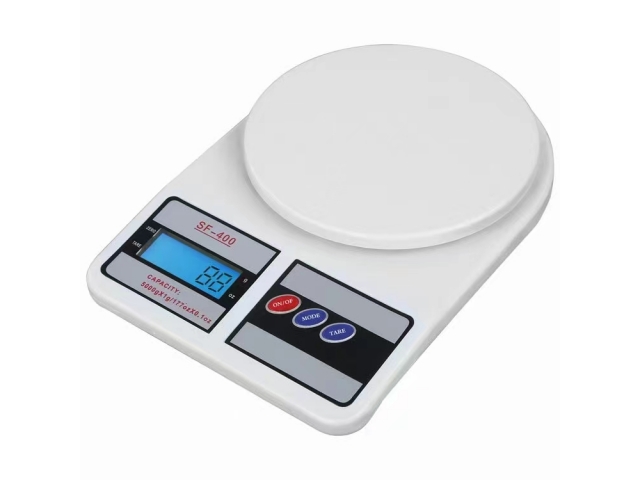
The diversity of household scales reflects their wide range of applications in daily life. Kitchen scales are perhaps the most ubiquitous, designed specifically for culinary tasks. They come in a variety of sizes and capacities, from compact pocket scales used for measuring small quantities of spices to larger countertop scales capable of weighing several kilograms of ingredients. Kitchen scales are essential for precise baking, where accurate measurements of flour, sugar, and other ingredients can mean the difference between a successful recipe and a failed one. They are also valuable for portion control, helping home cooks manage serving sizes and reduce food waste. Many modern kitchen scales offer digital displays, multiple unit measurements, and tare functions, making them versatile and user-friendly.
Bathroom scales, another common type of household scale, are primarily used for personal health monitoring. They are designed to measure body weight, with many modern models offering additional body composition metrics. Bathroom scales range from basic analog models with dial displays to advanced smart scales that sync data to smartphones or tablets via Bluetooth or Wi-Fi. For many people, bathroom scales are an integral part of their health and fitness routines, allowing them to track weight changes over time, monitor progress toward fitness goals, and identify potential health issues. However, it is important to note that body weight is not always an accurate indicator of health, and many experts recommend focusing on overall wellness rather than fixating on numbers. Smart bathroom scales address this by providing a more comprehensive picture of body composition, helping users understand their health beyond just weight.
Other specialized household scales include laundry scales, which are used to weigh laundry loads to ensure they fit within the capacity of washing machines, preventing overloading and improving washing efficiency. Postal scales, though often used for business purposes, are also common in households for weighing packages before shipping. Pet scales are designed to weigh small pets such as cats, dogs, and rabbits, helping pet owners monitor their pets’ health and ensure they are receiving the correct amount of food. Each of these specialized scales is tailored to specific needs, demonstrating the versatility of household scales and their ability to adapt to diverse user requirements.
The impact of household scales on modern lifestyles extends far beyond their basic functional role. In the realm of health and wellness, bathroom scales and smart scales have empowered individuals to take control of their health, providing valuable data that can inform diet, exercise, and lifestyle choices. By tracking weight and body composition over time, users can identify trends, set realistic goals, and make informed decisions about their health. Smart scales, in particular, have made health monitoring more convenient and accessible, allowing users to store and analyze data over time, share it with healthcare providers, and integrate it with other health and fitness apps. This has led to a more proactive approach to health, with individuals taking greater responsibility for their well-being.
In the kitchen, household scales have revolutionized home cooking and baking, promoting precision and consistency. Before the widespread use of kitchen scales, many recipes relied on volume measurements (such as cups and tablespoons), which can be inaccurate due to variations in ingredient density (for example, a cup of flour can vary in weight depending on how it is packed). Kitchen scales eliminate this variability, ensuring that ingredients are measured accurately every time. This is particularly important for baking, which is a science that requires precise ratios of ingredients. Accurate measurements also help reduce food waste, as home cooks can measure exactly the amount of ingredients they need, avoiding over-purchasing and excess. Additionally, kitchen scales are valuable for individuals following specific diets (such as low-carb, keto, or calorie-counted diets), allowing them to accurately track their food intake.
Household scales also play a role in promoting sustainability and efficient household management. Laundry scales help users avoid overloading their washing machines, which can reduce the machine’s efficiency, increase energy and water consumption, and damage the machine over time. By weighing laundry loads, users can ensure that their washing machines operate at optimal efficiency, reducing their environmental impact and lowering utility costs. Kitchen scales help reduce food waste by enabling precise measurement, which is a critical step in addressing the global food waste crisis. According to the Food and Agriculture Organization (FAO), approximately one-third of all food produced globally is wasted, and household food waste is a significant contributor. By using kitchen scales to measure ingredients accurately, home cooks can minimize excess and ensure that food is used efficiently.
Despite their many benefits, household scales also face challenges and criticisms. One of the main criticisms of bathroom scales is their potential to contribute to negative body image and disordered eating. For some individuals, frequent weight checking can lead to an unhealthy obsession with numbers, leading to anxiety, low self-esteem, and even eating disorders. Experts recommend using bathroom scales mindfully, focusing on long-term trends rather than daily fluctuations, and considering other indicators of health such as energy levels, sleep quality, and physical fitness. Smart scales, which provide a more comprehensive picture of body composition, can help mitigate this by shifting the focus from weight alone to overall health.
Another challenge is the issue of accuracy and calibration. Mechanical scales can lose accuracy over time due to spring fatigue, while electronic scales can be affected by factors such as uneven surfaces, battery levels, and improper calibration. To ensure accurate measurements, it is important to calibrate household scales regularly, follow the manufacturer’s instructions for use, and place the scale on a hard, flat surface. Many modern electronic scales come with auto-calibration features, making this process easier for users.
The future of household scales is shaped by ongoing technological advancements and changing consumer demands. One of the key trends is the continued integration of smart technology, with more household scales incorporating wireless connectivity, data analytics, and compatibility with health and fitness platforms. Future smart scales may offer even more advanced features, such as real-time health monitoring, personalized health recommendations, and integration with wearable devices (such as smartwatches and fitness trackers). This will further enhance the role of household scales in proactive health management, allowing users to monitor their health in real time and make immediate adjustments to their lifestyle.
Sustainability is another important trend shaping the future of household scales. As consumers become more environmentally conscious, manufacturers are developing household scales made from eco-friendly materials (such as recycled plastic, bamboo, and sustainable metals) and designed for durability and recyclability. Energy efficiency is also a priority, with many electronic scales using low-power components and rechargeable batteries to reduce their environmental impact. Additionally, manufacturers are focusing on reducing packaging waste and improving the lifecycle of their products, ensuring that household scales are sustainable from production to disposal.
Miniaturization and portability are also emerging trends, with manufacturers developing smaller, lighter household scales that are easy to store and transport. Compact kitchen scales, pocket-sized postal scales, and portable bathroom scales are becoming increasingly popular, catering to the needs of urban dwellers with limited space and individuals who travel frequently. These portable scales retain the accuracy and functionality of larger models, making them versatile and convenient for on-the-go use.
The integration of artificial intelligence (AI) and machine learning is another exciting development in the future of household scales. AI-powered smart scales can analyze user data over time, identify patterns, and provide personalized recommendations for diet, exercise, and lifestyle. For example, an AI-powered bathroom scale could detect changes in body composition and suggest adjustments to the user’s diet or exercise routine to help them reach their health goals. AI can also improve the accuracy of measurements by compensating for factors such as uneven surfaces and user movement, ensuring reliable results every time.
Education and awareness are also critical to the future of household scales, as many users may not fully understand how to use their scales properly or interpret the data they provide. Manufacturers and healthcare professionals can play a role in this by providing clear instructions for use, educational resources on healthy weight management, and guidance on interpreting body composition data. This will help users make the most of their household scales while avoiding the potential pitfalls of unhealthy weight obsession.
In conclusion, household scales are unsung heroes of daily life, playing a vital role in health management, culinary precision, and household efficiency. From their humble origins as simple balance scales in ancient civilizations to the advanced smart scales of today, household scales have evolved dramatically, adapting to technological advancements and changing consumer needs. Their diversity reflects their wide range of applications, from measuring ingredients in the kitchen to monitoring body composition in the bathroom. While they face challenges such as potential negative body image impacts and accuracy issues, the future of household scales is bright, with ongoing innovations in smart technology, sustainability, and AI promising to enhance their functionality and impact. As we continue to prioritize health, wellness, and sustainability in our daily lives, household scales will remain essential tools, empowering us to live healthier, more organized, and more sustainable lives. Their quiet presence in our homes is a testament to their enduring value and their role in shaping modern lifestyles.
Learn more about digital body weight scale, bathroom scale, smart weight scale, body fat scale, digital bathroom scale, weighing scale for home, bluetooth body scale, wireless weight scale, body composition scale, electronic weight scale, precision weight scale, digital weighing scale, bathroom weighing scale, smart body fat scale, usb rechargeable scale, mechanical bathroom scale, compact household scale, body weight and fat scale, high precision body scale, portable household scale, smart scale with app, digital scale for body weight, bathroom scale digital, household weighing machine, body fat analyzer scale, anti-slip bathroom scale, led display weight scale, household electronic scale, smart body composition scale, lightweight household scale, weight scale with bmi, digital body composition scale, waterproof bathroom scale, household scale for personal use, bluetooth smart scale, body weight scale for home, large display bathroom scale, battery operated household scale, multi-function body scale, accurate digital weight scale, household body fat scale, smart bathroom scale, weighing scale digital, body scale with body fat, slim design household scale, household scale with backlight, digital scale for bathroom, body weight scale digital, household smart weighing scale, pls contact us.
