





Changzhou Veidt Weighing Co., Ltd. © 2022 ALL RIGHTS RESERVED Privacy Policy | Calibration Weight | Test Weights | Cast Iron Weights | Standard Weights | Laboratory Weights | XML | SITEMAP
NEWS LIST
precision weights for calibration
Saturday 03rd January 2026 Back to list
In the realm of measurement science, accuracy and reliability stand as the cornerstones of countless industrial, scientific, and research activities. Calibration, the process of comparing a measuring instrument’s output to a known standard, ensures that these instruments perform within acceptable limits. At the heart of this critical process lies a seemingly simple yet indispensable tool: precision weights for calibration. These weights serve as the primary reference standards against which balances, scales, and other weighing equipment are calibrated, making them essential for maintaining the integrity of measurement systems across diverse sectors.
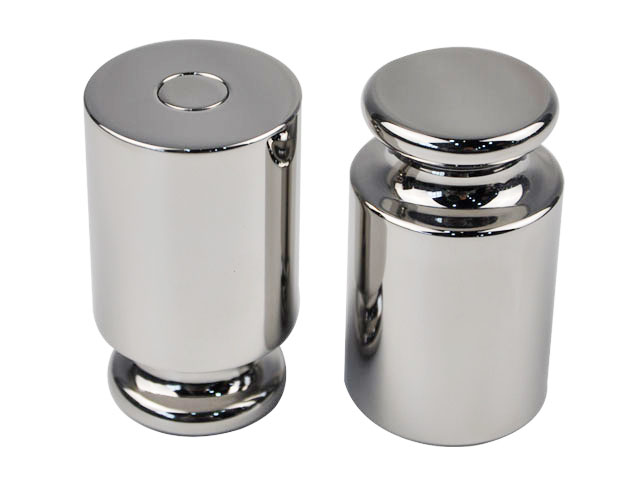
To fully grasp the significance of precision weights for calibration, it is first necessary to define their core purpose. Unlike commercial weights used in everyday transactions, calibration weights are engineered to exhibit extremely high levels of accuracy and stability. Their primary function is to provide a traceable reference to the International System of Units (SI) unit of mass, the kilogram. Traceability, a key concept in metrology, ensures that measurements can be linked back to a national or international standard through an unbroken chain of comparisons. This traceability is what gives calibration results their validity, allowing organizations to have confidence in the measurements taken by their equipment. Precision weights, therefore, act as the bridge between the abstract SI standard and the practical use of weighing instruments in real-world settings.
Precision calibration weights are classified into different accuracy classes based on international standards, which define their permissible errors, stability requirements, and intended applications. The most widely recognized classification systems include the OIML (Organisation Internationale de Métrologie Légale) R 111 standard and the ASTM E617 standard. Under the OIML R 111 classification, weights are divided into classes from E00 to M3, with E00 representing the highest accuracy class and M3 the lowest. Each class is defined by a maximum permissible error (MPE) that increases as the class decreases. For example, an E00 class 1 kg weight has an MPE of only ±0.5 mg, while an M3 class 1 kg weight has an MPE of ±1.5 g. This hierarchy ensures that there is a suitable weight class for every calibration need, from the high-precision requirements of national metrology institutes to the routine calibration of industrial scales.
The choice of material for precision calibration weights is a critical factor that directly impacts their accuracy, stability, and longevity. The ideal material must possess low magnetic susceptibility, high density, excellent corrosion resistance, and minimal volume change over time. Historically, brass was a common material for lower-accuracy weights, but its susceptibility to corrosion and magnetic properties limit its use in high-precision applications. Today, the most widely used materials for high-accuracy calibration weights are stainless steel, nickel-plated brass, and tungsten carbide. Stainless steel, particularly types 304 and 316, offers good corrosion resistance and low magnetic susceptibility, making it suitable for classes E2 to M1. Nickel-plated brass provides enhanced corrosion resistance compared to unplated brass and is often used for lower-accuracy classes such as M1 and M2. Tungsten carbide, with its high density (nearly twice that of steel), allows for smaller weight sizes, which reduces air buoyancy effects—a significant source of error in high-precision measurements. This material is typically used for high-accuracy classes such as E00, E0, and E1, where minimal error is essential.
Air buoyancy is a crucial consideration in the design and use of precision calibration weights. When a weight is placed in air, it displaces a volume of air equal to its own volume, creating an upward buoyant force that reduces the apparent mass of the weight. This effect becomes more pronounced with larger weights or in environments with significant changes in air density (e.g., variations in temperature, pressure, or humidity). To mitigate air buoyancy errors, high-precision weights are often designed with a compact shape to minimize their volume-to-mass ratio. Additionally, calibration procedures may include corrections for air buoyancy based on the measured environmental conditions and the density of the weight material. For example, tungsten carbide weights, due to their high density, have a smaller volume for a given mass, making them less affected by air buoyancy compared to stainless steel weights of the same mass.
The applications of precision calibration weights span a wide range of industries and sectors, each with unique requirements. In national metrology institutes (NMIs), the highest-accuracy weights (E00 and E0) are used to establish national mass standards, which are then used to calibrate secondary standards and working weights. These national standards are critical for ensuring uniformity in measurements across the country. In the pharmaceutical industry, precision weights are used to calibrate balances used in the formulation of drugs, where accurate mass measurements are essential for ensuring the efficacy and safety of the final product. Even small errors in mass can lead to incorrect dosages, posing significant risks to patients. The food and beverage industry also relies on calibrated weighing equipment to ensure product consistency and compliance with labeling regulations, where precise weights of ingredients and finished products are required.
In the aerospace and defense sectors, precision calibration weights play a vital role in the calibration of equipment used in the manufacturing and testing of aircraft components, spacecraft, and defense systems. Accurate mass measurements are critical for ensuring the performance and safety of these systems, where even minor discrepancies can have catastrophic consequences. The chemical and petrochemical industries use calibrated weighing equipment for the precise measurement of raw materials and finished products, ensuring compliance with quality control standards and environmental regulations. Research laboratories, across disciplines such as physics, chemistry, and biology, rely on high-precision calibration weights to maintain the accuracy of their experimental measurements, which is essential for the validity of research results and the advancement of scientific knowledge.
Proper maintenance and handling of precision calibration weights are essential to preserve their accuracy and extend their service life. Weights can be easily damaged or contaminated by improper handling, which can introduce errors into calibration results. One of the most important maintenance practices is to handle weights with clean, dry hands or with the use of tweezers, gloves, or weight handling tools to avoid transferring oils, dirt, or moisture onto the weight surface. Oils and dirt can add to the weight’s mass, while moisture can cause corrosion, particularly in non-resistant materials. Weights should be stored in a clean, dry, and stable environment, away from extreme temperatures, humidity, and magnetic fields. Temperature fluctuations can cause thermal expansion or contraction of the weight material, leading to temporary or permanent changes in mass. Magnetic fields can magnetize ferromagnetic weights, which can affect their interaction with magnetic weighing equipment, introducing errors.
Regular cleaning of precision weights is also necessary to remove any contaminants. The cleaning method depends on the weight material; for example, stainless steel weights can be cleaned with a mild detergent and water, followed by thorough drying, while tungsten carbide weights may require specialized cleaning agents to avoid damage. It is important to avoid abrasive cleaning methods that can scratch the weight surface, as scratches can change the weight’s mass and create crevices where contaminants can accumulate. Periodic recalibration of precision weights is another critical maintenance practice. Even with proper handling and storage, weights can undergo small changes in mass over time due to wear, corrosion, or material fatigue. Recalibration ensures that the weight’s mass remains within its specified tolerance and maintains its traceability to SI standards. The frequency of recalibration depends on the weight class, the frequency of use, and the environmental conditions in which it is stored and used. High-accuracy weights (E00, E0, E1) typically require more frequent recalibration than lower-accuracy classes.
The field of precision calibration weights is not static; ongoing advancements in materials science and manufacturing technology are driving improvements in their accuracy, stability, and usability. One emerging trend is the development of non-magnetic and low-magnetic weights for use in applications where magnetic interference is a concern, such as in the calibration of magnetic balances or in environments with strong magnetic fields. Advances in materials such as non-magnetic stainless steel and titanium alloys are enabling the production of weights with extremely low magnetic susceptibility, reducing the impact of magnetic fields on calibration accuracy.
Another trend is the use of advanced manufacturing techniques, such as additive manufacturing (3D printing), to produce complex weight shapes that optimize their performance. While traditional manufacturing methods such as machining are still dominant for high-accuracy weights, additive manufacturing offers the potential to create weights with customized geometries that minimize air buoyancy effects and improve handling. However, challenges remain in ensuring the accuracy and stability of 3D-printed weights, as the layer-by-layer manufacturing process can introduce variations in density and surface finish. Ongoing research is focused on addressing these challenges, and it is likely that additive manufacturing will play an increasingly important role in the production of precision calibration weights in the future.
The integration of digital technology into precision weight systems is also an emerging trend. Some modern calibration weights are equipped with embedded sensors that monitor environmental conditions such as temperature, humidity, and magnetic field strength, providing real-time data that can be used to correct for environmental effects during calibration. Additionally, digital tracking systems are being used to monitor the maintenance history, calibration records, and usage of weights, ensuring that they are properly maintained and recalibrated on schedule. This digitalization improves the traceability and reliability of calibration processes, making it easier for organizations to comply with quality management standards.
In conclusion, precision weights for calibration are essential tools in the field of metrology, ensuring the accuracy and reliability of measurement systems across a wide range of industries and applications. Their classification into different accuracy classes, choice of materials, and design considerations such as air buoyancy mitigation are critical factors that determine their performance. Proper maintenance and handling practices are essential to preserve their accuracy and extend their service life, while ongoing advancements in materials science, manufacturing technology, and digitalization are driving improvements in their performance and usability. As the demand for accurate and traceable measurements continues to grow, the role of precision calibration weights will remain不可或缺 in maintaining the integrity of measurement systems and supporting innovation across various sectors.
