





Changzhou Veidt Weighing Co., Ltd. © 2022 ALL RIGHTS RESERVED Privacy Policy | Calibration Weight | Test Weights | Cast Iron Weights | Standard Weights | Laboratory Weights | XML | SITEMAP
NEWS LIST
m2 calibration weight
Saturday 03rd January 2026 Back to list
In the realm of precision measurement, accuracy is the cornerstone of reliability. Whether in a laboratory, a manufacturing facility, or a quality control department, the instruments used to measure mass must perform with consistent precision. This is where calibration weights come into play—they serve as the reference standards against which weighing equipment is tested and adjusted. Among the various classes of calibration weights, M2 calibration weights hold a unique position, balancing performance, versatility, and practicality for a wide range of industrial and commercial applications.
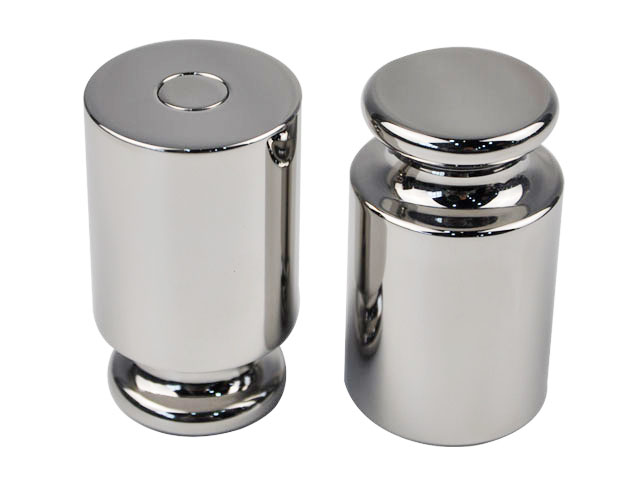
To understand the role of M2 calibration weights, it is first necessary to grasp the fundamental purpose of calibration weights in general. Calibration weights are objects of known mass that are used to verify or adjust the accuracy of weighing scales, balances, and other mass-measuring devices. Over time, factors such as regular use, environmental conditions, mechanical wear, and transportation can cause weighing instruments to drift from their original accuracy specifications. Without proper calibration, these instruments may produce incorrect measurements, leading to flawed product quality, inaccurate experimental results, or non-compliance with operational standards. Calibration weights provide a traceable reference point, allowing users to identify deviations in instrument performance and make the necessary adjustments to restore accuracy.
M2 calibration weights belong to a specific classification category that is defined by strict tolerances and performance criteria. The "M" in M2 denotes a medium accuracy class, positioning these weights between higher-precision classes (such as M1, F2, F1, and E2) and lower-precision ones (like M3). This classification is based on the maximum permissible error (MPE) allowed for each weight. The MPE represents the maximum amount by which the actual mass of the weight can deviate from its nominal mass while still meeting the class requirements. For M2 weights, the MPE is tailored to their nominal mass—smaller nominal masses have tighter tolerances, while larger ones have slightly more lenient tolerances, reflecting the practical challenges of manufacturing and handling larger weights with extreme precision.
One of the key characteristics of M2 calibration weights is their construction material. Typically, these weights are made from materials that offer a balance of durability, stability, and cost-effectiveness. Common materials include stainless steel, cast iron, and sometimes brass. Stainless steel is a popular choice due to its resistance to corrosion, which is crucial for maintaining mass stability over time—corrosion or oxidation can alter the mass of a weight, rendering it inaccurate. Cast iron, on the other hand, is often used for larger M2 weights because it is dense and cost-effective, making it suitable for applications where extremely high precision is not required but reliability and affordability are prioritized. The choice of material is closely linked to the intended application of the weight, as different environments and usage patterns demand different material properties.
Another important feature of M2 calibration weights is their design. Most M2 weights are designed with ease of handling in mind, especially for larger nominal masses. They may feature handles or knobs that allow for safe and convenient manipulation, reducing the risk of dropping or damaging the weight. The surface finish of M2 weights is also carefully controlled—smooth, even surfaces minimize the accumulation of dust, dirt, and moisture, which can add to the weight's mass and affect calibration accuracy. Some M2 weights may also have a protective coating or finish to enhance corrosion resistance, particularly for use in harsh or humid environments.
The functional importance of M2 calibration weights cannot be overstated, as they play a critical role in ensuring the accuracy of weighing operations across numerous industries. In manufacturing, for example, precise mass measurement is essential for ensuring that products meet specific weight specifications. A slight deviation in the mass of a component can affect the performance of the final product, leading to product failures or customer dissatisfaction. M2 calibration weights are used to calibrate the scales and balances used in production lines, from measuring raw materials to inspecting finished products. This ensures that each step of the manufacturing process adheres to quality standards, reducing waste and improving overall product reliability.
Laboratories also rely heavily on M2 calibration weights, albeit in applications where the required precision is not as stringent as those demanding higher-class weights. In educational laboratories, M2 weights are used to teach students about the principles of mass measurement and calibration, providing a practical and affordable tool for hands-on learning. In industrial laboratories, they are used for routine quality control tests, material analysis, and research and development activities where moderate precision is sufficient. For example, in the food and beverage industry, laboratories use M2-calibrated scales to test the moisture content of ingredients, ensuring compliance with food safety standards.
The retail sector is another major user of M2 calibration weights. Retail scales used in grocery stores, delis, and markets must be calibrated regularly to ensure that customers are charged accurately for the products they purchase. M2 calibration weights are ideal for this application because they offer the necessary accuracy for commercial transactions while being cost-effective enough for widespread use. Regulatory bodies often require retail establishments to maintain calibrated weighing equipment, and M2 weights provide a reliable means of meeting these requirements without incurring the high costs associated with higher-precision weight classes.
Logistics and shipping companies also utilize M2 calibration weights to ensure the accuracy of weighing equipment used in freight and package handling. Accurate mass measurement is critical in logistics, as shipping costs are often based on weight. Calibrating scales with M2 weights ensures that packages are weighed correctly, preventing overcharging or undercharging customers and ensuring compliance with shipping regulations. Additionally, accurate weight measurements help in optimizing load distribution, improving transportation efficiency, and reducing the risk of accidents caused by overloaded vehicles.
When selecting M2 calibration weights, several key factors must be considered to ensure that the weights are suitable for the intended application. The first and most important factor is the nominal mass of the weight. The nominal mass should match the range of the weighing instrument being calibrated. For example, a scale that measures up to 10 kilograms should be calibrated with a set of M2 weights that includes masses ranging from a few grams up to 10 kilograms. Using weights with nominal masses outside the instrument's range can lead to inaccurate calibration results.
The material of the weight is another critical consideration. As mentioned earlier, stainless steel is ideal for environments where corrosion resistance is important, such as laboratories, food processing facilities, and humid climates. Cast iron is better suited for dry, industrial environments where cost is a primary concern. It is also important to consider the compatibility of the weight material with the weighing instrument—some materials may cause damage to the instrument's weighing pan, so it is essential to choose weights that are compatible with the pan material.
The tolerance class of the weight must also be confirmed to ensure that it meets the requirements of the application. While M2 is a medium-precision class, it is important to verify that the weight's MPE is sufficient for the accuracy needs of the weighing instrument. For example, a high-precision balance may require a lower MPE than what M2 weights offer, in which case a higher-class weight (such as M1 or F2) would be more appropriate. Conversely, using a higher-class weight for an application that only requires M2 precision would be unnecessary and costly.
Handling and storage requirements should also be taken into account when selecting M2 calibration weights. Weights that are frequently moved or handled require a durable design with secure handles to prevent damage. For weights that are stored for long periods, it is important to choose materials that are resistant to long-term environmental degradation. Additionally, the storage space should be clean, dry, and free from vibration to maintain the weight's mass stability.
Proper usage of M2 calibration weights is essential to ensure accurate calibration results and prolong the life of the weights. One of the most important usage practices is to handle the weights with care. Weights should always be lifted using the provided handles or with clean, dry gloves to prevent contamination from fingerprints, oils, or moisture. Fingerprints can add a small amount of mass to the weight, affecting calibration accuracy, while moisture or oils can cause corrosion over time. It is also important to avoid dropping or striking the weights, as this can damage the surface or alter the mass.
Before using M2 calibration weights, it is necessary to ensure that both the weights and the weighing instrument are clean. The weights should be wiped with a clean, dry cloth to remove any dust, dirt, or debris. The weighing instrument's pan should also be cleaned to ensure that there are no foreign objects that could affect the measurement. Additionally, the environment in which the calibration is performed should be stable—temperature, humidity, and air currents can all affect the accuracy of mass measurements. Calibration should be performed in a room with controlled temperature (preferably between 18°C and 22°C) and low humidity, away from drafts, air conditioning vents, and heat sources.
When performing calibration, it is important to follow a systematic procedure. The weighing instrument should be turned on and allowed to warm up for the recommended period to ensure stable performance. The instrument should then be zeroed to eliminate any offset errors. The M2 calibration weights should be placed on the pan one at a time, starting with the smallest mass and progressing to the largest, or vice versa, depending on the instrument's calibration procedure. The instrument's reading should be compared to the nominal mass of the weight, and any deviations should be recorded. If the deviations exceed the instrument's acceptable tolerance, adjustments should be made to the instrument to restore accuracy.
Maintenance of M2 calibration weights is crucial for preserving their accuracy and extending their service life. Regular inspection is the first step in maintenance—weights should be inspected for signs of damage, corrosion, or wear. Any scratches, dents, or discoloration should be noted, as these can indicate a change in mass. If a weight is damaged, it should be removed from service and either repaired or replaced, depending on the severity of the damage.
Cleaning is another important maintenance task. M2 calibration weights should be cleaned regularly to remove any contaminants that could affect their mass. The cleaning method depends on the material of the weight—stainless steel weights can be cleaned with a mild detergent and water, followed by thorough drying to prevent water spots. Cast iron weights should be cleaned with a dry cloth to avoid moisture, which can cause rust. It is important to avoid using abrasive cleaners or tools, as these can scratch the surface of the weight and alter its mass.
Proper storage is also essential for maintaining the accuracy of M2 calibration weights. Weights should be stored in a clean, dry, and vibration-free environment. They should be placed in a dedicated storage case or rack to prevent damage and contamination. Weights should not be stacked haphazardly, as this can cause scratches or deformation. Additionally, weights should be stored away from chemicals or other substances that could cause corrosion or contamination.
Periodic re-verification of M2 calibration weights is recommended to ensure that their mass remains within the specified tolerance. Over time, even well-maintained weights can experience small changes in mass due to environmental factors or normal wear. Re-verification involves comparing the weight's actual mass to its nominal mass using a higher-precision weighing instrument or a reference weight of a higher class. If the weight's mass deviates beyond the MPE, it should be adjusted or replaced. The frequency of re-verification depends on the usage pattern and environment—weights used frequently or in harsh environments may require more frequent re-verification than those used occasionally in controlled environments.
In conclusion, M2 calibration weights are indispensable tools in the world of precision measurement, offering a balance of accuracy, versatility, and cost-effectiveness that makes them suitable for a wide range of applications. From manufacturing and laboratories to retail and logistics, these weights play a critical role in ensuring the reliability of weighing equipment and the accuracy of mass measurements. By understanding their core characteristics, selecting the right weights for the application, following proper usage practices, and implementing effective maintenance protocols, users can maximize the performance and lifespan of M2 calibration weights, ensuring consistent and accurate results for years to come. As technology continues to advance and the demand for precision measurement grows, the importance of M2 calibration weights in maintaining quality and reliability across industries will only continue to increase.
