





Changzhou Veidt Weighing Co., Ltd. © 2022 ALL RIGHTS RESERVED Privacy Policy | Calibration Weight | Test Weights | Cast Iron Weights | Standard Weights | Laboratory Weights | XML | SITEMAP
NEWS LIST
m1 calibration weights
Saturday 03rd January 2026 Back to list
In the realm of measurement accuracy, calibration weights serve as the cornerstone of reliable weighing operations across industries. Among the various classes of calibration weights, M1 class weights stand out for their versatility, accessibility, and practicality in a wide range of non-high-precision applications. From laboratory bench scales to industrial weighing systems, M1 calibration weights play a crucial role in ensuring that weighing instruments perform within acceptable error margins, thereby upholding the integrity of measurement data.
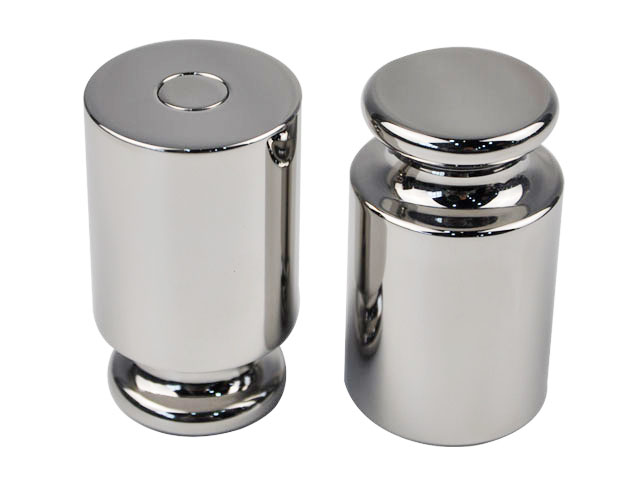
To begin with, it is essential to clarify what M1 calibration weights are and how they fit into the broader classification system of calibration weights. Calibration weights are standardized masses designed to verify, adjust, and calibrate weighing equipment. The classification of these weights is based on strict criteria related to tolerance, material quality, and stability, which determine the level of precision they can provide. M1 class weights are part of a hierarchical system where classes range from ultra-precise (such as E0, E1, and E2) to general-purpose (such as M1, M2, and M3). Unlike higher-precision classes that are primarily used in metrology laboratories and high-accuracy manufacturing processes, M1 weights are engineered for everyday calibration needs where extreme precision is not a prerequisite. This positioning makes them a cost-effective and practical choice for most commercial, industrial, and educational settings.
One of the defining characteristics of M1 calibration weights is their tolerance range. Tolerance refers to the maximum allowable deviation from the nominal mass of the weight. For M1 weights, the tolerance is significantly broader than that of higher classes, which is a key factor in their suitability for general-purpose applications. For example, a 1 kg M1 weight may have a tolerance of ±2.5 grams, whereas an E2 class 1 kg weight would have a tolerance of only ±0.16 grams. This broader tolerance does not diminish their utility; instead, it aligns with the accuracy requirements of most common weighing instruments, such as platform scales used in warehouses, kitchen scales in commercial kitchens, and educational balances in science classrooms. Another important characteristic of M1 weights is their material composition. Typically, M1 calibration weights are made from materials that balance durability, cost, and stability. Common materials include cast iron, steel, and sometimes brass or aluminum for smaller weights. Cast iron is particularly popular for larger M1 weights due to its high density, which allows for a compact size relative to mass, and its resistance to wear and tear in industrial environments. Steel weights, often coated with a protective layer to prevent corrosion, are used for medium-sized weights, while lighter materials like aluminum are reserved for smaller masses where portability is a consideration.
The physical design of M1 calibration weights also contributes to their functionality. Most M1 weights feature a simple, robust design with handles or knobs for easy handling, especially for larger masses. Smaller M1 weights (typically below 100 grams) may be cylindrical or rectangular in shape, with a smooth surface to minimize dust accumulation. Some weights also include a slot or a hole for hanging, which is useful for calibrating hanging scales or balances that require suspended weights. The design prioritizes ease of use and durability, as these weights are often subjected to frequent handling and exposure to various environmental conditions in industrial and commercial settings.
Moving on to applications, M1 calibration weights find utility in a diverse array of industries and settings, thanks to their versatility and cost-effectiveness. One of the most common applications is in industrial manufacturing and warehousing. In these environments, weighing instruments such as platform scales, floor scales, and conveyor scales are used to measure raw materials, in-process products, and finished goods. Regular calibration with M1 weights ensures that these scales provide accurate measurements, which is critical for inventory management, quality control, and compliance with production specifications. For example, in a food processing plant, calibrating portion scales with M1 weights ensures that products are packaged in the correct quantities, preventing underfilling or overfilling that could lead to customer complaints or financial losses. Similarly, in a construction material warehouse, calibrating scales used to measure aggregates like sand and gravel with M1 weights ensures that deliveries are accurate, avoiding disputes between suppliers and customers.
Another key application area for M1 calibration weights is in commercial retail settings. Retail scales used in grocery stores, delis, and farmers' markets rely on regular calibration to ensure that customers are charged correctly for products sold by weight. M1 weights are ideal for this purpose because they meet the accuracy requirements set by most local regulations for retail weighing and are affordable for small businesses to maintain. In addition to retail, M1 calibration weights are widely used in educational institutions, such as schools and universities, for teaching purposes in physics and chemistry laboratories. Students use these weights to learn about the principles of mass measurement, calibration, and the operation of weighing instruments, making them an essential tool for science education.
Healthcare facilities also utilize M1 calibration weights for certain applications. While high-precision weights are required for medical devices like analytical balances used in diagnostic laboratories, M1 weights are suitable for calibrating simpler weighing equipment, such as patient scales in clinics and hospitals. Accurate patient weight measurements are critical for determining medication dosages, monitoring health conditions, and planning medical treatments, so regular calibration with M1 weights helps ensure the reliability of these measurements. Additionally, M1 weights are used in environmental monitoring, such as calibrating scales used to measure soil samples, water samples, and waste materials in environmental testing laboratories. This ensures that the data collected for environmental assessments is accurate and trustworthy.
Several factors can influence the performance and longevity of M1 calibration weights, and understanding these factors is essential for maintaining their accuracy over time. One of the primary factors is environmental conditions. Temperature, humidity, and exposure to corrosive substances can all affect the mass and stability of the weights. For example, extreme temperatures can cause thermal expansion or contraction of the weight material, leading to temporary or permanent changes in mass. High humidity can promote corrosion, especially for metal weights, which can alter their mass and surface integrity. Exposure to chemicals, such as acids, bases, or solvents, can also damage the weight material, leading to inaccuracies. To mitigate these effects, M1 weights should be stored and used in a controlled environment with stable temperature and humidity levels, away from corrosive substances and direct sunlight.
Another factor that impacts the performance of M1 calibration weights is handling practices. Improper handling can lead to physical damage, such as dents, scratches, or chips, which can change the mass of the weight. For example, dropping a weight or allowing it to collide with hard surfaces can remove small amounts of material, reducing its mass. Similarly, handling weights with dirty or oily hands can transfer contaminants, which can add to the weight's mass temporarily. To avoid these issues, users should always handle M1 weights with clean, dry hands or use gloves. Tweezers or forceps should be used for smaller weights to prevent direct contact, and larger weights should be lifted using their handles to avoid dropping or damaging them. Additionally, weights should be placed gently on weighing pans to prevent impact damage to both the weight and the instrument.
Contamination is another significant factor that can affect the accuracy of M1 calibration weights. Dust, dirt, and other particles can accumulate on the surface of the weights, adding to their mass and leading to incorrect calibration results. Regular cleaning is therefore essential to maintain the accuracy of the weights. The cleaning method depends on the material of the weight; for example, cast iron weights can be cleaned with a dry cloth or a soft brush to remove dust, while steel weights can be wiped with a slightly damp cloth (followed by thorough drying) to remove contaminants. It is important to avoid using abrasive cleaners or solvents that can damage the weight's surface or protective coating.
Proper storage of M1 calibration weights is also critical for preserving their performance. Weights should be stored in a dedicated case or container that protects them from physical damage, dust, and environmental contaminants. The storage container should have individual compartments for each weight to prevent them from rubbing against each other, which can cause scratches or wear. Additionally, weights should be stored in a horizontal position to prevent deformation, especially for larger cast iron weights. It is also recommended to store weights in a location with minimal vibration, as constant vibration can affect the stability of the weight material over time.
Regular calibration of the M1 weights themselves is another key practice to ensure their accuracy. While M1 weights are used to calibrate other weighing instruments, they too can drift from their nominal mass over time due to wear, environmental factors, and handling. Therefore, it is important to have M1 weights recalibrated at regular intervals by a qualified metrology service provider. The frequency of recalibration depends on the frequency of use, the environmental conditions, and the criticality of the measurements. For most industrial and commercial applications, recalibration every 12 to 24 months is sufficient. However, weights used in harsh environments or for critical applications may require more frequent recalibration. During recalibration, the weight is compared to a reference weight of a higher class (such as E2 or F1) to determine if it is within its specified tolerance. If the weight is out of tolerance, it may be adjusted, repaired, or replaced.
When selecting M1 calibration weights, there are several considerations that users should keep in mind to ensure that the weights meet their specific needs. First, the nominal mass of the weights should match the range of the weighing instruments being calibrated. For example, if calibrating a scale with a maximum capacity of 50 kg, a set of M1 weights ranging from 100 grams to 50 kg would be appropriate. Second, the material of the weights should be compatible with the environment in which they will be used. For example, in a humid environment, stainless steel weights with a corrosion-resistant coating are preferable to cast iron weights. Third, the design of the weights should facilitate easy handling and use. For example, larger weights should have sturdy handles, and smaller weights should be easy to pick up with tweezers. Fourth, users should consider the traceability of the weights, even though the article avoids certification-related terms. Traceability ensures that the weight's calibration can be linked to national or international measurement standards, which is important for maintaining the integrity of measurement data. Finally, users should consider the cost of the weights, as M1 weights are available at a range of price points depending on the material, size, and manufacturer.
The importance of M1 calibration weights in ensuring measurement reliability cannot be overstated. Inaccurate weighing instruments can lead to a host of problems, including financial losses, product quality issues, non-compliance with regulations, and compromised safety. For example, in the pharmaceutical industry, even a small error in the measurement of raw materials can affect the efficacy and safety of medications. In the food industry, inaccurate portioning can lead to customer dissatisfaction and potential legal issues. In industrial manufacturing, incorrect measurements of raw materials can result in defective products and wasted resources. By using M1 calibration weights to regularly calibrate weighing instruments, users can mitigate these risks and ensure that their measurement processes are consistent and reliable.
In conclusion, M1 calibration weights are an essential tool for maintaining the accuracy of weighing instruments in a wide range of applications. Their versatility, cost-effectiveness, and practical design make them ideal for industrial, commercial, educational, and healthcare settings where extreme precision is not required. Understanding the key characteristics of M1 weights, such as their tolerance range, material composition, and physical design, is crucial for selecting the right weights for a given application. Additionally, proper handling, maintenance, storage, and regular recalibration are essential for preserving the accuracy and longevity of M1 calibration weights. By following best practices for the use and care of M1 weights, users can ensure that their weighing processes are reliable, consistent, and compliant with relevant requirements. As measurement technology continues to evolve, M1 calibration weights will remain a cornerstone of reliable weighing operations, supporting industries and institutions in their pursuit of accuracy and quality.
