





Changzhou Veidt Weighing Co., Ltd. © 2022 ALL RIGHTS RESERVED Privacy Policy | Calibration Weight | Test Weights | Cast Iron Weights | Standard Weights | Laboratory Weights | XML | SITEMAP
NEWS LIST
hanging calibration weights
Saturday 03rd January 2026 Back to list
In the realm of precision measurement, where accuracy can mean the difference between success and failure, reliability and consistency are paramount. Among the countless tools and instruments that underpin this critical field, hanging calibration weights stand out as unassuming yet indispensable components. These specialized weights, designed to be suspended during the calibration process, play a vital role in ensuring that a wide range of measuring devices operate within acceptable tolerance levels. From industrial manufacturing floors to scientific laboratories, their influence extends across diverse sectors, quietly upholding the standards that govern quality, safety, and scientific integrity.
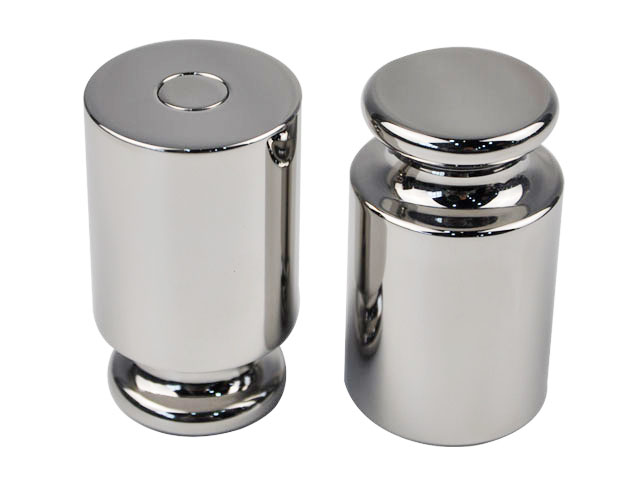
To understand the significance of hanging calibration weights, it is first essential to grasp the fundamental concept of calibration. Calibration is the process of comparing a measuring instrument’s output to a known, traceable standard to determine any deviations or errors. This ensures that the instrument provides accurate and consistent results, which is critical in scenarios where even the smallest discrepancy can have far-reaching consequences. Hanging calibration weights serve as these traceable standards in applications where the measuring device is designed to handle suspended loads or where a vertical force measurement is required. Unlike their benchtop counterparts, which are placed on a surface, hanging weights are specifically engineered to be attached to hooks, chains, or other suspension mechanisms, allowing for precise calibration of devices such as spring scales, dynamometers, crane scales, and tension meters.
The origins of calibration weights can be traced back to ancient civilizations, where standardized weights were used to facilitate trade and commerce. Early weights, often made of stone, metal, or clay, were simple in design but represented the first steps toward ensuring fairness in transactions. As societies advanced and technology evolved, the need for greater precision emerged, particularly during the Industrial Revolution. The mass production of goods demanded consistent quality control, which in turn required more accurate measuring instruments and calibration standards. Hanging calibration weights, as we know them today, began to take shape during this period, with improvements in materials and manufacturing processes enabling higher levels of precision. Over time, advancements in metallurgy, machining, and metrology have refined these weights, making them capable of meeting the stringent accuracy requirements of modern industries and scientific research.
One of the key characteristics of hanging calibration weights is their material composition, which is carefully selected to ensure stability, durability, and resistance to environmental factors. Common materials used include high-grade stainless steel, carbon steel, and sometimes brass or aluminum for specific applications. Stainless steel is particularly popular due to its corrosion resistance, which is crucial in environments where humidity, chemicals, or temperature fluctuations may be present. The material’s density and homogeneity also contribute to the weight’s stability, ensuring that its mass remains consistent over time. In addition to the base material, the surface finish of hanging calibration weights is also important. A smooth, polished surface reduces the accumulation of dust, dirt, and moisture, which can alter the weight’s mass and affect calibration accuracy. Some weights may also feature a protective coating to further enhance their resistance to wear and environmental damage.
Hanging calibration weights come in a wide range of sizes and configurations to accommodate different calibration needs. The mass of these weights can vary from a few grams to several tons, depending on the application. For example, small hanging weights (grams to kilograms) are used to calibrate laboratory balances and small spring scales, while larger weights (hundreds of kilograms to tons) are employed in industrial settings to calibrate crane scales and heavy-duty dynamometers. The design of the weight also varies to suit different suspension methods. Many hanging weights feature a top loop or hook that allows for easy attachment to the measuring device, while others may have a threaded insert or a shackle for secure connection. Some weights are also designed with a bottom hook or attachment point, enabling them to be stacked or combined with other weights to achieve a specific mass. This versatility makes hanging calibration weights suitable for a diverse range of calibration tasks.
The working principle of hanging calibration weights is based on the fundamental physical property of mass and its relationship to force. When a hanging weight is suspended from a measuring device, it exerts a downward force equal to its mass multiplied by the acceleration due to gravity (F = mg). The measuring device, such as a spring scale, responds to this force by deflecting or producing an output signal. By comparing the device’s output to the known force exerted by the calibration weight, any errors or deviations can be identified and corrected. This process ensures that the measuring device accurately measures the force or mass of other objects when in use. The key to this principle is the traceability of the calibration weight to a national or international standard. Traceability ensures that the weight’s mass is accurately known and can be traced back to a primary standard maintained by a recognized metrology organization, such as the International Bureau of Weights and Measures (BIPM). This traceability is essential for ensuring the validity and reliability of calibration results.
The applications of hanging calibration weights are vast and varied, spanning multiple industries and sectors. In the manufacturing industry, these weights are used to calibrate measuring instruments employed in quality control processes. For example, in the automotive industry, dynamometers used to measure engine torque and power must be calibrated regularly using hanging weights to ensure accurate performance testing. In the aerospace industry, tension meters used to measure the tension in aircraft cables and components rely on calibration with hanging weights to maintain safety and reliability. Similarly, in the construction industry, crane scales used to weigh construction materials must be calibrated to ensure that they can safely handle the loads they are designed for.
Scientific research is another area where hanging calibration weights play a critical role. In physics laboratories, these weights are used to calibrate instruments used in experiments involving force, mass, and motion. For example, in studies of gravitational forces, precise calibration weights are essential for ensuring the accuracy of experimental results. In chemistry laboratories, hanging weights may be used to calibrate balances used in quantitative analysis, where accurate mass measurements are crucial for determining the composition of substances. Environmental science also benefits from the use of hanging calibration weights, as they are used to calibrate instruments that measure parameters such as air pressure, water flow, and soil tension.
The healthcare industry is yet another sector that relies on hanging calibration weights. Medical devices such as patient scales, forceps, and surgical instruments must be calibrated to ensure accurate performance. For example, patient scales used in hospitals and clinics must be calibrated regularly to provide accurate weight measurements, which are essential for diagnosing and treating medical conditions. Similarly, force-measuring devices used in physical therapy and rehabilitation must be calibrated to ensure that they apply the correct amount of force to patients.
Proper maintenance and handling of hanging calibration weights are essential to ensure their accuracy and longevity. One of the most important maintenance practices is regular cleaning. Dust, dirt, and moisture can accumulate on the surface of the weights, altering their mass and affecting calibration results. Weights should be cleaned using a soft, dry cloth or a mild cleaning solution that does not corrode the material. It is also important to handle the weights with care to avoid damage. Dropping or mishandling a weight can cause dents, scratches, or deformation, which can change its mass. Hanging weights should be stored in a clean, dry environment, away from extreme temperatures, humidity, and chemicals. They should also be stored in a way that prevents them from coming into contact with other objects that could cause damage. Regular inspection is another key maintenance practice. Weights should be inspected for signs of wear, corrosion, or damage before each use. Any weights that show signs of damage or that are suspected of being inaccurate should be removed from service and re-calibrated or replaced.
Calibration of the hanging weights themselves is also essential to maintain their accuracy. Over time, factors such as wear, environmental conditions, and handling can cause the mass of the weights to change. Therefore, it is recommended that hanging calibration weights be re-calibrated at regular intervals, as specified by the manufacturer or by relevant industry standards. The re-calibration process involves comparing the weight to a traceable standard and adjusting or certifying its mass. This ensures that the weight continues to provide accurate and reliable calibration results.
The field of precision measurement is constantly evolving, driven by advancements in technology and the growing demand for higher accuracy and efficiency. This evolution is also shaping the development of hanging calibration weights. One of the key trends in the industry is the integration of digital technology. Some modern hanging calibration weights are equipped with digital sensors that allow for real-time monitoring of their mass and performance. These digital weights can transmit data to a computer or mobile device, enabling automated calibration processes and reducing the risk of human error. Another trend is the development of lighter and more compact hanging weights without compromising on accuracy. This is particularly important in applications where space is limited, such as in laboratory settings or in portable calibration equipment.
Sustainability is also becoming an increasingly important consideration in the design and manufacturing of hanging calibration weights. Manufacturers are exploring the use of eco-friendly materials and processes to reduce their environmental impact. For example, the use of recycled stainless steel and other sustainable materials is becoming more common. Additionally, efforts are being made to extend the lifespan of hanging weights through improved design and maintenance practices, reducing the need for replacement and minimizing waste.
The future of hanging calibration weights is also likely to be influenced by the growing globalization of trade and industry. As companies operate in increasingly global markets, there is a greater need for calibration standards that are recognized internationally. This is driving the adoption of global metrology standards and the development of hanging weights that meet these standards. Additionally, the increasing complexity of measuring instruments is requiring more specialized hanging calibration weights that can handle unique calibration requirements. For example, the rise of smart manufacturing and Industry 4.0 is leading to the development of measuring instruments that are integrated with digital systems, requiring calibration weights that can work seamlessly with these technologies.
In conclusion, hanging calibration weights are a critical component of the precision measurement ecosystem, playing a vital role in ensuring the accuracy and reliability of measuring instruments across a wide range of industries and applications. Their design, material composition, and traceability to international standards make them essential tools for quality control, scientific research, healthcare, and many other fields. Proper maintenance and handling are essential to ensure their longevity and accuracy, while ongoing advancements in technology are shaping their evolution to meet the changing needs of the precision measurement industry. As the demand for higher accuracy, efficiency, and sustainability continues to grow, hanging calibration weights will remain an unsung yet indispensable backbone of precision measurement, upholding the standards that drive innovation and ensure quality in our increasingly complex world.
