





Changzhou Veidt Weighing Co., Ltd. © 2022 ALL RIGHTS RESERVED Privacy Policy | Calibration Weight | Test Weights | Cast Iron Weights | Standard Weights | Laboratory Weights | XML | SITEMAP
NEWS LIST
e2 calibration weights
Saturday 03rd January 2026 Back to list
In the realm of measurement accuracy, calibration weights stand as the cornerstone of reliable weighing systems across industries. Among the various accuracy classes of calibration weights, E2 class holds a unique position, bridging the gap between high-precision reference standards and practical industrial applications.
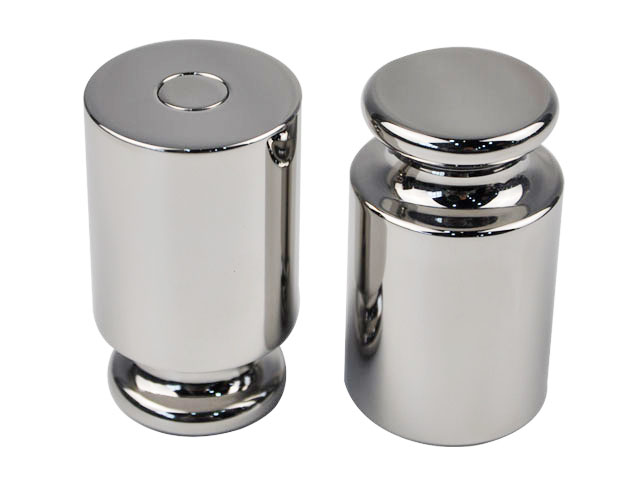
1. Understanding E2 Calibration Weights: Definition and Core Characteristics
Calibration weights are standardized objects designed to verify and adjust the accuracy of weighing instruments, such as balances and scales. The classification of these weights is based on international standards that define permissible error limits, material requirements, and construction specifications. E2 calibration weights belong to the medium-to-high precision category, making them suitable for a wide range of calibration tasks that demand greater accuracy than lower classes (such as F1, F2, or M1) but do not require the ultra-high precision of higher classes like E1.
One of the key defining features of E2 calibration weights is their permissible error range. Unlike lower-class weights, which have more generous error tolerances, E2 weights are manufactured to strict tolerances that vary with their mass. For example, a 1kg E2 weight typically has a permissible error of ±0.5mg, while a 1g E2 weight may have a tolerance of ±0.02mg. These tight tolerances ensure that E2 weights can be used to calibrate precision balances with readability down to 0.1mg, making them indispensable in laboratories and manufacturing facilities where small variations in mass can have significant impacts on product quality or experimental results.
Material selection is another critical aspect of E2 calibration weights. To maintain stability and minimize wear, E2 weights are commonly crafted from high-quality materials such as stainless steel, brass, or aluminum alloys. Stainless steel is particularly preferred due to its corrosion resistance, durability, and low magnetic susceptibility—properties that are essential for preserving the weight’s mass accuracy over time. Some E2 weights may also be coated with a protective layer to further enhance resistance to environmental factors, such as humidity and chemical exposure, which can alter the weight’s mass.
The construction of E2 calibration weights also adheres to strict standards. They are typically designed with a compact, robust shape to prevent damage during handling and storage. Many E2 weights feature a handle or a hook for easy manipulation with tweezers or gloves, reducing the risk of contamination from fingerprints, which can add measurable mass and compromise accuracy. Additionally, E2 weights are often marked with their mass value, accuracy class (E2), and calibration date to ensure traceability—a critical requirement for maintaining the integrity of calibration processes.
2. The Role of E2 Calibration Weights in Measurement Traceability
Traceability is a fundamental principle in metrology, referring to the ability to relate measurement results to a recognized standard, typically through an unbroken chain of calibrations. E2 calibration weights play a vital role in this chain, serving as a link between primary reference standards (such as E1 weights, which are calibrated against national or international standards) and the working weights used in daily operations. This traceability ensures that measurements taken with calibrated weighing instruments are accurate, reliable, and comparable across different laboratories, facilities, and even countries.
To maintain traceability, E2 calibration weights must themselves be calibrated at regular intervals by accredited calibration laboratories. During calibration, the weight’s actual mass is measured against a higher-precision reference weight (usually E1 class), and any deviation from the nominal mass is documented. If the deviation exceeds the permissible error limit, the weight may be adjusted, repaired, or replaced. The calibration certificate generated during this process provides a record of the weight’s accuracy and traceability, which is often required for compliance with quality management systems, such as ISO 9001, and regulatory requirements in industries like pharmaceuticals, food and beverage, and aerospace.
Traceability also ensures consistency in measurement results over time. By using E2 calibration weights that are traceable to a recognized standard, organizations can ensure that their weighing processes remain consistent, even as personnel, equipment, or environmental conditions change. This consistency is essential for quality control, as it allows organizations to detect and correct deviations in product mass before they reach the customer, reducing the risk of product recalls, customer complaints, and financial losses.
3. Applications of E2 Calibration Weights Across Industries
The versatility and precision of E2 calibration weights make them suitable for a wide range of applications across various industries. From laboratory research to industrial manufacturing, E2 weights are used to ensure the accuracy of weighing instruments that are critical to operational success. Below are some of the key industries and applications where E2 calibration weights are commonly employed:
3.1 Laboratory and Research Settings
In scientific research laboratories, accuracy is paramount. E2 calibration weights are used to calibrate precision analytical balances, which are used for tasks such as measuring sample masses in chemical analysis, pharmaceutical research, and materials science. For example, in a chemistry laboratory, an analytical balance calibrated with E2 weights ensures that the mass of reactants is measured accurately, which is essential for ensuring the reproducibility of experiments. In pharmaceutical research, E2 weights are used to calibrate balances used in drug discovery and development, where small variations in mass can affect the efficacy and safety of new drugs.
E2 weights are also used in academic and government research laboratories, where they play a role in advancing scientific knowledge. For instance, in environmental research, E2-calibrated balances are used to measure the mass of air, water, and soil samples, helping researchers to monitor pollution levels and understand the impact of human activities on the environment. In physics research, E2 weights are used to calibrate instruments used in experiments involving force, mass, and gravity, ensuring that the results are accurate and reliable.
3.2 Pharmaceutical and Healthcare Industries
The pharmaceutical industry is heavily regulated, with strict requirements for quality control and product safety. E2 calibration weights are used to calibrate the weighing instruments used in the production of pharmaceuticals, including the measurement of active pharmaceutical ingredients (APIs), excipients, and finished products. Accurate weighing is essential in this industry, as the dosage of APIs directly affects the safety and efficacy of drugs. A deviation in mass could result in a drug that is either ineffective or toxic, posing a significant risk to patients.
In addition to pharmaceutical production, E2 calibration weights are used in healthcare settings, such as hospitals and clinics. They are used to calibrate scales used for measuring patient weight, which is critical for determining medication dosages, monitoring patient health, and planning medical treatments. For example, in pediatric care, accurate weight measurements are essential for administering the correct dosage of medication to infants and children, who are more susceptible to the effects of incorrect dosages.
3.3 Food and Beverage Industry
The food and beverage industry relies on accurate weighing to ensure product consistency, compliance with labeling requirements, and cost control. E2 calibration weights are used to calibrate the scales and balances used in food production, processing, and packaging. For example, in a bakery, a scale calibrated with E2 weights ensures that each loaf of bread or batch of cookies has the correct mass, maintaining product consistency and meeting customer expectations. In the beverage industry, E2 weights are used to calibrate the filling machines that measure the volume of liquid in bottles or cans, ensuring that the product meets the labeled volume requirements.
Accurate weighing is also essential for cost control in the food and beverage industry. By ensuring that the correct amount of raw materials is used in each batch, organizations can reduce waste and minimize production costs. Additionally, accurate weighing helps to ensure compliance with regulatory requirements, such as those set by food safety agencies, which require food products to be labeled with accurate mass or volume information.
3.4 Aerospace and Automotive Industries
The aerospace and automotive industries demand high levels of precision and reliability, as even small deviations in mass can affect the performance and safety of vehicles and aircraft. E2 calibration weights are used to calibrate the weighing instruments used in the manufacturing and testing of components, such as engine parts, aircraft components, and automotive parts. For example, in the aerospace industry, E2 weights are used to calibrate the balances used to measure the mass of aircraft components, which is critical for ensuring that the aircraft meets weight requirements and operates efficiently. In the automotive industry, E2 weights are used to calibrate the scales used to measure the mass of engine parts, ensuring that they meet the design specifications and contribute to the overall performance and fuel efficiency of the vehicle.
4. Handling and Maintenance Best Practices for E2 Calibration Weights
The accuracy and longevity of E2 calibration weights depend largely on proper handling and maintenance. Even small amounts of contamination, damage, or improper storage can alter the weight’s mass, compromising its accuracy and traceability. Below are some key best practices for handling and maintaining E2 calibration weights:
4.1 Proper Handling Techniques
E2 calibration weights should always be handled with care to avoid contamination and damage. Fingerprints are one of the most common sources of contamination, as the oils and moisture on the skin can add measurable mass to the weight. To prevent this, E2 weights should be handled with clean, dry tweezers, gloves, or a weight handling tool. Gloves should be made of a non-abrasive, non-particulating material, such as nitrile or latex, to avoid scratching the weight’s surface or leaving particles on it.
When moving E2 weights, they should be lifted and placed gently to avoid dropping or impacting them. Impact can cause dents, scratches, or deformation, which can alter the weight’s mass. Additionally, weights should not be stacked or placed on top of each other, as this can cause damage to the surfaces of the weights.
4.2 Storage Requirements
Proper storage is essential for preserving the accuracy of E2 calibration weights. Weights should be stored in a clean, dry, and stable environment, away from sources of moisture, dust, chemicals, and temperature fluctuations. Temperature and humidity can affect the weight’s mass, so the storage area should be maintained at a constant temperature (preferably between 18°C and 22°C) and relative humidity (between 40% and 60%).
E2 weights should be stored in their original cases or in a dedicated weight storage cabinet. The storage case should be lined with a soft, non-abrasive material, such as foam or felt, to protect the weight’s surface from scratches. Weights should be stored individually to prevent contact between them, which can cause damage. Additionally, the storage area should be free from magnetic fields, as magnetic materials can become magnetized, affecting the weight’s mass and the accuracy of weighing instruments.
4.3 Regular Cleaning
E2 calibration weights should be cleaned regularly to remove any contamination, such as dust, dirt, or oils. Cleaning should be done using a mild, non-abrasive cleaning agent, such as isopropyl alcohol or a specialized weight cleaning solution. The weight should be wiped gently with a clean, soft cloth or a lint-free wipe, taking care not to scratch the surface. After cleaning, the weight should be dried thoroughly with a clean, dry cloth to remove any residual moisture.
It is important to note that cleaning should not be done too frequently, as excessive cleaning can wear away the weight’s surface or protective coating. Cleaning should only be performed when contamination is visible or when the weight is due for calibration.
4.4 Regular Calibration
As mentioned earlier, E2 calibration weights must be calibrated at regular intervals to maintain their accuracy and traceability. The frequency of calibration depends on several factors, including the frequency of use, the environment in which the weight is used and stored, and the requirements of the quality management system. In general, E2 weights should be calibrated at least once a year, although more frequent calibration may be necessary for weights that are used heavily or in harsh environments.
Calibration should be performed by an accredited calibration laboratory that has the necessary equipment and expertise to measure the weight’s mass accurately. The calibration laboratory will provide a calibration certificate that documents the weight’s actual mass, any deviation from the nominal mass, and the date of calibration. This certificate should be kept on file as proof of traceability and compliance with quality requirements.
5. Common Challenges and Solutions in Using E2 Calibration Weights
Despite their high precision and reliability, E2 calibration weights can face several challenges that can affect their accuracy. Below are some common challenges and solutions for using E2 calibration weights:
5.1 Contamination
As mentioned earlier, contamination from fingerprints, dust, and other particles is a common challenge for E2 calibration weights. To address this, organizations should implement strict handling protocols, such as requiring the use of tweezers or gloves when handling weights. Additionally, the weighing area should be kept clean and free from dust and debris. Regular cleaning of the weights and the weighing instrument can also help to prevent contamination.
5.2 Environmental Factors
Temperature and humidity fluctuations can affect the mass of E2 calibration weights and the accuracy of weighing instruments. To mitigate this, the weighing and storage areas should be maintained at a constant temperature and humidity. Additionally, weights should be allowed to acclimate to the ambient temperature of the weighing area before use. This acclimation period allows the weight’s temperature to equalize with the environment, reducing the impact of thermal expansion or contraction on the weight’s mass.
5.3 Damage and Wear
Damage from impact, scratching, or deformation can alter the mass of E2 calibration weights. To prevent this, organizations should train personnel on proper handling techniques and ensure that weights are stored in a protected environment. Regular inspections of the weights should be performed to check for signs of damage, such as dents, scratches, or deformation. If damage is detected, the weight should be removed from service and sent for calibration or replacement.
5.4 Lack of Traceability
A lack of traceability can compromise the accuracy and reliability of E2 calibration weights. To address this, organizations should ensure that all E2 weights are calibrated by an accredited laboratory and that calibration certificates are kept on file. Additionally, weights should be labeled with their calibration date and next due date to ensure that they are recalibrated on time.
6. The Future of E2 Calibration Weights in Evolving Metrology Standards
As metrology standards continue to evolve, the role of E2 calibration weights is likely to remain critical, while also adapting to new technologies and requirements. One of the key trends in metrology is the shift towards digitalization and automation, which is changing the way calibration processes are performed. For example, automated calibration systems are becoming more common, allowing for faster, more accurate, and more consistent calibration of weighing instruments. E2 calibration weights are likely to be integrated into these automated systems, requiring them to be compatible with digital measurement tools and software.
Another trend is the increasing focus on sustainability in manufacturing and industry. This is likely to lead to the development of E2 calibration weights made from more sustainable materials, such as recycled stainless steel or biodegradable coatings. Additionally, manufacturers may focus on improving the longevity of E2 weights, reducing the need for replacement and minimizing waste.
Advancements in materials science are also likely to impact the design and performance of E2 calibration weights. New materials with improved corrosion resistance, durability, and low magnetic susceptibility may be developed, further enhancing the accuracy and longevity of E2 weights. Additionally, advancements in manufacturing technologies, such as 3D printing, may allow for more precise and cost-effective production of E2 weights, making them more accessible to small and medium-sized organizations.
7. Conclusion
E2 calibration weights play a vital role in ensuring the accuracy and reliability of weighing systems across a wide range of industries. Their strict permissible error limits, high-quality materials, and traceability make them suitable for applications that demand medium-to-high precision, from laboratory research to pharmaceutical production and aerospace manufacturing. By following proper handling and maintenance best practices, organizations can preserve the accuracy and longevity of E2 calibration weights, ensuring that their weighing processes remain consistent and compliant with quality and regulatory requirements.
As metrology standards continue to evolve and new technologies emerge, E2 calibration weights are likely to adapt and remain a cornerstone of measurement integrity. Whether in a laboratory, a manufacturing facility, or a healthcare setting, E2 calibration weights are essential for upholding the principles of accuracy, traceability, and consistency that are fundamental to modern industry and scientific research. By understanding and implementing the best practices outlined in this article, professionals can maximize the value of E2 calibration weights and ensure that their measurement processes meet the highest standards of quality and reliability.
