





Changzhou Veidt Weighing Co., Ltd. © 2022 ALL RIGHTS RESERVED Privacy Policy | Calibration Weight | Test Weights | Cast Iron Weights | Standard Weights | Laboratory Weights | XML | SITEMAP
NEWS LIST
class f weights
Saturday 03rd January 2026 Back to list
In the realm of precision measurement, where accuracy is the cornerstone of reliability, weights serve as fundamental reference standards. Among the various classes of weights defined by international and regional standards, Class F weights occupy a unique and important position. Unlike higher-precision classes that are primarily used in metrology laboratories for calibration of other weights, or lower-precision classes designed for general industrial or commercial use, Class F weights strike a balance between precision and practicality.
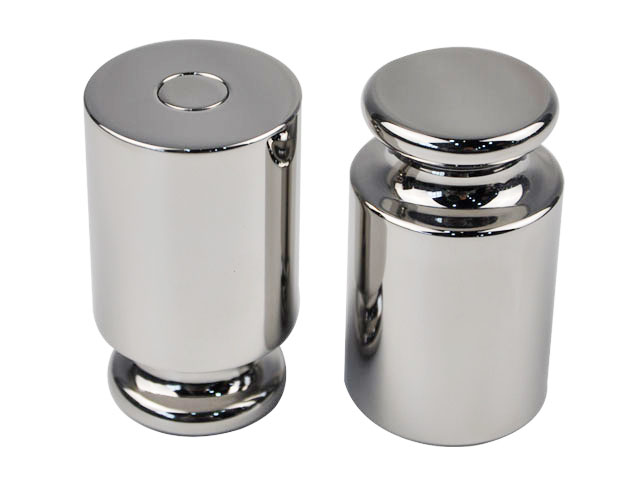
To understand the role of Class F weights, it is first essential to contextualize them within the hierarchical classification system of weights. Weight classification systems, such as those outlined in OIML R111 (International Organization of Legal Metrology) and ASTM E617 (American Society for Testing and Materials), categorize weights based on their tolerance levels, material requirements, and intended use. At the top of the hierarchy are high-precision classes like Class E1 and E2, which are characterized by extremely tight tolerances and are used exclusively in national metrology institutes or accredited calibration laboratories to establish traceability to the International System of Units (SI) base unit for mass, the kilogram. Below these are Class F1 and F2 weights, which are often referred to as "working standards" due to their role in calibrating lower-class weights and precision measuring instruments. Further down the scale are industrial classes such as Class M1, M2, and M3, which are used in routine manufacturing, quality control, and commercial transactions where slightly higher tolerances are acceptable.
Class F weights, which typically include subclasses F1 and F2, are distinguished by their moderate tolerance levels that make them suitable for a wide range of intermediate precision applications. The key difference between F1 and F2 weights lies in their maximum permissible errors (MPE). For example, a 1 kg Class F1 weight has a significantly smaller MPE than a 1 kg Class F2 weight, reflecting its higher precision. These tolerance levels are carefully defined to ensure that Class F weights can provide reliable reference values without the need for the specialized storage and handling requirements of higher-precision classes. This balance makes them a versatile choice for laboratories, manufacturing facilities, and testing centers that require accurate measurements but do not operate at the highest metrological level.
The manufacturing of Class F weights is subject to strict requirements to ensure their accuracy, stability, and durability. The choice of material is a critical factor in determining the performance of Class F weights. Common materials include stainless steel, brass, and sometimes aluminum for smaller weights. Stainless steel is particularly preferred due to its high density, corrosion resistance, and dimensional stability. These properties are essential because any change in the weight’s mass due to corrosion, wear, or environmental factors can compromise its accuracy. During the manufacturing process, the weights undergo a series of precision machining steps to achieve the desired mass and shape. The surface finish is also carefully controlled to minimize the accumulation of dust and debris, which can affect the measured mass. Additionally, Class F weights are often subjected to heat treatment to enhance their mechanical stability and reduce internal stresses that could lead to mass changes over time.
Another important aspect of Class F weight manufacturing is the verification of mass during production. Each weight must be individually calibrated against a higher-precision standard (typically Class E2 or F1 for F2 weights) to ensure that it meets the specified tolerance requirements. This initial calibration is a critical step in establishing the traceability of the Class F weight to national or international standards. Once manufactured and calibrated, the weights are marked with essential information, including their mass value, class designation, and manufacturer’s identification. This marking ensures traceability and helps users identify the weight’s specifications at a glance.
The applications of Class F weights are diverse, spanning multiple industries and sectors where intermediate precision measurement is required. One of the primary applications is in the calibration of lower-class weights. For instance, Class F1 weights are commonly used to calibrate Class F2, M1, and M2 weights, ensuring that these lower-precision weights maintain their accuracy over time. This calibration chain is essential for maintaining traceability throughout the measurement system, from the highest national standards down to routine industrial measurements. Without this chain, there would be no guarantee that the weights used in manufacturing or commercial transactions are accurate, leading to inconsistencies and potential disputes.
Class F weights are also widely used in the calibration and verification of precision measuring instruments. Instruments such as analytical balances, industrial scales, and force gauges rely on accurate weight references to ensure their measurements are reliable. For example, in a pharmaceutical laboratory, analytical balances used to measure active pharmaceutical ingredients (APIs) must be calibrated regularly using Class F weights to ensure that the dosage of medications is precise. Similarly, in the automotive industry, industrial scales used to measure components such as engine parts must be calibrated with Class F weights to maintain quality control standards. In these applications, the precision of Class F weights is sufficient to ensure that the instruments are calibrated within their specified accuracy limits.
Another important application of Class F weights is in research and development (R&D) activities. In fields such as materials science, chemistry, and physics, researchers often require accurate mass measurements to study the properties of materials, conduct experiments, and develop new technologies. Class F weights provide a reliable reference for these measurements, ensuring that the results are reproducible and comparable across different laboratories. For example, in a materials science laboratory, researchers studying the strength of a new alloy may use Class F weights to calibrate the testing equipment used to measure the alloy’s tensile strength. This ensures that the test results are accurate and can be trusted by other researchers in the field.
Class F weights also play a role in quality control and inspection processes across various industries. In manufacturing, for example, quality control inspectors use Class F weights to verify the accuracy of production equipment and ensure that finished products meet the required specifications. For instance, in the production of electronic components, where precise mass measurements are critical for performance, Class F weights are used to calibrate the scales used to check the mass of components. This helps to identify any deviations from the standard and ensures that only high-quality products reach the market. Similarly, in the food and beverage industry, Class F weights are used to calibrate the scales used in packaging and labeling processes, ensuring that products are accurately portioned and labeled in compliance with regulatory requirements.
To maintain the accuracy and reliability of Class F weights over time, regular calibration and proper maintenance are essential. Calibration is the process of comparing the weight’s mass to a traceable standard to determine if it still meets the specified tolerance requirements. The frequency of calibration depends on several factors, including the frequency of use, the environment in which the weight is stored and used, and the criticality of the measurements for which it is used. Generally, Class F weights should be calibrated at least once a year, although more frequent calibration may be necessary for weights used in harsh environments or high-frequency applications.
The calibration process for Class F weights involves several steps. First, the weight is cleaned to remove any dust, dirt, or contaminants that could affect the measurement. Next, it is placed in a controlled environment (typically a temperature-controlled laboratory) to allow it to reach thermal equilibrium with the standard weight and the measuring instrument. This is important because temperature changes can cause thermal expansion or contraction of the weight, leading to temporary changes in mass. Once thermal equilibrium is achieved, the weight is compared to a higher-precision standard using a precision balance. The difference between the measured mass of the Class F weight and the mass of the standard is calculated, and if this difference is within the specified MPE, the weight is considered calibrated and fit for use. If the difference exceeds the MPE, the weight may need to be adjusted, repaired, or replaced.
Proper maintenance of Class F weights is also crucial for ensuring their long-term performance. This includes storing the weights in a clean, dry, and vibration-free environment to prevent corrosion, damage, and contamination. Weights should be handled with care to avoid dropping or scratching, as these can cause permanent changes in mass. It is also recommended to use gloves when handling Class F weights to prevent the transfer of oils and moisture from the skin, which can affect the weight’s mass. Additionally, weights should be inspected regularly for signs of wear, corrosion, or damage, and any issues should be addressed promptly to prevent further deterioration.
The significance of Class F weights extends beyond their immediate applications in calibration and measurement. They play a vital role in ensuring the integrity of measurement systems across industries, which in turn contributes to product quality, consumer safety, and fair trade. For example, in the pharmaceutical industry, accurate measurements using Class F-calibrated instruments ensure that medications are dosed correctly, protecting patients from underdosing or overdosing. In the automotive industry, precise measurements help to ensure that vehicle components fit and function properly, enhancing safety and reliability. In commercial transactions, accurate weights ensure that consumers receive the correct quantity of goods, promoting fair trade practices.
Furthermore, Class F weights contribute to the harmonization of measurement standards globally. By adhering to international standards such as OIML R111, manufacturers of Class F weights ensure that their products are compatible with measurement systems around the world. This harmonization is essential for global trade, as it allows companies to operate in multiple countries with confidence that their measurements are accurate and recognized internationally. It also facilitates collaboration between researchers and institutions across borders, as they can rely on consistent and traceable measurement references.
In recent years, advancements in technology have had a significant impact on the manufacturing and calibration of Class F weights. Precision machining technologies, such as computer numerical control (CNC) machining, have improved the accuracy and consistency of weight production, allowing manufacturers to achieve tighter tolerances and better surface finishes. Similarly, advancements in precision balancing equipment have made the calibration process more efficient and accurate, reducing the time and cost associated with calibrating Class F weights. These technological advancements have also made Class F weights more accessible to a wider range of users, further expanding their applications.
Despite their many advantages, Class F weights are not without limitations. Their precision is not sufficient for the highest-level metrological applications, which require the use of Class E1 or E2 weights. Additionally, Class F weights are more expensive than lower-class weights, making them less suitable for applications where high precision is not required. However, their balance of precision, practicality, and cost makes them an ideal choice for a wide range of intermediate precision applications, and their limitations are outweighed by their numerous benefits.
Looking to the future, the role of Class F weights is likely to remain important as industries continue to demand higher levels of accuracy and reliability in measurement. As global trade expands and technology advances, the need for consistent and traceable measurement standards will only grow, and Class F weights will continue to play a key role in meeting this need. Additionally, ongoing improvements in manufacturing and calibration technologies are likely to further enhance the performance and accessibility of Class F weights, making them even more valuable to users across various sectors.
In conclusion, Class F weights are a critical component of the precision measurement ecosystem, striking a balance between accuracy and practicality that makes them indispensable across multiple industries. Their strict manufacturing requirements, diverse applications in calibration and quality control, and role in maintaining traceability and harmonizing global measurement standards highlight their significance. Regular calibration and proper maintenance ensure that Class F weights remain reliable over time, contributing to product quality, consumer safety, and fair trade. As technology continues to advance, Class F weights will continue to evolve, further solidifying their position as a fundamental reference standard in precision measurement.
