





Changzhou Veidt Weighing Co., Ltd. © 2022 ALL RIGHTS RESERVED Privacy Policy | Calibration Weight | Test Weights | Cast Iron Weights | Standard Weights | Laboratory Weights | XML | SITEMAP
NEWS LIST
test weight set
Saturday 14th March 2026 Back to list
In every corner of modern industry, scientific research, and daily commercial operations, the pursuit of accurate measurement stands as a non-negotiable pillar of reliability, consistency, and trust. At the heart of maintaining this accuracy lies a seemingly simple yet profoundly impactful tool: the test weight set. Far more than just a collection of weighted objects, these sets serve as the universal reference point for calibrating, verifying, and fine-tuning all types of weighing equipment, bridging the gap between raw mechanical or electronic readings and true, verifiable mass values. Without standardized test weight sets, the precision that underpins pharmaceutical manufacturing, food production, industrial logistics, laboratory research, and countless other sectors would crumble, leading to flawed data, inconsistent products, operational inefficiencies, and a breakdown of the trust that governs trade and quality control. This exploration delves into the essence of test weight sets, their design and construction, practical applications across diverse fields, proper handling and maintenance practices, and their enduring significance in a world that increasingly relies on exact measurements.
To understand the value of test weight sets, it is first critical to grasp their core purpose: to provide a consistent, known mass reference that enables the validation of weighing instruments. Weighing devices, from delicate laboratory analytical balances to heavy-duty industrial floor scales, are prone to subtle shifts in performance over time. Factors such as regular use, mechanical wear, environmental changes like temperature fluctuations and humidity, and even minor physical impacts can alter their calibration, causing readings to deviate from actual mass values. A test weight set eliminates this uncertainty by offering a tangible, stable benchmark; technicians place these calibrated weights onto a scale or balance, compare the instrument’s displayed reading to the known mass of the weight, and identify any discrepancies. This process is not limited to one-time checks; it forms the basis of routine maintenance protocols, ensuring that weighing equipment remains aligned with established measurement norms throughout its operational lifespan. Unlike makeshift or unregulated weights, a standardized test weight set is engineered to maintain its mass integrity over extended periods, making it a reliable long-term asset for any operation that prioritizes measurement accuracy.
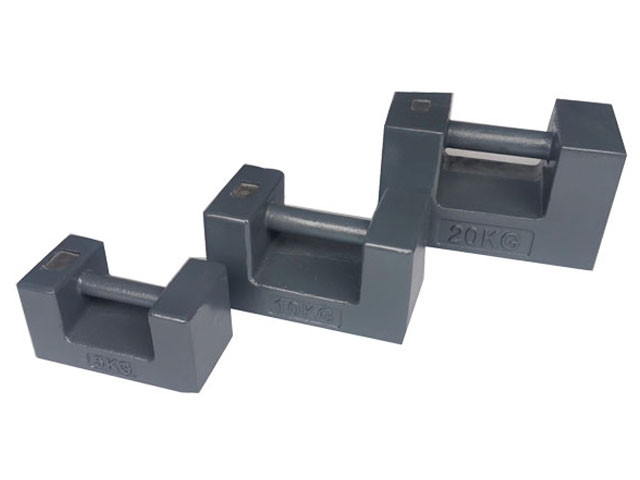
The design and construction of test weight sets are carefully tailored to balance durability, stability, and functionality, with variations to suit different precision requirements and working environments. One of the most fundamental considerations in crafting these weights is material selection, as the chosen substance directly impacts resistance to corrosion, wear, and mass fluctuation. For applications demanding ultra-fine precision, such as laboratory research and pharmaceutical formulation, weights are typically crafted from high-grade stainless steel. This material boasts exceptional resistance to rust and chemical damage, a smooth surface that resists dust and debris accumulation, and low magnetic properties—an essential feature for electronic balances that rely on electromagnetic force to measure mass. Stainless steel weights also maintain their dimensional stability across varying temperatures, ensuring that their mass remains consistent even in controlled lab settings or fluctuating industrial spaces. In contrast, heavy-duty test weights designed for industrial use, such as calibrating truck scales, warehouse hoppers, and large manufacturing scales, are often made from cast iron. Cast iron offers unparalleled strength and load-bearing capacity, making it ideal for creating large, heavy weights that can withstand the rigors of industrial handling. These cast iron weights are typically coated with a protective layer to prevent oxidation and wear, preserving their mass accuracy despite exposure to harsher working conditions, including dust, moisture, and frequent movement.
Beyond material, the physical structure and configuration of test weight sets are optimized for usability and versatility. Most sets follow a logical mass increment pattern, allowing users to combine individual weights to achieve a wide range of reference masses, catering to the full weighing range of different instruments. Smaller weights, often in milligram and gram increments, feature compact, cylindrical designs with a small top knob, enabling safe handling with precision tweezers or specialized lifters to avoid skin contact that could leave oil residues or alter mass. Larger weights, ranging from kilograms to tons, are built with ergonomic handles or slot designs for easy lifting by hand or with equipment like forklifts, ensuring safety and stability during calibration procedures. Many test weight sets also come with protective storage cases, which shield individual weights from physical damage, contamination, and environmental exposure when not in use. These cases are often lined with soft, non-abrasive material to prevent scratches or dents that could compromise the weight’s surface integrity, and they are organized to keep weights sorted by mass, streamlining the calibration process and reducing the risk of misplacement.
The versatility of test weight sets is evident in their widespread application across nearly every industry that depends on accurate mass measurement, each sector relying on these tools to uphold unique standards of quality, safety, and compliance. In the pharmaceutical and medical industries, precision in weighing active ingredients, excipients, and final products is a matter of patient safety and product efficacy. Even tiny deviations in mass can alter the potency of medications, leading to ineffective treatments or adverse health effects. Test weight sets are used to conduct daily, weekly, and monthly checks on analytical balances and formulation scales, ensuring that every measurement adheres to strict internal and industry-wide quality guidelines. This consistent verification not only safeguards patient well-being but also supports the integrity of production processes, preventing costly recalls and reputational damage associated with substandard products.
In the food and beverage sector, test weight sets play a vital role in both quality control and fair trade. Food manufacturers rely on accurate weighing to maintain consistent recipe ratios, ensuring that every batch of product meets flavor, texture, and nutritional standards. For packaged goods sold by weight, calibrated scales are essential to uphold transparency with consumers; test weight sets verify that packaging labels accurately reflect the actual mass of the contents, preventing underfilling or overfilling that could harm both consumer trust and business profitability. Additionally, in agricultural and logistics operations, these weights calibrate scales used to measure crops, raw ingredients, and shipped goods, ensuring fair transactions between suppliers, manufacturers, and distributors. Whether in a small-scale bakery or a large food processing plant, test weight sets are the quiet guardians of consistency and fairness in every measured portion.
Industrial manufacturing and heavy industry also depend heavily on test weight sets to sustain operational efficiency and product quality. In sectors such as automotive, aerospace, and machinery production, precise weighing of components, raw materials, and finished parts is critical for assembly accuracy, structural integrity, and performance compliance. Even minor measurement errors can lead to ill-fitting parts, weakened structures, or equipment malfunctions, resulting in production delays, wasted materials, and safety hazards. Test weight sets calibrate a wide range of industrial weighing equipment, from small bench scales used for component inspection to large-capacity scales used for weighing bulk materials and finished assemblies. In mining, construction, and logistics, these weights ensure that scales for weighing raw minerals, construction materials, and shipping containers remain accurate, supporting efficient inventory management, cost calculation, and compliance with transportation weight regulations.
Scientific research and laboratory work represent another realm where test weight sets are irreplaceable. Laboratories across disciplines—chemistry, biology, physics, materials science, and environmental research—rely on ultra-precise measurements to generate valid, reproducible data. Experimental results, whether for developing new materials, testing chemical reactions, or analyzing environmental samples, are only credible if the weighing instruments used are rigorously calibrated. Test weight sets, particularly those designed for high-precision applications, provide the reference needed to validate microbalances and analytical balances that measure masses down to the milligram and even microgram level. Without this reliable calibration, research findings would be unreliable, hindering scientific progress, innovation, and the development of new technologies and treatments.
Despite their robust design, test weight sets require careful handling and consistent maintenance to preserve their mass accuracy and extend their usable life. Proper handling begins with minimizing direct contact; small precision weights should always be handled with clean, lint-free gloves or specialized tweezers, as skin oils, sweat, and dirt can accumulate on the surface and subtly alter the weight’s mass. Larger industrial weights should be lifted and moved with care to avoid drops, dents, or scratches that can damage the surface and affect mass stability. When not in use, all weights should be returned promptly to their designated storage case, kept in a clean, dry, and temperature-stable environment to avoid exposure to moisture, chemicals, extreme temperatures, or abrasive materials that could cause corrosion or degradation.
Regular cleaning is another key aspect of maintaining test weight sets, though it must be done gently to avoid damaging the weight’s surface. For stainless steel precision weights, a soft, lint-free cloth lightly dampened with a mild, non-abrasive cleaning solution is sufficient to remove dust and residues; harsh chemicals or scrubbing tools should never be used, as they can scratch or corrode the surface. Cast iron industrial weights can be wiped down with a dry cloth to remove dust and debris, and any signs of coating wear should be addressed promptly to prevent rust formation. It is also important to periodically inspect each weight in the set for signs of damage, such as cracks, dents, rust, or surface discoloration. Any weight showing visible deterioration should be removed from regular use and evaluated, as damaged weights may no longer hold their accurate mass and could compromise calibration results.
Beyond physical care, the effectiveness of a test weight set also depends on thoughtful selection tailored to specific operational needs. Choosing the right set involves considering the precision requirements of the weighing equipment, the typical mass range being measured, and the working environment. For high-precision lab work, a set with small, fine-increment weights and tight mass tolerances is essential; for heavy industrial use, a set of large, durable cast iron weights with appropriate load capacities is more practical. Investing in a test weight set that aligns with specific use cases ensures that calibration efforts are effective, efficient, and capable of meeting the unique accuracy demands of the operation. Over time, as equipment and operational needs evolve, reassessing the suitability of the test weight set ensures that measurement accuracy remains uncompromised.
In a world driven by data, efficiency, and accountability, the importance of test weight sets cannot be overstated. These unassuming tools are the unsung heroes of precision measurement, quietly upholding the standards that govern product quality, consumer safety, fair trade, scientific progress, and industrial reliability. They transform abstract measurement norms into tangible, usable references, empowering technicians, researchers, and manufacturers to trust the readings of their weighing equipment and make informed decisions with confidence. Every perfectly formulated medication, every consistently packaged food product, every safely manufactured industrial component, and every credible scientific study owes a debt to the reliability of test weight sets and the rigorous calibration they enable.
Looking ahead, as technology advances and industries continue to demand higher levels of precision, the role of test weight sets will only grow in significance. Modern weighing equipment becomes more sophisticated with each passing year, featuring enhanced digital capabilities and finer measurement increments, but these innovations still rely on the fundamental principle of comparison to a known mass reference—a need that only test weight sets can fulfill. While digital calibration tools and automated systems may streamline the calibration process, the physical stability and reliability of test weight sets ensure that they remain a cornerstone of measurement quality control. They represent a timeless blend of simple engineering and critical functionality, adapting to new technological landscapes while retaining their core purpose: to keep the world of measurement accurate, consistent, and trustworthy.
In conclusion, test weight sets are far more than a collection of weighted metal pieces; they are the foundation of reliable measurement across every industry and scientific discipline. Their thoughtful design, durable construction, and precise calibration make them indispensable for verifying weighing equipment, maintaining quality standards, and ensuring fairness and safety in countless operations. By prioritizing proper selection, handling, and maintenance of test weight sets, businesses and research facilities can safeguard their measurement accuracy, reduce operational risks, and uphold the highest standards of quality and integrity. In an era where precision defines success, the test weight set remains a vital, irreplaceable tool that quietly supports the functionality and reliability of the modern world.
