





Changzhou Veidt Weighing Co., Ltd. © 2022 ALL RIGHTS RESERVED Privacy Policy | Calibration Weight | Test Weights | Cast Iron Weights | Standard Weights | Laboratory Weights | XML | SITEMAP
NEWS LIST
test weight for scale calibration
Saturday 21st March 2026 Back to list
Accurate weighing is a foundational element across countless industries and daily operations, from laboratory research and manufacturing production to commercial trade, logistics, and food processing. Every scale, whether a compact bench top model for small item measurement, a precision balance for scientific testing, a heavy-duty floor scale for bulk materials, or a portable unit for field use, relies on consistent calibration to deliver reliable results. At the heart of this calibration process lies the test weight, a precisely manufactured mass standard that serves as the reference point for verifying and adjusting a scale’s measurement accuracy. Without properly selected, handled, and maintained test weights, even the most well-built scales will gradually drift from their intended accuracy, leading to flawed data, inconsistent product quality, operational inefficiencies, and potential discrepancies in transactions that depend on precise weight readings. Understanding the role of test weights in scale calibration, the principles that guide their selection, the correct procedures for using them, and the steps to preserve their integrity is essential for anyone responsible for maintaining weighing equipment, regardless of the setting or application.
To grasp the importance of test weights, it is first necessary to understand why scale calibration is a recurring necessity rather than a one-time task. Scales are precision instruments that operate using internal components such as load cells, springs, levers, and digital sensors, all of which are susceptible to gradual changes over time. Regular use, exposure to environmental factors like temperature fluctuations, humidity, dust, and minor physical impacts can cause these components to shift, wear, or lose their initial alignment. Even scales that are used infrequently or stored in stable conditions can experience minor accuracy shifts due to slow material changes in internal parts or subtle gravitational variations in different locations. Calibration is the process of comparing the scale’s displayed measurements to a known, fixed mass—the test weight—and making targeted adjustments to align the scale’s readings with that standard. Test weights are designed to have a stable, unchanging mass within defined tolerance ranges, making them the only reliable way to validate whether a scale is performing within acceptable accuracy parameters. Unlike random objects or makeshift weights that have inconsistent or unknown masses, certified test weights are engineered to strict manufacturing standards, with tightly controlled tolerances that ensure their mass remains consistent under normal handling and storage conditions.
Selecting the right test weights for a specific scale is one of the most critical steps in effective calibration, as using an inappropriate weight can render the entire process ineffective or produce misleading results. The first factor to consider is the scale’s maximum weighing capacity, as test weights should ideally cover key points across the scale’s operating range to ensure accuracy at both low and high load levels. For most calibration protocols, it is standard practice to use test weights that correspond to roughly 25%, 50%, 75%, and 100% of the scale’s maximum capacity, as this range covers the typical weights the scale will measure in daily use. Using only a single test weight at full capacity may miss inaccuracies that occur at lighter loads, while focusing solely on small weights will not verify the scale’s performance under the heavy loads it is designed to handle. The second key factor is the tolerance level of the test weight relative to the scale’s readability; the test weight’s tolerance must be significantly smaller than the smallest unit the scale can display to ensure that any deviations detected during calibration are attributable to the scale itself, not the test weight. For example, a precision laboratory balance with a readability of 0.001 grams requires test weights with extremely narrow tolerances, while a larger industrial scale used for bulk goods with a readability of 10 grams can use test weights with slightly wider, yet still controlled, tolerances.
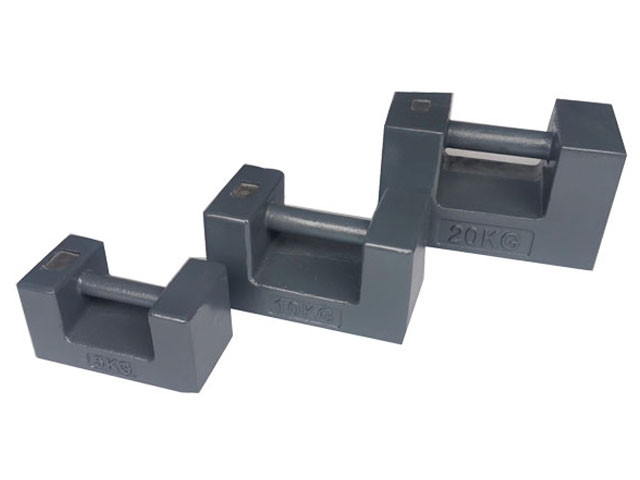
Test weights are available in a wide range of physical forms and mass values to suit different calibration needs, from tiny fractional gram weights for micro-balances to large, heavy cast weights for industrial floor scales. Common designs include cylindrical weights for easy stacking and placement, flat block weights for stable positioning on larger scale platforms, knobbed weights for safe handling with specialized tools, and stackable weight sets that combine multiple mass values for flexible calibration across different load points. Materials used to make test weights are chosen for their density, stability, resistance to corrosion, and non-magnetic properties, as these traits help preserve the weight’s mass over time. Stainless steel is a popular choice for high-precision test weights due to its resistance to rust and tarnish, while cast iron is commonly used for heavy-duty industrial weights thanks to its durability and cost-effectiveness for larger mass values. Some specialized test weights are made from non-magnetic alloys to avoid interference with digital scale sensors, ensuring that the weight’s mass alone is measured without external magnetic forces skewing the results. Regardless of material or design, all quality test weights are solid, one-piece constructions to prevent internal shifts or material loss that could alter their mass, unlike hollow or assembled weights that are prone to damage and mass inconsistency.
Proper handling of test weights is just as vital as correct selection, as even minor contamination or physical damage can alter a weight’s mass and compromise calibration accuracy. One of the most fundamental rules of test weight handling is avoiding direct contact with bare hands, as human skin naturally produces oils, sweat, and tiny particles that can stick to the weight’s surface, adding minuscule but measurable mass that affects precision. For small, high-precision weights, soft-tipped tweezers or specialized handling tools should be used to lift and place the weight, while larger, heavier weights require padded gloves or dedicated lifting handles to prevent skin contact and avoid dropping or scratching the weight. Dropping a test weight, even from a short height, can cause internal structural damage, dents, or chips that change its mass, while scratches or abrasions can trap dust or moisture over time. Before placing a test weight on a scale, it is important to inspect the weight’s surface for dust, dirt, moisture, or debris, and gently clean it with a soft, lint-free cloth if needed—never use abrasive cleaners, chemicals, or rough materials that could damage the weight’s finish. The scale platform should also be clean, dry, and free of any debris before calibration begins, as foreign objects on the platform will add extra weight and distort the calibration readings.
The step-by-step process of calibrating a scale with test weights follows a consistent, methodical workflow to ensure accuracy and repeatability. Before starting calibration, the scale should be placed on a flat, stable, level surface free from vibration, drafts, or sudden movements that could disrupt the weighing process. Digital scales should be powered on and allowed to warm up for the recommended period specified by the equipment manufacturer, as cold or recently powered-on digital sensors may not provide stable readings. The scale should first be zeroed or tared to account for the weight of any empty containers or platform accessories, ensuring that the baseline reading is set to zero with no load present. Once the scale is stabilized, the first test weight—typically the smallest mass in the calibration set—should be placed gently and centered on the scale platform to distribute the load evenly; uneven placement can cause uneven pressure on the scale’s internal sensors, leading to inaccurate readings. The scale’s displayed weight should be allowed to stabilize fully before recording the reading, and the value should be compared to the known mass of the test weight. Any noticeable deviation between the displayed value and the test weight’s mass should be noted, and minor adjustments should be made to the scale’s calibration settings following the equipment’s operational guidelines.
After testing the initial small test weight, the process should be repeated with progressively heavier test weights, covering the full range of the scale’s capacity as planned. For each weight, the same steps apply: careful placement, waiting for the reading to stabilize, recording the result, and comparing it to the known mass. It is also good practice to remove each test weight slowly and recheck the zero reading between each measurement to ensure the scale returns to baseline correctly, as a failure to zero out properly indicates a potential issue with the scale’s internal components. Once all individual test weights have been tested, stacking multiple weights to reach the full capacity of the scale is a common next step to verify performance under maximum load. After completing the upward calibration sequence, some technicians prefer to remove weights one by one and recheck readings in reverse order, as this can reveal any hysteresis issues—small differences in readings when loading versus unloading the scale. Any consistent deviations across multiple test weights indicate that the scale requires more significant adjustment or maintenance, while minor, one-off variations may be due to temporary environmental factors or improper placement.
Calibration frequency is another key consideration that depends on how the scale is used, the environment it operates in, and the impact of inaccurate readings on daily operations. Scales used in high-precision settings such as pharmaceutical laboratories, research facilities, or jewelry manufacturing may require calibration before each use or on a weekly basis, as even tiny measurement errors can have significant consequences in these fields. Scales used in general manufacturing, food preparation, or office settings may only need calibration monthly or quarterly, while heavy-duty industrial scales used in construction, agriculture, or logistics may be calibrated every six months to a year, depending on usage intensity. Environmental conditions also play a role; scales used in dusty, humid, or temperature-extreme environments will drift more quickly and require more frequent calibration than those used in climate-controlled, low-traffic spaces. Keeping a detailed log of all calibration activities, including the date of calibration, the test weights used, the readings obtained, any adjustments made, and the name of the person performing the calibration, is a valuable practice for tracking scale performance over time and identifying patterns of drift that may indicate impending equipment failure.
Preserving the long-term integrity of test weights requires consistent care and proper storage, as even the most durable test weights will degrade if not stored correctly. Test weights should be stored in a clean, dry, temperature-stable environment away from direct sunlight, moisture, chemicals, and magnetic fields that could affect their mass or material structure. Small precision weight sets should be kept in their original protective cases, which are designed to prevent scratching, dust accumulation, and contact between individual weights. Larger industrial test weights should be stored on flat, padded surfaces to avoid warping or damage, and should be kept separate from heavy machinery or sharp objects that could cause physical harm. Periodic inspection of test weights is essential to check for signs of corrosion, chipping, warping, or surface damage; any weight that shows visible damage or has been dropped repeatedly should be removed from use and re-evaluated for mass accuracy before being used for calibration again. Over time, even well-maintained test weights may experience minor mass changes due to normal wear, so periodic re-verification of their mass against a higher-level reference standard is recommended to ensure they remain suitable for calibration use.
It is also important to recognize the difference between routine calibration with test weights and simple daily verification of scale performance. Daily verification involves using a single, consistent test weight to quickly check that the scale is providing accurate readings before starting daily operations, which helps catch sudden accuracy shifts early. Calibration, by contrast, is a more comprehensive process that involves adjusting the scale’s internal settings to align with test weight standards, and is a more involved procedure than a quick verification check. Routine verification reduces the need for overly frequent full calibrations and provides peace of mind that the scale is performing correctly between scheduled calibration sessions. Both practices work together to maintain consistent scale accuracy, with test weights serving as the reliable reference for both quick checks and full calibration procedures.
In addition to regular calibration and maintenance, understanding common sources of calibration error can help prevent mistakes and ensure reliable results. One common error is using test weights that are outside the scale’s capacity range, either too light to test the scale’s full performance or too heavy for the scale to measure accurately. Another frequent issue is rushing the calibration process, not allowing the scale or test weights to acclimate to the ambient temperature; sudden temperature changes can cause minor expansion or contraction of both the scale components and the test weights, leading to temporary measurement discrepancies. Environmental factors such as air currents from fans or open windows, vibration from nearby machinery, and uneven flooring can also disrupt calibration readings, so choosing a calm, stable location for calibration is critical. Improper handling, as mentioned earlier, remains one of the most preventable sources of error, and taking the time to follow proper handling protocols can eliminate most mass contamination issues with test weights.
Across all industries, the consistent use of proper test weight practices directly translates to tangible benefits for operations and outcomes. In manufacturing, accurate weighing ensures that raw materials are measured correctly, leading to consistent product quality, reduced waste, and adherence to production formulas. In commercial settings, reliable scales prevent unfair transactions and build trust between buyers and sellers, as both parties can be confident that weight measurements are fair and accurate. In laboratories and research facilities, precise calibration with high-quality test weights ensures that experimental data is reproducible and reliable, forming the basis for valid research conclusions and scientific advancements. In logistics and shipping, accurate weight measurements help determine correct shipping costs, prevent overloading of vehicles, and ensure compliance with transportation regulations. Even in everyday settings such as kitchens or small retail shops, well-calibrated scales ensure portion control, pricing accuracy, and operational efficiency.
Test weights are often overlooked as simple, unassuming tools, but their role in maintaining measurement accuracy cannot be overstated. They are the quiet backbone of reliable weighing, bridging the gap between a scale’s mechanical or digital functionality and its ability to deliver consistent, trustworthy results. Investing time in selecting the right test weights, following proper handling and calibration procedures, and maintaining test weights properly is a small investment that yields significant returns in terms of operational efficiency, data reliability, product quality, and compliance with industry expectations. As weighing technology continues to evolve with more advanced digital scales and automated systems, the fundamental role of test weights remains unchanged—they are the universal reference point that ensures all weighing instruments perform as intended. Whether working with a small precision balance or a large industrial scale, taking a methodical, careful approach to test weight use and scale calibration will always be the most effective way to maintain accuracy and avoid the costly consequences of inaccurate measurements.
In summary, test weights are an indispensable component of scale calibration, requiring careful selection, gentle handling, proper storage, and regular re-evaluation to fulfill their role as reliable mass standards. Calibration is not a one-time task but a continuous process that adapts to usage patterns, environmental conditions, and operational needs. By prioritizing proper test weight practices, individuals and organizations can ensure that their weighing equipment remains accurate, consistent, and reliable over its entire lifespan. Every calibration session performed with care and attention to detail reinforces the integrity of weight measurements, supporting smooth operations, quality outcomes, and confidence in every reading displayed by the scale. As long as accurate weighing remains a necessity across industries, test weights will continue to be an essential tool for upholding measurement standards and ensuring precision in every weighing task.
