





Changzhou Veidt Weighing Co., Ltd. © 2022 ALL RIGHTS RESERVED Privacy Policy | Calibration Weight | Test Weights | Cast Iron Weights | Standard Weights | Laboratory Weights | XML | SITEMAP
NEWS LIST
test weight for mechanical scale
Saturday 21st March 2026 Back to list
In every setting where weight measurement plays a critical part in daily operations, from small retail spaces and local markets to industrial workshops, agricultural storage facilities, and laboratory testing environments, mechanical scales remain a widely used tool for their straightforward design, consistent performance, and independence from external power sources. Unlike digital weighing devices that rely on electronic sensors and battery power, mechanical scales operate through physical mechanisms—primarily springs, levers, counterweights, and balanced beams—to translate the force of an object’s mass into a visible reading on a dial or scale plate. Over time, however, even the sturdiest mechanical scales can experience shifts in accuracy due to regular use, environmental changes, physical wear on internal components, or minor misalignments from handling and movement. This is where test weights for mechanical scales become an indispensable resource, serving as a stable, standardized reference point to verify, calibrate, and restore the precision of these essential measuring tools. A test weight, at its core, is a solid object with a precisely defined and consistent mass, engineered to remain stable under normal handling and storage conditions, making it the perfect benchmark to check whether a mechanical scale is delivering accurate, trustworthy readings. Without regular use of these dedicated test weights, mechanical scales can gradually drift from their intended calibration, leading to inconsistent measurements that can disrupt daily workflows, affect fair transactions, compromise product quality control, and even create inefficiencies in industrial and logistical processes.
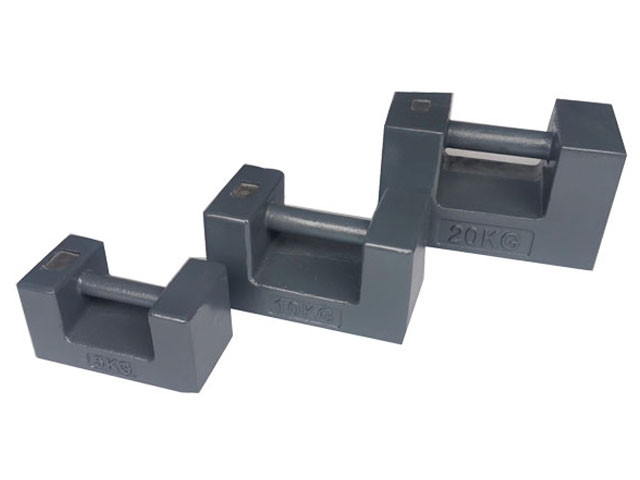
To fully understand the importance of test weights for mechanical scales, it is first necessary to grasp the basic operating logic of mechanical weighing equipment. Most common mechanical scales, whether compact countertop models for retail use, larger platform scales for heavy items, or balance scales for precise small-item weighing, function by comparing an unknown mass to a known force or counterbalance. Spring-loaded mechanical scales, for example, rely on the elastic properties of a metal spring: when an object is placed on the weighing platform, the spring compresses proportionally to the object’s weight, and this compression is transferred to a pointer that moves along a marked dial to indicate the measured mass. Lever-based mechanical scales, on the other hand, use a system of balanced beams and adjustable counterweights to match the weight of the item being weighed, with the position of the counterweight revealing the exact mass. Both designs are durable and user-friendly, but they are not immune to gradual changes in performance. Repeated loading and unloading of items can cause minor fatigue in the spring material, reducing its elasticity over time and leading to readings that are slightly higher or lower than the true weight. Friction in the lever joints, dust and debris buildup under the weighing platform, accidental bumps or shifts in the scale’s placement, and even fluctuations in ambient temperature can all alter the scale’s calibration and throw off its measurements. Unlike digital scales, which may have built-in electronic calibration functions, mechanical scales require a physical, tangible reference to reset and verify their accuracy—and that reference is always a properly selected and maintained test weight.
Test weights designed for mechanical scales are crafted with specific characteristics to ensure they can fulfill their role as a reliable mass standard, and they vary in size, material, and weight capacity to match the wide range of mechanical scale models available on the market. One of the key considerations in test weight design is material selection, as the chosen material directly impacts the weight’s stability, durability, resistance to environmental damage, and long-term mass consistency. Common materials used for these test weights include cast iron, stainless steel, and solid brass, each suited for different usage environments and calibration needs. Cast iron test weights are a popular choice for heavy-duty mechanical scales used in industrial and agricultural settings, as they are robust, resistant to physical impact, and able to maintain their mass integrity even with frequent handling. They are typically used for larger capacity mechanical scales that measure heavier loads, such as bulk materials, farm produce, or industrial equipment parts. Stainless steel test weights offer a high level of corrosion resistance, making them ideal for use in damp environments, food-related settings, or laboratories where moisture, humidity, or mild chemical exposure could affect the integrity of other materials. These weights are often used for smaller to medium-capacity mechanical scales that require consistent, precise calibration, such as those found in grocery stores, bakeries, or small manufacturing facilities. Brass test weights, meanwhile, are valued for their density, resistance to tarnishing under normal conditions, and stable mass properties, often used for precision mechanical scales that measure smaller, lighter items with greater detail. Regardless of the material, all high-quality mechanical scale test weights are manufactured to have a uniform density and a fixed, unchanging mass, ensuring that they do not gain or lose weight over time due to wear, corrosion, or environmental factors—an essential trait for a reliable calibration reference.
Selecting the right test weight for a specific mechanical scale is a critical step to ensure effective calibration and accurate measurement results, and it requires careful consideration of several key factors to avoid mismatched or ineffective testing. The first and most important factor is the weight capacity of the mechanical scale itself: the test weight used should align with the typical operating range of the scale, rather than being excessively large or small relative to its maximum capacity. For example, a small countertop mechanical scale used for weighing food items or small parts should be paired with test weights that fall within its regular weighing range, such as weights measured in grams or small kilograms, while a large industrial platform scale designed for heavy loads requires heavier test weights that match its upper capacity range. Using a test weight that is too light for a large mechanical scale may not trigger the full range of the scale’s internal mechanism, leading to incomplete calibration, while a test weight that is too heavy can risk damaging the scale’s internal springs or levers, especially if the scale is not designed to handle excessive load beyond its rated capacity. It is generally recommended to choose test weights that fall within the middle to upper range of the scale’s frequent use, as this covers the most common weighing scenarios and ensures the scale performs accurately where it matters most. Another important consideration is the level of precision required for the scale’s intended use: mechanical scales used for commercial transactions, where fair and exact measurements are essential for customer trust and ethical business practices, need test weights with a higher level of mass consistency, while scales used for general industrial weighing or rough estimation may use standard-duty test weights that meet basic reliability standards.
Proper handling and application of test weights during mechanical scale calibration are just as vital as selecting the correct weight, as careless handling can lead to inaccurate calibration results or even damage to both the test weight and the scale. Before beginning any calibration or verification process, the mechanical scale should be placed on a flat, stable, and level surface, free from wobble or unevenness that could skew the measurement readings. Any debris, dust, or foreign objects on the weighing platform or under the scale should be carefully removed, as these can add extra weight or create friction that interferes with the scale’s internal movement. The scale’s pointer or balance beam should be reset to the zero position to ensure a clean starting point for the test; if the scale does not rest at zero when empty, minor adjustments can be made using the built-in zero adjustment feature before placing the test weight. When handling the test weight, it is important to use clean, dry hands or protective gloves to avoid transferring oil, moisture, or dirt to the weight’s surface, which could slightly alter its mass over time. The test weight should be placed gently and centered on the weighing platform, avoiding sudden drops or rough placement that could jolt the scale’s internal components and cause temporary misalignment. Once the test weight is in place, the scale’s reading should be allowed to stabilize fully, and the displayed measurement should be compared to the known mass of the test weight. If the reading matches the test weight’s mass exactly or falls within an acceptable margin of error for the scale’s intended use, the scale remains properly calibrated. If there is a noticeable discrepancy, the scale’s calibration adjustment mechanism—usually a small screw or dial on the device’s body—can be carefully adjusted until the pointer aligns correctly with the test weight’s marked value. This process should be repeated multiple times with the same test weight to confirm consistency, and for larger mechanical scales, testing with multiple different test weights across the operating range can ensure full accuracy throughout the scale’s capacity.
Beyond one-time calibration, regular use of test weights is essential to maintain the long-term performance of mechanical scales, as it allows users to detect small shifts in accuracy early before they develop into significant measurement errors. The frequency of testing and calibration depends on how often the scale is used, the environment in which it operates, and the consequences of inaccurate measurements. Mechanical scales that are used multiple times daily in high-traffic commercial settings, such as local markets, grocery stores, or food processing areas, should be tested with their corresponding test weights at least once a week to catch any gradual drift in calibration. Scales used in industrial settings, where heavy loads are common and the scale may be exposed to dust, vibration, or temperature changes, may require more frequent testing, such as every few days, to ensure consistent performance. For scales used less frequently, such as those in home workshops or occasional agricultural use, monthly or quarterly testing with a test weight is usually sufficient to maintain accuracy. It is also important to test the scale after any significant event that could affect its calibration, such as being moved to a new location, being bumped or dropped, or undergoing minor repairs or cleaning. By making test weight verification a routine part of scale maintenance, users can avoid the frustration of inconsistent measurements, reduce the risk of errors in transactions or production processes, and extend the overall lifespan of the mechanical scale by preventing unnecessary strain on internal components from uncalibrated operation.
Test weights themselves also require proper care and maintenance to preserve their mass consistency and reliability as a calibration reference, as even small changes to the test weight’s physical condition can render it ineffective for accurate mechanical scale testing. One of the primary maintenance steps for test weights is regular cleaning to remove dirt, dust, moisture, or residue that may accumulate on the surface over time. Cleaning should be done with a soft, dry cloth or a mild, non-abrasive cleaning solution for stubborn debris, avoiding harsh chemicals that could corrode or damage the weight’s material. After cleaning, the test weight should be dried thoroughly to prevent moisture buildup, which can lead to rust or corrosion in cast iron weights or tarnishing in brass weights. Test weights should be stored in a clean, dry, and stable environment, away from extreme temperatures, direct sunlight, moisture, and sharp objects that could cause scratches or dents. Storing weights in a dedicated case or on a padded shelf helps protect them from physical impact and environmental damage, ensuring their mass remains unchanged. It is also important to avoid using test weights for any other purpose besides scale calibration, such as using them as doorstops, paperweights, or tools for lifting or prying, as this can cause physical damage, chips, or cracks that alter the weight’s mass. Over time, even well-maintained test weights may experience minor wear, so periodic cross-verification with another stable reference weight can confirm that the test weight’s mass has not shifted, maintaining its validity for mechanical scale calibration. This simple maintenance routine takes minimal time and effort but is critical to ensuring that the test weight remains a trustworthy benchmark for accurate weighing.
The impact of using properly calibrated mechanical scales with reliable test weights extends far beyond accurate number readings, touching on fairness, efficiency, quality control, and operational consistency across countless industries and daily activities. In commercial and retail settings, accurate mechanical scales verified by test weights ensure that transactions between buyers and sellers are fair and transparent, building trust and maintaining ethical business practices. Customers can feel confident that they are receiving the correct quantity of goods, while business owners avoid disputes and maintain a positive reputation in their community. In agricultural and farming operations, mechanical scales used to weigh crops, feed, or livestock rely on test weight calibration to ensure accurate inventory tracking, proper portioning of feed, and fair sales of produce, directly impacting the profitability and efficiency of the operation. In industrial and manufacturing settings, precise weight measurements are essential for material batching, product packaging, and quality control, and calibrated scales help reduce waste, ensure product consistency, and streamline production workflows. Even in educational settings, mechanical scales used for science experiments and hands-on learning require accurate calibration with test weights to help students learn proper measurement techniques and obtain reliable experimental results. In every case, the test weight serves as a quiet but essential foundation for reliable weighing, turning a simple mechanical scale from a basic tool into a precise and dependable instrument.
While digital weighing technology has become more prevalent in recent years, mechanical scales continue to hold a unique place in many settings due to their simplicity, durability, and ability to function without electricity or batteries. In remote areas with limited access to power, during power outages, or in environments where electronic devices may be prone to damage, mechanical scales remain the go-to choice for reliable weight measurement. This enduring relevance makes the role of test weights for mechanical scales equally important, as they ensure that these non-electronic tools can perform at their best and match the accuracy needed for modern applications. Many users prefer mechanical scales for their low maintenance requirements and long lifespan, but this longevity is only possible with regular test weight calibration to counteract the natural wear and tear of daily use. Investing time in selecting the right test weights, using them correctly, and maintaining both the weights and the scales themselves is a small but valuable effort that pays off in consistent performance, reduced operational errors, and prolonged equipment life.
In conclusion, test weights are an essential companion to mechanical scales, serving as the cornerstone of accurate, reliable weight measurement in countless personal, commercial, and industrial settings. These standardized mass references counteract the natural calibration drift that occurs in mechanical scales due to regular use, environmental factors, and physical wear, ensuring that measurements remain consistent and trustworthy over time. From selecting the right material and size of test weight to match a specific scale, to following proper handling and calibration procedures, to maintaining both the test weights and the scales with regular care, every step in the process contributes to the overall accuracy of the weighing system. Mechanical scales offer a practical, power-independent solution for weighing needs, and test weights ensure that this solution remains effective and precise. By integrating regular test weight verification into routine scale maintenance, users can uphold fairness in transactions, maintain quality control in production, streamline daily operations, and maximize the lifespan of their mechanical weighing equipment. As a simple yet vital tool, the test weight for mechanical scales plays an underappreciated but indispensable role in keeping daily operations running smoothly, one accurate measurement at a time.
