





Changzhou Veidt Weighing Co., Ltd. © 2022 ALL RIGHTS RESERVED Privacy Policy | Calibration Weight | Test Weights | Cast Iron Weights | Standard Weights | Laboratory Weights | XML | SITEMAP
NEWS LIST
test weight for elevator
Saturday 21st March 2026 Back to list
Elevators are among the most widely used vertical transportation systems in modern buildings, from low-rise residential complexes to towering commercial skyscrapers, and they serve as a critical link between different floors for millions of people every single day. While most passengers step into an elevator car without a second thought about its mechanical integrity or load-bearing capabilities, the smooth and safe operation of these machines relies on a series of rigorous testing protocols, with test weight standing as one of the most fundamental and irreplaceable tools in the entire evaluation process. Test weight for elevators is not merely a set of heavy metal blocks or calibrated masses; it is a precision instrument that mimics real-world passenger and cargo loads, allowing technicians and engineers to assess every critical function of an elevator system under controlled, measurable conditions. Without standardized test weight, it would be impossible to verify whether an elevator can handle its intended load capacity, maintain stable movement, activate safety features correctly, and withstand the wear and tear of daily use over years of service.
To understand why test weight is indispensable for elevators, it is first necessary to grasp the basic mechanics of vertical lift systems and the stresses they endure during regular operation. Every elevator is engineered to support a specific load limit, which is determined by the strength of its lifting cables, the power of its traction machine, the capacity of its braking system, the stability of its guide rails, and the structural integrity of the car itself. This load limit is not a random figure; it is calculated to balance passenger comfort, operational efficiency, and absolute safety, accounting for the combined weight of the elevator car, internal fixtures, and the maximum number of passengers or amount of cargo it is meant to carry. Over time, however, various factors can alter the performance of these components: gradual wear on cables and pulleys, minor shifts in alignment of guide rails, changes in the tension of lifting belts, and natural degradation of braking materials can all reduce an elevator’s ability to handle its rated load. Even small, unseen issues can escalate over time, leading to uneven movement, slower response times, or compromised safety functions if left unaddressed. Test weight provides a consistent, repeatable way to simulate these real-world stresses and measure how the elevator system responds, ensuring that any decline in performance is detected long before it poses a risk to users.
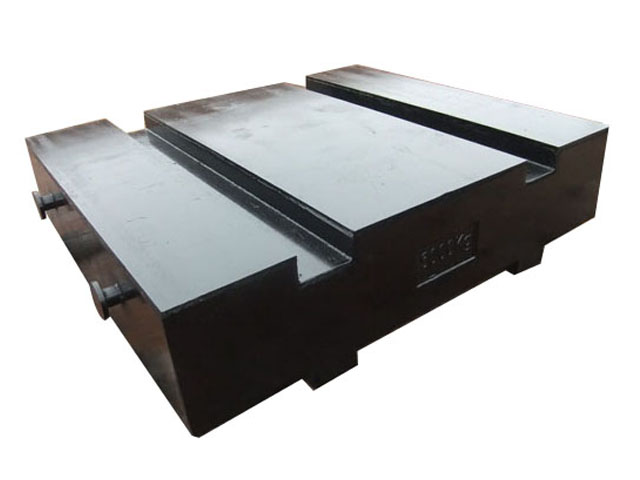
Elevator test weights are typically manufactured to strict dimensional and weight specifications, designed to be easy to handle, stack, and secure within the confines of an elevator car without damaging the interior flooring or walls. Most standard test weights are compact, durable, and feature built-in handles or interlocking edges to prevent shifting during testing, which is essential for maintaining a stable load distribution that mirrors the way passengers or goods would naturally settle inside the car. Unlike random heavy objects that might be used for makeshift testing, these calibrated weights offer uniform mass distribution, eliminating variables that could skew test results and ensure that every evaluation is accurate and consistent across multiple sessions. Technicians can add or remove test weights incrementally to reach specific load thresholds, starting with the elevator’s rated full capacity and often moving to a load level slightly above that threshold to test the system’s reserve strength and safety cutoff mechanisms. This incremental approach allows for detailed monitoring of every function, from the initial lift-off from a floor to the smooth acceleration to operating speed, the steady movement between floors, the precise braking and stopping at each landing, and the safe return to the ground floor or lowest level once testing is complete.
The process of conducting a load test with elevator test weight follows a structured, methodical sequence that prioritizes safety, accuracy, and thoroughness, and it is always carried out by trained professionals with deep knowledge of elevator mechanics and testing protocols. Before any test weights are placed inside the car, technicians perform a preliminary visual inspection of the entire system: checking the condition of lifting cables for signs of fraying or wear, examining the traction machine for unusual noise or vibration, verifying the alignment of guide rails, and testing the basic functionality of door operators, control panels, and emergency communication systems. This pre-test check ensures that there are no obvious mechanical faults that could be exacerbated by the added weight of the test blocks, preventing potential damage to the elevator or safety hazards during the evaluation. Once the preliminary inspection is complete, technicians begin loading the test weights carefully into the center of the car, distributing them evenly to avoid uneven weight distribution that could put unnecessary strain on one side of the car or the lifting mechanism. The load is built up gradually, with pauses between each addition to check for any changes in the elevator’s operation, such as unusual sounds, slow response to controls, or uneven movement.
When the test load reaches the elevator’s rated full capacity, the first phase of testing begins, focusing on routine operational performance. The elevator is run through multiple full cycles, traveling from the lowest floor to the highest floor and back down again, while technicians monitor key metrics both inside the car and from the machine room or control panel area. They observe the speed consistency during ascent and descent, making sure that the elevator does not accelerate too quickly or slow down unexpectedly under the full load. They also check the braking system’s responsiveness, ensuring that the elevator comes to a smooth, controlled stop at each designated landing without jolting or sliding past the floor level, which is critical for passenger comfort and safety. Additionally, technicians assess the door operation under load, confirming that doors open and close smoothly and securely, without getting stuck or failing to engage fully, as faulty door operation is a common source of minor disruptions and potential safety risks. This full-capacity test also evaluates the elevator’s suspension system, ensuring that the car remains stable and level at all times, even when carrying a full complement of test weight that replicates a full passenger load.
Beyond testing at rated capacity, elevator test weight is also used to evaluate the system’s safety margins by applying a load that exceeds the standard operating limit, a step designed to confirm that safety mechanisms activate correctly to prevent overloading and potential failure. This overload test is not intended to push the elevator to the point of damage, but rather to verify that built-in safety features—such as load sensors, emergency brakes, and power cutoff systems—engage as designed when the weight exceeds the rated threshold. During this phase, technicians carefully monitor how the elevator responds to the increased load, checking that warning signals activate to indicate an overloaded condition, that the traction system does not slip or lose control, and that the braking system can hold the car securely in place even with the extra weight. This step is vital because real-world elevator use often involves occasional overloading, whether from a crowded group of passengers entering at once or the transport of heavy furniture, equipment, or goods during moving or maintenance. By testing with extra test weight, professionals ensure that the elevator can handle these temporary, unexpected overloads without compromising safety, even if regular operation is meant to stay within the rated capacity.
Another key application of elevator test weight is in post-installation and post-repair testing, to confirm that new installations or recent maintenance work has been completed correctly and that the system meets performance standards. For newly installed elevators, load testing with calibrated test weight is a mandatory step before the system is put into public use, as it validates that every component has been installed properly and that the entire system functions as intended under realistic load conditions. Even minor installation errors, such as slightly misaligned guide rails or improperly tensioned cables, can become apparent under the stress of test weight, allowing technicians to make adjustments before the elevator serves any passengers. Similarly, after major repairs or component replacements—such as installing new braking systems, replacing lifting cables, or servicing the traction machine—load testing with test weight is essential to confirm that the repaired components integrate seamlessly with the rest of the system and that the elevator’s load-bearing capacity and performance are fully restored. Skipping this step could lead to unexpected malfunctions once the elevator returns to regular service, putting passengers at risk and leading to costly, unplanned downtime for repairs.
Long-term maintenance of elevator systems also relies heavily on regular test weight evaluations, as part of a proactive maintenance schedule that prevents small issues from turning into major, expensive problems. Elevators are mechanical systems with moving parts that experience constant wear during daily use, and performance can degrade slowly over months or years, often without any obvious signs to untrained observers. Scheduled load testing at consistent intervals—typically spaced out over the course of the elevator’s service life—allows technicians to track gradual changes in performance, identify early signs of wear or misalignment, and perform targeted maintenance before components fail completely. For example, a slight increase in stopping distance or a minor change in traction machine noise under test weight load may indicate that the braking system needs adjustment or that cables are starting to lose tension, issues that can be fixed quickly and affordably during routine maintenance. Without the baseline measurements provided by test weight testing, these subtle changes would go unnoticed, eventually leading to complete system breakdowns that require extensive repairs, extended service outages, and higher overall costs for building owners and managers.
The impact of proper test weight testing extends far beyond mechanical reliability; it directly touches on public safety and user confidence, two cornerstones of vertical transportation. Every time a passenger steps into an elevator, they trust that the system will support their weight and transport them safely to their destination, and that trust is only possible because of rigorous testing protocols that include test weight evaluations. For commercial buildings, office towers, hospitals, schools, and residential buildings, elevators are essential for daily operations, and any safety incident or prolonged outage can disrupt routines, cause inconvenience, and erode trust in the building’s management. Regular testing with calibrated test weight minimizes these risks by ensuring that safety systems are fully functional, load limits are respected, and the elevator operates smoothly under all intended conditions. It also helps maintain the structural integrity of the building itself, as an overloaded or malfunctioning elevator can put unexpected stress on the building’s vertical support structures, leading to long-term damage that is costly to repair.
It is also important to note that elevator test weight is designed with practicality and versatility in mind, adapting to the diverse needs of different types of elevators across various building types. Low-rise elevators in small residential buildings have different load requirements and operational speeds than high-speed elevators in tall skyscrapers, and test weight sets are available in a range of sizes and mass options to accommodate these differences. Some test weights are designed for compact elevator cars with limited space, while others are suited for larger, freight-focused elevators that carry heavier loads on a regular basis. Regardless of size or type, these test weights maintain the same core purpose: to provide a reliable, standardized load that allows for consistent, accurate testing across all elevator models. Technicians can mix and match different test weight blocks to achieve the exact load level needed for a specific elevator, making the tool highly flexible and suitable for nearly every vertical lift system in use today.
While modern technology has introduced advanced monitoring systems and digital diagnostic tools for elevator maintenance, these innovations have not replaced the need for physical test weight testing, and in fact, they complement each other perfectly. Digital sensors can track speed, vibration, and cable tension in real time, but they cannot replicate the physical stress of a real load on the entire elevator system. Test weight provides the tangible, real-world stress that digital tools alone cannot simulate, validating the data collected by electronic monitors and ensuring that the system performs well in practical use, not just in theoretical digital readings. Together, physical load testing with test weight and digital diagnostics create a comprehensive maintenance and testing strategy that covers every aspect of elevator performance, from mechanical strength to electronic functionality, leaving no room for unseen vulnerabilities.
In addition to safety and performance, test weight testing also plays a role in optimizing elevator efficiency and reducing long-term operational costs. An elevator that is properly tested and maintained to handle its rated load operates more smoothly, uses energy more efficiently, and experiences less wear and tear on its components. When the system is balanced and functioning correctly under load, the traction machine does not have to work harder than necessary to lift and lower the car, which reduces energy consumption and lowers utility costs for building owners. Well-maintained elevators also have longer service lives, delaying the need for full system replacements and providing a better return on the initial investment in the elevator installation. Test weight testing is a small but critical part of this efficiency equation, as it ensures that the elevator operates at peak performance and avoids the energy waste and accelerated wear that come with unaddressed mechanical issues.
Looking ahead, the role of test weight in elevator maintenance and safety will remain essential, even as elevator technology continues to evolve with new materials, automated systems, and energy-efficient designs. As buildings grow taller and elevator systems become more advanced, the need for reliable, standardized load testing will only increase, as the stakes for safety and reliability become higher in high-rise and high-traffic environments. Test weight will continue to be the gold standard for verifying load capacity and performance, providing a consistent, cost-effective way to ensure that elevators meet the demands of modern buildings and their occupants. The simplicity and effectiveness of test weight as a testing tool are what make it timeless; it does not rely on complex electronics or software that can become outdated, but instead uses basic physical principles to deliver accurate, actionable data about elevator performance.
In conclusion, elevator test weight is an unsung hero of vertical transportation safety and reliability, a simple yet powerful tool that underpins the safe operation of elevators in every type of building worldwide. From initial installation and commissioning to routine maintenance and post-repair verification, test weight provides the consistent, measurable load needed to evaluate every critical function of an elevator system, detect hidden issues early, and ensure that safety mechanisms work as intended. It protects passengers from harm, prevents costly equipment failures, extends the service life of elevators, and maintains the smooth operation of buildings that rely on vertical lift systems for daily function. While most people will never see or interact with elevator test weight directly, they benefit from its use every time they step into an elevator and trust that it will carry them safely to their floor. As long as elevators remain a vital part of modern infrastructure, test weight will continue to be an indispensable part of keeping these systems safe, reliable, and efficient for years to come.
