





Changzhou Veidt Weighing Co., Ltd. © 2022 ALL RIGHTS RESERVED Privacy Policy | Calibration Weight | Test Weights | Cast Iron Weights | Standard Weights | Laboratory Weights | XML | SITEMAP
NEWS LIST
test weight class M2
Saturday 21st March 2026 Back to list
In the broad landscape of precision measurement and mass calibration, test weights serve as the unsung foundation of consistent, reliable weighing across countless industries and daily operational settings. Among the structured hierarchy of weight classes designed to meet varying accuracy needs, Class M2 test weights occupy a vital middle ground, balancing practical durability, accessible precision, and versatile usability for routine calibration and verification tasks. Unlike ultra-high-precision weights reserved for specialized laboratory or national standard settings, M2 class test weights are engineered for real-world, hands-on use, bridging the gap between strict metrological standards and the everyday demands of commercial, industrial, and general operational weighing systems.
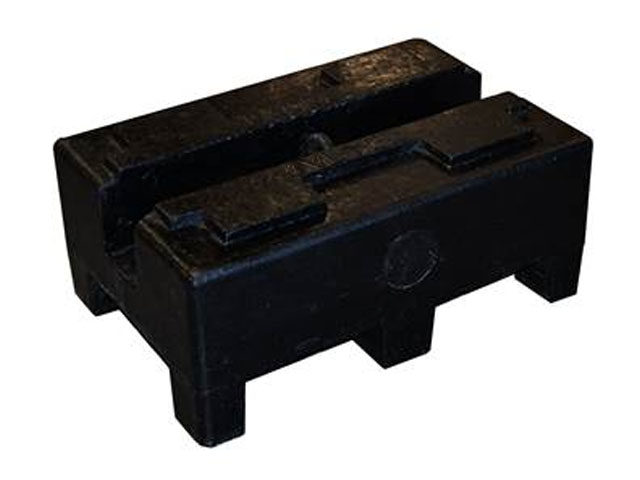
To grasp the purpose of M2 class test weights, it is essential to first understand their position within the structured framework of weight accuracy tiers, which are defined to match the tolerance requirements of different weighing instruments and use cases. Weight classes are differentiated by permissible deviation limits from their stated nominal mass, with lower numerical classes typically offering tighter tolerances for high-precision work, and higher numerical classes suited for general-purpose applications where moderate accuracy suffices. M2 class falls into the mid-range practical category, designed specifically for the calibration and verification of lower-class weights and for routine checks on medium-accuracy weighing equipment used in everyday transactions and industrial processes. This positioning means M2 test weights are not intended for cutting-edge scientific research or ultra-precise laboratory formulation work, where even tiny mass deviations can alter results; instead, they are built to deliver consistent, repeatable performance for the types of weighing tools that form the backbone of regular commerce, manufacturing, and logistics operations.
One of the defining traits of M2 class test weights is their alignment with the needs of general commercial transactions and medium-accuracy weighing systems, which are among the most widely used measurement tools across global economies. From small retail operations weighing bulk goods to large warehouse facilities checking incoming raw materials and finished products, these weighing devices require regular validation to ensure they provide consistent readings over time. M2 test weights are perfectly suited for this ongoing verification process, as their tolerance range matches the performance standards of these medium-accuracy scales, eliminating the need for overly precise, fragile weights that would be impractical for frequent field use. When used to calibrate or check these scales, M2 weights help ensure that every measurement remains within acceptable deviation limits, protecting both buyers and sellers from unfair discrepancies in mass-based transactions. This fairness extends beyond direct commercial exchanges, impacting industries such as agriculture, where bulk produce and feed are weighed, construction, where building materials are quantified, and food processing, where ingredient batches are measured for consistent production.
In industrial settings, M2 class test weights play an equally critical role in maintaining operational efficiency and product quality. Manufacturing facilities rely on accurate weighing for raw material intake, production line dosing, and finished product quality control, and even minor inconsistencies in scale readings can lead to material waste, uneven product batches, or non-compliance with internal quality guidelines. M2 test weights are commonly used for regular in-house calibration checks of platform scales, floor scales, and bench scales used in these environments, offering a durable and reliable reference point that can withstand the conditions of busy production floors. Unlike high-precision weights that require controlled storage and careful handling to avoid damage or contamination, M2 weights are constructed to hold up to repeated use in semi-industrial settings, resisting minor impacts, temperature fluctuations, and exposure to common workplace dust and moisture. This resilience makes them a practical choice for maintenance teams and quality control staff who need to perform regular scale checks without extensive preparation or specialized handling protocols.
The physical design and material composition of M2 class test weights are carefully optimized to support their intended use case, prioritizing stability, longevity, and resistance to common forms of degradation. Most M2 test weights are crafted from dense, sturdy metals that maintain a consistent mass over time, resisting warping, corrosion, and surface wear that could alter their nominal weight. Common materials include robust cast metals for larger, heavy-duty weights used in industrial and logistics settings, and smooth, non-porous metal alloys for smaller, handheld weights used in retail and light industrial applications. The surface finish of M2 weights is typically uniform and free of porous areas, preventing the accumulation of dirt, dust, or moisture that could add unintended mass and affect calibration accuracy. Larger M2 weights often feature a solid, compact design with ergonomic handling points for safe transport and placement on weighing platforms, while smaller weights are designed for easy stacking and storage in dedicated cases, reducing the risk of loss or damage during regular use.
Shape and structural design also play a key role in the functionality of M2 class test weights, with different configurations tailored to specific weighing equipment and use scenarios. Cylindrical M2 weights are common for smaller nominal values, as they are easy to handle and stack neatly, making them ideal for retail counters, small workshops, and portable calibration kits. Rectangular or block-style M2 weights are preferred for larger mass values, such as those used to calibrate floor scales and truck scales in logistics yards and manufacturing plants, as their flat, stable base ensures secure placement and even weight distribution during testing. Regardless of shape, all M2 test weights are manufactured to maintain a consistent density and mass distribution, ensuring that their weight is evenly distributed and that they provide reliable readings when placed on any compatible weighing device. This structural consistency is crucial for repeated calibration use, as it ensures that each test with an M2 weight yields comparable results, allowing operators to track changes in scale performance over time and address minor deviations before they impact daily operations.
Proper handling and routine maintenance are essential to preserving the accuracy and service life of M2 class test weights, even though they are designed for durability. While they do not require the extreme care of high-precision laboratory weights, M2 weights still benefit from basic practices that prevent unnecessary wear and mass deviation. Regular cleaning with a soft, lint-free cloth to remove surface dust, debris, or minor residue is recommended, as accumulated particles can add small amounts of mass and throw off calibration results over time. Operators should avoid dropping or striking M2 weights against hard surfaces, as impact can cause subtle structural damage or warping that alters their nominal mass, even if the damage is not visible to the naked eye. When not in use, M2 weights should be stored in a clean, dry, and temperature-stable environment, away from direct sunlight, extreme heat, cold, or moisture, which can cause minor expansion or contraction of the metal and temporary mass fluctuations. For weights used in harsh industrial environments, periodic visual inspections for signs of corrosion, surface pitting, or physical damage are advised, as these issues can signal a need for gentle restoration or replacement to maintain consistent performance.
Another key application of M2 class test weights is the calibration and verification of lower-class weights, creating a practical chain of measurement consistency that supports overall accuracy across an operation. Higher-precision weights are used to calibrate M2 weights, and M2 weights in turn are used to calibrate the next tier of general-purpose weights, ensuring that each level of measurement reference remains aligned with established tolerance standards. This hierarchical calibration approach is cost-effective and practical for businesses and facilities of all sizes, as it allows teams to maintain accurate measurement systems without investing in ultra-high-precision weights for every routine task. M2 weights act as a reliable intermediate step in this process, making precision measurement accessible to small businesses, local retailers, and mid-sized industrial operations that do not require the strictest metrological standards but still need consistent, trustworthy weighing results. This accessibility is one of the most valuable aspects of M2 class test weights, as it democratizes accurate mass measurement and supports fair practices across diverse sectors of the economy.
In logistics and transportation, M2 class test weights are indispensable for verifying the accuracy of scales used to weigh cargo, packages, and shipping containers. Accurate weight measurement is critical in this sector to ensure compliance with transportation safety guidelines, prevent overloading of vehicles and shipping vessels, and calculate fair shipping costs based on mass. Logistics hubs, freight terminals, and warehouse distribution centers rely on regular scale checks using M2 weights to confirm that their weighing equipment remains calibrated correctly, even with heavy daily use. The durable construction of M2 weights makes them well-suited for this high-volume environment, where scales are used constantly and calibration checks need to be performed efficiently during routine maintenance shifts. By using M2 test weights for regular verification, logistics teams can avoid costly errors such as undercharging for shipments, overloading vehicles, or misclassifying cargo based on incorrect weight readings, streamlining operations and reducing financial and logistical risks.
Beyond commercial and industrial settings, M2 class test weights also find practical use in public and municipal operations, supporting fair trade and consistent measurement in community-focused settings. Local markets, agricultural cooperatives, and small-scale food producers use M2 weights to calibrate their weighing scales, ensuring that customers receive the correct quantity of goods they pay for. Municipal inspection teams may also use M2 test weights as part of routine checks on commercial weighing devices, helping to uphold fair trade practices and protect consumer interests without the need for overly specialized equipment. In these settings, the balance of practicality, durability, and moderate precision offered by M2 weights makes them a versatile tool that aligns with the needs of everyday commerce and community operations.
It is important to distinguish M2 class test weights from both higher-precision tiers and lower-grade general weights to fully understand their unique value. Higher-class weights feature much tighter tolerances and are designed for controlled laboratory environments, national measurement standards, and high-precision manufacturing; they are fragile, require specialized handling, and are not cost-effective for routine field use. Lower-grade weights, on the other hand, have wider tolerance ranges and are only suitable for very basic, non-critical weighing tasks where minor deviations are acceptable. M2 class test weights fill the essential gap between these two extremes, offering a balanced solution that meets the accuracy needs of most routine calibration tasks while remaining durable and affordable for regular use. This middle-ground positioning is not a limitation but a deliberate design choice, ensuring that M2 weights are fit for purpose for the vast majority of real-world weighing applications that do not require extreme precision.
The long-term value of M2 class test weights extends beyond individual calibration tasks, contributing to overall operational consistency and trust in measurement systems. When businesses and facilities use M2 weights for regular scale maintenance, they establish a consistent benchmark for mass measurement, reducing variability in readings and ensuring that processes remain stable over time. This consistency builds trust with customers, partners, and regulatory bodies, as it demonstrates a commitment to fair and accurate measurement practices. For small businesses, in particular, using M2 test weights for routine calibration is a simple and effective way to maintain credibility and avoid disputes over product quantity or weight, fostering long-term customer loyalty. In industrial settings, consistent weighing supported by M2 weight calibration reduces material waste, improves product quality, and optimizes production efficiency, leading to tangible operational benefits and cost savings over time.
As measurement technology continues to evolve, with digital scales and automated weighing systems becoming more prevalent, the role of M2 class test weights remains unchanged and essential. Even the most advanced digital weighing equipment requires a physical mass reference to verify accuracy, as electronic components can drift over time due to wear, temperature changes, or frequent use. M2 test weights provide a reliable, tangible reference point that is unaffected by electronic malfunctions or software glitches, making them a critical backup and verification tool for modern weighing systems. Whether used to calibrate a traditional mechanical scale or a high-tech digital weighing system, M2 weights deliver consistent, repeatable results that ensure the reliability of digital and analog measurement tools alike. This adaptability ensures that M2 class test weights will remain a staple in measurement and calibration practices for years to come, even as technology advances.
When selecting M2 class test weights for a specific application, several practical factors should be considered to ensure optimal performance and suitability. The nominal mass range required is the primary consideration, as M2 weights are available in a wide range of values, from small fractional units for bench scales to large heavy-duty blocks for industrial floor scales. The intended environment of use is also important; weights used in clean, dry retail settings may have different finish requirements than those used in dusty, humid industrial environments, and selecting a weight with the appropriate material and surface coating can extend its service life. Handling and storage capabilities are another factor, as smaller operations may benefit from compact, stackable M2 weight sets, while large industrial facilities may require heavy-duty block weights with reinforced handling features. By matching the type and size of M2 test weights to the specific needs of the weighing equipment and operational environment, users can maximize the effectiveness and longevity of their calibration tools.
In summary, M2 class test weights are a cornerstone of practical, everyday mass measurement and calibration, offering a unique balance of moderate precision, durable construction, and versatile application across commercial, industrial, logistics, and municipal settings. Their position in the weight class hierarchy makes them ideally suited for routine scale verification, lower-class weight calibration, and general-purpose measurement tasks that demand consistency without the need for ultra-high precision. From small retail transactions to large-scale industrial production and logistics operations, M2 test weights play a vital role in maintaining fair trade, operational efficiency, and product quality, supporting reliable measurement practices that impact nearly every aspect of daily commerce and industry. By prioritizing durability, usability, and consistent performance, M2 class test weights prove that precision measurement does not require extreme specialization, but rather thoughtful design and practical application tailored to real-world needs. As a reliable and accessible calibration tool, M2 test weights will continue to be an essential component of effective weighing management, ensuring accuracy and fairness in measurement for businesses and communities worldwide.
