





Changzhou Veidt Weighing Co., Ltd. © 2022 ALL RIGHTS RESERVED Privacy Policy | Calibration Weight | Test Weights | Cast Iron Weights | Standard Weights | Laboratory Weights | XML | SITEMAP
NEWS LIST
test weight class M1
Saturday 21st March 2026 Back to list
Mass measurement stands as one of the most fundamental and universally applied practices across nearly every field of human activity, from small-scale daily operations to large-scale industrial production and commercial exchange. At the heart of reliable mass measurement lies the use of standardized test weights, which serve as fixed reference points to ensure that scales, balances, and other weighing equipment deliver consistent and dependable results. Among the various classifications of test weights, Class M1 holds a unique and indispensable position, balancing practicality, durability, and consistent performance to meet the everyday needs of countless industries and workplaces. Unlike highly specialized precision weights designed for strict laboratory or scientific research environments, M1 test weights are crafted for real-world, hands-on use, offering a reliable balance of accuracy and resilience that makes them a staple in routine calibration and quality control processes.
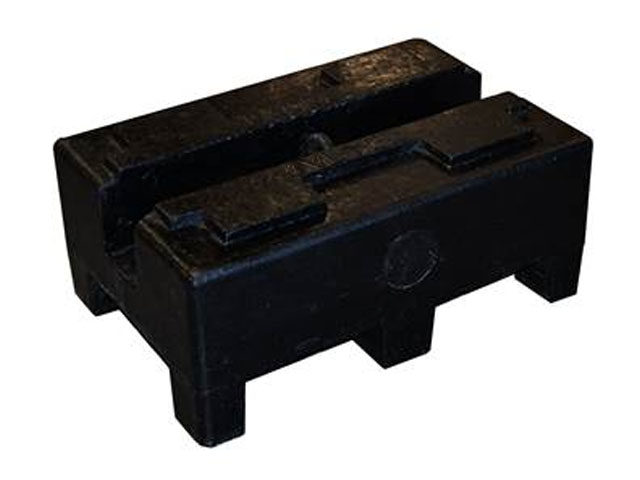
To fully grasp the role of M1 test weights, it is first necessary to understand the broader framework of weight classification in mass metrology. Weight classes are defined based on allowable deviation from a nominal mass value, with each category tailored to specific use cases that demand different levels of precision. M1 falls into the category of medium-precision test weights, positioned to serve the vast majority of routine weighing tasks that do not require the extreme accuracy of higher-grade weights. What sets M1 test weights apart is their intentional design for everyday functionality: they are built to withstand the wear and tear of regular use in varied environments, from busy factory floors to warehouse storage areas and small commercial settings, while maintaining a stable mass that remains consistent over extended periods. This balance of precision and durability is not accidental; it is the result of thoughtful material selection, manufacturing processes focused on practicality, and structural design that prioritizes ease of use and resistance to common workplace hazards such as minor impacts, dust, and moderate changes in temperature and humidity.
Material composition plays a pivotal role in defining the performance and longevity of M1 test weights, with two primary materials dominating production due to their distinct advantages for this weight class. The first and most widely used material is cast iron, chosen for its exceptional sturdiness, density consistency, and cost-effectiveness. Cast iron M1 test weights are typically formed through a solid casting process, resulting in a dense, solid structure with no internal voids that could compromise mass stability. This solid construction makes them highly resistant to dents, scratches, and physical damage that can occur during frequent handling, transportation, and storage in industrial settings. To protect against corrosion and rust, especially in environments with moderate moisture or airborne particles, cast iron M1 weights are often finished with a protective coating that creates a barrier between the metal and external elements. This coating is durable enough to maintain its integrity with regular care, ensuring that the weight’s mass remains unchanged even after months or years of use. The second common material is stainless steel, which offers enhanced resistance to corrosion, oxidation, and staining compared to cast iron. Stainless steel M1 test weights are ideal for environments where moisture, mild chemical exposure, or cleanliness is a priority, such as food processing areas, agricultural settings, or workshops with high humidity. While stainless steel variants may have a slightly different production profile, they share the same core commitment to consistent mass and practical durability, making them suitable for specialized applications where cast iron may be less optimal. Both material options adhere to the core principles of M1 classification: reliable performance, long-term stability, and adaptability to real-world conditions, rather than focusing on ultra-high precision that is unnecessary for most routine tasks.
The structural design of M1 test weights is another key factor that contributes to their widespread usability, with form following function to simplify handling and ensure compatibility with different types of weighing equipment. Unlike higher-precision weights that often have intricate, delicate shapes and require specialized handling tools, M1 test weights feature straightforward, robust designs that prioritize practicality. Smaller M1 weights, typically used for calibrating tabletop scales and compact balances, are often compact and flat or cylindrical, easy to grip and place on weighing surfaces without risk of slipping or damage. Larger M1 weights, designed for calibrating floor scales, platform scales, and heavy-duty industrial weighing equipment, are equipped with integrated handles, loops, or lifting points that allow safe and easy transportation and placement, even when moving heavier nominal masses. These structural features are not just for convenience; they also reduce the risk of accidental damage during use, which helps preserve the weight’s accuracy over time. Additionally, the shape and dimensions of M1 test weights are standardized to ensure compatibility across different types of weighing equipment, eliminating the need for custom or specialized weights for most common applications. This standardization extends to the tolerance levels for M1 weights, which are set to accommodate the needs of routine industrial and commercial weighing. The allowable deviation from the nominal mass for M1 weights is carefully calibrated to be strict enough to ensure reliable measurement results for everyday tasks, yet flexible enough to support cost-effective manufacturing and long-term durability. This means that M1 weights can maintain their performance without the need for frequent, complex recalibration, making them a low-maintenance solution for businesses and facilities of all sizes.
The practical applications of M1 test weights span an incredibly diverse range of industries and settings, reflecting their versatility and ability to meet the mass measurement needs of everyday operations. One of the most common uses is in industrial manufacturing, where consistent weighing is critical for quality control, raw material dosing, and finished product verification. In production facilities that process goods ranging from mechanical parts to consumer goods, M1 test weights are used regularly to calibrate scales and ensure that raw materials are measured accurately, production batches are consistent, and finished products meet internal quality standards. This calibration process helps prevent errors that could lead to wasted materials, inconsistent product quality, or production delays, making M1 weights a silent but essential part of efficient manufacturing workflows. In logistics and warehousing, M1 test weights play a vital role in calibrating pallet scales, floor scales, and shipping scales, ensuring that goods are weighed accurately for inventory management, shipping calculations, and compliance with internal operational standards. Accurate weighing in logistics helps streamline storage, loading, and transportation processes, reducing inefficiencies and ensuring that goods are handled correctly throughout the supply chain.
Commercial settings also rely heavily on M1 test weights to maintain fair and consistent weighing practices, from small retail businesses that sell goods by weight to larger commercial operations that handle bulk products. In these environments, reliable weighing is essential for building trust with customers and ensuring smooth daily transactions, and M1 weights provide a cost-effective and dependable way to keep scales calibrated and accurate. Agricultural operations benefit greatly from M1 test weights as well, using them to calibrate scales for measuring crops, feed, fertilizers, and livestock-related supplies. The durable design of M1 weights makes them well-suited for the often rugged conditions of farms and agricultural facilities, where equipment must withstand dust, varying temperatures, and frequent movement. Beyond these core industries, M1 test weights are also used in workshops, repair facilities, and small-scale production environments, where routine calibration of weighing tools is necessary for precise work. They are equally useful in educational settings, where they can be used to teach basic principles of mass measurement and calibration without the need for delicate, high-maintenance equipment. This broad range of applications underscores the universal appeal of M1 test weights: they are not designed for a single niche use, but rather to serve as a reliable, all-purpose solution for any situation that requires consistent, practical mass measurement.
Proper handling and basic maintenance are key to maximizing the lifespan and performance of M1 test weights, and even simple care practices can ensure that these weights remain accurate and functional for many years. One of the most important rules for handling M1 weights is to avoid unnecessary rough treatment, such as dropping, banging, or scraping them against hard surfaces. While M1 weights are built to be durable, repeated physical impact can gradually alter their mass or damage their protective coating, leading to minor inaccuracies over time. When handling M1 weights, it is recommended to use clean, dry hands or basic protective gloves to prevent dirt, oil, or moisture from accumulating on the surface, which can affect both the weight’s condition and its mass stability. After use, M1 weights should be stored in a clean, dry, and stable environment, away from direct sunlight, extreme temperatures, and corrosive substances. Storage areas should be free of excessive dust and moisture, and weights should be placed in a secure spot where they will not be knocked over or damaged by other tools or equipment. For cast iron M1 weights, regular visual inspections of the protective coating are recommended; if any small areas of wear or minor rust are spotted, simple touch-up treatments can be applied to prevent further corrosion and maintain the weight’s integrity. Stainless steel M1 weights require less frequent corrosion checks but should still be wiped clean regularly to remove any residue or buildup that could accumulate on the surface.
Recalibration is another aspect of maintaining M1 test weights, though the frequency of recalibration is far lower than that required for higher-precision weights. The need for recalibration depends largely on the frequency of use and the conditions in which the weights are used; weights that are handled daily in harsh industrial environments may require recalibration more often than those used occasionally in a controlled setting. In most cases, M1 weights can maintain their accuracy for extended periods between calibrations, especially when handled and stored properly. When recalibration is needed, it can be performed using standard reference weights of a higher precision grade, following straightforward comparison methods that do not require complex laboratory equipment. This ease of recalibration adds to the practical value of M1 weights, as it reduces downtime and operational costs for businesses and facilities that rely on them for daily use. It is important to note that proper care and maintenance are not just about preserving accuracy; they are also about ensuring the safety of those handling the weights, especially larger M1 weights that require lifting. Following safe handling practices, such as using the integrated lifting points and avoiding overexertion, helps prevent workplace injuries and ensures that the weight is used correctly at all times.
One of the most significant advantages of M1 test weights is their ability to strike a perfect balance between performance and accessibility, making them a practical choice for organizations of all sizes, from small local businesses to large industrial operations. Unlike high-precision weights that require specialized storage, careful handling, and frequent, costly calibration, M1 weights are designed to be accessible and user-friendly, with a focus on real-world functionality rather than extreme technical specifications. This accessibility does not mean a compromise on quality; M1 weights are manufactured to consistent standards that ensure reliable performance for their intended use cases, providing a level of accuracy that is more than sufficient for the vast majority of routine weighing tasks. They eliminate the need for businesses to invest in overly specialized equipment that exceeds their operational needs, offering a cost-effective solution that delivers consistent results without unnecessary complexity. In a world where efficiency and practicality are key to successful operations, M1 test weights stand out as a prime example of functional design: they meet a critical need without unnecessary frills, focusing on what matters most—stable mass, durable construction, and reliable performance day in and day out.
Looking at the broader role of M1 test weights in mass measurement systems, they serve as a critical bridge between high-precision laboratory metrology and everyday practical weighing. Higher-precision weight classes are essential for scientific research, advanced laboratory testing, and applications where minute measurement differences carry significant consequences, but they are not practical for daily use in most industrial, commercial, or logistical settings. M1 weights fill this gap, providing a consistent reference point that ensures accuracy in the kinds of weighing tasks that keep businesses and industries running smoothly. They are a testament to the idea that effective measurement tools do not need to be overly complex or specialized; they simply need to perform their intended function reliably and consistently. Every time a scale is calibrated with an M1 test weight, it helps ensure that raw materials are measured correctly, products are consistent, shipments are accurate, and transactions are fair—small, incremental contributions that add up to significant efficiency and reliability across entire industries.
In conclusion, test weight Class M1 represents a cornerstone of practical mass measurement, combining durable construction, consistent performance, and versatile design to meet the everyday needs of diverse industries and workplaces. From manufacturing and logistics to commercial trade and agriculture, M1 test weights play a quiet but essential role in maintaining accuracy and efficiency in routine operations, offering a reliable and accessible solution for calibration and quality control. Their design prioritizes real-world usability over extreme precision, making them resilient, low-maintenance, and adaptable to a wide range of environmental conditions. Proper handling and basic care further extend their lifespan, ensuring that they continue to deliver consistent results for years on end. As a medium-precision weight class tailored to practical application, M1 test weights prove that the most valuable tools are often those that perform their core function reliably, without unnecessary complexity or specialization. In an era where efficiency and consistency are paramount, M1 test weights remain an indispensable part of modern mass measurement, supporting the smooth operation of countless businesses and industries around the world by providing a stable, dependable reference for accurate weighing.
