





Changzhou Veidt Weighing Co., Ltd. © 2022 ALL RIGHTS RESERVED Privacy Policy | Calibration Weight | Test Weights | Cast Iron Weights | Standard Weights | Laboratory Weights | XML | SITEMAP
NEWS LIST
test weight class F2
Saturday 21st March 2026 Back to list
In the vast and precise world of metrology, test weights serve as the quiet backbone of accurate weighing, a category of tools that bridges theoretical mass standards and real-world measurement across countless industries and settings. Among the various weight classes defined to meet different levels of accuracy needs, test weight class F2 holds a distinct and widely applicable position, balancing reliable precision with practical accessibility for daily, routine weighing calibration and verification tasks. Unlike the ultra-high-precision weights reserved for specialized metrology laboratories or top-tier scientific research, F2 class weights are crafted to fill the gap between elite reference standards and basic, low-precision working weights, making them one of the most commonly utilized weight grades in general laboratory work, educational environments, industrial quality control, and routine scale maintenance. To fully grasp the value of F2 test weights, it is essential to explore their core characteristics, the tolerance parameters that define their class, their ideal applications, proper handling protocols, and their role in maintaining consistency and reliability in measurements that impact everything from product manufacturing to academic experimentation.
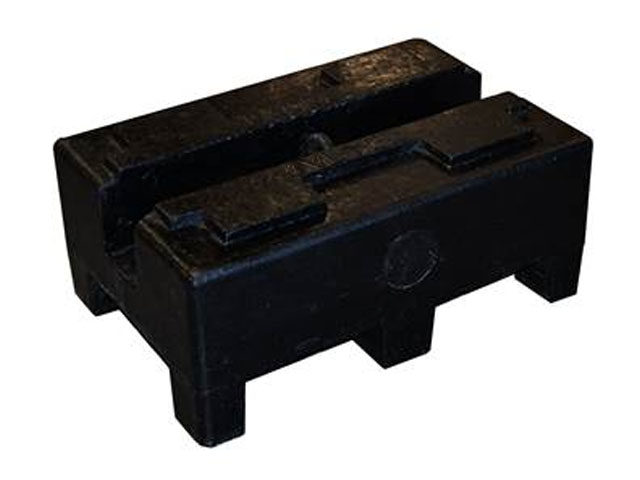
First, it is critical to contextualize where F2 test weights fall within the broader hierarchy of weight precision classes, as this hierarchy is built around permissible deviation from a stated nominal mass—commonly referred to as tolerance. Weight classes are structured so that higher tiers feature narrower tolerances, meaning the actual mass of the weight stays extremely close to its labeled value, while lower tiers have wider tolerances suited for less demanding measurements. F2 sits firmly in the mid-range of this spectrum: it falls below the ultra-precise E1, E2, and F1 classes that are used for calibrating high-end analytical balances and serving as primary reference standards, but it sits above the M-series weights designed for rough, everyday industrial weighing and basic scale checks where extreme accuracy is not a priority. This mid-tier positioning is what makes F2 so versatile; it offers a level of accuracy that is sufficient for most non-specialized precision work without the strict handling requirements, delicate construction, or specialized storage needs of the higher classes. The tolerance ranges for F2 test weights are carefully defined to align with the performance capabilities of mid-range weighing equipment, ensuring that when used for calibration, the equipment can deliver consistent, repeatable results that meet standard operational requirements across a multitude of sectors.
The physical design and material composition of F2 test weights are engineered to support their mid-range precision and durable functionality, with careful attention to factors that affect long-term mass stability and resistance to common environmental stressors. Most F2 test weights are constructed from high-quality stainless steel, a material chosen for its unique combination of properties that support reliable mass retention: it has low magnetic susceptibility, which prevents interference from external magnetic fields that could alter weight readings, resists corrosion and oxidation from exposure to air, moisture, and mild chemical fumes often present in labs or industrial spaces, and offers solid resistance to minor scratches and dents that could otherwise change the weight’s mass over time. Smaller F2 weights, typically those in milligram and gram ranges, are often solid, compact pieces with smooth, polished surfaces to minimize dust accumulation and facilitate easy cleaning, while larger weights in kilogram ranges may feature built-in adjustment cavities. These cavities allow for minor mass adjustments to be made by trained metrology personnel over time, correcting for any tiny mass changes that may occur from regular use, ensuring the weight remains within its specified tolerance range for extended periods. Unlike the highly polished, ultra-fine finishes of higher-class weights, F2 weights have a practical, functional finish that prioritizes durability without compromising the required precision, making them well-suited for frequent handling in busy workspaces where perfect, pristine conditions are not always achievable.
The true strength of F2 test weights lies in their broad, cross-industry applicability, as they are tailored to support the calibration and verification needs of mid-precision weighing equipment that is ubiquitous in professional and educational settings. One of the primary uses for F2 class weights is calibrating semi-analytical balances and precision top-loading scales commonly found in university laboratories, community colleges, and technical training institutions. In these educational environments, students and instructors rely on accurate weighing for chemistry experiments, physics demonstrations, material science projects, and general lab work, and F2 weights provide the perfect balance of accuracy and affordability for routine practice. Unlike higher-class weights that require strict, controlled conditions and limited student handling, F2 weights can be used regularly for teaching proper weighing techniques and calibration principles without excessive risk of damage or rapid loss of precision. Beyond education, F2 test weights are a staple in industrial quality control departments, where they are used to verify the accuracy of production line scales, packaging scales, and small batch weighing equipment. In manufacturing, consistent weight measurements are vital to ensuring product uniformity, compliance with internal quality standards, and accurate portioning of raw materials; F2 weights allow teams to perform regular, on-site scale checks to catch any drift in measurement accuracy before it impacts product quality or production efficiency.
F2 test weights also play a key role in small to mid-sized laboratory operations, including research facilities focused on applied science, environmental testing labs, and food and beverage quality control labs. These settings do not always require the ultra-high precision of analytical microbalances, but they still need reliable, consistent measurements for sample preparation, reagent mixing, and data collection. Using F2 weights for regular calibration ensures that weighing equipment remains within acceptable accuracy ranges, supporting the integrity of test results and research data without the overhead of maintaining and calibrating higher-class reference weights. Additionally, F2 weights are commonly used for calibrating mid-range commercial scales in retail and small-scale production environments, where legal weight compliance for products and materials is necessary, but the extreme precision of high-end metrology tools is not required. This wide range of applications cements F2 as a workhorse weight class, one that does not seek to compete with elite precision weights but instead fulfills a critical, everyday role in keeping measurements consistent across the parts of industry and academia that form the backbone of routine scientific and operational work.
Proper handling and care are essential to preserving the accuracy and lifespan of F2 test weights, even though they are more durable than higher-precision alternatives. One of the most fundamental rules for handling any precision test weight, including F2, is to avoid direct skin contact. Oils, salts, and moisture from human hands can leave residue on the weight’s surface, which can gradually add mass or cause corrosion over time, pushing the weight outside its specified tolerance range. Instead, F2 weights should always be handled with clean, lint-free gloves or specialized weight tweezers, depending on their size; smaller gram and milligram weights require precision tweezers to avoid dropping or scratching, while larger kilogram weights can be safely handled with soft, non-abrasive gloves. When not in use, F2 weights should be stored in a dedicated, protective case lined with soft, non-scratching material, kept in a dry, temperature-stable environment away from direct sunlight, heat sources, and corrosive chemicals. Extreme temperature fluctuations can cause minor expansion or contraction of the metal, while high humidity can accelerate corrosion, even in stainless steel, so consistent storage conditions help maintain mass stability.
Regular cleaning is another key aspect of F2 weight maintenance, though it must be done gently to avoid damaging the weight’s surface. For routine cleaning, a soft, lint-free cloth lightly dampened with a mild, non-abrasive cleaning solution or pure alcohol is sufficient to remove dust, fingerprints, and minor surface residue; harsh scrubbing, abrasive cleaners, or stiff brushes should never be used, as they can scratch the surface or remove tiny amounts of material, altering the weight’s mass. After cleaning, weights should be fully air-dried before being returned to their storage case to prevent moisture buildup. It is also recommended to have F2 test weights periodically re-verified by metrology professionals to confirm they remain within their tolerance range, especially if they are used frequently or exposed to harsh environmental conditions. The frequency of re-verification depends on usage intensity: weights used daily in industrial settings may need checks more often than those used occasionally in educational labs, but regular checks ensure that the weights continue to provide reliable calibration results over years of use.
A common misconception about mid-tier weight classes like F2 is that they are “less important” than higher-precision weights, but this overlooks the fundamental principle of metrology: matching the precision of the test weight to the needs of the equipment and task at hand. Using an ultra-high-precision E1 or F1 weight to calibrate a basic mid-range scale is unnecessary and inefficient, as the higher precision of the weight is wasted on equipment that cannot achieve that level of accuracy, and the delicate nature of those weights makes them unsuitable for frequent, on-site use. Conversely, using a low-precision M-series weight to calibrate a mid-range precision scale would result in inaccurate calibration, leading to flawed measurements and unreliable data. F2 test weights fill this perfect middle ground, offering precision that is perfectly matched to the capabilities of the most commonly used weighing equipment across industries, making them a cost-effective, practical choice for routine calibration. This alignment between weight class and equipment capability is what makes F2 such a valuable tool; it eliminates waste while ensuring accuracy, striking a balance that is essential for sustainable, efficient measurement practices.
Beyond individual workplaces and labs, F2 test weights contribute to broader consistency in measurement standards on a local and regional scale. By providing a reliable, accessible reference mass for countless routine calibration tasks, they help ensure that measurements taken in one lab, factory, or educational institution are consistent with those taken in another, even when ultra-high-precision reference standards are not present. This consistency is vital for collaborative research, shared industry standards, and cross-organizational data comparison, as it creates a common baseline for weighing that does not require access to elite metrology facilities. F2 weights act as a practical link between the highest levels of national and international mass standards and everyday measurement practices, bringing the principles of accurate metrology out of specialized labs and into the spaces where routine work happens. They represent the democratization of precision, making reliable calibration accessible to teams and institutions that may not have the resources for high-end metrology equipment but still require accurate, trustworthy measurements for their daily operations.
As technology in weighing equipment continues to evolve, with mid-range scales and balances becoming more advanced and user-friendly, the role of F2 test weights remains unchanged and even more relevant. Modern weighing equipment often features digital displays and enhanced sensitivity, but it still requires regular calibration against a known mass standard to maintain accuracy, and F2 weights provide the ideal reference for this ongoing maintenance. They are not designed for cutting-edge scientific breakthroughs or ultra-sensitive micro-weighing, but for the steady, reliable work that keeps industries running, educational programs effective, and research consistent. In a world that increasingly relies on data-driven decision-making, the accuracy of basic measurements cannot be overlooked, and F2 test weights stand as a reliable, practical solution to ensuring that data is built on a foundation of consistent, verified mass measurements.
In summary, test weight class F2 is far more than just a mid-range option in the metrology hierarchy; it is a essential tool that balances precision, durability, and practicality for the full spectrum of routine weighing calibration needs. From high school science labs to industrial production floors, from small research facilities to quality control departments, F2 weights perform a quiet but critical role in maintaining measurement accuracy, supporting consistent results, and upholding basic standards of quality and reliability. Their thoughtful design, suitable tolerance ranges, and versatile applications make them an indispensable part of any operation that relies on accurate weighing, proving that precision does not always have to be elite to be meaningful. By understanding the unique position and purpose of F2 test weights, users can make informed choices about their calibration tools, ensuring that their weighing equipment performs reliably, their data is accurate, and their daily operations run smoothly with a level of precision that is perfectly matched to their needs.
