





Changzhou Veidt Weighing Co., Ltd. © 2022 ALL RIGHTS RESERVED Privacy Policy | Calibration Weight | Test Weights | Cast Iron Weights | Standard Weights | Laboratory Weights | XML | SITEMAP
NEWS LIST
test weight class E2
Saturday 21st March 2026 Back to list
In the vast and intricate world of precision measurement, test weights serve as the quiet backbone of reliable data collection, quality control, and consistent industrial and scientific operations. Among the various graded categories of these critical tools, test weight class E2 holds a distinct and indispensable position, balancing exceptional accuracy with broad practical usability across multiple professional fields. Unlike weights designed for basic commercial weighing or rough industrial use, E2 class weights are engineered to meet strict metrological standards, with tightly controlled tolerances and physical properties that make them suitable for high-precision testing, calibration, and verification tasks. This category occupies a unique niche in the hierarchy of precision weights, sitting just below the ultra-high-accuracy reference weights used in top-tier national metrology laboratories, yet far above standard weights meant for everyday commercial scales. Understanding the role, characteristics, handling, and real-world impact of E2 test weights reveals the hidden importance of precision measurement in modern society, where even tiny deviations in mass can lead to significant errors in research, manufacturing, and quality assurance.
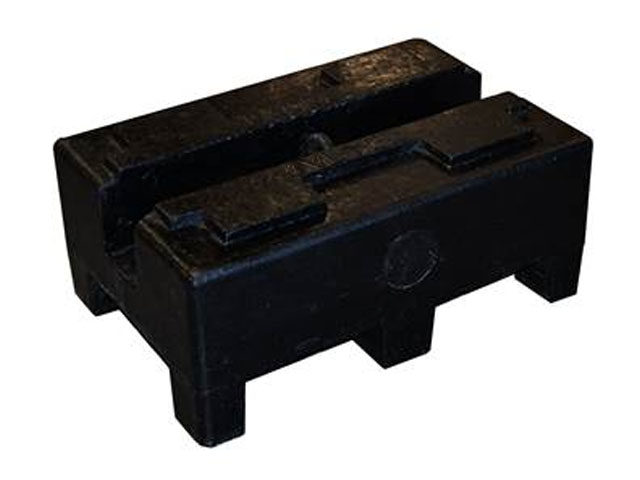
To grasp the value of E2 class test weights, it is essential to first understand the core principles behind weight classification systems, which are built around allowable mass deviations and intended use cases. All precision test weights are grouped into classes based on the maximum acceptable error from their stated nominal mass, with tighter tolerances corresponding to higher accuracy levels. E2 weights are defined by extremely narrow margin of error, meaning their actual mass must fall within an exceptionally small range relative to their marked value. This level of precision is not arbitrary; it is tailored to support the calibration of high-sensitivity weighing instruments that require consistent, reliable reference points to function accurately. These weights are typically crafted from durable, non-corrosive materials that resist wear, tarnish, and magnetic interference, as physical damage or chemical changes to the surface can alter mass and compromise measurement integrity. Common materials for E2 weights include high-grade stainless steel alloys chosen for their stability, density consistency, and resistance to environmental factors like moisture and oxidation. Smaller E2 weights, especially those in milligram ranges, are often solid, single-piece constructions with smooth, polished surfaces to prevent dust accumulation and physical damage, while larger weights may feature sealed internal cavities for minor mass adjustments without exposing the interior to external elements.
The physical design of E2 test weights is carefully optimized to maintain precision over time, with every detail serving a functional purpose. The surfaces are finished to a high smoothness, avoiding rough textures that could trap tiny particles or scratch easily during handling. Weights in this class are also manufactured to strict magnetic susceptibility limits, as magnetic properties can interfere with the performance of sensitive electronic balances and scales, leading to inaccurate readings. For this reason, E2 weights undergo specialized testing to ensure they do not retain magnetic charge or react strongly to external magnetic fields, a critical feature for use in laboratory and industrial settings where electromagnetic equipment is common. Additionally, these weights are designed to be compact and ergonomic for safe handling, with smaller weights often stored in protective, lined cases to prevent contact with other objects that could cause scratches or dents. Even minor surface imperfections, such as a small scratch or a tiny dent, can slightly change the mass of an E2 weight, making proper design and storage vital to preserving their accuracy over months and years of use.
The primary application of E2 class test weights lies in the calibration and verification of high-precision weighing instruments, most commonly analytical balances and precision scales used in specialized laboratories and manufacturing facilities. These scales are capable of measuring mass with extremely fine readability, often down to fractions of a milligram, and they require a reference weight with matching precision to ensure their measurements remain consistent. Unlike standard weights that are used for quick, rough checks, E2 weights are used for formal testing and calibration procedures, where the goal is to confirm that a scale or balance is operating within its specified accuracy range. They are also frequently used to calibrate the next tier of lower-accuracy test weights, creating a traceable chain of measurement that links high-level metrology standards to everyday industrial and scientific use. This hierarchical calibration system ensures that measurements taken in different labs, factories, or facilities are comparable and consistent, eliminating discrepancies that could arise from uncalibrated or inaccurately calibrated equipment.
One of the key sectors where E2 test weights are indispensable is scientific research, particularly in fields that demand meticulous mass measurements. In chemistry labs, for example, researchers rely on precise mass readings to prepare chemical solutions, measure reactants, and analyze experimental results; even a tiny error in mass can skew chemical reactions, alter concentration levels, and lead to invalid data. Pharmaceutical research and production also depend heavily on E2 weights, where accurate dosing of active ingredients and excipients is critical to ensuring product safety, consistency, and effectiveness. In these settings, using a weight with looser tolerances could result in dosage variations that fall outside acceptable ranges, affecting both product quality and regulatory compliance. E2 weights are also used in materials science, where researchers test the properties of new materials by measuring small changes in mass, and in environmental science, where sample analysis requires precise weighing to detect trace elements or pollutants. In all these scientific applications, the reliability of E2 test weights directly impacts the validity of research findings and the reproducibility of experiments, two cornerstones of credible scientific work.
Beyond scientific research, E2 class test weights play a vital role in industrial quality control and manufacturing processes that require strict adherence to mass specifications. In industries producing small components, such as electronics, aerospace, and medical devices, even minor variations in part mass can affect product performance, fit, and functionality. E2 weights are used to calibrate the scales that measure raw materials, component parts, and finished products, ensuring that every item meets the required mass standards. This level of precision is especially important in aerospace and medical manufacturing, where product consistency can have direct implications for safety and reliability. In food and beverage production, while some processes use lower-accuracy weights, specialized segments such as premium product formulation, nutritional supplement manufacturing, and laboratory testing for quality control rely on E2 weights to maintain accurate ingredient ratios and comply with internal quality standards. Additionally, E2 weights are used in manufacturing facilities to calibrate checkweighers, machines that automatically verify the mass of packaged goods as they move along production lines, preventing underfilled or overfilled products from reaching the market.
Proper handling and maintenance are essential to preserving the accuracy and lifespan of E2 class test weights, as their high precision makes them vulnerable to damage from improper use and environmental exposure. Unlike standard weights that can be handled casually, E2 weights require careful, deliberate handling to avoid contamination and physical harm. Users are typically advised to handle these weights with clean, dry gloves or specialized tools, never with bare hands, as skin oils, sweat, and dirt can leave residues on the surface that add tiny amounts of mass over time. Even the moisture from a single fingerprint can be enough to affect the measurements of an ultra-sensitive balance, making clean handling a non-negotiable practice. When not in use, E2 weights should be stored in their original protective cases, which are designed to keep them separate from other tools and prevent scratches, dents, and dust accumulation. Storage areas should be clean, dry, and temperature-stable, as extreme temperatures or high humidity can cause minor expansion or contraction of the weight material, or lead to corrosion and surface degradation.
Regular inspection and periodic recalibration are also critical for maintaining the performance of E2 test weights. Over time, even with careful handling, weights can experience minor wear, surface changes, or subtle mass shifts that fall outside their acceptable tolerance range. Routine visual inspections can identify surface damage, scratches, or signs of corrosion, while periodic calibration against higher-accuracy reference weights ensures that any deviations are detected and corrected promptly. The frequency of recalibration depends on factors such as frequency of use, handling conditions, and environmental factors; weights used daily in busy labs may require more frequent checks than those used occasionally in controlled storage. It is also important to avoid dropping or bumping E2 weights, as impact can cause internal structural changes or visible dents that alter mass. When transporting E2 weights, they should be secured in their protective cases and placed in shock-absorbent packaging to prevent damage during movement.
Another important aspect of E2 test weights is their role in maintaining measurement consistency across different facilities and geographic locations. In a globalized economy, where products are manufactured in one country, tested in another, and sold worldwide, uniform measurement standards are essential for fair trade, product compatibility, and quality assurance. E2 weights provide a common reference point for these standards, allowing manufacturers and laboratories across the globe to calibrate their equipment using the same level of precision. This consistency eliminates trade barriers related to measurement discrepancies and ensures that products meet the same quality standards regardless of where they are produced or tested. For small businesses and large corporations alike, this uniformity reduces waste, rework, and customer complaints related to inconsistent product quality, making E2 weights a practical investment in operational efficiency and customer satisfaction.
It is also important to distinguish E2 class test weights from other weight classes to fully appreciate their specific role. Higher-accuracy weight classes are reserved for top-level metrology laboratories and national standardization bodies, used primarily for calibrating other reference weights rather than direct scale calibration. Lower-accuracy weight classes, by contrast, are designed for commercial scales, industrial checkweighing, and everyday weighing tasks where small mass deviations are less critical. E2 weights fill the gap between these two extremes, offering a level of precision that meets the demands of high-sensitivity applications without the specialized handling and cost associated with ultra-high-accuracy reference weights. This balance of precision and practicality makes E2 weights one of the most widely used high-precision weight categories in professional settings, suitable for a broad range of tasks that require more accuracy than standard weights can provide.
The impact of E2 test weights extends far beyond the immediate act of weighing and calibration, touching nearly every aspect of modern life that relies on consistent, accurate measurement. From life-saving medications that require precise ingredient dosing to electronic devices that depend on tiny, accurately sized components, from scientific breakthroughs that rely on precise experimental data to food products that maintain consistent quality, E2 weights play a silent but essential role. Many people never encounter these specialized tools directly, but their influence is evident in the reliability of products, the validity of scientific research, and the safety of consumer goods. Without consistent, high-precision reference weights like those in the E2 class, modern manufacturing, scientific research, and quality control would be far less reliable, leading to increased waste, inconsistent products, and unreliable data that could hinder innovation and progress.
As technology continues to advance and the demand for precision in manufacturing and research grows, the importance of E2 class test weights remains unchanged. New generations of high-sensitivity balances and scales are being developed with even finer readability, and these instruments still require the stable, accurate reference points that E2 weights provide. While automated calibration systems and digital measurement tools have evolved, physical test weights remain a gold standard for mass calibration, as they provide a tangible, traceable reference that digital systems alone cannot replicate. Investing in high-quality E2 test weights and following proper handling and maintenance protocols is not just a best practice for laboratories and manufacturing facilities; it is a commitment to accuracy, quality, and reliability that underpins the integrity of their work.
In conclusion, test weight class E2 represents a critical intersection of precision, practicality, and versatility in the field of metrology. These carefully crafted tools are designed to meet strict accuracy standards, support high-precision weighing applications, and maintain consistent measurement across diverse industries and scientific disciplines. Their role in calibrating sensitive equipment, verifying lower-tier weights, and ensuring product quality and research validity cannot be overstated. Proper handling, storage, and regular maintenance are essential to preserving their performance, allowing them to deliver reliable results over extended periods of use. As a foundational element of precision measurement, E2 test weights continue to be an indispensable resource for laboratories, manufacturing facilities, and research institutions worldwide, supporting innovation, quality control, and consistent standards in an increasingly precise and interconnected world. Their quiet contribution to accuracy and reliability makes them an unsung hero of modern industry and scientific progress, reminding us that even the smallest tools can have the most far-reaching impact.
