





Changzhou Veidt Weighing Co., Ltd. © 2022 ALL RIGHTS RESERVED Privacy Policy | Calibration Weight | Test Weights | Cast Iron Weights | Standard Weights | Laboratory Weights | XML | SITEMAP
NEWS LIST
test weight class E1
Saturday 21st March 2026 Back to list
In the intricate world of precision measurement, test weights serve as the quiet backbone of reliable data collection, industrial quality control, scientific research, and global metrological consistency. Among the various classifications of these critical tools, Class E1 test weights stand apart as a benchmark of meticulous engineering and uncompromising accuracy, designed for scenarios where even the tiniest deviation from a target mass value can disrupt entire processes, compromise research findings, or undermine the integrity of calibrated equipment. Unlike standard weights used for routine daily weighing or general industrial calibration, E1 class test weights are crafted to operate within an exceptionally narrow margin of error, making them indispensable for high-stakes measurement tasks that demand unparalleled attention to detail. This exploration delves into the core characteristics of E1 test weights, the rigorous processes behind their creation, the specialized environments where they thrive, the careful handling and maintenance they require, and their lasting impact on the broader field of metrology, all without reference to specific brands, formal certifications, or commercial claims that might overshadow their inherent technical and functional value.
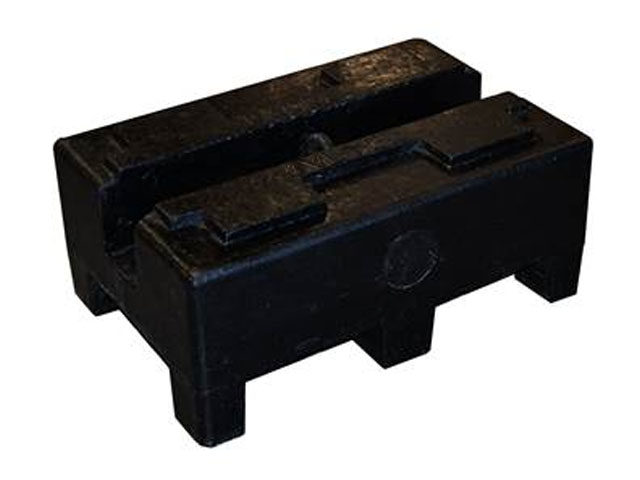
To understand the significance of Class E1 test weights, it is essential to first grasp the foundational role of test weights in measurement systems. Every weighing device, from delicate laboratory microbalances to large-scale industrial scales, relies on calibrated reference weights to maintain accuracy over time. Without these standardized mass references, measurements would be inconsistent, varying from one device to another and from one location to another, creating chaos in fields such as pharmaceuticals, materials science, aerospace engineering, and national metrology institutions. Test weights are categorized into different classes based on their allowable mass deviation, surface quality, material properties, and intended use, with each class tailored to a specific level of precision demand. E1 weights occupy the upper echelon of this classification system, not by arbitrary designation, but by the strict physical and metrological standards they must meet to fulfill their purpose. Their tolerance for error is far smaller than that of lower-class weights, meaning their actual mass remains extraordinarily close to their nominal, or labeled, mass value under controlled conditions. This level of precision is not achieved by chance; it is the result of deliberate material selection, precise manufacturing techniques, and exhaustive testing at every stage of production.
The material composition of E1 test weights is one of the first elements that sets them apart from lower-grade alternatives. Manufacturers select materials that possess a unique combination of properties: high density to minimize physical size for a given mass, resistance to corrosion and oxidation to preserve mass stability over time, low magnetic susceptibility to avoid interference from external magnetic fields, and uniformity in composition to prevent internal inconsistencies that could alter mass. Common materials used for E1 weights include specialized stainless steel alloys and other non-magnetic, corrosion-resistant metals, chosen for their ability to maintain a stable mass even when exposed to mild environmental changes that would affect lesser materials. These materials are not picked for aesthetic appeal or cost efficiency, but for their ability to retain their physical and metrological properties over extended periods, a critical trait for a tool that is meant to be a long-term reference standard. The density of the material is particularly vital because a higher density allows for a more compact weight, reducing the surface area exposed to dust, moisture, and physical damage—all factors that can gradually change the mass of a weight and reduce its accuracy. Additionally, the non-magnetic nature of the materials ensures that the weight is not influenced by nearby electronic equipment or magnetic fields, which could create invisible forces that skew measurement results when the weight is placed on a balance.
The manufacturing process for E1 test weights is equally rigorous, leaving no room for shortcuts or imperfections. Unlike mass-produced weights for general use, E1 weights are often crafted as single-piece, monobloc structures, meaning they are formed from a single solid block of material with no internal cavities, adjustable compartments, or welded joints. This seamless construction eliminates the risk of internal contamination, moisture buildup, or structural wear that could affect mass stability, a common issue with weights that have adjustable components or assembled parts. Every step of the production process is carried out in controlled environments, typically in clean, temperature-stabilized facilities to prevent environmental factors from impacting the shaping and finishing of the weight. The shaping process involves precision machining to achieve the exact mass required, followed by extensive surface finishing to create a smooth, non-porous surface that resists dust adhesion and is easy to clean without damaging the material. Rough surfaces can trap tiny particles of dust, dirt, or moisture, adding minuscule amounts of mass that, while unnoticeable in everyday use, are significant enough to compromise the precision of an E1 weight. After machining and finishing, each weight undergoes a series of meticulous mass verification tests using highly sensitive comparison equipment, where its actual mass is measured against a primary reference standard to ensure it falls within the strict tolerance range defined for E1 classification. Any weight that does not meet these exacting standards is refined further or discarded, ensuring only the most consistent and accurate pieces move forward for use in professional settings.
One of the defining traits of E1 test weights is their extremely narrow permissible error range, a feature that directly dictates their intended applications. For even small nominal mass values, the allowable deviation from the target mass is measured in fractions of a milligram, a level of precision that is far beyond what is needed for routine weighing tasks. This narrow tolerance means that E1 weights are not designed for casual, daily use in standard laboratories or industrial settings; instead, they are reserved for applications where absolute measurement accuracy is non-negotiable. Primary among these applications is the calibration of other high-precision reference weights, including lower-class E2 weights and other precision mass standards. E1 weights act as a critical link in the metrological chain, transferring the accuracy of national and international mass standards to secondary reference tools that are then used in more widespread calibration efforts. They are also the go-to choice for calibrating ultra-micro and microbalances, the most sensitive weighing instruments available, which are used to measure tiny quantities of substances in fields such as pharmaceutical research, chemical analysis, and materials science. In these fields, measuring a dose of a potent compound, a trace element in a sample, or a microscopic component of a new material requires balances that can detect changes in mass as small as a fraction of a milligram, and only E1 class weights can provide the reference accuracy needed to ensure these instruments function correctly.
Beyond laboratory and research settings, E1 test weights play a vital role in upholding consistency across global measurement systems. In an era where international trade, scientific collaboration, and cross-border manufacturing rely on universal measurement standards, having a shared reference for mass is essential. E1 weights help maintain this uniformity by serving as a reliable reference point that can be used to calibrate equipment and verify measurements in different countries and industries, ensuring that a gram measured in one laboratory is equivalent to a gram measured anywhere else in the world. This consistency is particularly important in industries where product safety and quality are tightly regulated, such as pharmaceuticals, food and beverage production, and aerospace manufacturing, where even a small discrepancy in mass can lead to unsafe products, failed components, or significant financial losses. For example, in pharmaceutical development, the precise measurement of active ingredients is critical to ensuring medication dosage is safe and effective; a minor error in measurement could lead to under-dosed or over-dosed medications with serious consequences for patients. In aerospace engineering, the mass of individual components must be measured with extreme accuracy to ensure the balance and performance of aircraft and spacecraft, where even a tiny weight imbalance can affect flight stability and safety. In these high-stakes scenarios, E1 test weights provide the level of accuracy needed to uphold strict quality and safety standards without relying on external certifications or brand claims to validate their performance.
Despite their exceptional precision, E1 test weights are not indestructible, and their long-term accuracy depends heavily on proper handling, storage, and maintenance practices. Unlike durable, lower-class weights that can withstand frequent handling and less-than-ideal storage conditions, E1 weights require gentle care to preserve their mass stability and surface integrity. One of the most important practices is avoiding direct physical contact with bare hands, as the oils, sweat, and tiny particles present on human skin can transfer to the weight’s surface, adding small amounts of mass that can throw off its precision over time. Instead, users wear lint-free, non-abrasive gloves when handling E1 weights, using specialized tools to place and remove the weights from balances to prevent scratches or surface damage. Storage is another critical factor; E1 weights should be kept in custom-fitted, protective cases made from soft, non-abrasive materials, stored in a clean, temperature-stabilized, and low-humidity environment. Extreme temperatures, high humidity, and exposure to chemicals or dust can all cause corrosion, surface degradation, or mass changes, so the storage space must be carefully controlled to minimize these risks. Regular cleaning is also necessary, but it must be done using gentle, non-abrasive methods and materials that do not scratch the weight’s surface or leave behind residue. Even small scratches or dents can alter the weight’s mass or create areas where dust and moisture can accumulate, so avoiding physical impact and rough handling is essential at all times.
Another key aspect of maintaining E1 test weights is periodic re-verification, even when they are handled and stored correctly. Over time, all test weights will experience minor changes in mass due to gradual surface wear, environmental exposure, or repeated use, no matter how carefully they are cared for. For E1 weights, these small changes are far more impactful than they are for lower-class weights, so regular checks against a primary reference standard are necessary to confirm their accuracy and detect any drift from their nominal mass. The frequency of re-verification depends on how often the weight is used and the conditions in which it is stored; weights used frequently in active laboratory settings may require more frequent checks than those used only occasionally as reference standards. This ongoing maintenance is not a sign of poor quality, but rather a recognition of the delicate nature of high-precision measurement tools and the commitment to upholding accuracy over the lifespan of the weight. It also highlights the responsibility that comes with using E1 class weights: those who rely on these tools must prioritize proper care and verification to ensure they continue to serve as reliable reference standards.
When comparing E1 test weights to lower-class weight options, the differences extend far beyond just tolerance levels, touching on usability, durability, and intended purpose. Lower-class weights are designed for more frequent, rugged use in general laboratory and industrial settings, where a slightly wider margin of error is acceptable and durability is a top priority. They can withstand more handling, less controlled storage, and regular use without losing their functionality for their intended tasks. E1 weights, by contrast, are specialized tools that prioritize precision above all else, making them less suited for heavy daily use or harsh environments. This distinction is crucial for users selecting the right weight for their needs, as using an E1 weight for routine, low-precision tasks would be unnecessary and risk damaging a tool that is meant for critical reference work, while using a lower-class weight for high-precision calibration would lead to inaccurate measurements and unreliable data. Understanding this difference helps ensure that each type of weight is used in the scenario where it can provide the most value, balancing precision, practicality, and longevity effectively.
The impact of E1 test weights extends beyond individual measurement tasks, shaping the way industries and scientific fields approach quality control, research, and innovation. In scientific research, accurate measurements are the foundation of valid data and reproducible results; without reliable reference weights like E1 class, experiments cannot be repeated by other researchers, and scientific progress would slow significantly. Researchers rely on the consistency of E1 weights to ensure that their measurements are trustworthy, allowing them to draw accurate conclusions from their work and build on existing knowledge. In industrial quality control, E1 weights help manufacturers maintain consistent product quality, reduce waste from defective products, and meet internal and external quality expectations. By ensuring that weighing equipment is calibrated accurately, manufacturers can minimize variations in production, improve product reliability, and build trust with customers and partners. In national metrology institutions, E1 weights serve as a cornerstone of a country’s measurement infrastructure, supporting everything from commercial trade to regulatory compliance and scientific advancement.
It is also important to recognize that the value of E1 test weights lies in their function and performance, not in external labels or formal accreditations. Their effectiveness comes from the precision of their design, the quality of their materials, and the rigor of their manufacturing, not from any specific certification or brand association. This focus on inherent quality makes them a timeless tool in metrology, as their value is tied to their ability to deliver consistent, accurate mass measurements regardless of external validation. In a world where many products rely on branding or certifications to establish credibility, E1 test weights stand out as a testament to the importance of technical excellence and functional reliability. They are a reminder that the most critical tools in science and industry are often those that perform their job quietly and consistently, without fanfare, but with an unwavering commitment to precision.
Looking to the future, the role of E1 test weights is likely to remain essential, even as measurement technology continues to advance. While digital weighing systems and automated calibration tools have become more sophisticated, they still require physical reference standards to verify their accuracy, and E1 weights will continue to be the gold standard for this critical verification step. As industries and research fields push for even higher levels of precision—driven by advances in nanotechnology, personalized medicine, and advanced manufacturing—the demand for reliable, high-precision reference weights like E1 class will only grow. Manufacturers will continue to refine materials and production techniques to enhance the stability and accuracy of E1 weights, adapting to new challenges and evolving measurement needs while maintaining the core principles of precision and quality that define the class.
In conclusion, Class E1 test weights are far more than just small metal objects used for calibration; they are a symbol of the dedication to precision that underpins modern science, industry, and global measurement consistency. Their narrow error tolerance, specialized materials, meticulous manufacturing, and strict handling requirements all reflect a commitment to accuracy that is unmatched by lower-class weight options. From calibrating sensitive laboratory instruments to upholding global measurement standards, E1 weights play a vital role in ensuring that measurements are reliable, consistent, and trustworthy across countless applications. Their value lies not in commercial claims or external recognition, but in their ability to perform a critical task with unwavering precision, supporting progress, safety, and quality in every field that relies on accurate mass measurement. As long as precision remains a priority in science, industry, and trade, E1 test weights will continue to be an indispensable tool, quietly enabling accuracy and consistency in the work that shapes our world.
