





Changzhou Veidt Weighing Co., Ltd. © 2022 ALL RIGHTS RESERVED Privacy Policy | Calibration Weight | Test Weights | Cast Iron Weights | Standard Weights | Laboratory Weights | XML | SITEMAP
NEWS LIST
stainless steel test weight
Saturday 14th March 2026 Back to list
In the vast landscape of precision measurement and quality control across countless industries, the stainless steel test weight stands as an unassuming yet indispensable tool, serving as a reliable reference for mass calibration and equipment verification. Unlike ordinary metal blocks, these test weights are crafted with meticulous attention to detail, engineered to deliver consistent, stable mass values that form the backbone of trustworthy weighing operations. From compact laboratory settings to large-scale industrial production floors, from educational institutions teaching fundamental metrology to specialized facilities handling sensitive materials, stainless steel test weights play a pivotal role in upholding measurement integrity, ensuring that every reading, every data point, and every quality check is rooted in accuracy. Their enduring popularity stems from a unique blend of material properties, manufacturing precision, and practical versatility, making them a preferred choice for professionals who demand reliability in their measurement workflows.
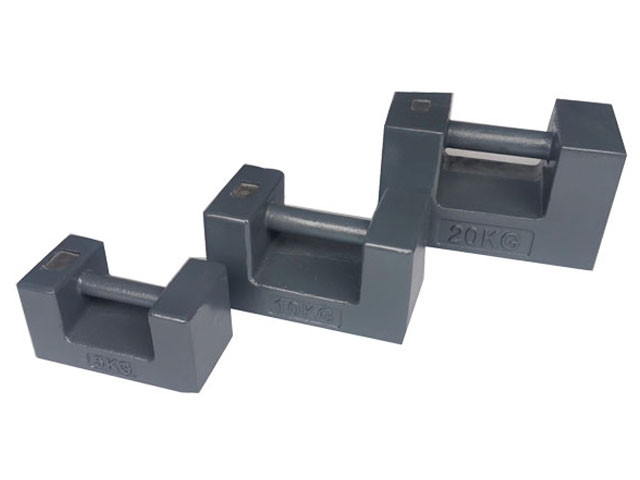
At the heart of every high-quality stainless steel test weight is the inherent excellence of stainless steel as a base material, a metal alloy celebrated for its remarkable resistance to environmental degradation and dimensional stability. Unlike carbon steel or other ferrous metals that are prone to rust, tarnish, and corrosion when exposed to moisture, humidity, or mild chemical substances, stainless steel forms a thin, invisible protective oxide layer on its surface that shields it from oxidation and wear. This corrosion resistance is not just a cosmetic benefit; it directly preserves the mass integrity of the test weight over time, preventing material loss or surface buildup that could alter its calibrated weight and compromise measurement accuracy. Even in environments with fluctuating temperatures, high humidity levels, or occasional exposure to mild cleaning agents, stainless steel test weights maintain their structural and mass stability, avoiding the warping, pitting, or degradation that plagues lesser materials. Additionally, stainless steel offers a favorable density profile, allowing manufacturers to create test weights of precise mass values in compact, manageable sizes, whether for miniature milligram weights used in analytical balances or large, heavy-duty weights for calibrating industrial floor scales and heavy-duty weighing equipment.
The non-magnetic properties of many stainless steel alloys used in test weight production further enhance their functionality, particularly in precision measurement scenarios where magnetic interference can skew results. Magnetic attraction between a test weight and weighing equipment can introduce subtle errors in mass readings, a critical issue in laboratories, research facilities, and industries where ultra-precise measurements are non-negotiable. Stainless steel test weights with low magnetic susceptibility eliminate this risk, ensuring that the only force acting on the weighing device during calibration is the pure gravitational pull of the test weight’s mass. This feature makes them ideal for use with sensitive electronic balances, analytical scales, and precision weighing instruments that operate with minimal tolerance for external interference. Furthermore, stainless steel is easy to clean and sanitize, a key advantage in environments where hygiene and contamination control are priorities, such as food and beverage processing plants, pharmaceutical manufacturing facilities, and medical research laboratories. Smooth, non-porous stainless steel surfaces do not harbor dust, debris, or microbial contaminants, and they can be quickly wiped down or sterilized without damaging the material or altering the test weight’s mass, maintaining both cleanliness and measurement accuracy.
The manufacturing process of stainless steel test weights is a rigorous, multi-stage endeavor that prioritizes precision at every step, starting with the careful selection of raw materials and ending with thorough quality assessment. Manufacturers begin by sourcing high-grade stainless steel alloys that meet strict internal standards for purity, density consistency, and structural uniformity, rejecting any materials with impurities or inconsistencies that could impact mass stability. The raw steel is then subjected to precision forming processes, which may include casting, forging, or machining, depending on the desired size, shape, and weight specification of the final product. For smaller, ultra-precise test weights, advanced machining techniques are employed to shape the steel into exact dimensions, with tight tolerances that ensure the mass aligns with the intended specification. Larger test weights may undergo forging to enhance structural density and durability, followed by precision grinding to refine their shape and remove any excess material.
After the initial forming stage, each stainless steel test weight undergoes extensive finishing and refinement to achieve a smooth, uniform surface and precise mass calibration. This involves grinding, polishing, and deburring to eliminate sharp edges, surface imperfections, and residual material that could affect weight or handling. Skilled technicians then perform precision mass adjustment, carefully adding or removing minute amounts of material from the test weight to fine-tune its mass to the exact required value. This adjustment process demands extreme care and precision, as even the tiniest deviation can lead to measurable errors in calibration. Once the mass is calibrated to the desired standard, the test weight undergoes a final surface treatment to enhance its corrosion resistance and durability, such as passivation to strengthen the protective oxide layer or fine polishing to create a smooth, easy-to-clean finish. Throughout the entire manufacturing process, strict quality control measures are in place to monitor dimensional accuracy, mass consistency, and material integrity, with each test weight inspected multiple times to ensure it meets the rigorous requirements of professional measurement use.
Stainless steel test weights are available in a diverse range of sizes, shapes, and weight denominations to cater to the unique needs of different applications, spanning from minuscule milligram weights to large, heavy-duty weights capable of calibrating massive industrial scales. Common shapes include cylindrical, knob-style, flat, and hooked designs, each engineered for specific handling and usage scenarios. Cylindrical and knob-style test weights are widely used in laboratories and general calibration work, offering easy handling with gloved hands or specialized tools, while hooked weights are ideal for suspended weighing applications and equipment testing that requires vertical loading. Flat, stackable test weights are convenient for incremental calibration and storage, allowing users to combine multiple weights to achieve a desired total mass. Weight specifications cover an extensive spectrum, from fractions of a gram for micro-precision laboratory work to hundreds or even thousands of kilograms for heavy industrial and commercial weighing systems. This wide variety ensures that there is a stainless steel test weight suitable for nearly every calibration task, regardless of scale or complexity.
The applications of stainless steel test weights extend across nearly every industry that relies on accurate mass measurement, solidifying their status as a universal tool for quality assurance and operational efficiency. In scientific and research laboratories, these test weights are essential for calibrating analytical balances, precision scales, and measuring instruments used in chemistry, physics, materials science, and biological research. Accurate mass measurements are the foundation of reliable experimental data, and stainless steel test weights provide the consistent reference needed to ensure that experiments yield repeatable, trustworthy results. In educational settings, from primary schools teaching basic measurement concepts to universities conducting advanced metrology studies, stainless steel test weights serve as practical teaching aids, helping students understand the principles of mass, weight, and calibration through hands-on learning experiences.
Industrial sectors depend heavily on stainless steel test weights to maintain product quality, comply with internal quality standards, and ensure fair trade practices. Manufacturing facilities use them to calibrate production line scales, checkweighers, and packaging equipment, ensuring that products are filled, packaged, and labeled with accurate weight quantities. This not only upholds product consistency but also prevents costly errors related to underfilling or overfilling, protecting both manufacturers and consumers. In the food and beverage industry, where precise ingredient measurement and portion control are critical for product uniformity and safety, stainless steel test weights are a staple in quality control labs and production areas, thanks to their hygienic properties and corrosion resistance. Pharmaceutical and cosmetic manufacturers rely on these test weights to calibrate equipment used for measuring active ingredients and formulations, where even minor weight discrepancies can compromise product efficacy and safety. Logistics, shipping, and warehousing operations use large stainless steel test weights to calibrate floor scales, pallet scales, and truck scales, ensuring accurate weight calculations for cargo, shipping costs, and compliance with transportation regulations.
Beyond these core industries, stainless steel test weights find utility in specialized fields such as aerospace, automotive manufacturing, and metallurgy, where precision mass measurement is vital for quality control, component testing, and material analysis. In aerospace and automotive production, even the smallest deviation in component weight can impact performance, safety, and fuel efficiency, making accurate calibration with reliable test weights a critical part of the manufacturing process. In metrology institutes and calibration laboratories, stainless steel test weights serve as secondary reference standards, supporting the calibration of other measurement tools and ensuring traceability in mass measurement systems. Their durability and long service life also make them a cost-effective choice for businesses and institutions, as they retain their accuracy and structural integrity for years with proper care, reducing the need for frequent replacements.
To maximize the lifespan and maintain the accuracy of stainless steel test weights, proper handling, storage, and routine maintenance are essential practices for all users. One of the most important rules is to avoid direct bare-hand contact with the test weights, as skin oils, sweat, and dirt can leave residues on the surface that may accumulate over time and alter the mass. Instead, users should wear clean, lint-free gloves or use specialized tools such as forceps or weight lifters when handling test weights, especially smaller, high-precision models. When placing or removing test weights from weighing equipment, gentle handling is crucial to prevent impacts, drops, or scratches that could damage the surface, distort the shape, or affect the calibrated mass. Even minor dents or surface damage can lead to subtle mass changes, compromising the reliability of the test weight for future calibrations.
Storage conditions also play a key role in preserving the quality of stainless steel test weights. They should be stored in a clean, dry, and temperature-stable environment, free from excessive humidity, dust, chemical fumes, or extreme temperature fluctuations that could promote corrosion or surface degradation. Many test weights come with protective cases or storage trays, which help prevent scratches, keep dust at bay, and organize weights by size for easy access. Avoid storing test weights in direct contact with other metal objects or abrasive materials that could scratch or damage their surfaces. Regular cleaning is another vital maintenance step: test weights should be wiped down with a soft, lint-free cloth and a mild, non-abrasive cleaning solution as needed to remove dust, residues, or contaminants. After cleaning, they should be dried thoroughly to prevent moisture buildup on the surface. It is important to avoid harsh chemicals, abrasive scrubbers, or aggressive cleaning methods that could erode the protective oxide layer or damage the polished surface of the test weight.
While stainless steel test weights are designed for long-term stability, periodic performance checks are recommended to ensure their mass remains accurate, especially for frequently used weights or those operating in harsh environments. Over time, even with proper care, minor wear, surface abrasion, or material loss may occur, potentially affecting calibration accuracy. Scheduling routine checks with calibrated measurement equipment allows users to identify any deviations early and address them promptly, either through re-calibration or replacement if necessary. This proactive approach to maintenance ensures that stainless steel test weights continue to deliver reliable, consistent mass values, upholding the integrity of measurement processes for years to come.
In conclusion, the stainless steel test weight is far more than a simple metal block; it is a precision-engineered instrument that underpins accuracy, consistency, and reliability across every sector of modern industry, science, and commerce. Its unique combination of corrosion resistance, dimensional stability, non-magnetic properties, and hygienic design sets it apart from other materials used for mass calibration, while rigorous manufacturing standards ensure unwavering precision. From the smallest laboratory balance to the largest industrial weighing system, stainless steel test weights provide the consistent reference point needed to turn raw measurements into actionable data, quality assurance, and operational excellence. As technology advances and industries continue to demand higher levels of precision, the role of stainless steel test weights remains as critical as ever, a timeless tool that embodies the importance of accuracy in every aspect of measurement and production. By prioritizing proper handling, maintenance, and quality selection, users can leverage the full potential of these test weights, ensuring that their measurement processes remain accurate, efficient, and reliable for all their operational needs.
