





Changzhou Veidt Weighing Co., Ltd. © 2022 ALL RIGHTS RESERVED Privacy Policy | Calibration Weight | Test Weights | Cast Iron Weights | Standard Weights | Laboratory Weights | XML | SITEMAP
NEWS LIST
class f calibration weights
Friday 02nd January 2026 Back to list
In the realm of precision measurement, calibration weights serve as the foundational reference for ensuring accuracy across a wide range of industrial, scientific, and laboratory operations. Among the various classes of calibration weights, Class F stands out as a versatile and widely used category, designed to meet the demands of routine calibration tasks while maintaining a high level of precision.
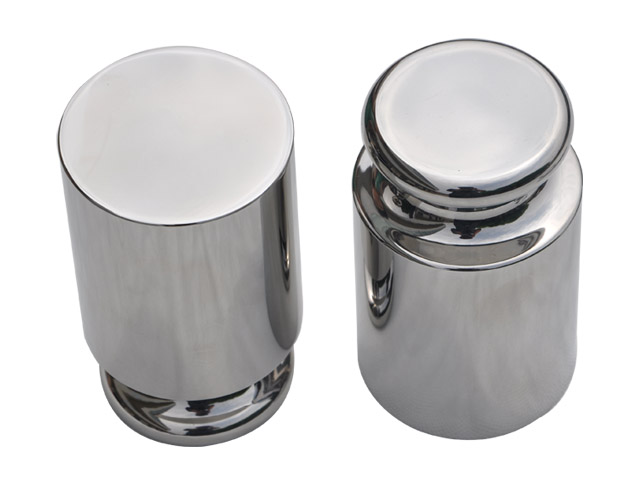
To begin with, it is crucial to clarify what distinguishes Class F calibration weights from other weight classes. Calibration weights are typically classified based on their tolerance levels, which refer to the maximum allowable deviation from their nominal mass. Class F weights are positioned in the middle of the precision spectrum, offering a balance between accuracy and practicality. Unlike higher-precision classes (such as Class E or Class D), which are reserved for specialized laboratory calibrations and reference standards, Class F weights are engineered for everyday calibration tasks that require consistent, but not ultra-high, precision. Conversely, they are more accurate than lower classes (such as Class G), making them suitable for applications where measurement errors could lead to significant quality or safety issues.
The tolerance specifications for Class F weights are defined by international standards, which provide a framework for ensuring uniformity and interoperability across different regions and industries. These standards outline the maximum permissible error for each nominal mass in the Class F range, from small gram-level weights to larger kilogram-level weights. For example, a 1 kg Class F weight may have a maximum tolerance of ±20 milligrams, while a 1 gram Class F weight might have a tolerance of ±0.5 milligrams. These tolerances are carefully calibrated to ensure that Class F weights can reliably calibrate a variety of measuring instruments, including balances, scales, and load cells, without introducing excessive error into the measurement chain.
Material selection is a critical factor in the performance and durability of Class F calibration weights. The ideal material must possess several key properties: high density, corrosion resistance, stability over time, and resistance to wear and tear. The most commonly used materials for Class F weights include stainless steel, brass, and aluminum, each with its own set of advantages and limitations. Stainless steel is the preferred choice for many applications due to its excellent corrosion resistance and dimensional stability. It is particularly suitable for use in harsh environments, such as industrial settings where exposure to moisture, chemicals, or extreme temperatures is common. Brass, on the other hand, offers a higher density than stainless steel, which allows for smaller weight dimensions for a given mass. This makes brass weights ideal for applications where space is limited, such as in portable calibration kits. Aluminum is less dense than stainless steel and brass, but it is lightweight and cost-effective, making it suitable for larger nominal mass weights where portability is a priority.
In addition to the base material, the surface finish of Class F calibration weights also plays a significant role in their performance. A smooth, polished surface helps to prevent the accumulation of dust, dirt, and moisture, which can alter the weight’s mass over time. It also reduces the risk of corrosion and wear, ensuring that the weight maintains its accuracy for an extended period. Manufacturers typically use processes such as electroplating, passivation, or chemical polishing to achieve the desired surface finish, depending on the base material and the intended application of the weight.
The manufacturing process of Class F calibration weights is a highly controlled and precise operation, involving several key steps to ensure that the final product meets the required tolerance specifications. The process begins with the selection and preparation of the raw material, which is carefully inspected for purity and consistency. Next, the material is shaped into the desired form using techniques such as forging, casting, or machining. Forging involves heating the material to a high temperature and then shaping it using pressure, which results in a dense, uniform structure that enhances the weight’s stability. Casting is used for more complex shapes, where molten metal is poured into a mold and allowed to cool and solidify. Machining is then used to refine the shape and dimensions of the weight, ensuring that it closely matches the nominal mass.
After shaping, the weight undergoes a series of calibration and testing procedures to verify its mass accuracy. This typically involves comparing the weight to a reference standard of a higher precision class (such as Class E) using a high-precision balance. Any deviations from the nominal mass are corrected through additional machining or grinding. Once the weight meets the tolerance requirements, it is marked with essential information, including the nominal mass, the class (F), and the manufacturer’s identifier. This marking ensures traceability, allowing users to track the weight’s calibration history and ensure that it remains within specification.
Class F calibration weights find applications in a wide range of industries and settings, thanks to their balance of precision and versatility. One of the most common applications is in industrial quality control, where they are used to calibrate scales and balances used in manufacturing processes. For example, in the food and beverage industry, Class F weights are used to calibrate scales that measure ingredients, ensuring that products meet consistent quality and quantity standards. In the pharmaceutical industry, they are used to calibrate balances used in the formulation of drugs, where precise measurements are critical to ensuring the efficacy and safety of the final product.
Another important application of Class F calibration weights is in laboratory settings, where they are used for routine calibration of laboratory balances and other measuring instruments. While high-precision laboratories may use higher classes of weights for reference standards, Class F weights are ideal for daily calibration tasks, such as verifying the accuracy of balances used in chemical analysis or biological research. They are also used in educational institutions, where they serve as teaching tools to demonstrate the principles of measurement and calibration.
Class F weights are also widely used in the field of metrology, the science of measurement. Metrology laboratories use Class F weights to calibrate measuring instruments for other organizations, ensuring that these instruments meet national and international standards. In addition, they are used in legal metrology, where they help to enforce regulations related to trade and commerce. For example, in retail settings, Class F weights are used to calibrate scales used for weighing products sold by mass, ensuring that consumers receive the correct amount of product.
Proper maintenance and handling of Class F calibration weights are essential to preserving their accuracy and extending their service life. One of the most important maintenance practices is regular cleaning. Weights should be cleaned regularly to remove dust, dirt, and other contaminants that can accumulate on the surface and alter the mass. Cleaning should be done using a soft, lint-free cloth and a mild cleaning solution, avoiding abrasive materials that can scratch the surface. After cleaning, the weight should be thoroughly dried to prevent moisture from causing corrosion.
Storage is another critical factor in maintaining the integrity of Class F weights. Weights should be stored in a clean, dry environment, away from extreme temperatures, humidity, and chemical fumes. They should be placed in a dedicated storage case or rack to prevent damage from impact or abrasion. It is also important to store weights separately based on their nominal mass to avoid confusion and ensure that they are not damaged by contact with larger, heavier weights.
Regular calibration is essential to ensure that Class F weights remain within their tolerance specifications. Over time, factors such as wear and tear, corrosion, and accidental damage can cause the weight’s mass to deviate from the nominal value. The frequency of calibration depends on the frequency of use, the environment in which the weight is used, and the requirements of the application. In general, Class F weights should be calibrated at least once a year, or more frequently if they are used in harsh environments or subjected to heavy use. During calibration, the weight is compared to a reference standard, and any deviations are documented. If the weight is outside the tolerance range, it may need to be reconditioned or replaced.
Handling practices also play a significant role in maintaining the accuracy of Class F weights. Weights should always be handled with care, using gloves to prevent the transfer of oils and moisture from the skin, which can alter the mass. They should never be dropped, struck, or subjected to excessive force, as this can cause permanent damage. When using weights, they should be placed gently on the measuring instrument’s pan, avoiding sliding or scraping, which can cause wear.
In conclusion, Class F calibration weights are an essential component of precision measurement systems, offering a balance of accuracy, versatility, and practicality that makes them suitable for a wide range of applications. From industrial quality control to laboratory research and legal metrology, Class F weights play a critical role in ensuring the reliability and consistency of measurements. By understanding their defining characteristics, material selection, manufacturing processes, and maintenance requirements, professionals can maximize the performance and service life of these weights. As measurement technology continues to evolve, the importance of Class F calibration weights is likely to remain, as they provide a cost-effective and reliable solution for meeting the routine calibration needs of various industries. Whether used in a factory, a laboratory, or a retail setting, Class F weights are a cornerstone of accurate measurement, helping to ensure quality, safety, and fairness in countless applications.
