





Changzhou Veidt Weighing Co., Ltd. © 2022 ALL RIGHTS RESERVED Privacy Policy | Calibration Weight | Test Weights | Cast Iron Weights | Standard Weights | Laboratory Weights | XML | SITEMAP
NEWS LIST
class 1 weight set
Friday 02nd January 2026 Back to list
In the realm of precision measurement, where accuracy is the cornerstone of reliability, class 1 weight sets stand as indispensable tools. These meticulously crafted weight sets are designed to meet rigorous standards for precision, making them essential across a wide range of industries and applications. From scientific research laboratories to manufacturing quality control departments, class 1 weight sets play a pivotal role in ensuring that measurements are consistent, accurate, and trustworthy.
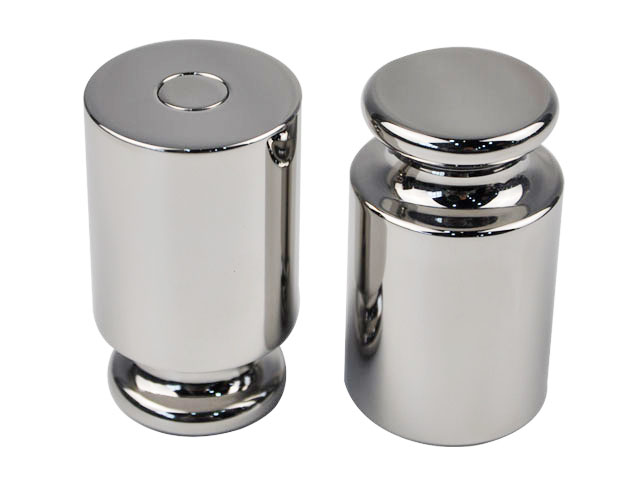
To understand the importance of class 1 weight sets, it is first necessary to define what distinguishes them from other classes of weights. Weight classes are typically categorized based on their tolerance levels—the maximum allowable deviation from their nominal weight. Class 1 weights are among the most precise weight classes available, with extremely tight tolerance ranges. Unlike lower classes, which may have larger allowable deviations suitable for general-purpose use, class 1 weights are engineered to minimize errors, making them ideal for applications where even the smallest discrepancy can have significant consequences. For instance, a class 1 weight of 1 kilogram may have a tolerance of only a few milligrams, ensuring that its actual weight is as close as possible to the stated nominal value.
The construction of class 1 weight sets is a testament to the emphasis on precision. These weights are typically made from high-quality materials that offer excellent stability and resistance to environmental factors. Common materials include stainless steel, brass, and sometimes tungsten alloys. Stainless steel is a popular choice due to its corrosion resistance, durability, and low magnetic susceptibility—properties that are crucial for maintaining weight accuracy over time. Brass, on the other hand, is often used for smaller weights due to its malleability and ease of machining, allowing for intricate designs that enhance precision. Tungsten alloys are occasionally used for heavier weights because of their high density, which reduces the physical size of the weight while maintaining its mass, making it easier to handle and store.
Another key feature of class 1 weight sets is their surface finish. The surfaces of these weights are meticulously polished to minimize friction and prevent the accumulation of dust, dirt, or moisture, all of which can alter the weight’s mass. A smooth, uniform surface also reduces the risk of scratches or damage that could affect precision. Additionally, class 1 weights are often designed with specific shapes to facilitate easy handling with tweezers or weight handling tools, reducing the risk of contamination from human touch. Oils and moisture from skin can adhere to the weight’s surface, adding to its mass and introducing measurement errors, so the design of class 1 weights often includes features that minimize contact points.
The applications of class 1 weight sets are diverse and span numerous industries, each relying on their precision to achieve specific goals. One of the most critical applications is in calibration laboratories. Calibration—the process of comparing a measuring instrument’s output to a known standard—is essential for ensuring that instruments such as balances, scales, and force gauges are accurate. Class 1 weight sets serve as the primary standards in these laboratories, providing the reference points against which other instruments are calibrated. For example, a analytical balance used in a pharmaceutical laboratory must be calibrated regularly using class 1 weights to ensure that it can accurately measure small quantities of active ingredients, which is vital for maintaining the efficacy and safety of medications.
Scientific research is another field where class 1 weight sets are invaluable. In disciplines such as physics, chemistry, and materials science, experiments often require precise measurements of mass to validate hypotheses and ensure reproducibility. For instance, in a chemistry experiment involving stoichiometry, the accurate measurement of reactants is essential for determining the correct ratios of substances involved in a chemical reaction. A class 1 weight set ensures that these measurements are consistent across different trials and laboratories, allowing researchers to compare results and advance scientific knowledge. Similarly, in materials science, the measurement of a material’s density— which requires precise mass measurements—relies on class 1 weights to ensure accuracy, as density is a critical property that determines a material’s suitability for specific applications.
Manufacturing and quality control are also major users of class 1 weight sets. In industries such as aerospace, automotive, and electronics, where components must meet strict specifications, precision measurement is essential to ensure product quality and safety. For example, in the aerospace industry, the weight of aircraft components directly affects fuel efficiency, performance, and safety. Class 1 weight sets are used to calibrate the scales and balances used to measure these components, ensuring that they meet the exact weight requirements. In the electronics industry, tiny components such as microchips and resistors must be measured with extreme precision to ensure that they function correctly in electronic devices. Class 1 weights play a key role in calibrating the instruments used to measure these small parts, helping to prevent defects and ensure product reliability.
Class 1 weight sets are also used in regulatory and compliance testing. Many industries are subject to strict regulations that require accurate measurement and documentation. For example, in the food and beverage industry, products must be labeled with accurate weight information to comply with consumer protection laws. Class 1 weight sets are used to calibrate the scales used in production and packaging facilities, ensuring that the labeled weights are correct. Similarly, in the pharmaceutical industry, regulatory bodies require that medications are dosed accurately, and class 1 weight sets are used to calibrate the equipment used to measure and dispense active ingredients, ensuring compliance with these regulations.
The proper use of class 1 weight sets is essential to maintain their precision and accuracy. One of the most important principles of using these weights is to minimize contamination. As mentioned earlier, human skin contains oils and moisture that can transfer to the weight’s surface, altering its mass. Therefore, class 1 weights should always be handled with tweezers, gloves, or other specialized handling tools. Tweezers are particularly useful for small weights, as they allow for precise handling without direct contact. Gloves made from materials such as nitrile or latex can be used for larger weights, but it is important to ensure that the gloves are clean and free of debris.
Another key principle is to use the weights in a controlled environment. Environmental factors such as temperature, humidity, and air pressure can affect the mass of the weights and the accuracy of the measurements. Class 1 weight sets should be used and stored in an environment with stable temperature and humidity. Extreme temperatures can cause thermal expansion or contraction of the weight material, altering its volume and thus its mass. High humidity can lead to corrosion or oxidation of the weight surface, which can also affect mass. Additionally, air currents can interfere with measurements, so the area where the weights are used should be free from drafts.
Proper storage is also crucial for maintaining the integrity of class 1 weight sets. Weights should be stored in a clean, dry container that protects them from dust, moisture, and physical damage. Many class 1 weight sets come with specialized storage cases that have individual compartments for each weight, preventing them from rubbing against each other and causing scratches. The storage container should be kept in a secure location where it is not exposed to extreme temperatures, humidity, or other environmental hazards. It is also important to store the weights in a way that minimizes their exposure to magnetic fields, as some materials can become magnetized, which can affect their mass and the accuracy of measurements.
Regular inspection and maintenance are essential to ensure that class 1 weight sets remain accurate over time. Weights should be inspected periodically for signs of damage, such as scratches, dents, or corrosion. If any damage is detected, the weight should be removed from service and either repaired or replaced. Additionally, class 1 weight sets should be recalibrated regularly to verify their accuracy. Recalibration involves comparing the weight’s actual mass to a reference standard, typically a higher-class weight or a standard maintained by a national metrology institute. The frequency of recalibration depends on the frequency of use, the environment in which the weights are used, and the specific requirements of the application. In general, weights used in critical applications should be recalibrated more frequently than those used in less critical applications.
When using class 1 weight sets with measuring instruments such as balances, it is important to follow the manufacturer’s instructions for the instrument. Different balances have different capabilities and requirements, and using the weights correctly with the instrument is essential for accurate measurements. For example, some balances require that the weights be placed in a specific position on the balance pan, while others may require that the balance be allowed to stabilize before taking a measurement. It is also important to ensure that the balance is level and that the pan is clean before using the weights.
The cost of class 1 weight sets can vary depending on factors such as the material, the range of weights included, and the manufacturer. However, the investment in these weight sets is justified by their precision and reliability. For industries and applications where accuracy is critical, the cost of using a lower-class weight set— which could lead to measurement errors, product defects, or non-compliance with regulations—far outweighs the cost of a class 1 weight set. Additionally, properly maintained class 1 weight sets have a long lifespan, making them a cost-effective investment over time.
It is important to note that class 1 weight sets are not suitable for all applications. For general-purpose tasks such as weighing groceries or packages in a retail store, a lower-class weight set with larger tolerances is sufficient and more cost-effective. Class 1 weights are reserved for applications where the highest level of precision is required. Using a class 1 weight set for non-critical applications is unnecessary and can lead to unnecessary wear and tear on the weights, reducing their lifespan.
In conclusion, class 1 weight sets are essential tools in the world of precision measurement. Their tight tolerance ranges, high-quality construction, and resistance to environmental factors make them ideal for applications where accuracy is critical. From calibration laboratories and scientific research to manufacturing and regulatory compliance, these weight sets play a pivotal role in ensuring that measurements are consistent, reliable, and accurate. Proper use, handling, storage, and maintenance are essential to maintain their precision and extend their lifespan. While they may be more expensive than lower-class weight sets, their value in critical applications is undeniable. As technology continues to advance and the demand for precision measurement grows, class 1 weight sets will remain a cornerstone of accurate measurement across industries.
