





Changzhou Veidt Weighing Co., Ltd. © 2022 ALL RIGHTS RESERVED Privacy Policy | Calibration Weight | Test Weights | Cast Iron Weights | Standard Weights | Laboratory Weights | XML | SITEMAP
NEWS LIST
cast iron weight manufacturer
Friday 02nd January 2026 Back to list
In the intricate web of global manufacturing and industrial operations, cast iron weights stand as unsung heroes, underpinning precision, safety, and reliability across countless sectors. From calibrating industrial scales to balancing heavy machinery, these unassuming components play a critical role in ensuring that processes run smoothly and standards are maintained. At the heart of this ecosystem are cast iron weight manufacturers, entities that blend traditional craftsmanship with modern technological advancements to produce products that meet the diverse and evolving needs of industries worldwide.
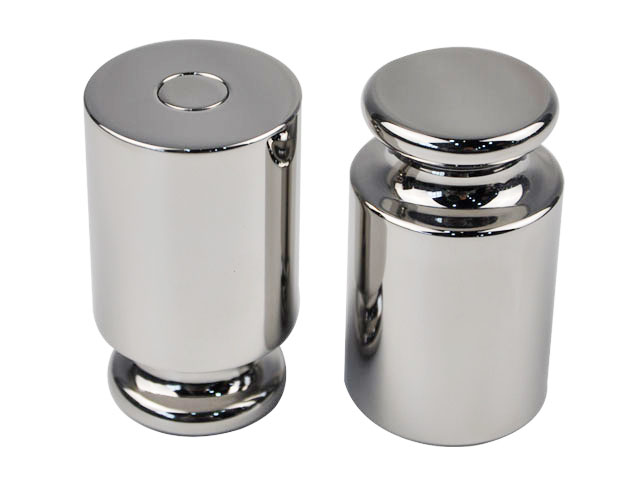
Cast iron, a material with a history dating back millennia, remains the material of choice for weight manufacturing due to its exceptional combination of properties. Unlike other metals, cast iron boasts high density, which allows for compact weight designs without compromising on mass— a crucial attribute for applications where space is limited. Additionally, it exhibits excellent wear resistance and dimensional stability, ensuring that the weights retain their accuracy and shape even after prolonged use in harsh industrial environments. The material’s ability to be easily cast into complex shapes and precise configurations further enhances its suitability, enabling manufacturers to produce weights in a wide range of sizes, from small gram-level weights used in laboratory settings to large-tonnage weights employed in heavy industry.
The process of manufacturing cast iron weights is a meticulous one, requiring careful attention to detail at every stage to ensure quality and precision. It begins with the selection of raw materials, where high-quality cast iron scrap and pig iron are chosen based on their chemical composition. This selection is critical, as impurities in the raw materials can affect the density and structural integrity of the final product. Once the raw materials are selected, they are melted in a furnace at temperatures exceeding 1,500 degrees Celsius. The molten iron is then carefully poured into molds that have been precision-engineered to the desired shape and size of the weight. These molds can be made from sand, metal, or other materials, depending on the production volume and the complexity of the weight design.
After casting, the weights undergo a series of post-processing steps to refine their quality. The first step is cooling, where the cast weights are allowed to cool slowly to room temperature to prevent thermal stress and cracking. Once cooled, the weights are removed from the molds and subjected to trimming and grinding to remove any excess material, such as sprues and risers, and to achieve the precise dimensional tolerances required. Some weights may also undergo heat treatment processes, such as annealing, to improve their mechanical properties and reduce internal stresses. Finally, the weights are inspected for defects, such as porosity, cracks, or dimensional inaccuracies, using a combination of visual inspection and precision measuring tools. This rigorous quality control process ensures that only weights that meet the highest standards of accuracy and reliability leave the manufacturing facility.
One of the key strengths of cast iron weight manufacturers is their ability to customize products to meet the specific needs of their customers. Industries vary widely in their weight requirements, and manufacturers must be flexible enough to adapt to these diverse needs. For example, in the automotive industry, cast iron weights are used to balance engine components and wheels, requiring precise weights that can withstand high speeds and vibrations. In contrast, the construction industry uses large cast iron weights for testing the load-bearing capacity of structures and machinery, demanding weights that are durable and capable of withstanding heavy loads. Manufacturers work closely with their customers to understand their unique applications, then design and produce weights that are tailored to those requirements. This customization can involve adjusting the size, shape, weight, and surface finish of the product, as well as incorporating features such as handles or mounting points for ease of use.
The applications of cast iron weights are vast and varied, spanning across numerous industries. In the logistics and warehousing sector, cast iron weights are used to calibrate weighing scales, ensuring that goods are accurately measured for shipping and inventory management. Accurate weighing is essential in this sector, as it prevents overloading of vehicles, ensures compliance with transportation regulations, and helps businesses maintain accurate financial records. In the agricultural industry, cast iron weights are used to balance farm machinery, such as tractors and harvesters, improving their stability and performance in the field. They are also used in irrigation systems to ensure proper water flow and pressure.
The aerospace and defense sectors also rely heavily on cast iron weights for a range of applications. In aerospace, weights are used to balance aircraft components, such as propellers and control surfaces, ensuring that the aircraft operates safely and efficiently. They are also used in ground testing facilities to simulate the weight of aircraft components during testing. In the defense sector, cast iron weights are used in the calibration of weapons systems and in the testing of military vehicles, ensuring that they meet the strict performance and safety standards required for combat operations.
The laboratory and scientific research sector is another important market for cast iron weight manufacturers. In this sector, precision is paramount, and cast iron weights are used to calibrate analytical balances and other precision measuring instruments. These weights must meet extremely tight dimensional tolerances and have a high degree of surface finish to ensure accurate calibration. Manufacturers produce a range of precision cast iron weights for this market, including class 1 and class 2 weights, which are used in laboratories and calibration facilities around the world.
Despite the many advantages of cast iron weights, the manufacturers face a number of challenges in today’s competitive industrial landscape. One of the biggest challenges is the fluctuation in raw material prices. Cast iron is made from iron ore and scrap metal, whose prices are subject to global market conditions, including supply and demand, geopolitical tensions, and economic fluctuations. These price fluctuations can significantly impact the cost of production, forcing manufacturers to adjust their pricing strategies or find ways to optimize their production processes to reduce costs.
Another challenge is the increasing demand for more precise and high-performance weights. As industries become more advanced, the requirements for accuracy and reliability continue to rise. Manufacturers must invest in advanced technology and equipment to meet these demands, such as computer-aided design (CAD) software for mold design, precision casting equipment, and advanced measuring tools for quality control. This investment can be costly, particularly for small and medium-sized manufacturers, who may struggle to compete with larger companies that have greater financial resources.
Environmental regulations are also a growing concern for cast iron weight manufacturers. The casting process generates emissions and waste, which must be managed in compliance with local and international environmental standards. Manufacturers are required to invest in pollution control equipment, such as dust collectors and air filtration systems, to reduce their environmental impact. They are also exploring more sustainable production methods, such as using recycled cast iron scrap and optimizing their energy use, to minimize their carbon footprint. While these measures are necessary for environmental protection, they can add to the cost of production and require ongoing investment in new technology.
Despite these challenges, there are also significant opportunities for cast iron weight manufacturers in the global market. The growth of key industries, such as automotive, aerospace, logistics, and construction, particularly in emerging economies, is driving demand for cast iron weights. As these economies continue to develop, their industrial infrastructure expands, creating new opportunities for manufacturers to supply weights for a range of applications. Additionally, the increasing focus on quality control and standardization across industries is leading to higher demand for precision cast iron weights, as businesses seek to ensure that their processes meet international standards and regulations.
Technological advancements are also opening up new opportunities for manufacturers. The adoption of Industry 4.0 technologies, such as automation, artificial intelligence (AI), and the Internet of Things (IoT), is transforming the manufacturing process. Automation can help manufacturers improve production efficiency, reduce labor costs, and enhance quality control by minimizing human error. AI and IoT can be used to monitor the production process in real-time, allowing manufacturers to identify and address issues before they affect the quality of the final product. For example, sensors can be used to monitor the temperature of the molten iron and the cooling process, ensuring that the weights are produced with consistent quality. These technological advancements are helping manufacturers to stay competitive and meet the evolving needs of their customers.
The trend towards customization is another opportunity for cast iron weight manufacturers. As industries become more specialized, the demand for custom-designed weights is increasing. Manufacturers that can offer a high degree of customization, combined with fast turnaround times and competitive pricing, are well-positioned to capture this market. By working closely with their customers and leveraging advanced design and production technologies, manufacturers can create custom weights that meet the unique requirements of each application.
In addition to these opportunities, cast iron weight manufacturers are also exploring new markets and applications for their products. For example, the renewable energy sector, which includes wind and solar power, is a growing market for cast iron weights. Wind turbines require precision weights for balancing rotating components, such as blades and generators, ensuring that they operate efficiently and safely. Solar power plants use cast iron weights to secure solar panels and other equipment, particularly in areas with high winds. As the renewable energy sector continues to expand, the demand for cast iron weights in this market is expected to grow.
The future of cast iron weight manufacturing looks promising, with a number of trends shaping the industry. One of the key trends is the continued adoption of advanced technology, which will help manufacturers improve efficiency, quality, and customization capabilities. Another trend is the growing focus on sustainability, with manufacturers increasingly adopting eco-friendly production methods and materials. This focus on sustainability is not only driven by environmental regulations but also by consumer demand, as businesses and consumers alike become more conscious of the environmental impact of the products they use.
The globalization of the industry is also expected to continue, with manufacturers expanding their reach into new markets. This globalization will create both opportunities and challenges, as manufacturers must compete with companies from around the world and adapt to different market conditions and regulations. However, manufacturers that can leverage their expertise, technology, and customization capabilities will be able to thrive in this global market.
In conclusion, cast iron weight manufacturers play a critical role in supporting modern industry, providing the precision, reliability, and customization needed to meet the diverse needs of various sectors. While the industry faces challenges such as fluctuating raw material prices, increasing precision requirements, and environmental regulations, there are significant opportunities driven by industrial growth, technological advancements, and the demand for customization. By embracing new technologies, focusing on sustainability, and working closely with their customers, cast iron weight manufacturers can continue to evolve and thrive in the global market, ensuring that they remain essential partners in the industrial ecosystem for years to come.
