





Changzhou Veidt Weighing Co., Ltd. © 2022 ALL RIGHTS RESERVED Privacy Policy | Calibration Weight | Test Weights | Cast Iron Weights | Standard Weights | Laboratory Weights | XML | SITEMAP
NEWS LIST
cast iron test weight
Saturday 14th March 2026 Back to list
In the vast and intricate web of industrial operations, precise measurement stands as an unshakable foundation for quality control, operational safety, and consistent production. Among the countless tools that uphold this standard, cast iron test weights emerge as unsung heroes, quietly facilitating accurate weighing and calibration across countless sectors. These unassuming metal masses are far more than simple lumps of cast iron; they are engineered precision instruments designed to deliver reliable, stable mass values in diverse working environments, from bustling manufacturing floors to remote field calibration sites, from heavy-duty industrial settings to routine laboratory checks. Unlike fragile or specialized measurement tools, cast iron test weights blend ruggedness, practicality, and consistent performance, making them indispensable for businesses and professionals who rely on accurate weight measurements day in and day out. Their enduring popularity stems from a unique combination of material properties, functional design, and cost-effective usability, catering to the practical needs of industrial operations without compromising on core measurement reliability.
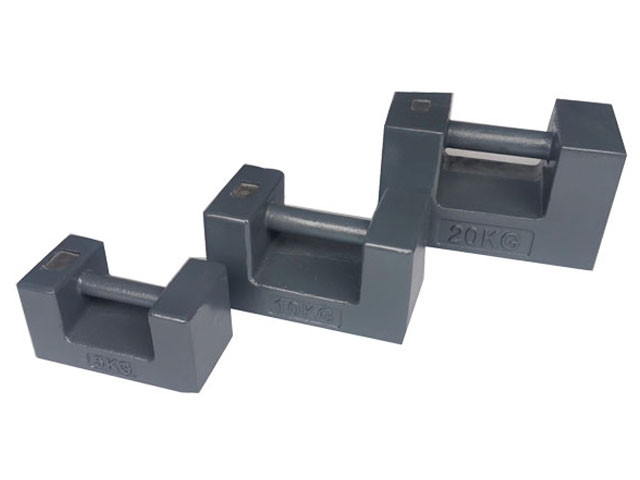
At the heart of every cast iron test weight lies the inherent excellence of cast iron as a manufacturing material, a choice shaped by decades of industrial experience and material science. Cast iron boasts a high and uniform density, a critical trait for test weights as it ensures a compact, manageable size while carrying a defined mass value, eliminating the bulkiness that would plague less dense materials. This density consistency is meticulously maintained throughout the production process, preventing internal voids, uneven material distribution, or structural inconsistencies that could alter the actual mass of the weight and skew calibration results. Beyond density, cast iron offers exceptional compressive strength and impact resistance, traits that set it apart from more delicate materials used in high-precision laboratory weights. In busy industrial environments, where tools are frequently handled, moved, and subjected to minor bumps or vibrations, this durability means cast iron test weights resist chipping, cracking, and deformation under normal use, retaining their structural integrity and mass accuracy far longer than less robust alternatives.
The material also exhibits remarkable dimensional stability, a key factor in long-term measurement reliability. Cast iron is minimally affected by moderate fluctuations in ambient temperature and humidity, common variables in industrial spaces that can distort the dimensions and mass of less stable materials. This stability ensures that a cast iron test weight will maintain its calibrated mass value through routine shifts in working conditions, reducing the need for frequent recalibration and minimizing downtime associated with measurement adjustments. Additionally, cast iron has natural damping properties that absorb minor vibrations, a subtle yet valuable feature during calibration procedures that helps stabilize weighing equipment and deliver more consistent readings. While cast iron is not immune to corrosion, especially in damp or chemically exposed environments, modern manufacturing practices address this limitation effectively, ensuring the material’s longevity without compromising its core functional benefits. It is this balanced blend of density, strength, stability, and practicality that makes cast iron the preferred material for test weights across industrial and commercial applications, striking a perfect balance between performance and real-world usability.
The production of cast iron test weights is a precise, methodical process that prioritizes uniformity, accuracy, and durability at every stage, starting with rigorous raw material selection. Manufacturers source high-quality cast iron blends with controlled chemical compositions, carefully regulating the levels of carbon, silicon, and other trace elements to optimize density, strength, and castability. Impurities are strictly minimized during the melting phase, as even small contaminants can disrupt material uniformity and impact the final mass accuracy of the weight. Once melted to the precise temperature, the molten iron is poured into custom-designed molds, crafted to produce test weights of specific shapes, sizes, and mass values. The molding process is executed with extreme care to avoid air bubbles, shrinkage, or structural flaws, which could create internal inconsistencies and compromise the weight’s performance. After cooling and solidifying, the raw castings undergo a series of post-processing treatments to refine their quality and functionality.
Initial post-processing involves removing excess material, smoothing rough edges, and eliminating surface imperfections such as burrs or mold residues. This step not only enhances the weight’s appearance but also prevents sharp edges from damaging weighing equipment or causing injury during handling. For larger, heavier test weights, ergonomic features like built-in handles or lifting points are integrated during this phase, designed to facilitate safe and efficient transport without altering the weight’s mass distribution. Following shaping and smoothing, the test weights undergo surface treatment to protect against corrosion and wear, a vital step for extending their service life. Common treatments include protective coating applications that create a barrier against moisture, dust, and mild chemical exposure, preserving the underlying cast iron and preventing rust formation that could alter mass over time. Each test weight is then marked with clear, durable engravings of its nominal mass value, ensuring easy identification even after prolonged use; these markings are deeply etched to resist fading or wear from regular handling and environmental exposure.
The final and most critical production stage is precision calibration and quality verification. Every cast iron test weight is carefully weighed against calibrated reference standards to ensure its actual mass falls within acceptable tolerance ranges for its intended use. This verification process is conducted under controlled conditions to eliminate external factors that could affect measurements, and any weights that do not meet strict quality standards are refined or discarded. Unlike high-precision laboratory weights designed for ultra-fine measurements, cast iron test weights are engineered to meet practical industrial tolerance requirements, making them suitable for a broad spectrum of routine calibration and weighing tasks. This focus on practical accuracy, rather than extreme precision, keeps production costs manageable while ensuring the weights meet the rigorous demands of daily industrial use, resulting in a product that delivers consistent performance without unnecessary complexity or expense.
Cast iron test weights are available in a diverse range of shapes, sizes, and mass values to suit countless applications, each design tailored to specific functional needs. Common shapes include cylindrical, rectangular, and lock-style weights, each offering unique advantages for different scenarios. Cylindrical weights are compact, stackable, and easy to handle, ideal for calibrating smaller bench scales and tabletop weighing devices. Rectangular weights provide a stable base and are often preferred for heavy-duty applications, such as calibrating large floor scales, truck scales, or industrial platform scales, where stability during placement is paramount. Lock-style weights feature interlocking designs that allow for secure stacking and combination, enabling users to create custom cumulative mass values for calibrating high-capacity weighing equipment efficiently. Mass values span a wide spectrum, from small weights suitable for precision bench scales to large, heavy weights designed for heavy industrial machinery calibration and load testing, ensuring there is a cast iron test weight to meet nearly every industrial weighing requirement.
The versatility of cast iron test weights translates to an extensive range of real-world applications across nearly every industrial sector, solidifying their role as a universal calibration tool. In manufacturing facilities, they are a staple of quality control processes, used daily to calibrate scales and checkweighers that monitor raw material intake, component weighing, and finished product packaging. Accurate weight measurements are non-negotiable in manufacturing, as even minor deviations can lead to product defects, material waste, inconsistent batch quality, and increased operational costs. By regularly verifying weighing equipment with cast iron test weights, manufacturers uphold strict quality standards, ensure production consistency, and reduce the risk of costly errors that can disrupt entire production lines. In logistics and warehousing, these weights play an equally vital role, calibrating freight scales, pallet scales, and shipping scales to ensure accurate weight calculations for billing, inventory management, and compliance with transportation regulations. Inaccurate freight weighing can lead to financial disputes, regulatory penalties, and logistical delays, making routine calibration with reliable cast iron test weights a critical operational practice.
Heavy industry sectors, including construction, mining, and machinery manufacturing, rely heavily on large-format cast iron test weights for load testing and equipment calibration. These weights are used to verify the performance of cranes, hoists, elevators, and other lifting equipment, ensuring they can safely handle designated loads without risk of failure. They are also employed to calibrate load cells and force measurement devices, which are integral to monitoring structural integrity and operational safety in heavy machinery. In agricultural operations, cast iron test weights calibrate scales used for weighing grain, feed, fertilizers, and harvested crops, supporting accurate inventory tracking, fair trade transactions, and efficient farm management. Even in educational and training settings, these weights serve as practical teaching tools, helping students understand mass measurement principles, calibration techniques, and the fundamentals of accurate weighing in a hands-on, tangible way. This wide-ranging applicability across industries underscores the universal need for reliable, durable test weights and highlights why cast iron remains the material of choice for such a diverse array of users.
While cast iron test weights are engineered for durability, proper usage and regular maintenance are essential to preserve their accuracy, extend their service life, and ensure safe handling. One of the most fundamental practices is careful handling to prevent physical damage; even though cast iron is sturdy, repeated dropping, rough handling, or heavy impact can cause subtle structural damage, chipping, or internal stress that alters the weight’s mass and compromises calibration accuracy. Users should always lift and move test weights using appropriate equipment, such as gloves for smaller weights or lifting tools for heavier models, avoiding dragging or sliding them across rough surfaces that can scratch or wear down the protective coating. It is also crucial to avoid exposing test weights to harsh environmental conditions whenever possible, including prolonged moisture, direct exposure to corrosive chemicals, or extreme temperature swings that can accelerate corrosion or degrade the protective surface layer.
Regular cleaning is a simple yet effective maintenance step that preserves both the weight’s condition and measurement accuracy. After each use, cast iron test weights should be wiped down with a clean, dry, lint-free cloth to remove dust, dirt, oil residues, or moisture that may have accumulated on the surface. Built-up debris can add negligible mass over time, leading to minor measurement inaccuracies, while trapped moisture can initiate rust formation beneath the protective coating. For weights used in dusty or industrial environments, more thorough cleaning may be required periodically, using mild, non-corrosive cleaning agents that do not damage the protective finish. After cleaning, weights should be stored in a dry, well-ventilated area, ideally on dedicated storage racks or in protective cases that keep them organized and shielded from environmental hazards. Proper storage not only prevents corrosion and damage but also reduces the risk of misplacement, ensuring weights are readily available when needed for calibration tasks.
Periodic performance checks are another key aspect of maintenance, as even well-cared-for cast iron test weights may experience minor shifts in mass over time due to wear, surface degradation, or environmental exposure. Scheduled reverification against calibrated reference standards ensures that any drift in accuracy is detected and addressed promptly, maintaining the reliability of calibration results. The frequency of these checks depends on usage intensity and environmental conditions; weights used daily in harsh industrial settings will require more frequent verification than those used occasionally in controlled environments. Additionally, any weight that has been subjected to significant impact, visible corrosion, or physical damage should be removed from service immediately for inspection and recalibration, rather than risking inaccurate measurements that could impact downstream operations. By adhering to these basic usage and maintenance practices, users can maximize the lifespan of their cast iron test weights, ensuring they remain reliable calibration tools for years of consistent use.
In an era where industrial processes are increasingly automated and precision-driven, the role of cast iron test weights remains as relevant as ever, a testament to their timeless design and practical functionality. They represent a perfect marriage of traditional material wisdom and modern engineering, offering a cost-effective, reliable solution to a universal industrial need: accurate, consistent mass measurement. Unlike cutting-edge but fragile high-tech tools, cast iron test weights thrive in the real-world conditions of industrial workplaces, where durability and practicality often outweigh ultra-high precision. They do not rely on complex electronics, power sources, or specialized training to operate, making them accessible to users across all levels of technical expertise, from seasoned calibration technicians to frontline production workers.
Looking ahead, the demand for cast iron test weights is poised to remain steady, driven by the ongoing need for reliable calibration across growing industrial sectors worldwide. While advancements in materials and manufacturing techniques may refine their design and performance, the core advantages of cast iron—density, durability, stability, and cost-efficiency—will continue to make it the preferred material for industrial test weights. These unassuming metal masses are more than just tools; they are a critical link in the chain of quality assurance, operational safety, and industrial efficiency. Every time a scale is calibrated, a load is tested, or a product is weighed accurately, a cast iron test weight plays a vital role in ensuring that process runs smoothly and reliably. In the grand scheme of industrial progress, they may not grab headlines, but their steady, unwavering performance makes them an irreplaceable cornerstone of modern industry, supporting countless operations and upholding the standards of precision that keep global industry moving forward.
Ultimately, the true value of cast iron test weights lies in their quiet dependability. They are designed to perform consistently, withstand the rigors of daily use, and deliver accurate results when it matters most, without fanfare or complexity. In a world that often chases the latest technological innovations, the enduring appeal of cast iron test weights serves as a reminder that sometimes the most essential tools are those that prioritize practicality, durability, and consistent performance. Whether in a small manufacturing workshop, a large-scale logistics hub, a heavy industrial plant, or a training laboratory, cast iron test weights continue to fulfill their purpose with unwavering reliability, proving that some timeless solutions remain unmatched in meeting the fundamental needs of industrial work.
