





Changzhou Veidt Weighing Co., Ltd. © 2022 ALL RIGHTS RESERVED Privacy Policy | Calibration Weight | Test Weights | Cast Iron Weights | Standard Weights | Laboratory Weights | XML | SITEMAP
NEWS LIST
cast iron standard weights
Friday 02nd January 2026 Back to list
In the realm of measurement and precision, cast iron standard weights stand as unsung heroes, underpinning countless industrial, commercial, and scientific processes. These unassuming objects, crafted from durable cast iron, serve as the foundational reference for ensuring accuracy in weight measurement across diverse sectors. From manufacturing floors where components are calibrated to exact specifications, to agricultural markets where fair trade relies on precise weight verification, cast iron standard weights play a pivotal role in maintaining order, reliability, and trust.
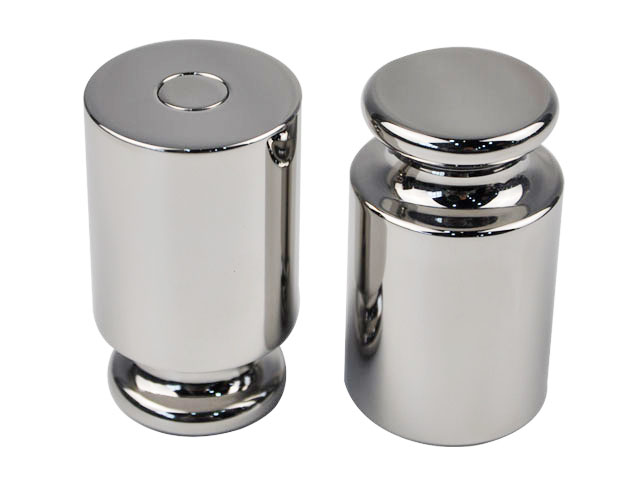
To understand the value of cast iron standard weights, it is first essential to explore the material properties that make cast iron an ideal choice for this purpose. Cast iron, an alloy primarily composed of iron, carbon, and silicon, possesses a unique combination of strength, durability, and stability that sets it apart from other materials. Unlike softer metals that may deform over time or under stress, cast iron exhibits exceptional rigidity, ensuring that the weight remains consistent and unaltered even after prolonged use. This dimensional stability is critical for standard weights, as any deviation in mass would render them ineffective as reference tools. Additionally, cast iron has excellent wear resistance, making it capable of withstanding the rigors of frequent handling, exposure to varying environmental conditions, and contact with other surfaces without significant degradation.
Another key advantage of cast iron is its high density. A higher density means that cast iron standard weights can achieve a significant mass without requiring an overly large volume. This compactness is highly practical, as it allows for easier storage, transportation, and handling, particularly in settings where space is limited or where multiple weights of different sizes are needed. Furthermore, cast iron is relatively cost-effective compared to other high-density materials such as stainless steel or tungsten. This cost efficiency makes cast iron standard weights accessible to a wide range of users, from small-scale businesses to large industrial facilities, without compromising on quality or performance. The material's ability to be easily cast into various shapes and sizes also adds to its versatility, enabling the production of weights tailored to specific measurement requirements.
The manufacturing process of cast iron standard weights is a meticulous undertaking that demands precision and attention to detail to ensure the final product meets the required mass specifications. The process typically begins with the design phase, where engineers determine the dimensions, shape, and mass of the weight based on its intended use. Common shapes include cylindrical, rectangular, or hexagonal, each offering distinct advantages depending on the application. For example, cylindrical weights are often preferred for use in balances due to their compact shape and ease of placement, while rectangular weights may be used in industrial scales for better stability on flat surfaces.
Once the design is finalized, the casting process commences. Molten cast iron is poured into molds that have been precision-engineered to the exact dimensions of the desired weight. The molds are typically made from sand or metal, with sand molds being more cost-effective for small-scale production and metal molds offering greater precision and durability for large-scale manufacturing. After pouring, the molten iron is allowed to cool and solidify, a process that must be carefully controlled to avoid the formation of internal defects such as cracks, porosity, or uneven cooling, which could affect the weight's mass and structural integrity. Once solidified, the cast weight is removed from the mold and undergoes a series of post-processing steps.
Post-processing is a critical stage in ensuring the accuracy of cast iron standard weights. This includes trimming any excess material, such as flash or runners, that may have formed during casting. The weight is then subjected to machining processes to refine its dimensions and achieve a smooth surface finish. Machining also allows for precise adjustment of the mass; if the cast weight is slightly over the target mass, a small amount of material can be removed through grinding or milling to bring it to the exact specification. Quality control is an integral part of every step of the manufacturing process. Each weight is carefully weighed using highly precise measuring equipment to verify that it meets the required mass tolerance. Weights that do not meet the tolerance are either reworked or discarded, ensuring that only products of the highest quality reach the market.
The applications of cast iron standard weights are vast and varied, spanning numerous industries and sectors. One of the most common uses is in industrial manufacturing, where precision is paramount. In manufacturing facilities, cast iron standard weights are used to calibrate production equipment such as scales, balances, and pressure gauges. Calibration ensures that these tools measure accurately, which is essential for producing components that meet design specifications. For example, in the automotive industry, the weight of engine parts must be precise to ensure optimal performance and efficiency. Cast iron standard weights are used to calibrate the scales that measure these parts, ensuring that each component is within the required tolerance.
Agriculture and food processing are another major sector where cast iron standard weights are indispensable. In agricultural markets, farmers and traders rely on accurate weight measurement to ensure fair pricing for crops such as grains, fruits, and vegetables. Cast iron standard weights are used to calibrate the scales used in these markets, preventing fraud and ensuring that both buyers and sellers are treated fairly. In food processing facilities, weights are used to measure ingredients accurately, which is critical for maintaining product consistency and adhering to recipe specifications. For example, in a bakery, the precise measurement of flour, sugar, and other ingredients is essential for producing bread and pastries of consistent quality. Cast iron standard weights are used to calibrate the scales and measuring equipment used in these facilities, ensuring that each batch of product meets the required standards.
The scientific and laboratory sector also relies heavily on cast iron standard weights for precise measurement. In research laboratories, scientists conduct experiments that require accurate weight measurements of samples, chemicals, and equipment. Cast iron standard weights are used to calibrate the analytical balances used in these laboratories, which can measure mass to the nearest microgram. This level of precision is essential for ensuring the validity and reproducibility of experimental results. For example, in pharmaceutical research, the accurate measurement of drug compounds is critical for determining their efficacy and safety. Cast iron standard weights play a key role in calibrating the equipment used in these measurements, helping to advance medical research and drug development.
Transportation and logistics are another area where cast iron standard weights are widely used. In the shipping industry, the weight of cargo must be accurately measured to ensure compliance with safety regulations and to determine shipping costs. Cast iron standard weights are used to calibrate the scales used to weigh trucks, containers, and individual packages. This ensures that cargo weights are reported accurately, preventing overloading of vehicles and ships, which can lead to accidents and safety hazards. In addition, accurate weight measurement is essential for optimizing fuel efficiency, as overloaded vehicles consume more fuel and emit more pollutants. Cast iron standard weights help to ensure that transportation companies operate efficiently and safely.
Proper maintenance of cast iron standard weights is essential to ensure their long-term accuracy and durability. While cast iron is a durable material, it is not immune to damage or degradation if not properly cared for. One of the most important maintenance practices is regular cleaning. Weights can accumulate dust, dirt, and debris over time, which can add to their mass and affect measurement accuracy. Cleaning should be done using a soft cloth or brush to avoid scratching the surface of the weight. Abrasive cleaners should be avoided, as they can remove material from the weight and alter its mass.
Storage is another critical factor in maintaining the integrity of cast iron standard weights. Weights should be stored in a clean, dry environment to prevent rust and corrosion. Cast iron is susceptible to rust when exposed to moisture, so storage areas should be well-ventilated and free from humidity. Weights should also be stored in a way that prevents them from coming into contact with hard surfaces or other weights, which can cause chipping or damage. Many users store weights in dedicated cases or racks that keep them secure and protected.
Regular calibration and verification are also essential for cast iron standard weights. Over time, even the most durable weights may undergo slight changes in mass due to wear, environmental factors, or handling. Regular calibration involves comparing the weight to a higher-level standard weight that is traceable to an international or national measurement standard. This ensures that the weight remains accurate and reliable. The frequency of calibration depends on the frequency of use and the environment in which the weight is used. Weights used in high-precision applications such as laboratories may require calibration more frequently than those used in less demanding applications such as agricultural markets.
In addition to maintenance, proper handling of cast iron standard weights is crucial to prevent damage. Weights should be handled with care, using gloves if necessary to avoid transferring oils or dirt from the hands to the weight. Dropping or mishandling a weight can cause chips, cracks, or deformation, which can alter its mass. When using weights on scales or balances, they should be placed gently to avoid damaging the measuring equipment or the weight itself.
The enduring relevance of cast iron standard weights in modern society is a testament to their reliability, versatility, and cost-effectiveness. In an era where technological advancements have led to the development of digital measuring equipment, cast iron standard weights remain an essential reference tool. Digital scales and balances, while highly accurate, still require calibration using physical standard weights to ensure their measurements are correct. Cast iron standard weights provide a tangible, stable reference that is not affected by power outages, electronic malfunctions, or other issues that can plague digital equipment.
Furthermore, cast iron standard weights play a critical role in international trade and standardization. Many countries have adopted international measurement standards, such as those set by the International Bureau of Weights and Measures (BIPM), to ensure consistency in measurement across borders. Cast iron standard weights that are calibrated to these international standards help to facilitate fair trade by ensuring that products are measured accurately regardless of where they are produced or sold. This consistency is essential for global commerce, as it prevents disputes over weight and ensures that consumers and businesses receive what they pay for.
Looking to the future, the demand for cast iron standard weights is likely to remain strong, driven by ongoing industrialization, the growth of global trade, and the increasing emphasis on precision in scientific research and manufacturing. While new materials and technologies may emerge, the unique combination of properties offered by cast iron—strength, durability, high density, and cost-effectiveness—ensures that it will continue to be the material of choice for standard weights for years to come. Manufacturers may continue to refine the manufacturing process, incorporating advanced technologies such as 3D printing for mold making or computerized machining for greater precision, but the fundamental role of cast iron standard weights in maintaining measurement accuracy will remain unchanged.
In conclusion, cast iron standard weights are essential components of the global measurement infrastructure, playing a vital role in ensuring accuracy, reliability, and fairness across a wide range of industries and applications. Their unique material properties, meticulous manufacturing process, and proper maintenance practices contribute to their long-term effectiveness and durability. As the world continues to rely on precise measurement for industrial production, scientific advancement, and global trade, cast iron standard weights will remain a cornerstone of these efforts, providing a stable, tangible reference that underpins trust and consistency in measurement. Whether in a high-tech laboratory, a bustling agricultural market, or a busy manufacturing facility, cast iron standard weights quietly fulfill their role as guardians of precision, making them an indispensable part of modern life.
