





Changzhou Veidt Weighing Co., Ltd. © 2022 ALL RIGHTS RESERVED Privacy Policy | Calibration Weight | Test Weights | Cast Iron Weights | Standard Weights | Laboratory Weights | XML | SITEMAP
NEWS LIST
Calibration Weights With Tweezers
Tuesday 15th September 2026 Back to list
Calibration weights paired with specialized tweezers form an indispensable combination for precision weighing and instrument calibration across professional laboratory, industrial, and research scenarios. This matching tool set is designed to eliminate manual handling errors and protect high-precision calibration weights from contamination and physical damage, thereby sustaining the long-term accuracy of weighing instruments. Bare-hand contact with calibration weights inevitably transfers skin oils, sweat, and tiny dust particles, which can alter the surface quality and effective mass of precision weights and lead to inaccurate calibration results. Professional tweezers serve as a dedicated handling tool, enabling safe, stable, and contact-free operation of calibration weights of different specifications. The synergy between calibration weights and tweezers not only optimizes daily calibration workflows but also extends the service life of precision weighing accessories, laying a solid foundation for consistent and reliable high-precision measurement data in various technical fields.
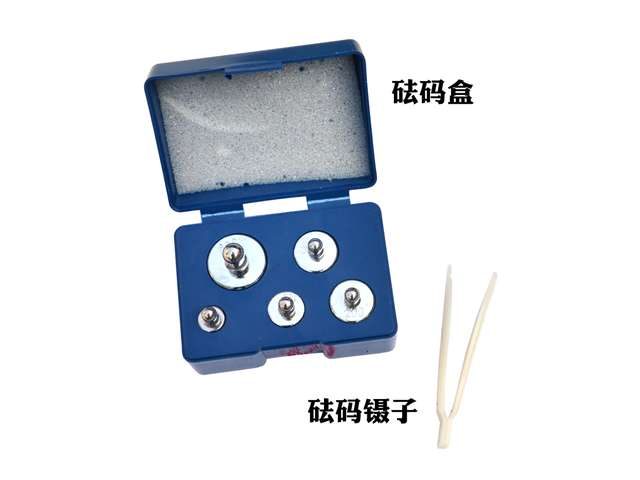
The core value of using tweezers to handle calibration weights lies in eliminating human-induced contamination that threatens measurement precision. Human skin naturally secretes trace oils and moisture, and even clean hands carry invisible fine dust and epidermal residues. When directly touching the smooth surface of precision calibration weights, these substances will adhere tightly to the metal surface, forming a thin uneven film that subtly changes the actual mass of the weights. For high-sensitivity weighing instruments capable of capturing microgram-level changes, such tiny mass deviations are enough to cause obvious errors in calibration results and further affect the accuracy of subsequent experimental tests and industrial weighing operations. Specialized tweezers for calibration work are manufactured with non-stick and non-abrasive properties, which can completely avoid direct skin contact between operators and weights. In addition to preventing contamination, these tweezers avoid the fingerprint marks and surface smudges left by manual handling, keeping the surface of calibration weights clean and intact at all times, which is the basic prerequisite for maintaining stable calibration performance in long-term use.
Professional calibration tweezers are structurally and materially optimized to adapt to the delicate characteristics of precision calibration weights. Unlike ordinary daily tweezers, calibration-specific tweezers adopt soft and smooth tip treatments, which can firmly clamp weights without scratching or squeezing the polished metal surface of calibration weights. Hard and rough clamping tools are prone to leave tiny scratches and dents on the weight surface during operation, and these micro damages will accumulate dust and moisture over time, triggering slow oxidation and mass drift of the weights. The main body of qualified calibration tweezers usually adopts non-magnetic metal materials, which can effectively avoid magnetic interference with metal calibration weights. Magnetic adsorption will cause subtle adsorption force between weights and weighing pans during calibration, interfering with the stability of weighing data. The ergonomic design of the tweezers body also ensures that operators can complete clamping, lifting, placing and adjusting actions stably and flexibly, avoiding accidental dropping or sliding of weights caused by unsteady grip, and preventing physical damage to precision weights.
The standardized matching use of calibration weights and tweezers greatly standardizes the whole process of instrument calibration and improves the consistency of operation results. In precision calibration work, every step from taking weights out of the storage container, placing them on the weighing pan, to removing and resetting them requires precise and standardized operation. Using tweezers for whole-process handling ensures that each weight is placed flat and centered on the weighing pan, avoiding tilt, offset or surface friction caused by manual placement. Irregular placement will lead to uneven stress on the weighing pan and inconsistent force transmission, resulting in fluctuating calibration data. With the help of tweezers, operators can achieve fine position adjustment of tiny calibration weights, ensuring that each calibration operation is carried out under consistent spatial and contact conditions. This standardized operation mode reduces human operational differences, makes the calibration results of different batches and different operators more comparable, and effectively improves the overall reliability and repeatability of instrument calibration work.
Proper use of tweezers can significantly extend the service life of calibration weights and reduce the loss of precision measurement accessories. Calibration weights are high-precision consumables with strict surface finish and mass stability requirements, and their service life is closely related to daily handling and maintenance methods. Direct manual handling not only causes surface contamination but also easily leads to collision and abrasion during frequent picking and placing. Even minor collisions and frictions will cause irreversible micro changes in the weight volume and surface flatness, gradually leading to mass deviation and making the weights lose calibration accuracy. Special tweezers provide stable buffer and protection during the handling process, reducing the collision probability between weights and containers or weighing equipment. Meanwhile, the non-slip clamping performance of tweezers avoids frequent repeated picking and placing caused by slipping, effectively reducing the frequency of surface friction of weights. Long-term standardized handling with tweezers can keep the surface finish and structural integrity of calibration weights for a long time, reduce the frequency of weight replacement and recalibration, and improve the economic efficiency of precision measurement work.
The application scope of calibration weights matched with tweezers covers multiple fields that rely on high-precision measurement. In scientific research laboratories, this matching tool set is widely used in the calibration of analytical balances and micro-weighing equipment, providing accurate measurement benchmarks for chemical component analysis, material density testing and pharmaceutical ingredient research. In industrial manufacturing scenarios, it is used for regular calibration of detection weighing equipment in precision parts processing, electronic component production and packaging measurement links, ensuring that product quality detection data is accurate and effective. In jewelry detection and precious metal trading fields, high-precision calibration weights and matching tweezers ensure the accuracy of precious metal weighing, avoiding measurement deviations that affect transaction fairness. In addition, educational experimental teaching environments also adopt this matching tool set to cultivate students' standardized experimental operation habits, help students understand the importance of precise operation in measurement work, and lay a foundation for standardized experimental skills training.
Daily maintenance of tweezers is equally important to maintain the coordination performance with calibration weights and ensure long-term stable calibration work. As a core auxiliary tool, the cleanliness and integrity of tweezers directly affect the use state of calibration weights. Operators need to clean the tweezers before and after each use to remove tiny dust, fiber residues and possible trace contaminants on the tip and body, preventing secondary pollution to calibration weights during clamping. It is necessary to regularly check the tip flatness and clamping tightness of the tweezers; once tip deformation, loosened clamping or surface wear is found, the tweezers should be replaced in time to avoid unstable clamping or scratching weights. Tweezers should be stored in a dry and dust-free environment separately from conventional tools, avoiding extrusion deformation and magnetic contamination. Good maintenance habits can keep the tweezers in optimal working condition for a long time, ensure the long-term effective matching use with calibration weights, and maintain the continuity and accuracy of daily calibration work.
In the whole system of precision measurement and instrument calibration, the combination of calibration weights and tweezers is a basic but crucial detail that determines measurement quality. Many measurement errors in practical work stem from neglected auxiliary tool operation specifications rather than the performance failure of weighing instruments or calibration weights themselves. Adhering to the use of special tweezers to handle calibration weights runs through every link of calibration operation, from protecting the physical state of precision weights to standardizing operation processes, from improving data accuracy to reducing equipment loss, which plays an irreplaceable role. With the continuous improvement of precision measurement requirements in various industries, the standardized use and scientific maintenance of calibration weights and matching tweezers will become more important. Grasping these basic operational details is the key to ensuring long-term stable operation of precision weighing equipment and authentic and effective measurement data.
