





Changzhou Veidt Weighing Co., Ltd. © 2022 ALL RIGHTS RESERVED Privacy Policy | Calibration Weight | Test Weights | Cast Iron Weights | Standard Weights | Laboratory Weights | XML | SITEMAP
NEWS LIST
calibration weights for sale
Friday 02nd January 2026 Back to list
In a world driven by accuracy and reliability, countless industries and daily operations rely on tools that measure correctly. From the scale at a local grocery store to the sophisticated equipment in a pharmaceutical lab, the integrity of measurements directly impacts quality, safety, and trust. At the heart of maintaining this measurement integrity lies a humble yet indispensable tool: calibration weights. For businesses and professionals seeking to uphold the highest standards of precision, calibration weights for sale offer a gateway to consistent, accurate measurements across diverse applications.
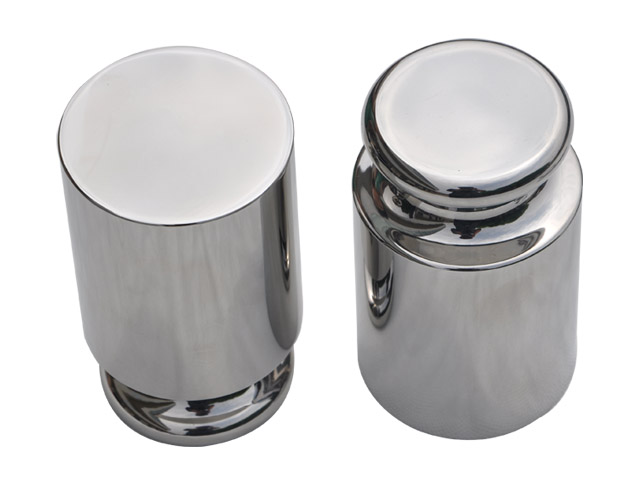
The fundamental role of calibration weights is to verify and adjust the accuracy of weighing instruments. Over time, factors such as regular use, environmental conditions (including temperature, humidity, and vibration), and mechanical wear can cause weighing devices to drift from their original calibration. This drift, even if minimal, can lead to incorrect measurements, which in turn may result in financial losses, compromised product quality, or even safety hazards. Calibration weights act as a reference standard—known, fixed masses that allow users to check if a weighing instrument is providing readings that match the actual mass of an object. By comparing the instrument’s reading of a calibration weight to the weight’s known mass, users can identify discrepancies and make necessary adjustments to restore the instrument’s accuracy. In essence, calibration weights are the foundation upon which reliable measurement systems are built.
One of the key aspects that make calibration weights so versatile is the wide variety of types available on the market. These variations are designed to cater to different applications, weighing ranges, and environmental conditions. The most common distinction among calibration weights is based on their material, as the material directly affects properties such as durability, corrosion resistance, and density—all of which are critical for maintaining consistent mass over time. Stainless steel is one of the most popular materials for calibration weights. It offers an excellent balance of durability and resistance to corrosion, making it suitable for use in a wide range of environments, from industrial settings to laboratory environments with moderate humidity. For applications that require higher resistance to corrosion, such as in chemical labs or marine environments, weights made from materials like titanium or special alloys are available. These materials can withstand exposure to harsh chemicals and saltwater without degrading, ensuring long-term accuracy.
Another important classification of calibration weights is based on their shape and design. Cylindrical weights are the most common, featuring a simple, compact shape that makes them easy to handle and store. They are ideal for general-purpose calibration, such as checking bench scales or floor scales in retail or manufacturing settings. For more precise applications, such as in analytical balances used in scientific research, spherical or cube-shaped weights may be preferred. These shapes minimize the surface area exposed to dust and moisture, reducing the risk of contamination that could affect their mass. Additionally, some calibration weights come with handles or hooks, which are designed for use with larger weighing instruments, such as crane scales or hanging scales, where the weight needs to be suspended during calibration.
Calibration weights also vary in terms of their mass range, from extremely small weights measured in milligrams to large weights in kilograms or even metric tons. Microgram and milligram weights are typically used in analytical labs for calibrating precision balances that measure small quantities, such as in pharmaceutical testing or chemical analysis. Gram and kilogram weights are more commonly used in industrial and commercial settings, such as calibrating scales in food processing plants, warehouses, and retail stores. Large-tonnage weights, on the other hand, are used in heavy industries, such as construction, mining, and shipping, to calibrate large scales that measure the weight of bulk materials, vehicles, or shipping containers. This wide range of mass options ensures that there is a calibration weight suitable for nearly every weighing application.
The applications of calibration weights are as diverse as the industries that rely on accurate measurements. In the manufacturing sector, for example, calibration weights play a crucial role in ensuring that products meet the required specifications. In the production of electronic components, for instance, small calibration weights are used to calibrate the scales that measure the mass of tiny parts, ensuring that each component is within the acceptable weight range. In the automotive industry, larger calibration weights are used to calibrate the scales that measure the weight of vehicle parts, such as engines or chassis, to ensure structural integrity and performance. Without accurate calibration, manufacturers risk producing defective products that may fail prematurely or pose safety risks to consumers.
The healthcare and pharmaceutical industries are another sector where calibration weights are essential. In pharmacies, scales used to measure medications must be highly accurate to ensure that patients receive the correct dosage. Calibration weights are used regularly to verify the accuracy of these scales, as even a small error in dosage can have serious health consequences. In medical labs, calibration weights are used to calibrate the balances that measure blood samples, tissue samples, and other biological materials. Accurate measurements in these settings are critical for diagnosing diseases and developing treatment plans. Similarly, in the pharmaceutical manufacturing process, calibration weights are used to ensure that the correct amount of each ingredient is added to medications, maintaining the efficacy and safety of the final product.
The food and beverage industry also relies heavily on calibration weights to maintain quality and compliance with regulatory standards. In food processing plants, scales are used to measure ingredients, portion out finished products, and check the weight of packages. Calibration weights ensure that these scales are accurate, preventing underfilling or overfilling of packages. Underfilling can lead to consumer complaints and regulatory fines, while overfilling can result in significant financial losses for the manufacturer. In retail settings, such as grocery stores and delis, calibration weights are used to calibrate the scales used to weigh produce, meat, and other fresh items. This ensures that customers are charged correctly for the products they purchase, building trust between the retailer and the consumer.
Scientific research is another area where calibration weights are indispensable. In physics labs, for example, calibration weights are used to calibrate instruments used in experiments involving force, mass, and gravity. In chemistry labs, they are used to calibrate balances used for precise measurements of chemicals, which is critical for the success of experiments and the accuracy of research results. In environmental science, calibration weights are used to calibrate the scales that measure soil samples, water samples, and air particles, helping researchers to monitor environmental conditions and assess the impact of human activities on the environment. Without accurate calibration weights, the results of these research studies could be unreliable, leading to incorrect conclusions and ineffective policies.
When looking for calibration weights for sale, there are several important factors to consider to ensure that you select the right weights for your specific needs. First and foremost, you need to determine the appropriate mass range for your application. Consider the maximum and minimum weights that your weighing instrument is designed to measure, and select calibration weights that cover this range. It is also important to consider the resolution of your weighing instrument—for high-resolution balances, you will need calibration weights with smaller increments to ensure accurate calibration.
The material of the calibration weights is another critical factor. As mentioned earlier, stainless steel is a good all-purpose choice, but if your application involves exposure to harsh chemicals, moisture, or extreme temperatures, you may need to opt for a more corrosion-resistant material, such as titanium or a special alloy. Additionally, consider the environment where the weights will be used—if you are working in a cleanroom or a lab with strict contamination control requirements, you may need weights with a smooth, easy-to-clean surface to prevent the accumulation of dust and debris.
The shape and design of the calibration weights should also be tailored to your application. For general-purpose calibration, cylindrical weights are usually sufficient. For precision applications, such as in analytical labs, spherical or cube-shaped weights may be a better choice. If you need to calibrate hanging scales or crane scales, look for weights with handles or hooks that allow for easy suspension. Additionally, consider the ease of handling and storage—weights that are too large or awkward to handle may increase the risk of injury or damage to the weights themselves.
Another important consideration when purchasing calibration weights is their stability over time. High-quality calibration weights are designed to maintain their mass with minimal drift, even after repeated use. Look for weights that are manufactured using precise machining processes to ensure consistent mass and dimensional accuracy. It is also a good idea to select weights that come with a protective case to prevent damage during storage and transportation. The case should be durable and provide a secure fit to keep the weights safe from scratches, dents, and other forms of damage that could affect their mass.
Cost is also a factor to consider when looking for calibration weights for sale, but it should not be the sole determining factor. While it may be tempting to opt for cheaper weights, low-quality weights may not maintain their accuracy over time, leading to more frequent calibrations and potential errors in measurements. Investing in high-quality calibration weights may cost more upfront, but it can save you money in the long run by reducing the need for frequent replacements and minimizing the risk of financial losses or safety hazards caused by inaccurate measurements. It is important to balance cost with quality to ensure that you get the best value for your money.
Availability and delivery are also important practical considerations. When purchasing calibration weights, it is important to buy from a reputable supplier who can provide the weights you need in a timely manner. Look for suppliers who have a wide range of calibration weights in stock, as this will allow you to find the exact type and mass range you need without long lead times. Additionally, consider the supplier’s customer service—reputable suppliers will be able to answer your questions and provide guidance on selecting the right calibration weights for your application.
Proper care and maintenance of calibration weights are also essential to ensure their long-term accuracy and reliability. After each use, clean the weights with a soft, dry cloth to remove any dust, dirt, or moisture. Avoid using harsh chemicals or abrasives, as these can damage the surface of the weights and affect their mass. Store the weights in their protective case when not in use, and keep them in a clean, dry environment with stable temperature and humidity. Avoid dropping or mishandling the weights, as impact can cause permanent damage and alter their mass. Regularly inspect the weights for signs of wear, corrosion, or damage, and replace them if necessary.
In conclusion, calibration weights are a critical component of any measurement system, ensuring accuracy, reliability, and consistency across a wide range of industries and applications. For businesses and professionals in need of these essential tools, calibration weights for sale offer a wide range of options to suit every need, from small, precise weights for laboratory use to large, heavy-duty weights for industrial applications. By understanding the different types of calibration weights available, their applications, and the key factors to consider when purchasing them, you can select the right weights to maintain the integrity of your measurement systems. Investing in high-quality calibration weights and properly caring for them will not only ensure accurate measurements but also save you time, money, and potential headaches in the long run. Whether you are in manufacturing, healthcare, food processing, scientific research, or any other field that relies on precise measurements, calibration weights are an investment in quality and trust that should not be overlooked.
