





Changzhou Veidt Weighing Co., Ltd. © 2022 ALL RIGHTS RESERVED Privacy Policy | Calibration Weight | Test Weights | Cast Iron Weights | Standard Weights | Laboratory Weights | XML | SITEMAP
NEWS LIST
Calibration Weights For Pocket Scale
Tuesday 15th September 2026 Back to list
Pocket scales have become indispensable portable tools for daily precision weighing, widely used in personal measurement, hobby crafting, small commodity weighing and fine ingredient proportioning. To maintain their long-term accuracy and stable performance, calibration weights serve as the most essential auxiliary accessory, playing an irreplaceable role in eliminating weighing errors caused by daily use. These compact, high-precision weights are specially designed to match the sensitive sensing system of pocket scales, correcting subtle deviations generated by mechanical wear, environmental changes and frequent operation. Many users overlook regular scale calibration, leading to gradual inaccuracies in weighing results that affect the precision of daily operations. Understanding the functions, usage norms, maintenance methods and selection principles of dedicated calibration weights can help users maximize the service life and measurement stability of pocket scales, ensuring every weighing data is reliable and consistent in various daily and lightweight professional scenarios.
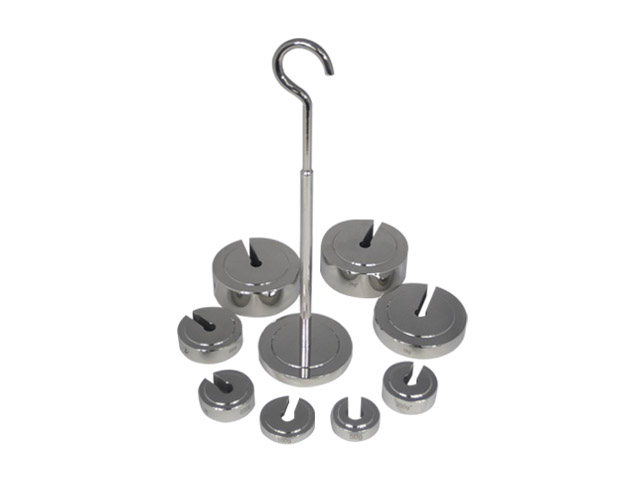
The core value of calibration weights for pocket scales lies in their ability to restore and stabilize the weighing accuracy of portable miniature scales. Unlike ordinary heavy objects, these professional weights are manufactured with strict surface smoothness, uniform density and stable mass performance, with no internal gaps or uneven stress that may cause mass deviation. Pocket scales feature high sensitivity, which means even tiny external interference or internal component fatigue can lead to obvious weighing errors. After long-term carrying, frequent opening and closing, and repeated object placement, the scale’s internal sensor and bearing structure will produce subtle displacement and wear, resulting in inconsistent zero points and offset readings. Calibration weights provide a fixed and standard mass reference for the scale’s system, allowing the device to re-identify the standard weight range, automatically correct offset values, and reset the zero-balance system. This effective correction process can eliminate cumulative errors in daily use, making the scale’s measurement data return to a stable and accurate state, and avoid inaccurate weighing results that may mislead users’ daily matching and recording work.
Reasonable selection of calibration weights is the premise of completing accurate scale calibration, and users need to match the weight specification according to the measuring range of different pocket scales. Each pocket scale has a fixed maximum weighing capacity and optimal precision interval, and only calibration weights that match this interval can achieve the best correction effect. Using overweight weights will cause excessive pressure on the scale’s miniature sensing components, easily causing permanent structural damage and reducing the scale’s service life, while underweight weights cannot trigger the full-range calibration program, failing to eliminate cumulative errors in the high-value weighing interval. For small-range pocket scales commonly used for fine weighing, small-specification calibration weights are more suitable for completing zero calibration and full-scale correction. For medium-range portable scales, a combination of multiple standard weights can be used to simulate different weighing values and complete multi-point calibration. In addition, the surface finish and structural integrity of the weights should be checked before selection, as worn, deformed or scratched weights will lose their standard mass reference value and cannot be used for professional calibration work.
Standardized operation steps directly determine the calibration effect of pocket scales with matching weights, and standardized daily operation can effectively avoid ineffective calibration and secondary errors. Before starting calibration, users need to place the pocket scale on a completely flat, stable and horizontal surface to prevent tilt and vibration from affecting the sensor’s induction accuracy. It is necessary to clean the scale’s weighing pan and the surface of the calibration weights in advance to remove dust, oil stains, moisture and other attachments, because tiny attachments will change the actual mass of the weights and lead to calibration deviation. After turning on the scale, wait for the device to complete the self-check program and display a stable zero value, then enter the manual calibration mode according to the scale’s operation instructions. Place the matched calibration weight gently in the center of the weighing pan, avoiding collision, extrusion and position offset. After the scale stably identifies the weight and completes data correction, wait for the system to automatically confirm and save the calibration parameters, and finally restart the scale to test the weighing accuracy to ensure the calibration is successful.
Daily maintenance and proper storage of calibration weights are crucial to maintaining their long-term standard mass and usability. These precision accessories are small in size and high in precision, and are extremely sensitive to external environmental factors such as humidity, temperature change and chemical corrosion. Long-term exposure to humid air will cause oxidation and rust on the metal weights, increasing their actual mass, while contact with corrosive substances such as cosmetics, detergent and acid-base liquids will damage the surface structure and cause mass deviation. Users should place the calibration weights in a dry, cool and sealed storage box when not in use, avoiding direct sunlight and extreme temperature environments. It is forbidden to arbitrarily stack, collide or drop the weights, as impact force will cause internal structural changes and tiny deformation, thus destroying the standard mass accuracy. In addition, do not touch the weighing surface of the weights directly with hands during use, as sweat and grease on the skin will adhere to the surface and gradually affect the calibration accuracy after long-term accumulation.
Regular calibration maintenance with professional weights can effectively extend the service life of pocket scales and stabilize their long-term working performance. Most pocket scales are frequently carried and used in different scenarios, and their internal precision components are prone to fatigue and displacement after long-term vibration and friction. Without regular calibration, small errors will continue to accumulate, gradually leading to large deviations in weighing results, and even cause irreversible aging of the sensor in severe cases. Adhering to regular calibration can timely adjust the operating parameters of the scale, reduce the working load of precision components, and keep the sensor in a sensitive and stable working state. For users who use pocket scales frequently, regular calibration every two to three weeks is recommended, while occasional use can adopt monthly calibration. Timely calibration can not only ensure the accuracy of each weighing, but also effectively detect potential faults such as slow response and unstable zero drift of the scale in advance, facilitating timely maintenance and avoiding equipment scrapping caused by long-term neglected errors.
Many users underestimate the importance of dedicated calibration weights and mistakenly use ordinary daily objects instead for scale correction, which will bring obvious hidden dangers to weighing accuracy. Coins, small metal parts and other daily items often have uneven surface quality, inconsistent internal density and uncertain mass deviation, and their weight values will also change with surface wear and dirt adhesion. Using these non-standard objects for calibration will set wrong reference parameters for the pocket scale, resulting in systematic errors in the device’s long-term operation. Different from non-standard substitutes, professional calibration weights are designed for long-term repeated use, with stable mass, uniform structure and strong anti-interference ability, which can always provide accurate reference standards. Even in different temperature and humidity environments, their mass stability is far higher than ordinary objects, which can ensure the consistency and credibility of scale calibration results.
In daily portable weighing work, the combination of high-quality pocket scales and standard calibration weights forms a complete precision weighing system, which is the key to ensuring stable and reliable measurement data. Calibration weights are not trivial supporting accessories, but core tools to maintain the accuracy of miniature portable scales, running through the whole life cycle of scale use and maintenance. Mastering scientific selection, standardized operation and careful maintenance methods can give full play to the calibration effect of the weights, eliminate various weighing errors caused by environmental changes and equipment wear, and make the compact and portable pocket scale always maintain excellent precision performance. Whether for daily personal fine weighing or lightweight precision measurement work, adhering to regular calibration with professional weights is the most effective and economical way to ensure weighing quality and improve work accuracy.
