





Changzhou Veidt Weighing Co., Ltd. © 2022 ALL RIGHTS RESERVED Privacy Policy | Calibration Weight | Test Weights | Cast Iron Weights | Standard Weights | Laboratory Weights | XML | SITEMAP
NEWS LIST
Calibration Weights For Gram Scale
Tuesday 15th September 2026 Back to list
Gram scales are essential precision measuring tools widely applied in daily testing, laboratory research, small-batch manufacturing, and hobby crafting, where accurate mass measurement is the core guarantee of reliable results. Calibration weights serve as the fundamental auxiliary tool to maintain the long-term accuracy and stability of gram scales, functioning as a standardized mass reference to correct measurement deviations caused by long-term use, environmental changes, or mechanical wear. Even high-quality gram scales will gradually produce subtle errors after frequent operation, dust accumulation, temperature fluctuation, or slight structural vibration, which can accumulate and affect the credibility of measured data over time. The application of calibration weights provides a simple and effective way to verify scale performance, adjust measurement parameters, and eliminate systematic errors.
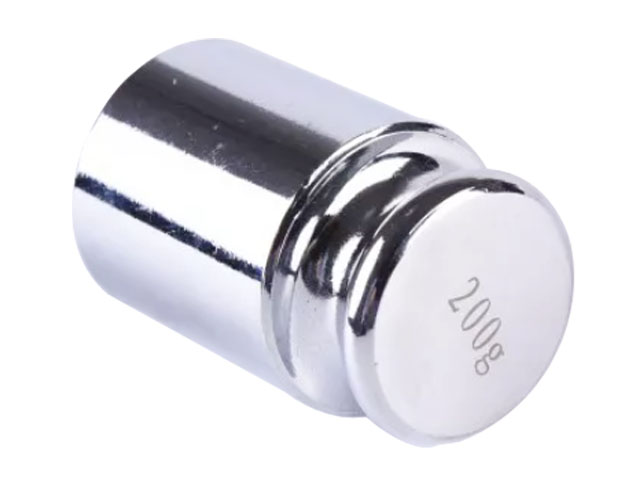
The core value of calibration weights for gram scales lies in providing a stable and consistent mass reference benchmark, which is the premise to ensure the repeatability and accuracy of scale measurements. Unlike ordinary daily weights, these calibration accessories are manufactured with strict attention to mass uniformity and surface stability, with minimal inherent mass deviation to meet the high-precision matching demand of gram-level weighing equipment. Gram scales are sensitive to tiny mass changes, and even a deviation of 0.1 grams will lead to inaccurate experimental data, ingredient proportion errors, or product quality inconsistencies. Calibration weights can effectively detect such subtle deviations: by placing the standard weight on the center of the scale’s weighing pan, users can directly compare the scale’s displayed value with the actual mass of the weight, so as to judge whether the scale needs parameter correction. In addition, regular calibration with professional weights can prevent gradual drift of the scale’s internal sensing system, avoid cumulative errors caused by long-term unattended use, and keep the scale in the best working state for a long time. This regular calibration process is particularly critical for scenarios that require continuous and stable weighing accuracy.
The physical and material characteristics determine the practical performance and service effect of gram scale calibration weights, making material selection the key factor affecting calibration reliability. Most high-performance calibration weights for gram scales adopt dense, wear-resistant, and anti-corrosion metal materials, which can effectively avoid mass changes caused by oxidation, rust, or surface abrasion during long-term use. Low-density or unstable materials are rarely used for such precision calibration tools, as they are prone to surface wear after frequent handling, or absorb moisture and dust in the air, resulting in subtle mass increase or decrease that interferes with calibration results. Qualified calibration weights feature smooth, burr-free surface treatment, which reduces dust adhesion and facilitates daily cleaning. Meanwhile, their overall structural design is compact and uniform, ensuring stable placement on the weighing pan without tilting or rolling during calibration. These material and structural advantages enable the weights to maintain consistent mass stability in conventional indoor environments, adapting to the sensitive working characteristics of gram scales and ensuring each calibration operation delivers true and effective reference data.
Standardized operation steps are crucial to exert the maximum calibration effect of weights and avoid human-induced calibration errors. Before starting the calibration work, users need to place the gram scale on a horizontal, stable desktop surface to prevent measurement deviation caused by equipment tilting or ground vibration. It is also necessary to clean the weighing pan and the surface of the calibration weight with a soft dry cloth to remove floating dust, fine debris, and residual stains, because tiny attachments on the contact surface will directly affect the accuracy of gram-level weighing. After preprocessing, turn on the gram scale and let it preheat for an appropriate period to ensure the internal sensor reaches a stable working state, eliminating the influence of startup instability. Then perform zeroing operation to make the scale display zero value without any load. Finally, place the matched calibration weight gently in the center of the weighing pan, avoid touching the weighing pan with hands or generating vibration during placement, and observe the scale’s reading. If the displayed value is inconsistent with the standard weight mass, follow the equipment’s built-in adjustment program to complete parameter correction until the reading matches the standard mass.
Scientific daily maintenance and storage of calibration weights can effectively extend their service life and maintain long-term calibration accuracy, avoiding performance attenuation caused by improper management. After each use, the calibration weights should be cleaned timely to remove surface dust and subtle contaminants, and placed in a dry, dust-proof, and constant-temperature storage environment. Humid environments are strictly prohibited, as long-term moisture contact will cause surface oxidation of metal weights, leading to mass changes and failure to meet precision calibration requirements. It is also necessary to avoid random collision, dropping, or friction with hard objects, which will cause surface wear and structural deformation, resulting in irreversible mass deviation. In daily management, users should avoid directly touching the weight surface with bare hands, as sweat and grease on the skin will adhere to the surface, gradually causing corrosion and mass change over time. It is recommended to use clean tweezers or soft gloves to take and place weights. Regular visual inspection of the weights is also essential to check for surface scratches, oxidation spots, or deformation, ensuring the weights are always in qualified working condition before calibration.
Calibration weights for gram scales are applicable to a wide range of life and industrial scenarios, covering most scenes that require gram-level precise weighing and data verification. In laboratory daily work, these weights are used to calibrate analytical gram scales, ensuring the accuracy of sample weighing in chemical experiments, biological detection, and material analysis, which directly affects the authenticity and reproducibility of experimental conclusions. In small-scale production and processing fields, they are used to calibrate weighing equipment for ingredient proportioning, product quality inspection, and raw material metering, effectively avoiding product quality problems caused by inaccurate weighing. In daily life and hobby fields, such as jewelry weighing, tea proportioning, spice blending, and handmade craft production, calibration weights can correct household gram scale deviations and ensure the consistency of finished products. In addition, educational institutions use these weights for teaching experiments, helping students understand the principles of precise weighing and the importance of instrument calibration. The versatile and precise characteristics of the weights make them an indispensable supporting tool for all gram-level weighing scenarios.
In the process of using calibration weights and gram scales, some common minor problems often affect calibration results, and targeted troubleshooting can quickly restore equipment accuracy. If the scale reading is unstable during calibration, the main reasons usually include unstable placement, residual dust on the weighing pan, or insufficient preheating time of the equipment. At this time, it is necessary to re-adjust the horizontal position of the scale, thoroughly clean the contact surface, and re-preheat the equipment for calibration. If the scale has a fixed deviation after calibration, it may be caused by long-term wear of the internal sensor or slight deformation of the calibration weight. Users can replace the spare calibration weight for secondary verification to distinguish the fault source. If the weight surface is oxidized or worn, it should be stopped from use in time to avoid continuous wrong calibration. In addition, environmental airflow will also cause fluctuation of gram scale readings, so calibration should be carried out in a wind-shielded and stable space. Timely elimination of these interfering factors can effectively improve the success rate and accuracy of calibration.
Reasonable selection of calibration weights is the premise to match the performance of gram scales and ensure calibration efficiency and accuracy. Users need to select weights with appropriate mass specifications according to the maximum weighing range and precision level of their gram scales, ensuring the weight mass is within the optimal calibration interval of the equipment. Excessively light weights cannot effectively detect the full-scale measurement deviation of the scale, while excessively heavy weights will cause pressure overload on the scale’s sensing system and even cause permanent damage. In terms of quality selection, priority should be given to weights with stable material, smooth surface, and no deformation or oxidation, ensuring long-term mass stability. For high-precision gram scales used in laboratories and precision production, it is necessary to choose high-stability calibration weights with stricter manufacturing fineness to match the equipment’s high-precision measurement needs. For household and conventional daily use, standard stable calibration weights can meet daily calibration requirements. Scientific selection matching the equipment and usage scenario can maximize the calibration effect, maintain the long-term accuracy of gram scales, and provide reliable guarantee for all weighing work.
