





Changzhou Veidt Weighing Co., Ltd. © 2022 ALL RIGHTS RESERVED Privacy Policy | Calibration Weight | Test Weights | Cast Iron Weights | Standard Weights | Laboratory Weights | XML | SITEMAP
NEWS LIST
calibration weights for balances
Friday 02nd January 2026 Back to list
In the realm of precision measurement, balances serve as indispensable tools across countless industries and scientific fields. From pharmaceutical laboratories ensuring the accuracy of medicinal dosages to manufacturing facilities verifying the weight of components, the reliability of balance measurements directly impacts product quality, safety, and operational integrity. However, even the most advanced balances cannot maintain their precision indefinitely—they require regular calibration, and at the heart of this calibration process lies a critical component: calibration weights. Calibration weights for balances are not mere masses; they are precision-engineered standards that enable the verification and adjustment of balance accuracy.
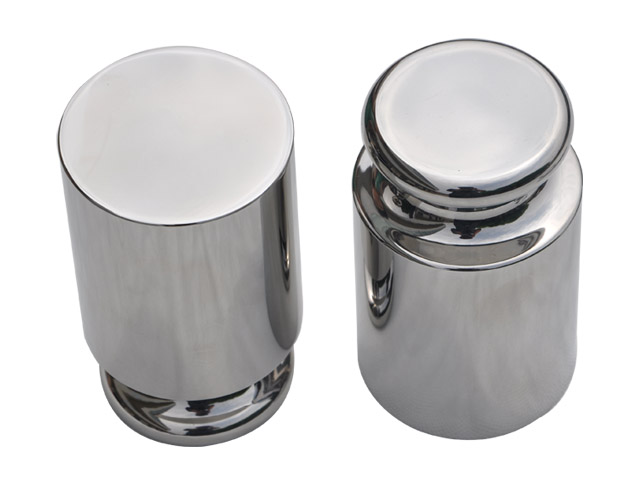
To understand the role of calibration weights, it is first necessary to grasp the purpose of balance calibration. Balances operate based on the principle of comparing the unknown mass of a sample against a known mass—calibration weights provide this known reference. Over time, a variety of factors can compromise a balance’s accuracy, including mechanical wear and tear, changes in environmental conditions (such as temperature, humidity, and vibration), and improper handling. Calibration involves placing a set of known weights on the balance and comparing the balance’s displayed value to the actual weight of the standard. If discrepancies are found, adjustments are made to the balance to restore its accuracy. Without reliable calibration weights, this process would be meaningless, as there would be no valid reference point to assess the balance’s performance. In essence, calibration weights are the foundation upon which the trustworthiness of balance measurements is built.
Calibration weights for balances come in a diverse range of types, each designed to suit specific balance models, measurement ranges, and application requirements. One of the primary distinctions among calibration weights is their form factor. The most common forms include cylindrical weights, rectangular weights, and hook weights. Cylindrical weights are widely used for general-purpose calibration of analytical and precision balances, as their compact shape minimizes air resistance and makes them easy to handle with tweezers—an essential feature for weights used with sensitive balances. Rectangular weights, on the other hand, are often preferred for larger capacity balances, such as those used in industrial settings, due to their stable base, which prevents tipping during calibration. Hook weights, as the name suggests, are equipped with a hook or loop, making them ideal for calibrating hanging balances or balances that measure tension, such as those used in textile manufacturing to test thread strength.
Another key classification of calibration weights is based on their nominal mass range. Weights are available in a spectrum of sizes, from ultra-small microgram weights (used for calibrating analytical balances with a capacity of just a few grams) to large kilogram or even metric ton weights (employed for industrial balances used in shipping, mining, or construction). For most laboratory and small-scale industrial applications, weight sets are commonly used. These sets typically include a range of weights that cover the full measurement capacity of the balance, allowing for comprehensive calibration across different mass ranges. For example, a standard weight set for a 200g analytical balance might include weights of 100g, 50g, 20g, 20g, 10g, 5g, 2g, 2g, 1g, and smaller fractional weights (such as 500mg, 200mg, etc.), following the standard metric weight series that allows for combining weights to achieve any desired mass within the set’s range.
The materials used in the construction of calibration weights are carefully selected to ensure stability, durability, and resistance to environmental factors that could alter their mass. The choice of material directly impacts the weight’s performance and longevity, making it a critical consideration for any user. One of the most common materials for precision calibration weights is stainless steel. Stainless steel offers an excellent balance of properties: it is resistant to corrosion, relatively low-cost compared to other precision materials, and has a stable density. There are several types of stainless steel used, with 316L stainless steel being particularly popular for weights used in harsh or humid environments, such as pharmaceutical cleanrooms or food processing facilities, due to its enhanced corrosion resistance.
For higher-precision applications, such as calibration of analytical balances in research laboratories or metrology institutes, non-magnetic stainless steel or alloy weights are often preferred. Non-magnetic materials are essential in environments where magnetic fields may be present, as magnetic properties can cause interference with balance measurements. Some high-precision weights are made from alloys such as brass, although brass is less commonly used today due to its susceptibility to corrosion—unless it is plated with a protective layer such as nickel. For the highest level of precision, weights made from platinum-iridium alloys are used. These alloys have extremely low thermal expansion, high density, and exceptional chemical stability, making them ideal for primary standard weights—weights that serve as the reference for calibrating other weights, rather than for direct use with balances.
When selecting calibration weights for balances, several key factors must be taken into account to ensure that the weights are suitable for the intended application. First and foremost is the accuracy class of the weights. Accuracy classes define the maximum allowable error for a weight of a given nominal mass. Different organizations, such as the International Organization for Standardization (ISO), have established standard accuracy classes for calibration weights. For example, ISO 17025 specifies several classes, ranging from Class E1 (highest precision) to Class M3 (general purpose). The choice of accuracy class depends on the accuracy requirements of the balance being calibrated. Analytical balances, which require extremely high precision (often to the nearest 0.1mg or 0.01mg), must be calibrated with high-accuracy weights (such as Class E1 or E2). In contrast, industrial platform balances used for measuring large masses with lower precision (to the nearest gram or kilogram) can be calibrated with lower-class weights (such as Class F1 or M1).
Another important factor in selection is the compatibility of the weights with the balance. This includes not only the mass range but also the physical size of the weights. For example, a small analytical balance with a narrow weighing pan cannot accommodate large, bulky weights, so it is essential to choose weights that fit comfortably on the pan without touching the sides or the balance’s enclosure. Additionally, for balances with automatic internal calibration systems, it is important to ensure that the external calibration weights (if used) are compatible with the balance’s calibration protocol. Some balances may require weights with specific dimensions or surface finishes to interact properly with the balance’s sensors.
Environmental conditions in the calibration area also play a role in weight selection. If the calibration is performed in a humid environment, such as a pharmaceutical cleanroom with controlled humidity, corrosion-resistant materials like 316L stainless steel are a must. In environments with magnetic fields, such as near industrial magnets or electrical equipment, non-magnetic weights are essential to avoid magnetic interference. Similarly, in high-temperature environments, weights with low thermal expansion coefficients (such as platinum-iridium alloys) may be necessary to prevent changes in mass due to temperature fluctuations.
The applications of calibration weights for balances span a wide range of industries and fields, highlighting their universal importance in ensuring measurement accuracy. In the pharmaceutical industry, for example, calibration weights are critical for maintaining compliance with strict quality control standards. Pharmaceutical manufacturers must ensure that the mass of active pharmaceutical ingredients (APIs) in each dosage form (tablets, capsules, injections) is precise to guarantee efficacy and safety. Balances used for weighing APIs are calibrated regularly with high-precision weights to ensure that their measurements are accurate. Any deviation in balance accuracy could result in dosages that are too high (posing a risk of toxicity) or too low (rendering the medication ineffective), making calibration weights a vital component of pharmaceutical quality assurance.
In the food and beverage industry, calibration weights play a similar role in ensuring product consistency and compliance with labeling regulations. Food manufacturers use balances to weigh ingredients during production, and accurate measurements are essential to maintain the taste, texture, and nutritional content of the final product. Additionally, labeling requirements mandate that the net weight stated on food packaging is accurate, so balances used for final product weighing must be calibrated regularly with appropriate weights. For example, a manufacturer of packaged snacks must ensure that each package contains the stated weight of snacks, and calibration weights help verify that the balances used for this purpose are functioning correctly.
The scientific research community also relies heavily on calibration weights for a wide range of applications. In chemistry laboratories, balances are used to weigh reactants for chemical reactions, and accurate measurements are critical for ensuring the validity of experimental results. A small error in the mass of a reactant can lead to incorrect stoichiometric calculations, invalidating the entire experiment. Similarly, in physics laboratories, balances are used to measure the mass of samples in experiments involving force, density, or material properties, and calibration weights ensure that these measurements are precise. In environmental science, balances are used to weigh soil samples, water samples, or air particles, and accurate measurements are essential for monitoring environmental pollutants and understanding ecological processes.
Industrial manufacturing is another major area where calibration weights are indispensable. In aerospace manufacturing, for example, precision is paramount—even the smallest deviation in the mass of a component can affect the performance and safety of an aircraft. Balances used to weigh aerospace components are calibrated with high-accuracy weights to ensure that each component meets the strict design specifications. In the automotive industry, calibration weights are used to calibrate balances that measure engine components, brake parts, and other critical components, ensuring that they are of the correct mass for optimal performance and safety. In electronics manufacturing, balances are used to weigh small components such as microchips and resistors, and calibration weights ensure that these tiny components are of the correct mass, which is essential for the functionality of electronic devices.
Proper handling and maintenance of calibration weights are essential to preserve their accuracy and extend their lifespan. Weights are precision instruments, and even minor damage or contamination can alter their mass, rendering them unreliable for calibration. One of the most important handling practices is to always use tweezers, gloves, or a weight handling tool when touching weights. Human skin contains oils, moisture, and dirt, which can transfer to the weight’s surface, causing contamination and potentially corrosion. For small precision weights, non-magnetic tweezers are recommended to avoid scratching the weight’s surface. Gloves made of lint-free material, such as nitrile, should be worn to prevent oil transfer.
Storage conditions are also critical for maintaining weight accuracy. Weights should be stored in a clean, dry, and stable environment, away from extreme temperatures, humidity, and magnetic fields. Ideally, weights should be stored in their original case, which is designed to protect them from physical damage and environmental factors. If the original case is not available, a container lined with a soft, non-abrasive material (such as foam) can be used to prevent scratches. It is also important to store weights separately from other tools or objects that could cause impact damage. Additionally, weights should be stored in a horizontal position to prevent deformation, especially for larger weights.
Regular cleaning of calibration weights is necessary to remove contamination. The cleaning method depends on the material of the weight. For stainless steel weights, a mild detergent solution and a soft cloth or brush can be used to remove dirt and oil. The weight should then be rinsed with distilled water and dried thoroughly with a lint-free cloth. For more delicate materials, such as platinum-iridium alloys, only distilled water and a soft cloth should be used to avoid damaging the surface. Abrasive cleaners, solvents, or harsh chemicals should never be used, as they can scratch or corrode the weight’s surface. After cleaning, weights should be allowed to dry completely before being stored or used for calibration.
Regular verification of calibration weights is also essential to ensure that their mass remains within the allowable error limits. Even with proper handling and storage, weights can undergo slight changes in mass over time due to wear, corrosion, or other factors. The frequency of verification depends on the accuracy class of the weight and the intensity of use. High-accuracy weights (such as Class E1 and E2) used in critical applications should be verified annually, while lower-class weights (such as Class M1) used in general-purpose applications may only need verification every two to three years. Verification involves comparing the weight to a higher-accuracy reference weight (a primary standard) to check for any deviations in mass. If a weight is found to be out of tolerance, it may need to be reconditioned (cleaned, polished, or adjusted) or replaced.
In addition to handling and maintenance, it is important to establish a formal calibration schedule for both the balances and the calibration weights. A well-documented calibration schedule ensures that both the balances and the weights are checked regularly, reducing the risk of inaccurate measurements. The schedule should include details such as the frequency of calibration, the person responsible for performing the calibration, the type of weights used, and the results of each calibration. This documentation is not only important for internal quality control but also for compliance with industry regulations and standards, such as ISO 9001 (quality management systems) or Good Manufacturing Practices (GMP) in the pharmaceutical and food industries.
Common mistakes to avoid when using calibration weights for balances include using weights that are outside their accuracy class for the intended application, handling weights with bare hands, storing weights in improper conditions, and failing to verify the weights regularly. Another common mistake is using damaged or contaminated weights—even a small scratch or a layer of oil on the weight’s surface can affect its mass, leading to inaccurate balance calibration. It is also important to avoid dropping or impacting weights, as this can cause permanent deformation or damage to the weight’s structure.
Looking to the future, the development of calibration weights for balances is likely to be driven by advances in materials science and precision manufacturing technologies. New materials with even greater stability, corrosion resistance, and low thermal expansion are being researched, which could lead to the development of higher-precision weights for use in cutting-edge scientific and industrial applications. Additionally, advances in manufacturing techniques, such as 3D printing with precision materials, could enable the production of custom-shaped weights for specialized balance models.
In conclusion, calibration weights for balances are essential tools that underpin the accuracy and reliability of precision measurement across a wide range of industries and scientific fields. From their role as reference standards in balance calibration to their impact on product quality, safety, and regulatory compliance, calibration weights play a vital role in modern society. Understanding the fundamentals of calibration weights—including their types, materials, and selection criteria—is essential for ensuring that the right weights are chosen for each application. Additionally, proper handling, maintenance, and verification of calibration weights are critical to preserving their accuracy and extending their lifespan. As technology continues to advance, the development of more precise and durable calibration weights will further enhance the capabilities of balance measurement, supporting innovation and quality in countless fields.
