





Changzhou Veidt Weighing Co., Ltd. © 2022 ALL RIGHTS RESERVED Privacy Policy | Calibration Weight | Test Weights | Cast Iron Weights | Standard Weights | Laboratory Weights | XML | SITEMAP
NEWS LIST
calibration weight factory
Friday 02nd January 2026 Back to list
In the vast landscape of industrial precision and measurement accuracy, calibration weights stand as unsung heroes. These seemingly simple objects play a pivotal role in ensuring the reliability of countless instruments and processes across industries ranging from manufacturing and aerospace to healthcare and agriculture. Behind every high-quality calibration weight lies the expertise, precision engineering, and rigorous quality control of a calibration weight factory.
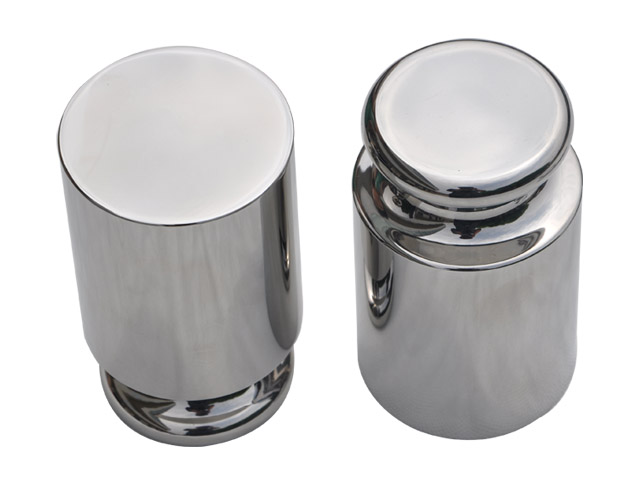
Calibration weights are not mere pieces of metal; they are precision tools designed to verify and adjust the accuracy of weighing equipment. From the small scales used in local pharmacies to the massive industrial balances employed in shipping ports, every weighing device requires periodic calibration to maintain its performance. A calibration weight factory’s primary mission is to produce weights that meet strict dimensional and mass specifications, ensuring that they can serve as trustworthy references for these calibration processes. Unlike standard manufacturing facilities, which prioritize volume and speed, calibration weight factories operate with a singular focus on precision—even the smallest deviation from the specified mass can render a weight useless, potentially leading to incorrect measurements, flawed products, and costly operational errors.
The foundation of any reputable calibration weight factory lies in its commitment to material selection. The choice of material directly impacts the weight’s stability, durability, and accuracy over time. Common materials used include stainless steel, carbon steel, brass, and aluminum, each with its own set of properties that make it suitable for specific applications. Stainless steel, for instance, is favored for its resistance to corrosion and wear, making it ideal for weights used in harsh environments such as chemical plants or outdoor testing facilities. Brass, on the other hand, offers excellent machinability and stability, making it a popular choice for smaller, more precise weights. The factory’s material selection process involves rigorous testing to ensure that each batch of raw material meets the required purity and density standards. This often includes chemical analysis to detect impurities and density measurements to confirm that the material will yield weights with consistent mass properties.
Once the raw materials have been selected and validated, the production process begins with the initial shaping of the weight. This stage typically involves forging, casting, or machining, depending on the size and complexity of the final product. For larger weights, forging is often preferred as it compacts the metal, enhancing its density and structural integrity. Forging involves heating the raw material to a high temperature and then applying pressure to shape it into a rough form. Smaller weights, by contrast, may be produced using machining processes such as turning, milling, or grinding. Machining allows for greater precision in shaping, enabling the factory to achieve the exact dimensional specifications required for the weight. During this stage, skilled technicians operate computer numerical control (CNC) machines, which use pre-programmed instructions to perform precise cuts and shaping operations. This automation reduces the risk of human error and ensures consistency across multiple units.
After the initial shaping, the next critical stage is precision machining and finishing. This is where the weight is refined to meet the exact mass and dimensional tolerances. The process begins with a rough machining step to remove any excess material, followed by a semi-finishing step to bring the weight closer to its final specifications. The final step is finish machining, which uses high-precision tools to achieve the required surface smoothness and dimensional accuracy. For example, the surface of a calibration weight may be ground to a mirror finish to minimize friction and prevent the accumulation of dust or debris, which could alter its mass. Additionally, any edges or corners are often rounded to prevent damage during handling and use. Throughout the machining process, the weight is periodically measured using high-precision instruments such as coordinate measuring machines (CMMs) and optical comparators to ensure that it remains within the specified tolerances.
One of the most crucial aspects of calibration weight production is the mass adjustment process. Even after precise machining, a weight may not have the exact mass required. To correct this, the factory uses a process known as “trimming,” where small amounts of material are removed from the weight to adjust its mass to the desired value. Trimming is a delicate operation that requires extreme precision; even a tiny chip of metal removed can significantly alter the weight’s mass. In modern factories, this process is often automated using laser trimming technology, which allows for extremely precise material removal. Laser trimming not only ensures accuracy but also minimizes the impact on the weight’s structural integrity and surface finish. After trimming, the weight is re-measured to confirm that it meets the exact mass specification. If the weight is still outside the tolerance, the trimming process is repeated until the desired mass is achieved.
Once the weight has been machined and trimmed to the correct specifications, it undergoes a series of surface treatment processes to enhance its durability and resistance to environmental factors. The type of surface treatment depends on the material of the weight and its intended application. For example, stainless steel weights may be passivated to create a protective oxide layer that prevents corrosion. Carbon steel weights, which are more prone to rust, may be painted, plated with zinc or nickel, or coated with a corrosion-resistant polymer. Brass weights may be polished to enhance their appearance and protect against tarnishing. These surface treatments not only extend the lifespan of the weight but also help maintain its mass stability over time by preventing material loss due to corrosion or wear.
Quality control is a pervasive and non-negotiable aspect of every calibration weight factory’s operations. Unlike many other manufacturing industries, where a small number of defects may be acceptable, calibration weight production requires near-perfect quality. Even a single defective weight can have far-reaching consequences, as it may lead to the calibration of weighing instruments with incorrect references, resulting in flawed products, safety hazards, or financial losses. To ensure the highest level of quality, factories implement a comprehensive quality control system that begins with the inspection of raw materials and continues through every stage of production, culminating in a final inspection before the weights are shipped to customers.
The quality control process includes a wide range of tests and measurements. Dimensional inspections are conducted to verify that the weight’s size, shape, and surface finish meet the specified requirements. Mass measurements are performed using ultra-precision balances that are themselves calibrated regularly to ensure their accuracy. These balances are capable of measuring mass with a precision of up to 0.1 micrograms, allowing technicians to detect even the smallest deviations from the required mass. In addition to dimensional and mass inspections, some factories also conduct environmental stability tests to ensure that the weights maintain their accuracy under different temperature, humidity, and pressure conditions. For example, a weight may be subjected to extreme temperatures to test its thermal stability, or exposed to high humidity to evaluate its resistance to corrosion.
Technological advancements have played a significant role in transforming the operations of calibration weight factories. In the past, production was largely manual, relying on the skill and experience of technicians to achieve the required precision. Today, however, modern factories are equipped with state-of-the-art technology that has revolutionized every aspect of the production process. CNC machining centers, laser trimming systems, and automated inspection equipment have not only improved the accuracy and consistency of the weights but also increased production efficiency and reduced the risk of human error.
Another key technological advancement is the use of computer-aided design (CAD) software in the design phase. CAD software allows engineers to create detailed 3D models of the weights, enabling them to simulate the production process and identify potential issues before manufacturing begins. This not only speeds up the design process but also ensures that the weights are designed to meet the exact specifications and performance requirements. Additionally, many factories use enterprise resource planning (ERP) systems to manage their operations, from inventory control and production scheduling to quality control and order management. These systems provide real-time visibility into the production process, allowing managers to make informed decisions and optimize efficiency.
The impact of calibration weight factories extends far beyond the production of individual weights. They play a critical role in upholding global industrial standards and ensuring the interoperability of measurement systems across different countries and industries. In a globalized economy, where products are manufactured in one country, assembled in another, and sold worldwide, consistent and accurate measurement is essential. Calibration weights serve as the foundation for this consistency, ensuring that weighing instruments in different locations are calibrated to the same standards. This not only facilitates international trade but also helps maintain product quality and safety across borders.
For example, in the pharmaceutical industry, the accurate measurement of ingredients is critical to ensuring the efficacy and safety of drugs. A calibration weight factory’s products are used to calibrate the scales that measure these ingredients, ensuring that each batch of medication contains the correct dosage. In the aerospace industry, calibration weights are used to calibrate the weighing equipment used to measure aircraft components, ensuring that they meet the strict weight requirements for safe flight. In agriculture, they are used to calibrate the scales used to measure grain and other crops, ensuring fair trade and accurate pricing for farmers and buyers alike.
Calibration weight factories also play a vital role in supporting research and development (R&D) activities. Many industries rely on precise measurement to develop new products and technologies. For example, in the field of materials science, researchers use calibration weights to test the properties of new materials, ensuring that their measurements are accurate and reliable. In the field of metrology, the science of measurement, calibration weight factories work closely with research institutions to develop new measurement standards and techniques, pushing the boundaries of precision and accuracy.
Despite the critical role they play, calibration weight factories face a number of challenges. One of the biggest challenges is the increasing demand for higher precision and tighter tolerances. As industries become more advanced, the requirements for measurement accuracy continue to rise, putting pressure on factories to produce weights with ever-smaller deviations from the specified mass. This requires significant investments in new technology and equipment, as well as ongoing training for technicians to operate these advanced systems.
Another challenge is the volatility of raw material prices. The materials used to produce calibration weights, such as stainless steel and brass, are subject to fluctuations in global commodity markets. This can impact the cost of production, making it difficult for factories to maintain stable pricing for their customers. To mitigate this risk, many factories establish long-term contracts with raw material suppliers or invest in inventory management systems to track and forecast material prices.
Additionally, calibration weight factories must comply with a range of international regulations and standards related to measurement and quality. While the article avoids mentioning specific certifications, factories must still adhere to general industry best practices to ensure that their products are reliable and consistent. This requires ongoing monitoring and updating of quality control systems to keep pace with changes in regulations and industry requirements.
Looking to the future, calibration weight factories are poised to embrace new technologies and innovations to meet the evolving needs of industries worldwide. One area of growth is the development of smart calibration weights, which incorporate sensors and other electronic components to provide real-time data on their mass, temperature, and environmental conditions. These smart weights can help users monitor the performance of their calibration equipment more effectively, reducing the risk of errors and improving operational efficiency.
Another area of innovation is the use of additive manufacturing, also known as 3D printing, in the production of calibration weights. While traditional machining processes are still the norm, additive manufacturing offers the potential to produce complex shapes and designs that are difficult or impossible to achieve with conventional methods. It also allows for greater customization, enabling factories to produce weights tailored to specific customer requirements. However, there are still challenges to overcome, such as ensuring the accuracy and stability of 3D-printed weights, which require further research and development.
In conclusion, calibration weight factories are essential components of the global industrial ecosystem, playing a critical role in ensuring the accuracy and reliability of measurement systems across industries. Their commitment to precision, rigorous quality control, and technological innovation ensures that calibration weights meet the highest standards, supporting everything from everyday commercial transactions to cutting-edge scientific research. Despite the challenges they face, these factories continue to adapt and evolve, driven by the growing demand for higher precision and more reliable measurement tools. As industries around the world continue to advance, the importance of calibration weight factories will only increase, making them indispensable partners in the pursuit of operational excellence and technological progress.
