





Changzhou Veidt Weighing Co., Ltd. © 2022 ALL RIGHTS RESERVED Privacy Policy | Calibration Weight | Test Weights | Cast Iron Weights | Standard Weights | Laboratory Weights | XML | SITEMAP
NEWS LIST
calibration masses
Friday 02nd January 2026 Back to list
In the realm of precision measurement, where accuracy can dictate the success of experiments, the reliability of industrial processes, or the safety of consumer products, calibration masses stand as unsung heroes. These seemingly simple objects—carefully crafted pieces of material with precisely defined weights—serve as the foundation for calibrating a wide range of weighing instruments, ensuring that measurements taken across different settings and over time are consistent and trustworthy. From laboratories to manufacturing floors, from medical facilities to agricultural operations, calibration masses play an indispensable role in upholding the integrity of quantitative analysis.
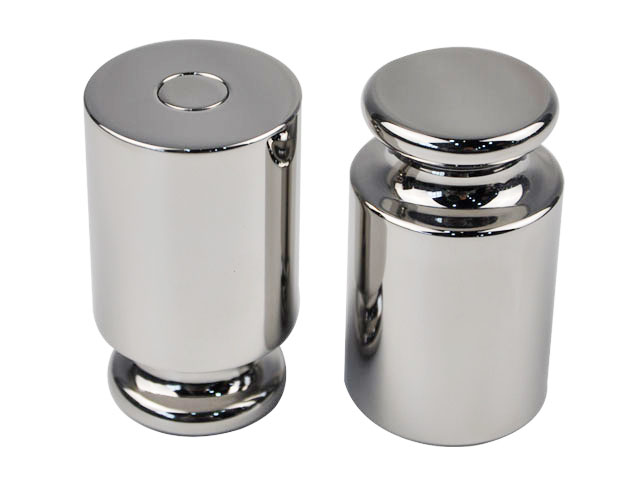
At its core, a calibration mass is a standard reference object designed to have a known, stable mass. Its primary function is to verify and adjust the accuracy of weighing devices such as balances, scales, and load cells. When a weighing instrument is calibrated using a mass of known value, any discrepancies between the instrument’s reading and the actual mass of the calibration standard can be identified and corrected. This process is critical because even the most advanced weighing equipment can drift from its accurate settings over time due to factors like mechanical wear, environmental changes, or electrical fluctuations. Without regular calibration using reliable masses, measurements can become inaccurate, leading to flawed data, defective products, or even hazardous situations in fields like pharmaceuticals or aerospace.
The concept of using standard masses for measurement dates back thousands of years, with early civilizations developing rudimentary weight standards for trade and commerce. However, the modern calibration mass as we know it today is a product of rigorous engineering and scientific advancement. Unlike the arbitrary weights of ancient times, contemporary calibration masses are manufactured to adhere to precise dimensional and mass specifications, ensuring that they can be traced to international standards. This traceability is a key characteristic of high-quality calibration masses, as it allows users to have confidence that their measurements are consistent with global benchmarks, facilitating international trade, scientific collaboration, and regulatory compliance.
Calibration masses come in a wide variety of types, each designed to meet specific application requirements. One of the most common classifications is based on their shape, which is often determined by the type of weighing instrument they are intended to calibrate. Cylindrical masses, for example, are frequently used with analytical balances—high-precision instruments used in laboratories to measure very small masses, often in the milligram or microgram range. Their cylindrical shape minimizes air resistance and makes them easy to handle with tweezers, reducing the risk of contamination or damage to both the mass and the balance. In contrast, rectangular or block-shaped masses are more commonly used for calibrating industrial scales, such as those found in warehouses or manufacturing plants, where larger masses are required and ease of stacking or placement is a priority.
Another important classification of calibration masses is based on their mass range. Calibration masses can be as small as a few milligrams (used for calibrating microbalances in pharmaceutical or chemical laboratories) or as large as several metric tons (used for calibrating heavy-duty scales in shipping yards or construction sites). Intermediate mass ranges, such as grams, kilograms, and hectograms, are used in a wide variety of settings, from educational laboratories to food processing facilities. The choice of mass range depends entirely on the capacity of the weighing instrument being calibrated; using a mass that is too small may not effectively test the instrument’s accuracy at higher load levels, while using a mass that is too large can damage the instrument.
In addition to shape and mass range, calibration masses can also be categorized based on their level of precision. Different applications require different degrees of accuracy, and calibration masses are manufactured to meet varying tolerance levels. For example, laboratory applications that demand extremely high precision—such as analyzing the composition of a chemical compound or measuring the mass of a biological sample—require calibration masses with very tight tolerances, meaning that their actual mass deviates only minimally from their nominal mass. On the other hand, industrial applications that require general accuracy—such as weighing bulk materials in a warehouse—can use calibration masses with wider tolerances, which are typically more cost-effective and durable.
The materials used in the construction of calibration masses are carefully selected to ensure stability, durability, and resistance to environmental factors. The ideal material for a calibration mass should have a low coefficient of thermal expansion, meaning that its mass does not change significantly with temperature fluctuations. It should also be resistant to corrosion, oxidation, and wear, as these factors can alter the mass of the object over time. Stainless steel is one of the most commonly used materials for calibration masses, particularly in industrial and general laboratory settings. It offers a good balance of durability, corrosion resistance, and cost-effectiveness. For high-precision applications, such as those in metrology laboratories, materials like brass, aluminum, or even platinum-iridium alloys are used. Platinum-iridium alloys, in particular, are highly valued for their exceptional stability and resistance to chemical and physical changes, making them ideal for use in primary mass standards.
The applications of calibration masses are diverse and span across numerous industries and fields. In the scientific research sector, calibration masses are essential for ensuring the accuracy of experiments in chemistry, physics, biology, and environmental science. For example, in chemical analysis, researchers rely on calibrated balances to measure the exact amounts of reactants, which is critical for obtaining reliable results and ensuring the reproducibility of experiments. In environmental science, calibration masses are used to calibrate instruments that measure the mass of pollutants in air, water, or soil, helping to monitor environmental quality and comply with environmental regulations.
The manufacturing industry is another major user of calibration masses. In industries such as automotive, aerospace, and electronics, precise measurement is crucial for ensuring the quality and safety of products. For instance, in the automotive industry, calibration masses are used to calibrate scales that measure the mass of engine components, ensuring that they meet design specifications and function properly. In the aerospace industry, where even the smallest deviation from specifications can have catastrophic consequences, calibration masses are used to calibrate instruments that measure the mass of aircraft parts, fuel, and other critical components. In the electronics industry, calibration masses are used to calibrate scales that measure the mass of small components like microchips, ensuring that they are manufactured to the correct size and weight.
The medical and pharmaceutical industries also rely heavily on calibration masses. In medical facilities, calibrated scales are used to measure the mass of patients, medications, and medical equipment. Accurate measurement of medication dosages is particularly critical, as incorrect dosages can have serious health implications for patients. In the pharmaceutical industry, calibration masses are used throughout the manufacturing process, from measuring raw materials to testing the mass of finished products. This ensures that medications are produced in consistent quantities and meet the strict quality standards set by regulatory authorities.
Agriculture and food processing are additional sectors where calibration masses play an important role. In agriculture, scales calibrated with precision masses are used to measure the mass of crops, seeds, and fertilizers, helping farmers to manage their yields and optimize their use of resources. In food processing facilities, calibration masses are used to calibrate scales that measure ingredients, ensuring that food products are produced in consistent quantities and meet labeling requirements. This is not only important for consumer trust but also for complying with food safety regulations.
To ensure that calibration masses remain reliable and accurate over time, proper use and maintenance are essential. One of the most important best practices is to handle calibration masses with care. Fingerprints, dirt, and moisture can add to the mass of the object, leading to inaccurate calibration results. For this reason, calibration masses should always be handled with clean, dry hands or with the use of tweezers, gloves, or other appropriate tools. It is also important to store calibration masses in a clean, dry environment, away from extreme temperatures, humidity, and chemical fumes. Exposure to these environmental factors can cause corrosion, oxidation, or other physical changes that alter the mass of the object.
Regular inspection and recalibration of calibration masses are also necessary. Even with proper handling and storage, calibration masses can undergo small changes in mass over time due to normal wear and tear. For this reason, it is recommended that calibration masses be inspected periodically for signs of damage, corrosion, or contamination. They should also be recalibrated at regular intervals by a qualified metrology laboratory to ensure that their mass remains within the specified tolerance. The frequency of recalibration depends on the type of mass, the material it is made of, and the conditions in which it is used. High-precision masses used in laboratory settings may need to be recalibrated annually, while industrial masses used in less demanding environments may only need recalibration every two to five years.
Another important aspect of maintenance is proper cleaning of calibration masses. When cleaning is necessary, it should be done using mild, non-abrasive cleaning agents and soft cloths or brushes to avoid scratching or damaging the surface of the mass. Harsh chemicals or abrasive materials can remove material from the mass, altering its weight. After cleaning, the mass should be thoroughly dried to prevent moisture from accumulating on its surface.
Looking to the future, several emerging trends are shaping the development and use of calibration masses. One of the most significant trends is the increasing adoption of digital technology in weighing instruments and calibration processes. Digital balances and scales offer higher precision and accuracy than their analog counterparts, and they can be easily connected to computer systems for data logging and analysis. This has led to the development of calibration masses that are compatible with digital instruments, as well as software tools that automate the calibration process, reducing the risk of human error.
Another emerging trend is the focus on sustainability in the manufacturing of calibration masses. As industries around the world become more environmentally conscious, manufacturers of calibration masses are exploring ways to reduce their environmental impact. This includes using recycled materials in the production of calibration masses, as well as developing more energy-efficient manufacturing processes. Additionally, there is a growing emphasis on the longevity of calibration masses, with manufacturers designing products that are more durable and require less frequent replacement, reducing waste.
The globalization of trade and commerce is also driving changes in the calibration mass industry. As companies operate in multiple countries, there is a greater need for calibration masses that meet international standards and are recognized by regulatory authorities around the world. This has led to increased harmonization of calibration standards and specifications, making it easier for companies to ensure compliance with global regulations. Additionally, the rise of international metrology organizations has facilitated the sharing of knowledge and best practices in the field of calibration, leading to improvements in the quality and reliability of calibration masses.
In conclusion, calibration masses are essential tools that underpin the accuracy and reliability of precision measurement across a wide range of industries and applications. From their fundamental role in calibrating weighing instruments to their diverse applications in science, manufacturing, medicine, and agriculture, calibration masses play a critical role in ensuring that measurements are consistent, trustworthy, and compliant with standards. The careful selection of materials, the variety of types available, and the implementation of proper use and maintenance practices are all key factors in maximizing the effectiveness and longevity of calibration masses. As technology continues to advance and global standards become more harmonized, the role of calibration masses is likely to become even more important, ensuring that the precision measurement needs of the future are met with the same level of reliability and accuracy that we depend on today.
