





Changzhou Veidt Weighing Co., Ltd. © 2022 ALL RIGHTS RESERVED Privacy Policy | Calibration Weight | Test Weights | Cast Iron Weights | Standard Weights | Laboratory Weights | XML | SITEMAP
NEWS LIST
calibrated test weights
Friday 02nd January 2026 Back to list
In the realm of measurement and quality control, precision stands as the cornerstone of reliability. Whether in industrial manufacturing, scientific research, or everyday commercial transactions, the accuracy of weight measurements directly impacts product quality, safety, and trust. At the heart of ensuring this accuracy lies a seemingly simple yet indispensable tool: calibrated test weights. These devices are not merely ordinary weights; they are carefully designed and adjusted to serve as reference standards, enabling the calibration of scales, balances, and other weighing instruments.
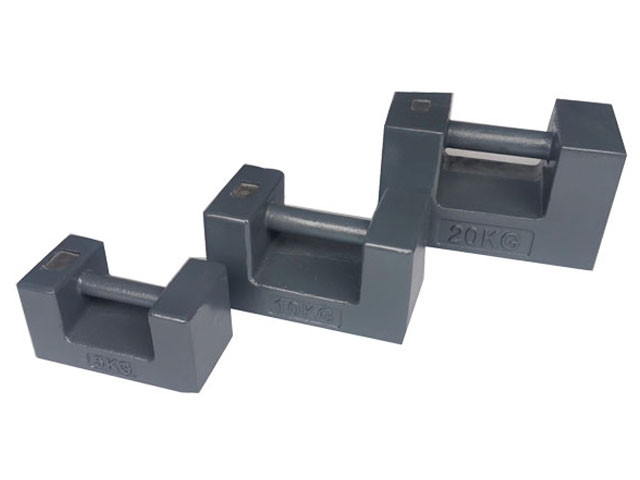
To understand the role of calibrated test weights, it is first necessary to grasp the concept of calibration itself. Calibration is the process of comparing a measuring instrument’s output to a known, accurate reference standard to determine any deviations or errors. For weighing instruments, this reference standard is precisely what calibrated test weights provide. Without such standards, there would be no way to verify if a scale is displaying the correct weight—leading to potential inaccuracies that could have far-reaching consequences. For instance, a slight error in a pharmaceutical scale could result in incorrect dosages of medication, posing serious health risks to patients. Similarly, in the food industry, an inaccurate scale might lead to underfilling or overfilling of products, harming both consumers and businesses. Calibrated test weights, therefore, act as the "benchmark" that ensures weighing instruments operate within acceptable limits of accuracy, underpinning the integrity of countless processes across various sectors.
Calibrated test weights come in a wide array of types, each tailored to specific applications, weighing ranges, and instrument types. One of the primary ways to categorize them is by their shape, as different shapes are suited to different weighing scenarios. Cylindrical weights are among the most common, featuring a simple cylindrical design with a hole or a handle for easy handling. They are ideal for general-purpose calibration, such as calibrating bench scales and floor scales used in retail stores, warehouses, and small manufacturing facilities. The cylindrical shape allows for stable placement on the weighing pan, reducing the risk of tipping and ensuring consistent measurement results.
Another common type is the cube-shaped weight, which offers a compact design and a larger contact area with the weighing pan. This increased contact area enhances stability, making cube weights particularly useful for calibrating precision balances in laboratories, where even the slightest instability can affect measurement accuracy. Cube weights are often used in applications requiring high precision, such as analytical chemistry and materials science research, where measurements must be accurate to the milligram or microgram level.
For specialized applications, such as calibrating hanging scales or dynamometers, hook-shaped or shackle-shaped weights are employed. These weights feature a built-in hook or shackle that allows them to be suspended from the instrument, simulating the actual loading conditions the instrument will encounter in use. This ensures that the calibration is relevant and accurate for the specific application, as the weight’s orientation and loading method match real-world usage. Additionally, there are flat weights, which are thin and lightweight, designed for calibrating small, delicate instruments like pocket scales or jewelry scales.
Beyond shape, calibrated test weights can also be categorized by their weight range. Weights span from extremely small values, such as micrograms (for analytical balances) to very large ones, such as metric tons (for industrial crane scales). Microgram and milligram weights are typically used in laboratory settings, where precise measurements of small quantities are critical. Gram and kilogram weights are more versatile, finding use in both laboratory and industrial environments. Ton-level weights, on the other hand, are massive and often used in heavy industries, such as mining, construction, and shipping, to calibrate scales that measure large loads like bulk materials or shipping containers.
The materials used in the construction of calibrated test weights are carefully selected to ensure stability, durability, and accuracy. The choice of material depends on the weight’s intended use, required precision, and environmental conditions. One of the most widely used materials is stainless steel. Stainless steel offers excellent corrosion resistance, making it suitable for use in harsh environments, such as humid laboratories, food processing facilities, or outdoor industrial sites. It is also highly durable, able to withstand repeated handling and use without significant wear or deformation. Additionally, stainless steel has a consistent density, which is crucial for maintaining the weight’s accuracy over time.
For applications requiring even higher precision, such as primary calibration laboratories (where national or regional measurement standards are maintained), weights made from non-magnetic materials like aluminum or titanium are preferred. Magnetic interference can affect the accuracy of sensitive weighing instruments, so non-magnetic weights are essential in environments where magnetic fields are present, such as near electrical equipment or in magnetic resonance imaging (MRI) facilities. These materials also offer good corrosion resistance and are lightweight, making them easier to handle for smaller weight ranges.
In some cases, weights made from brass or copper are used for general-purpose applications. These materials are less expensive than stainless steel or titanium, making them a cost-effective option for applications where extremely high precision is not required. However, brass and copper are more prone to corrosion, so they are best used in dry, controlled environments to maintain their accuracy. For very large weights, such as ton-level weights, materials like cast iron or concrete are used due to their high density and low cost. These materials can be easily cast into large shapes, making them suitable for calibrating heavy-duty scales.
The applications of calibrated test weights are vast and varied, touching nearly every industry where weight measurement is critical. In the pharmaceutical industry, for example, calibrated test weights are used to calibrate the scales and balances used in the formulation of medications. Ensuring the accuracy of these instruments is essential to ensure that each dose contains the correct amount of active ingredients, as incorrect dosages can render medications ineffective or even dangerous. Pharmacies also use calibrated test weights to calibrate their prescription scales, ensuring that patients receive the correct amount of medication as prescribed by their healthcare providers.
The food and beverage industry is another major user of calibrated test weights. Food manufacturers rely on accurate weighing to ensure product consistency, meet labeling requirements, and control costs. For instance, a snack food manufacturer might use calibrated test weights to calibrate the scales that measure the amount of potato chips placed in each bag, ensuring that each bag meets the weight specified on the label. Similarly, beverage manufacturers use calibrated test weights to calibrate the filling machines that measure the amount of liquid in each bottle or can. In addition, grocery stores and supermarkets use calibrated test weights to calibrate their checkout scales, ensuring that customers are charged correctly for the products they purchase.
In the field of scientific research, calibrated test weights are indispensable tools for ensuring the accuracy of experiments and measurements. In analytical chemistry, for example, researchers use precision balances calibrated with microgram or milligram weights to measure small quantities of chemicals, ensuring that reactions are conducted with the correct stoichiometry. In physics, calibrated test weights are used to study forces, masses, and gravity, providing the reference standards needed to validate theories and experimental results. Environmental scientists also use calibrated test weights to calibrate the instruments used to measure air and water pollution, ensuring that the data collected is accurate and reliable for environmental monitoring and policy-making.
The industrial sector is perhaps the largest user of calibrated test weights, with applications ranging from manufacturing and assembly to quality control and logistics. In manufacturing, calibrated test weights are used to calibrate the scales and balances used in the production process, ensuring that components are manufactured to the correct specifications. For example, an automotive manufacturer might use calibrated test weights to calibrate the scales that measure the weight of engine parts, ensuring that each part meets the design requirements for performance and safety. In quality control, calibrated test weights are used to verify the accuracy of finished products, ensuring that they meet the required weight standards before being shipped to customers.
Logistics and shipping companies also rely heavily on calibrated test weights to calibrate the scales used to measure the weight of packages and shipping containers. Accurate weight measurements are essential for determining shipping costs, as most shipping companies charge based on weight. Additionally, accurate weight measurements are required for compliance with safety regulations, as overloaded vehicles pose a significant risk to road safety. Calibrated test weights ensure that the scales used in warehouses, distribution centers, and shipping terminals are accurate, preventing overcharging and ensuring compliance with safety standards.
Proper use and maintenance of calibrated test weights are essential to ensure their accuracy and longevity. One of the most important considerations is handling. Calibrated test weights should always be handled with care to avoid damage, such as scratches, dents, or deformation, which can alter their weight and affect their accuracy. It is recommended to use gloves when handling precision weights to prevent the transfer of oils, dirt, or moisture from the hands, which can also impact accuracy. Weights should be lifted by their handles (if equipped) or using specialized tools, rather than being grabbed directly by the main body.
Storage is another critical factor in maintaining the accuracy of calibrated test weights. Weights should be stored in a clean, dry, and stable environment, away from extreme temperatures, humidity, and magnetic fields. Extreme temperatures can cause thermal expansion or contraction of the weight material, altering its weight. High humidity can lead to corrosion, especially for weights made from brass or copper. Magnetic fields can magnetize some weight materials, affecting the accuracy of sensitive weighing instruments. Weights should also be stored in a dedicated case or rack to prevent them from coming into contact with other objects, which could cause damage.
Regular inspection and re-calibration are also essential for calibrated test weights. Over time, even with proper handling and storage, weights can lose their accuracy due to wear, corrosion, or other factors. It is recommended to inspect weights regularly for signs of damage, such as scratches, dents, or discoloration. If any damage is detected, the weight should be taken out of service and re-calibrated or replaced. Re-calibration involves comparing the weight to a higher-level reference standard to determine if it still meets the required accuracy specifications. The frequency of re-calibration depends on the weight’s usage, environment, and required precision. For high-precision weights used in laboratory settings, re-calibration may be required annually or even more frequently. For general-purpose weights used in less demanding environments, re-calibration may be required every two to five years.
In addition to handling, storage, and re-calibration, it is also important to use the correct weight for the application. Using a weight that is too large or too small for the instrument being calibrated can lead to inaccurate results. For example, calibrating a small analytical balance with a large kilogram weight would not provide an accurate assessment of the balance’s performance at the microgram level. It is also important to ensure that the weight’s surface is clean before use, as dirt, dust, or debris can add to the weight and affect measurement accuracy. Weights can be cleaned using a soft, dry cloth or a mild cleaning solution (if necessary), but care should be taken not to damage the surface.
The future of calibrated test weights is closely tied to advancements in measurement technology. As weighing instruments become more precise and sophisticated, the demand for higher-precision calibrated test weights will continue to grow. For example, the development of nanotechnology has led to the need for weights that can be calibrated to the nanogram level, enabling the accurate measurement of extremely small quantities of materials. Additionally, the increasing use of automation in manufacturing and laboratory settings is driving the development of calibrated test weights that can be integrated with automated calibration systems, reducing the need for manual handling and improving efficiency.
Another trend in the field of calibrated test weights is the move towards digitalization. Digital weighing instruments are becoming more common, and there is a growing need for calibrated test weights that can be used with these instruments to ensure their accuracy. Some manufacturers are developing smart calibrated test weights equipped with sensors that can transmit data to digital instruments, enabling real-time calibration and monitoring. This digitalization also facilitates the tracking of weight calibration history, making it easier to manage and maintain calibration records for compliance purposes.
In conclusion, calibrated test weights are essential tools that play a vital role in ensuring the accuracy and reliability of weight measurements across a wide range of industries and applications. From pharmaceuticals and food production to scientific research and industrial manufacturing, these weights serve as the reference standards that underpin the integrity of countless processes. Their diverse types, materials, and applications reflect the varied needs of different sectors, while proper handling, storage, and re-calibration ensure their long-term accuracy and effectiveness. As measurement technology continues to advance, calibrated test weights will evolve to meet the growing demand for higher precision and greater integration with digital systems. Despite their simplicity, calibrated test weights remain an irreplaceable component of the global measurement infrastructure, ensuring that trust and reliability are maintained in every weight measurement.
