





Changzhou Veidt Weighing Co., Ltd. © 2022 ALL RIGHTS RESERVED Privacy Policy | Calibration Weight | Test Weights | Cast Iron Weights | Standard Weights | Laboratory Weights | XML | SITEMAP
NEWS LIST
Jewelry Scale Calibration Weight
Saturday 26th September 2026 Back to list
Jewelry scale calibration weights are essential precision tools designed to maintain the accuracy and stability of miniature weighing devices used exclusively in the jewelry industry. Given the ultra-high value of precious metals, gemstones, and finished jewelry products, even microscopic measurement deviations can trigger inconsistent weighing results, leading to unfair transaction outcomes and unreliable craft parameter records. These specialized weights serve as a fixed and reliable mass reference, correcting the subtle drift of electronic and mechanical jewelry scales that occurs with prolonged use, frequent operation, and environmental changes. Unlike ordinary daily objects with unstable mass, they are manufactured with rigorous precision control, providing a unified benchmark for scale verification and adjustment. Whether for professional jewelry trading, handmade jewelry production, or gemstone identification and sorting, calibrated weights lay the foundation for credible weighing data, ensuring every measurement result truly reflects the actual mass of jewelry materials and finished pieces.
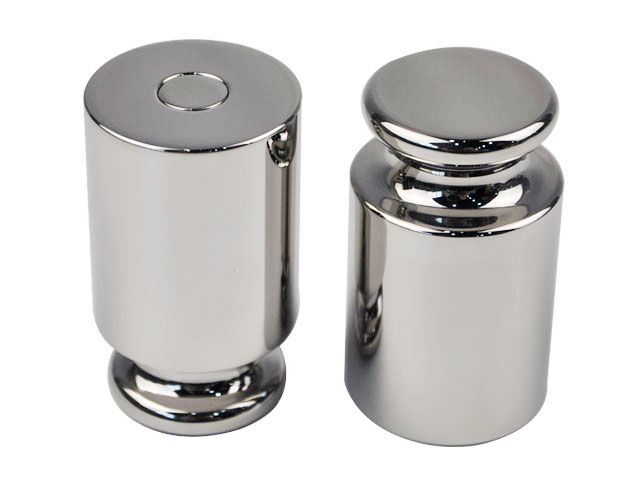
The core value of jewelry scale calibration weights lies in solving the inherent accuracy attenuation problem of precision weighing equipment. Most jewelry scales are high-sensitivity devices capable of capturing milligram-level changes, which makes them extremely susceptible to external interference and internal component fatigue. After long-term continuous use, the internal sensors and mechanical structures of the scale will gradually produce subtle offsets, causing the displayed data to deviate from the real mass. Daily factors such as frequent platform friction, slight vibration during placement, and temperature and humidity fluctuations in the working environment will further amplify this deviation. Calibration weights eliminate these errors by providing a constant, known standard mass. By placing the weight on the scale’s central weighing platform and comparing the reading with the standard mass value, users can identify scale inaccuracies and complete targeted calibration, restoring the equipment’s optimal weighing performance.
The structural and material design of jewelry calibration weights is tailored to the refined usage scenarios of the jewelry industry. Different from bulky industrial calibration weights, jewelry-grade calibration weights feature compact sizes and smooth, delicate surfaces, perfectly matching the small weighing pans of portable and desktop jewelry scales. The materials selected are characterized by stable physical properties, strong oxidation resistance, and low wear resistance, effectively avoiding mass changes caused by air oxidation, surface abrasion, or moisture erosion during long-term storage and use. This stable material performance ensures that the weight’s mass remains consistent for a long time, avoiding secondary errors caused by the calibration tool itself. In addition, the surface of qualified jewelry calibration weights is usually treated with fine polishing and anti-corrosion processing, which not only maintains measurement accuracy but also prevents dust and stain adhesion that may affect weighing results, adapting to the clean and precise working environment of jewelry production and trading.
Standardized use of calibration weights is a key step to ensure long-term reliable operation of jewelry scales, and standardized operation methods directly determine the calibration effect. Before calibration, users need to place the jewelry scale on a flat, stable horizontal surface to avoid tilting and shaking that may affect data stability, and let the equipment preheat and stand for a period of time to eliminate the influence of frequent startup and continuous operation. Meanwhile, the calibration weight and the scale weighing platform should be kept clean and dry, with no residual dust, fingerprints, or debris, as tiny attachments may cause non-negligible mass errors. During calibration, the weight must be gently placed in the absolute center of the weighing pan, avoiding contact with the scale’s surrounding edges and supports. After the scale reading stabilizes, follow the equipment’s prompt to complete parameter adjustment, so that the scale’s displayed value is completely consistent with the standard mass of the calibration weight.
Regular calibration with professional weights is crucial for maintaining the credibility of jewelry industry transactions and production quality control. In jewelry trading, the weight of gold, silver, platinum and various precious gemstones is the core basis for value evaluation. A tiny weighing error accumulated in long-term transactions will not only cause economic losses for buyers and sellers but also damage the credibility of merchants and practitioners. In handmade jewelry processing and customized production, accurate weighing of raw materials ensures the consistency of product proportion and finished product quality, avoiding defective products caused by mismatched material ratios. For gemstone classification and grading, precise weight data is an important reference for grade division and value positioning. Calibration weights provide stable and unified measurement standards for all these links, making every weighing result traceable and accurate.
Many practitioners underestimate the impact of environmental factors on jewelry scale accuracy and ignore the necessity of regular calibration. In actual working scenarios, changes in ambient temperature will cause slight thermal expansion and contraction of the scale’s internal precision components, and air flow and static electricity in the space will also interfere with sensor induction sensitivity. These subtle interferences cannot be identified by naked eyes, but will continuously affect the stability of weighing data. Using calibration weights for regular detection and calibration can effectively offset environmental interference errors and correct equipment drift problems in a timely manner. Even if the scale displays normal readings in daily use, potential accuracy deviations will gradually accumulate. Adhering to periodic calibration is the most effective way to maintain long-term measurement stability of precision jewelry scales.
The matching selection of jewelry calibration weights and scales directly affects the calibration efficiency and accuracy effect. Different types of jewelry scales have different maximum weighing ranges and precision levels, requiring corresponding specification calibration weights for matching use. Ultra-precise micro-scales for weighing small gemstones and fine jewelry accessories are adapted to lightweight calibration weights to meet milligram-level precision calibration needs, while conventional desktop scales for weighing bulk precious metal materials are matched with medium-mass calibration weights to complete full-range accuracy verification. Using a weight with an excessively large or small mass will fail to achieve an ideal calibration effect, unable to effectively detect the full-scale accuracy of the equipment. Reasonable selection of matching specifications ensures that the calibration process can cover the conventional weighing range of the scale, making the corrected equipment suitable for all daily jewelry weighing work scenarios.
Proper maintenance and storage of jewelry calibration weights are essential to extend their service life and ensure long-term measurement accuracy. As high-precision measuring auxiliary tools, calibration weights are extremely sensitive to external damage and contamination. Users should avoid direct hand contact with the weight surface during use, as sweat and grease on the skin will cause surface corrosion and mass change over time. It is recommended to use special tweezers or non-slip gloves to take and place weights. After each use, the weights should be wiped clean with a soft, dry cloth and placed in a sealed, dry storage box to isolate moisture, dust and corrosive gases in the air. In addition, weights should avoid collision, falling and extrusion to prevent surface deformation and internal structural changes that may cause mass deviation. Standardized maintenance habits ensure that calibration weights always maintain standard mass state and provide accurate reference for scale calibration.
In the increasingly refined and standardized jewelry industry, calibration weights have become an indispensable basic tool for every professional practitioner and institution. They are not only simple auxiliary accessories for weighing equipment, but also core guarantees for realizing precise measurement, standardized operation and credible transaction evaluation. With the continuous improvement of jewelry production refinement and transaction precision requirements, the demand for high-stability calibration weights and standardized calibration operations is also increasing. Insisting on using professional calibration weights for regular equipment calibration and maintaining standardized use and maintenance methods can effectively eliminate weighing errors, ensure the accuracy and consistency of all jewelry weighing links, and provide solid technical support for the standardized development of jewelry processing, trading and identification industries.
