





Changzhou Veidt Weighing Co., Ltd. © 2022 ALL RIGHTS RESERVED Privacy Policy | Calibration Weight | Test Weights | Cast Iron Weights | Standard Weights | Laboratory Weights | XML | SITEMAP
NEWS LIST
High Precision Calibration Weights
Saturday 26th September 2026 Back to list
High precision calibration weights are essential reference mass tools designed to verify, correct, and stabilize the accuracy of various weighing instruments across professional and industrial scenarios. Serving as the fundamental benchmark for precise mass measurement, these specialized weights eliminate systematic errors and deviations in weighing equipment, ensuring all measurement data remains consistent and reliable in long-term operational use. Unlike ordinary weighing accessories, high-precision calibration weights undergo rigorous manufacturing processing and surface treatment, with stable physical properties and minimal mass variation over time. They are widely adopted in scientific research laboratories, pharmaceutical production, fine chemical processing, electronic manufacturing, and quality inspection industries, where even tiny measurement errors can lead to flawed product batches, inaccurate experimental data, or failed quality verification. The core value of these weights lies in their ability to maintain exceptional mass stability and environmental adaptability, laying a solid foundation for standardized, precise, and traceable mass measurement work in various professional fields.
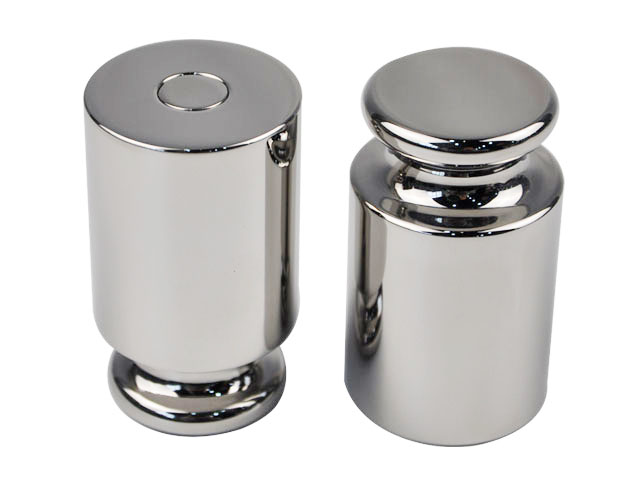
The material selection of high precision calibration weights is the core factor determining their measurement stability and service life, and professional manufacturing strictly prioritizes materials with excellent physical and chemical properties. Premium non-magnetic stainless steel alloys are the most mainstream material for high-end precision calibration weights, featuring ultra-low magnetic susceptibility, strong oxidation resistance, and outstanding corrosion resistance. This type of material can effectively avoid mass changes caused by environmental oxidation, moisture erosion, or subtle magnetic interference, which is critical for eliminating invisible measurement errors in high-sensitivity electronic balances and analytical weighing devices. In addition to stainless steel, carefully polished and surface-treated brass materials are also applied in medium-precision calibration scenarios, with high surface hardness and good wear resistance to withstand frequent daily calibration operations. Some special-scenario weights adopt high-density alloy materials, which achieve ideal mass volume ratios, reducing the physical size of high-mass weights while ensuring structural compactness. All materials used for high precision calibration weights are screened for uniform density and stable molecular structure, avoiding internal defects that may cause gradual mass drift during long-term use.
The manufacturing process of high precision calibration weights involves multiple refined processing steps, each designed to lock in precise mass and optimize overall performance. The entire production process starts with precise cutting and integral forming of raw materials, adopting one-piece molding technology to avoid structural gaps and mass inconsistencies caused by assembly splicing. After initial forming, each weight undergoes fine grinding and polishing treatment to create a smooth, flawless surface. A smooth surface prevents dust, moisture, and chemical residues from adhering to the weight surface, which could otherwise accumulate and alter the standard mass over time. Subsequent stress relief treatment eliminates internal structural stress generated during processing, preventing subtle deformation and mass deviation caused by temperature changes or long-term placement. The final stage involves fine mass adjustment through micro-processing, where professional operators precisely trim the weight to reach the target mass range through ultra-fine material removal. Every processing link is strictly controlled to minimize artificial and mechanical errors, ensuring each finished weight delivers consistent and reliable precision performance.
Environmental adaptability is a key advantage of qualified high precision calibration weights, enabling stable use in complex and variable working environments. Ordinary weighing accessories are easily affected by temperature, humidity, and air pressure changes, leading to subtle volume expansion and contraction or surface deterioration that distorts measurement accuracy. In contrast, high precision calibration weights are manufactured with temperature-resistant and moisture-resistant material characteristics, maintaining stable mass and structural performance within a wide temperature range. Their excellent surface anti-corrosion treatment resists erosion from trace chemical vapors, acidic and alkaline substances commonly found in laboratory and industrial production environments, avoiding surface corrosion and mass loss. Moreover, the non-magnetic design of high-grade calibration weights effectively shields external magnetic field interference, a crucial feature for precision calibration of high-sensitivity electronic weighing equipment that is highly susceptible to magnetic field influence. This superior environmental adaptability allows the weights to maintain long-term measurement stability without frequent replacement or repeated correction.
High precision calibration weights follow standardized application logic in practical use, with standardized operation directly affecting the accuracy of weighing equipment calibration. Before each calibration operation, users need to place the weights in the working environment for a period of time to achieve temperature balance with the ambient air, eliminating measurement errors caused by temperature differences between the weights and the equipment. During placement, the weights must be gently positioned on the center of the weighing platform to avoid lateral force and vibration interference, as eccentric placement or violent placement will produce instantaneous pressure deviations and affect calibration results. It is also necessary to keep the weight surface clean and dry before use, removing floating dust, water stains, or oil stains with professional cleaning tools, as tiny attachments will directly change the effective mass of the weights. In multi-point calibration operations, users need to select weights of different mass specifications according to the measuring range of the weighing equipment, completing full-range calibration step by step to ensure the weighing device maintains accurate measurement performance from low to high load.
Scientific daily maintenance and storage are indispensable to extend the service life and preserve the precision of high precision calibration weights. These precision accessories cannot be stored in open and humid environments, as long-term exposure to humid air will cause subtle oxidation on the metal surface, and dust accumulation will gradually affect mass accuracy. Professional sealed storage boxes with shock absorption and moisture-proof functions are the ideal storage choice, which can isolate external dust, moisture, and physical collision damage. It is strictly forbidden to touch the weight surface directly with hands during daily use and storage, as sweat, grease, and fingerprints left on the surface will cause slow chemical corrosion and mass change over time. After each use, the weights should be cleaned gently with professional neutral cleaning agents and soft cleaning cloths, then dried and placed back in a constant-temperature storage environment. In addition, severe vibration, extrusion, and high-temperature baking should be avoided, as external physical and high-temperature effects will damage the internal structural stability of the weights and cause irreversible precision loss.
The application scenarios of high precision calibration weights cover multiple high-requirement industries and scientific research fields, serving as the core guarantee of measurement accuracy in refined production and experimental research. In scientific research laboratories, they are used to calibrate analytical balances and precision weighing instruments, ensuring the accuracy of experimental data in material analysis, chemical testing, and physical research, and providing reliable data support for academic research and technological innovation. In the pharmaceutical and food processing industries, precise weighing is related to product formula accuracy and production safety, and these calibration weights help standardize the weighing of raw materials and finished products, avoiding product quality problems caused by inaccurate proportioning. In the electronic precision manufacturing industry, tiny component quality detection relies on high-precision weighing equipment, and regular calibration with professional weights ensures the consistency of component quality and improves product yield. Meanwhile, quality inspection and testing institutions rely on high precision calibration weights to complete the verification of various weighing devices, ensuring the fairness and accuracy of industry measurement standards.
With the continuous upgrading of refined manufacturing and precision scientific research technology, the performance requirements for high precision calibration weights are constantly improving, driving the continuous optimization of product design and production technology. Modern high-precision calibration weight manufacturing is developing towards higher stability, lower mass drift, and stronger environmental adaptability, with new alloy materials and refined processing technologies continuously applied to product production. The iterative upgrade of products further reduces subtle mass changes caused by long-term use and environmental interference, meeting the ultra-precise measurement needs of emerging fields such as new material research, microelectronic manufacturing, and biomedical testing. At the same time, the matching use and maintenance systems of calibration weights are becoming more standardized, helping users maximize the precision value of equipment and reduce measurement errors in production and research. As the basic guarantee of precise mass measurement, high precision calibration weights will always occupy an irreplaceable core position in modern industrial manufacturing and scientific research systems.
