





Changzhou Veidt Weighing Co., Ltd. © 2022 ALL RIGHTS RESERVED Privacy Policy | Calibration Weight | Test Weights | Cast Iron Weights | Standard Weights | Laboratory Weights | XML | SITEMAP
Product Category
Wheelchair Scale
In modern healthcare and daily assisted living environments, accurate body weight measurement stands as one of the most fundamental and indispensable components of physical health assessment, laying a critical foundation for disease diagnosis, treatment formulation, physical condition monitoring, and rehabilitation evaluation. For individuals with limited mobility, including those with physical disabilities, chronic illnesses, postoperative mobility impairment, and elderly people with weakened physical functions, traditional weighing equipment designed for standing users can no longer meet their basic measurement needs. These groups often struggle to stand independently for weighing, and frequent posture transfers not only consume massive physical strength of caregivers but also bring potential safety hazards such as falls, sprains, and physical discomfort to the users themselves. Under this practical demand, wheelchair scales have emerged as a specialized, humanized, and high-precision weighing device, perfectly adapting to the physical characteristics and activity limitations of wheelchair-bound users. Unlike conventional electronic scales and platform scales, wheelchair scales are professionally optimized for the structural characteristics of wheelchairs and the physical state of immobile patients, enabling users to complete full weight measurement while sitting stably in their wheelchairs without any posture adjustment or position transfer. This core functional advantage fundamentally changes the traditional weighing mode for mobility-impaired groups, greatly improving the safety, convenience, and efficiency of daily weight detection, and has gradually become an essential piece of auxiliary equipment in professional medical institutions, rehabilitation centers, and long-term care environments.
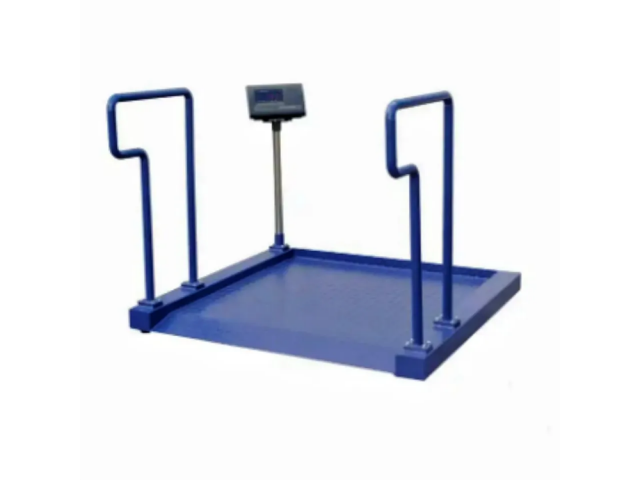
The core design logic of wheelchair scales revolves around user safety, measurement accuracy, and operational simplicity, with every structural and technical detail tailored to the actual use scenarios of vulnerable mobility groups. The overall structure of a standard wheelchair scale adopts an ultra-flat and wide platform design, effectively solving the problem of difficult wheelchair entry and exit faced by traditional high-platform weighing equipment. The flat transition structure eliminates height gaps between the ground and the weighing platform, allowing ordinary manual wheelchairs, electric wheelchairs, and rehabilitation wheelchairs to roll onto the weighing area smoothly and stably without bumping or tilting. This structural design not only protects the stability of wheelchair users during the entire weighing process and avoids physical jitters caused by bumpy movement but also prevents accidental collisions and structural wear of wheelchairs, extending the service life of auxiliary mobility equipment. Meanwhile, the weighing platform is equipped with a high-strength anti-slip treatment on the surface, which can effectively increase friction between the wheelchair wheels and the platform, completely avoiding wheelchair sliding and displacement even in the case of slight ground vibration or subtle body movement of the user, ensuring the absolute stability of the measurement environment and laying a solid foundation for high-precision weight data acquisition.
In terms of core weighing technology, modern wheelchair scales are equipped with advanced microprocessor sensing systems and intelligent motion compensation algorithms, which completely break through the accuracy limitations of traditional weighing devices that rely on static measurement. In actual use scenarios, most wheelchair users cannot maintain an absolutely static state during weighing; subtle body shaking, limb adjustment, respiratory fluctuation, and slight wheelchair displacement will interfere with the judgment of traditional weighing equipment, resulting in fluctuating and unstable measured data. The built-in high-sensitivity pressure sensors of wheelchair scales can capture subtle pressure changes on the platform in real time, and the supporting intelligent calculation chip can automatically screen, filter, and calibrate fluctuating data through built-in programs. It can effectively eliminate measurement errors caused by slight movements of users and wheelchairs, automatically lock the most accurate and stable weight value, and ensure that the measurement result is true and reliable even in a non-fully static environment. This intelligent sensing and data processing technology makes the weighing process more in line with the real physical state of users, avoiding the need for users to forcibly maintain a rigid static posture, greatly reducing their physical tension and discomfort during measurement.
The diversified functional design of wheelchair scales fully considers the complex and diverse needs of professional medical care and daily home care, realizing multi-scenario and multi-functional integrated application. One of the most practical core functions is the automatic tare weighing function, which solves the long-standing measurement pain point of wheelchair-bound users. Since users need to sit in wheelchairs for weighing, the total weight measured by the equipment includes the weight of the user’s body and the wheelchair itself. The intelligent tare system of the wheelchair scale can pre-store and automatically deduct the weight of various types of wheelchairs. Caregivers only need to perform a simple tare operation before formal measurement, and the equipment can automatically exclude the interference of wheelchair weight, accurately capture the pure body weight data of the user, and realize precise separation of human body weight and equipment weight. Some upgraded models also support one-key tare reset and multi-group weight data storage, which can adapt to the alternating use of multiple wheelchairs in public care environments, avoiding repeated debugging and setting, and greatly improving the efficiency of continuous measurement work.
Data visualization and intelligent transmission functions further enhance the professional application value of wheelchair scales in modern healthcare systems. Most mainstream wheelchair scales are equipped with high-definition high-brightness display screens, which feature large-font display, high contrast, and wide viewing angle design. The display interface can clearly present real-time weight data, stable locking values, and measurement status prompts, which is convenient for caregivers, medical staff, and users to quickly read data from multiple angles. The display part adopts a rotatable structural design in most cases, which can flexibly adjust the orientation according to the user’s sitting posture and the staff’s operating position, eliminating the problem of viewing dead angles. In addition to local data display, modern wheelchair scales are also compatible with intelligent data transmission functions, which can stably transmit measured weight data to terminal devices such as computers and professional medical management systems. This wireless and wired dual-channel transmission mode realizes automatic recording, real-time uploading, and cloud storage of health data, avoids manual recording errors and data loss, and facilitates medical staff to sort out, analyze, and track the long-term weight change curve of users, providing accurate data support for disease judgment and rehabilitation effect evaluation.
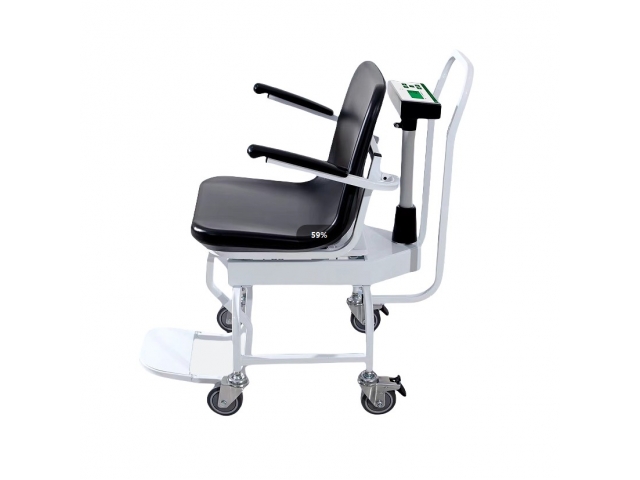
Portability and flexible layout performance make wheelchair scales adaptable to various complex use environments, breaking the spatial limitations of traditional fixed weighing equipment. Different from large fixed medical weighing instruments that are bulky and difficult to move, most wheelchair scales adopt a lightweight and modular integrated structural design, with reasonable overall weight distribution and flexible body structure. Some models are equipped with movable auxiliary casters and foldable structures, which can be easily pushed and transferred by a single caregiver, and can be folded and stored when not in use, occupying extremely small space. This flexible moving and storage capability enables the equipment to be freely switched between different rooms, wards, and functional areas, realizing on-site weighing services for users. For bedridden users who are inconvenient to move, caregivers can directly transfer the wheelchair scale to the bedside to complete the measurement, completely avoiding the risk of secondary injury caused by long-distance movement and posture transfer of users, and greatly improving the humanization and flexibility of health detection work.
The safety protection design of wheelchair scales runs through the whole product structure and use process, fully protecting the physical safety of vulnerable user groups. In terms of structural safety, the whole machine is made of high-strength and durable engineering materials, which have strong compression resistance, impact resistance, and deformation resistance, and can bear the weight of users and wheelchairs stably for a long time without structural deformation or equipment damage. The edge of the weighing platform adopts rounded corner polishing treatment, which completely avoids scratch and collision injuries caused by sharp edges during the movement of wheelchairs and personnel. In terms of use safety, the equipment has a built-in overload protection system, which can automatically trigger early warning prompts and stop data collection when the bearing weight exceeds the safe range, effectively preventing equipment damage caused by overload and safety accidents such as platform collapse. At the same time, the equipment circuit system has stable overcurrent and overvoltage protection functions, which can avoid circuit failure and equipment failure caused by unstable power supply, ensuring continuous and safe operation in long-term high-frequency use scenarios.
Antibacterial and easy-to-clean design is a key functional feature of medical-grade wheelchair scales, adapting to the high-standard hygiene and disinfection requirements of medical and care environments. In public healthcare places such as hospitals, rehabilitation centers, and nursing homes, weighing equipment is used frequently by different users, and the surface is extremely easy to attach bacteria, dust, and stains, which brings hidden dangers to cross-infection. The key contact parts and platform surfaces of wheelchair scales are treated with professional antibacterial technology, which can effectively inhibit the reproduction and growth of common harmful bacteria on the surface, maintain the hygiene of the equipment itself, and reduce the risk of bacterial cross-infection in the use process. Moreover, the integrated smooth surface design avoids dead corners of dirt accumulation, and the whole machine can be directly wiped and disinfected with conventional medical disinfectants and clean soft cloths. The simple and efficient cleaning and disinfection process meets the daily hygiene management standards of professional medical environments, ensures the health and safety of each user, and greatly reduces the daily maintenance workload of care staff.
Wheelchair scales have extremely wide application scenarios, covering professional medical treatment, rehabilitation training, elderly care, home health care, and many other fields, becoming an important tool for full-cycle health management of mobility-impaired groups. In hospital wards and outpatient departments, the equipment is mainly used for regular weight detection of patients with neurological diseases, limb injuries, postoperative paralysis, and chronic severe diseases. Real-time and accurate weight data can help doctors judge the patient’s physical metabolism, nutritional status, and disease recovery progress, and provide a basis for adjusting medication dosage, nutritional supplement schemes, and treatment plans. In dialysis departments, bariatric departments, and intensive care units, the high-precision measurement performance of wheelchair scales can capture subtle weight changes of patients, helping medical staff quickly judge physical abnormalities and grasp the best treatment time. In rehabilitation centers, long-term weight tracking data can evaluate the physical recovery effect of patients with limb dysfunction, provide data support for adjusting rehabilitation training intensity and schemes, and promote the orderly progress of rehabilitation treatment.
In long-term elderly care institutions, nursing homes, and home care scenarios, wheelchair scales play an irreplaceable role in daily health monitoring of the elderly and disabled people. Most elderly people with limited mobility and long-term wheelchair users have weak physical functions and slow metabolism, and subtle weight changes often reflect changes in physical health status, such as malnutrition, organ function decline, and abnormal water metabolism. Regular and accurate weight measurement through wheelchair scales enables caregivers and family members to timely grasp the health changes of users, detect potential health risks in advance, and carry out early intervention and care. For home-based mobility-impaired users, the portable and easy-to-operate features of wheelchair scales enable family members to complete professional weight detection at home without going out for medical treatment, realizing long-term continuous health monitoring, avoiding the delay of health problems caused by irregular detection, and greatly improving the convenience of family health management.
Standardized daily maintenance and scientific use specifications are key to ensuring the long-term stable operation and lasting measurement accuracy of wheelchair scales. In daily use, the equipment should be placed on a flat, dry, and stable ground environment to avoid long-term placement on uneven, humid, or vibrating ground, so as to prevent internal sensor displacement and structural deformation from affecting measurement accuracy. Before each use, it is necessary to simply check the flatness of the platform, the flexibility of the display screen, and the sensitivity of the keys, and perform zero calibration processing to ensure that the equipment is in the best working state. After each use, the surface stains and dust should be cleaned in time, and the residual moisture and disinfectant on the surface should be wiped dry to avoid long-term corrosion of the equipment surface and internal circuit components. In terms of power maintenance, rechargeable battery models need to be charged regularly to avoid long-term power loss leading to battery aging and damage; plug-in models need to check the integrity of the power line regularly to avoid circuit aging and leakage risks. In addition, regular professional calibration and overall equipment inspection can effectively eliminate potential failures, ensure the stability of long-term measurement data, and extend the overall service life of the equipment.
With the continuous progress of medical and health technology and the continuous improvement of social public care awareness, the functional performance and application value of wheelchair scales are constantly upgraded and expanded, becoming an important part of humanized medical care and precise health management. In the past, the weight detection of mobility-impaired groups often faced the problems of cumbersome operation, low safety, and inaccurate data, which made it difficult to form systematic and continuous health data records and affected the refinement of medical diagnosis and daily care work. The emergence and continuous optimization of wheelchair scales completely solve these industry pain points. Through humanized structural design, intelligent measurement technology, safe and hygienic material configuration, and flexible scene adaptation performance, it realizes safe, efficient, accurate, and convenient weight measurement for all wheelchair-bound users. In the future, with the further integration of intelligent sensing, big data analysis, and remote health monitoring technology, wheelchair scales will develop towards more intelligent, miniaturized, and multi-functional directions, realizing more refined health data monitoring and intelligent early warning functions. It will further empower the full-life-cycle health management of mobility-impaired groups, continuously improve the level of professional medical care and public welfare care, and bring more secure, convenient, and warm health protection to vulnerable groups with limited mobility.
