





Changzhou Veidt Weighing Co., Ltd. © 2022 ALL RIGHTS RESERVED Privacy Policy | Calibration Weight | Test Weights | Cast Iron Weights | Standard Weights | Laboratory Weights | XML | SITEMAP
Product Category
Slot Hook Weight
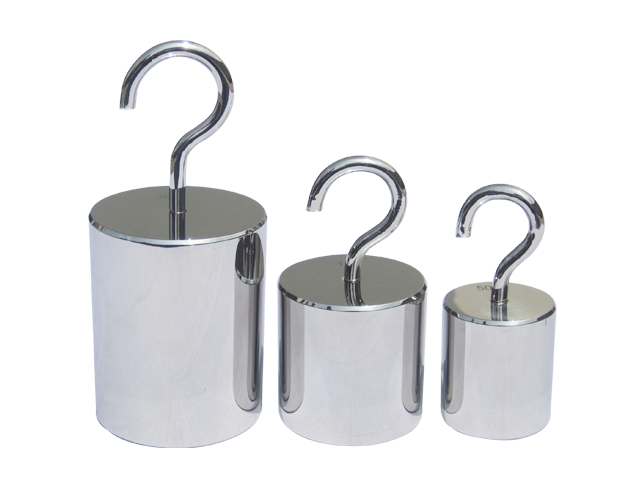
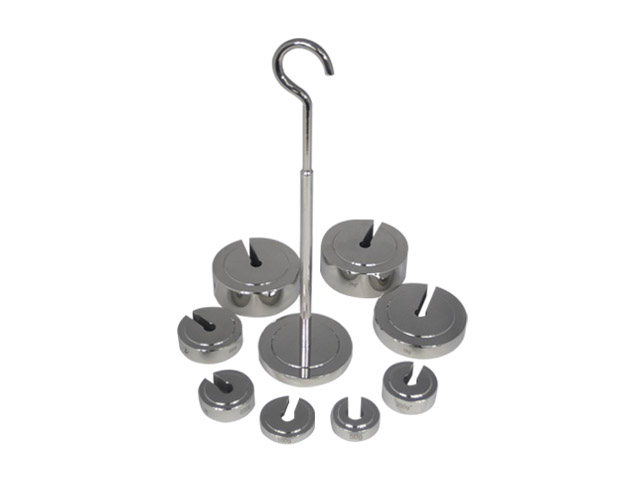
Veidt Weighing is a Slot Hook Weight factory in china. Slot hook weight is a precision measuring tool specially designed for hanging weighing, mainly used in laboratories, industrial production and other occasions that require high-precision measurement. Unlike ordinary weights, the characteristic of slot hook weights is that they have a special groove or hook structure designed at the top, which is easy to hang on a balance or force measuring device for measurement.
These types of weights are usually made of stainless steel, brass, or special alloy materials, and their surfaces are finely treated to prevent oxidation and corrosion, ensuring that they can maintain accurate weight even after long-term use. The accuracy level of modern slot hook weights can reach F1 level or even higher, meeting various precision weighing needs.
Unique design features of slot hook weights
Groove/hook design: The most prominent feature of the groove hook weight is the hanging structure at the top. The groove design facilitates stable suspension, while the hook design is more suitable for quick loading and unloading. Some high-end models use rotatable hooks to achieve multi angle suspension.
Anti slip texture: The side of the weight is often designed with anti slip texture or grooves for easy access and placement, while avoiding accidental drops caused by hand slippage.
Magnetic isolation: Some professional grade slot hook weights have built-in magnetic isolation layers to prevent external magnetic fields from interfering with weighing results, making them particularly suitable for use in electronic balance environments.
Temperature compensation: High end models will consider the metal expansion coefficient at different temperatures to ensure weight stability in various environmental temperatures.
The main application areas of slot hook weights
Laboratory research: Used in physics and chemistry experiments to calibrate precision scales and measure parameters such as material density and buoyancy.
Industrial production: applied in fields such as automobile manufacturing and aerospace, testing material strength and component load-bearing capacity.
Quality inspection: As a standard weight, it is used by the quality inspection department for regular calibration of various weighing equipment.
Teaching demonstration: Visually demonstrate mechanical concepts such as force balance and lever principle in physics teaching.
Medical equipment: used for calibrating precision medical scales to ensure the accuracy of drug ratios.
Classification and specifications of slot hook weights
Classified by accuracy level:
E1 level: highest accuracy, used for national metrological standards
E2 level: laboratory level standard
F1 level: Industrial grade high-precision
F2 level: General industrial use
M1 level: ordinary commercial use
Classified by Material:
Stainless steel series: corrosion-resistant, suitable for humid environments
Brass series: economical and practical, requiring regular maintenance
Titanium alloy series: High strength to weight ratio, suitable for special occasions
Plating series: Surface chrome or nickel plating to increase durability
Common specification range:
Micro: 1mg-500mg (for ultra precision measurement)
Small size: 1g-500g (commonly used in laboratories)
Medium size: 1kg-20kg (industrial use)
Large: 50kg or more (for special industrial applications)
Key points for the use and maintenance of slot hook weights
Correct usage method:
Use specialized tweezers or gloves for retrieval and placement, avoiding direct contact with hands
When hanging, ensure that the weight is vertical to avoid lateral forces affecting the measurement
Handle with care to prevent deformation due to impact
Weights of different precision levels cannot be mixed
Daily maintenance standards:
Regularly clean the surface using specialized cleaning agents and soft cloths
Store in a constant temperature and humidity environment
Avoid contact with corrosive substances
Regular inspection and calibration (recommended at least once a year)
Calibration cycle recommendation:
E1 level: 3 months
E2 level: 6 months
F1 level: 12 months
F2/M1 level: 24 months
Guide to purchasing slot hook weights
Determine the required parameters:
Required accuracy level
Usage frequency and environment
Weight range and combination requirements
Special functional requirements (such as anti magnetic, anti-corrosion, etc.)
Considerations for supporting equipment:
Match the load-bearing capacity and accuracy of the balance
Consider dedicated storage boxes and workbenches
Necessary auxiliary tools (tweezers, gloves, etc.)
As an important tool in the field of precision measurement, the design and technology of slot hook weights are still constantly developing. With the increasing precision requirements in manufacturing and advances in measurement technology, slot hook weights will continue to play an irreplaceable role in quality control, scientific research, and industrial production.
In the complex and interconnected ecosystem of modern industrial production, logistics operations, and precision measurement work, there are countless small but indispensable hardware components that play a pivotal role in maintaining operational stability, ensuring measurement accuracy, and supporting the smooth progress of daily work. Among these components, Slot Hook Weight and Calibration Weight stand out as two distinct yet complementary tools, each serving unique functional purposes across different industrial sectors, and together they form a subtle but critical link between heavy-duty operational support and precise metrological control. Unlike high-profile machinery or advanced electronic systems, these two weight-based components often operate behind the scenes, yet their reliable performance directly impacts the safety of production processes, the consistency of product quality, and the credibility of measurement data, making them essential assets in fields ranging from construction and manufacturing to laboratory research and material handling. To fully understand their significance, it is necessary to explore their structural design, core functions, application scenarios, daily maintenance requirements, and the unique value they bring to various industrial operations, as well as the ways in which they interact with broader industrial workflows to enhance overall efficiency and reliability.
Starting with Slot Hook Weight, this specialized weighted component is engineered to address the practical challenges of balance, stability, and load distribution in scenarios that involve hanging, lifting, or fixed installation operations. Unlike standard counterweights that lack integrated hook structures, Slot Hook Weight combines a solid weighted body with a precisely designed slot and hook mechanism, creating a versatile tool that can be quickly attached, positioned, and secured without the need for complex auxiliary fixtures. The design of the slot and hook is tailored to match common mounting points, lifting beams, and suspension systems used in industrial and construction settings, allowing for seamless integration into existing equipment setups. Typically manufactured from high-density, durable metal materials that offer consistent weight distribution and resistance to physical wear, Slot Hook Weight is built to withstand the rigors of daily use in harsh working environments, including exposure to minor impacts, temperature fluctuations, and outdoor conditions. The weighted body is crafted to maintain its structural integrity over extended periods, ensuring that its actual weight remains stable and does not degrade due to corrosion, material fatigue, or repeated handling. This combination of functional design and robust construction makes Slot Hook Weight a go-to solution for tasks that require targeted counterbalancing, such as stabilizing suspended scaffolding components, adjusting the balance of lifting equipment, preventing sagging or shifting of lightweight structural elements, and calibrating the tension of suspension systems in various construction and maintenance projects.
In practical daily operations, Slot Hook Weight finds extensive use across multiple industries that rely on suspended or balanced systems. In the construction industry, for example, it is commonly employed to counterbalance temporary suspended platforms, ensuring that these platforms remain level and stable even when workers move across them or carry tools and materials. By strategically placing Slot Hook Weight at specific points along the platform’s support structure, construction teams can eliminate uneven weight distribution that could lead to tilting, swaying, or potential safety hazards. In the field of material handling and warehouse logistics, Slot Hook Weight is used to stabilize hanging storage racks, prevent the swinging of suspended goods during transportation, and maintain the balance of conveyor system components that operate on a suspended track. Its easy-to-install hook design allows workers to add or remove weights quickly, adjusting the counterbalance effect in real time to match changing load conditions. Additionally, in theatrical and event production settings, where suspended lighting, sound equipment, and stage props require precise balance to avoid movement or instability during performances, Slot Hook Weight provides a reliable and adjustable solution for achieving perfect equilibrium. The key advantage of Slot Hook Weight lies in its adaptability; it can be used individually for small-scale balance adjustments or combined in sets to create a larger counterbalancing force for heavier loads, making it suitable for both minor fine-tuning tasks and heavy-duty operational support. Unlike fixed counterweights that are permanently attached to equipment, Slot Hook Weight offers portability and reusability, allowing it to be moved between different job sites and repurposed for multiple tasks, which enhances its practical value and reduces unnecessary resource waste in industrial operations.
When examining the performance characteristics of Slot Hook Weight, several key attributes set it apart from generic counterweight solutions. First and foremost is its consistent weight accuracy; each unit is manufactured to a specified weight standard, ensuring that users can rely on it to deliver a predictable counterbalancing force every time it is used. This consistency is crucial in applications where even a small deviation in weight could disrupt the balance of a sensitive system, leading to operational errors or safety risks. Second, the slot and hook mechanism is designed for secure attachment, with a smooth, rounded edge that prevents damage to suspension cables, support beams, or mounting brackets while ensuring that the weight stays firmly in place during operation. There is no risk of accidental dislodgment due to vibration or movement, which is a critical safety feature in high-altitude construction and heavy-load lifting scenarios. Third, the material composition of Slot Hook Weight prioritizes durability and longevity; the metal used is resistant to rust, oxidation, and surface wear, meaning it can maintain its performance and appearance even after years of use in demanding environments. This durability reduces the need for frequent replacements, making it a cost-effective choice for businesses that require reliable counterbalancing tools for ongoing operations. Furthermore, the compact and ergonomic design of Slot Hook Weight makes it easy to handle and store; it does not take up excessive space in toolboxes or on job sites, and its lightweight yet heavy-duty nature allows workers to carry multiple units without unnecessary physical strain. These combined characteristics make Slot Hook Weight a practical and efficient tool that addresses a wide range of counterbalancing needs, filling a unique niche in industrial and construction operations where precision, stability, and ease of use are equally important.
Shifting focus to Calibration Weight, this precision-engineered component serves an entirely different but equally vital purpose in the industrial landscape: providing a standardized reference for mass measurement to ensure the accuracy of weighing equipment across all sectors. Calibration Weight is a precisely manufactured mass standard, designed to have a known, stable weight value that serves as a benchmark for calibrating, verifying, and adjusting weighing instruments such as electronic scales, laboratory balances, industrial weighbridges, and portable weighing devices. Unlike Slot Hook Weight, which is designed for functional counterbalancing, Calibration Weight is crafted with meticulous attention to dimensional accuracy, material purity, and weight consistency, as even the tiniest deviation in its mass can lead to significant measurement errors in the equipment it calibrates. The production process of Calibration Weight follows strict manufacturing protocols to eliminate imperfections, with each unit undergoing rigorous testing to ensure that its actual mass matches its stated weight value within a narrow tolerance range. This level of precision is essential because weighing equipment is used in countless critical applications, from manufacturing raw material measurement and finished product quality control to pharmaceutical ingredient formulation, food processing portioning, and trade-related weight verification. Inaccurate weighing data can lead to wasted materials, inconsistent product quality, financial disputes in commercial transactions, and compromised safety in industries where precise ingredient ratios are non-negotiable, making Calibration Weight an indispensable tool for maintaining measurement integrity.
The design and material selection of Calibration Weight are carefully optimized to preserve its mass stability and measurement accuracy over time. Most high-quality Calibration Weight units are made from corrosion-resistant, non-magnetic metal alloys that are not affected by environmental factors such as humidity, temperature changes, or exposure to air, which could alter their mass. These materials are also resistant to scratches, dents, and surface contamination, as physical damage or foreign particles adhering to the weight can change its weight and compromise its calibration value. The shape of Calibration Weight varies depending on its intended use: smaller weights for laboratory balances often feature a compact, cylindrical design with a small handle for easy handling to avoid direct contact with the hands, which can leave oil residues or moisture that affect accuracy; larger industrial Calibration Weight units are designed with sturdy, stackable bodies that can be easily transported and placed on weighing platforms for calibrating heavy-capacity scales. Some Calibration Weight sets include a range of different weight values, allowing users to calibrate the full range of their weighing equipment, from small incremental measurements to maximum load capacity. This versatility ensures that weighing instruments can be accurately calibrated across their entire operating range, not just at a single point, which is critical for maintaining consistent measurement accuracy regardless of the load being weighed.
The application scope of Calibration Weight is incredibly broad, spanning every industry that relies on accurate weight measurement, and its role becomes even more critical in sectors where precision is a core requirement. In laboratory and research environments, Calibration Weight is used daily to calibrate analytical balances and precision scales, ensuring that scientific experiments, chemical testing, and material analysis produce reliable and reproducible results. Researchers depend on the accuracy of these measurements to draw valid conclusions, develop new products, and validate scientific hypotheses, making Calibration Weight a foundational tool for scientific progress. In manufacturing and industrial production facilities, Calibration Weight is used to calibrate production line scales that measure raw materials, monitor component weights during assembly, and verify the weight of finished products before they are shipped to customers. This calibration process ensures that products meet quality standards, comply with internal production specifications, and avoid underweight or overweight issues that could lead to customer dissatisfaction or regulatory complications. In commercial and retail settings, Calibration Weight is used to verify the accuracy of point-of-sale scales, ensuring that customers receive the correct quantity of goods and that businesses maintain fair trade practices. For logistics and transportation companies, Calibration Weight is essential for calibrating weighbridges and portable freight scales, ensuring that cargo weights are measured accurately to comply with transportation regulations and avoid overloading vehicles, which poses safety risks and can lead to operational delays. Even in agricultural operations, Calibration Weight is used to calibrate scales for measuring crops, fertilizers, and livestock feed, supporting efficient farm management and accurate yield calculation.
One of the most important aspects of Calibration Weight usage is the adherence to proper handling and maintenance practices, as these are critical to preserving its precision and extending its service life. Unlike ordinary tools, Calibration Weight requires careful handling to prevent physical damage and contamination; users are advised to handle it with clean, dry hands or use specialized tweezers or gloves to avoid transferring oils, dust, or moisture to the surface. When not in use, Calibration Weight should be stored in a dedicated, protective case that keeps it separate from other tools and prevents scratches or dents. Storage environments should be clean, dry, and free from extreme temperature fluctuations, as these factors can cause minor expansion or contraction of the metal, which may affect its mass over time. Regular inspection is also necessary to check for signs of wear, corrosion, or surface damage; any Calibration Weight that shows visible imperfections should be removed from service and re-tested to confirm its accuracy before being used again. Additionally, Calibration Weight should be periodically re-calibrated to ensure that its mass value remains consistent with international measurement standards, as long-term use and environmental exposure can cause minimal but cumulative changes that impact its precision. By following these maintenance protocols, users can ensure that Calibration Weight continues to provide reliable reference values for years, supporting consistent and accurate weighing operations across all applications.
While Slot Hook Weight and Calibration Weight serve distinct purposes, there are subtle intersections and complementary relationships between the two in certain industrial scenarios, highlighting their collective importance in maintaining operational efficiency and measurement accuracy. For instance, in industries that involve both heavy lifting operations and precise weight measurement, such as construction material manufacturing or metal fabrication workshops, Slot Hook Weight may be used to stabilize lifting equipment that handles raw materials, while Calibration Weight is used to calibrate the scales that measure those materials before processing. In this way, Slot Hook Weight ensures the safety and stability of the material handling process, while Calibration Weight guarantees the accuracy of the material measurement, creating a seamless workflow that balances operational safety and quality control. Another overlapping scenario is in equipment testing and maintenance, where Slot Hook Weight may be used to apply a controlled load to lifting or suspension systems to test their structural integrity, and Calibration Weight is used to verify the accuracy of the load-measuring devices used during those tests. This combination ensures that load testing is both safe (thanks to the stable counterbalancing of Slot Hook Weight) and accurate (thanks to the precise measurement reference of Calibration Weight), providing reliable data to assess equipment performance and safety.
Beyond their direct functional applications, both Slot Hook Weight and Calibration Weight contribute to broader industrial goals such as cost reduction, safety enhancement, and sustainable operations. For Slot Hook Weight, its durable construction and reusability reduce the need for frequent replacement of counterweight components, cutting down on maintenance costs and material waste for businesses. Its ability to prevent equipment imbalance and potential accidents also reduces the risk of workplace injuries, equipment damage, and costly operational downtime, making it a valuable investment in workplace safety. For Calibration Weight, its role in ensuring accurate weighing directly reduces material waste in production processes, as precise measurements prevent overuse of raw materials and minimize the production of defective products. Accurate weighing also eliminates financial losses from commercial disputes related to incorrect weight measurements, ensuring fair trade and maintaining positive business relationships. In addition, the use of Calibration Weight supports compliance with internal quality management standards and industry best practices, helping businesses build a reputation for reliability and consistency in their products and services. Together, these two components demonstrate how small, often overlooked hardware tools can have a far-reaching impact on the overall performance, safety, and profitability of industrial operations.
As industrial technology continues to evolve and operational requirements become more stringent, the demand for high-quality, reliable Slot Hook Weight and Calibration Weight remains steady, with ongoing advancements in their design and manufacturing to meet the changing needs of modern industries. Manufacturers of these components are continuously refining material formulations to enhance durability, weight consistency, and resistance to environmental factors, while also optimizing their design for greater ease of use and versatility. For Slot Hook Weight, this means developing more ergonomic hook and slot designs that fit a wider range of mounting systems and improve attachment security; for Calibration Weight, it means pushing the boundaries of precision manufacturing to achieve even tighter weight tolerances and better long-term stability. These advancements ensure that both components remain relevant and effective in an increasingly automated and precision-driven industrial landscape, where even minor improvements in performance can lead to significant gains in operational efficiency and measurement accuracy.
It is also important to recognize that the value of Slot Hook Weight and Calibration Weight extends beyond their immediate functional use; they represent a commitment to quality, safety, and attention to detail that is essential for sustainable industrial development. In a world where industrial operations are often focused on large-scale machinery and advanced technology, it is easy to overlook the small components that keep everything running smoothly, but these tools are a reminder that every element of a workflow plays a vital role in overall success. Whether it is a Slot Hook Weight keeping a suspended platform stable high above a construction site or a Calibration Weight ensuring the accuracy of a laboratory balance that supports life-saving research, these components work silently and reliably to support progress and safety across countless industries. They do not rely on complex electronics or advanced software to perform their functions, instead relying on thoughtful design, quality materials, and precise manufacturing to deliver consistent performance, making them a timeless and essential part of industrial infrastructure.
In conclusion, Slot Hook Weight and Calibration Weight are two indispensable industrial components that, despite their simple appearance, fulfill critical roles in ensuring operational stability, measurement accuracy, and workplace safety across a wide range of sectors. Slot Hook Weight excels in providing reliable counterbalancing and stability for suspended and lifting operations, offering adaptability, durability, and ease of use that make it a staple in construction, logistics, and maintenance work. Calibration Weight, on the other hand, serves as the foundation of precise mass measurement, providing a standardized reference that ensures the accuracy of weighing equipment in manufacturing, laboratories, commerce, and agriculture. While their functions are distinct, they complement each other in many industrial workflows, collectively supporting efficient, safe, and high-quality operations. As industrial practices continue to advance, the importance of these two components will only grow, as businesses and workers increasingly recognize that precision and stability at every level of operation are key to success. By investing in high-quality Slot Hook Weight and Calibration Weight, and adhering to proper usage and maintenance practices, industrial operations can enhance their safety protocols, improve product quality, reduce unnecessary costs, and maintain a standard of excellence that drives long-term growth and sustainability. These unassuming tools prove that in industry, every component matters, and even the smallest parts can make the biggest difference in the overall success and reliability of complex operational systems.
Learn more about slot hook standard weight, slot hook calibration weight, slot hook unit weight, stainless steel slot hook weight, cast iron slot hook weight, slot hook weight set, slot hook weight for balance, slot hook weight tolerance, slot hook weight specification, slot hook weight measurement, slot hook weight verification, slot hook weight calibration procedure, slot hook weight per piece, high precision slot hook weight, slot hook weight for weighing scale, slot hook weight for crane, slot hook weight for lifting equipment, slot hook weight deviation, slot hook weight certificate, slot hook weight maintenance, slot hook weight material, slot hook weight load capacity, slot hook weight for industrial use, slot hook weight for laboratory, slot hook weight for retail scales, slot hook weight legal metrology, slot hook weight traceability, slot hook weight adjustment, slot hook weight testing standard, slot hook weight comparison, slot hook weight for conveyor system, slot hook weight for production line, slot hook weight for panel assembly, coated slot hook weight, slot hook weight for spring scale, slot hook weight for tension meter, slot hook weight customization, slot hook weight packaging, slot hook weight shipping standard, slot hook weight gross weight, slot hook weight net weight, slot hook weight for calibration equipment, slot hook weight compliance standard, slot hook weight benchmark, slot hook weight for heavy-duty machinery, slot hook weight for quality inspection, slot hook weight storage method, slot hook weight replacement parts, slot hook weight for international calibration, pls contact us.
