





Changzhou Veidt Weighing Co., Ltd. © 2022 ALL RIGHTS RESERVED Privacy Policy | Calibration Weight | Test Weights | Cast Iron Weights | Standard Weights | Laboratory Weights | XML | SITEMAP
NEWS LIST
Industrial Bench Scale
Friday 09th October 2026 Back to list
Industrial bench scales are compact, high-precision weighing devices designed for desktop industrial operations. Integrating advanced sensor technology and durable structural design, they deliver stable and accurate weight data for production inspection, packaging, and material sorting, serving as fundamental equipment for daily industrial quality and efficiency control.
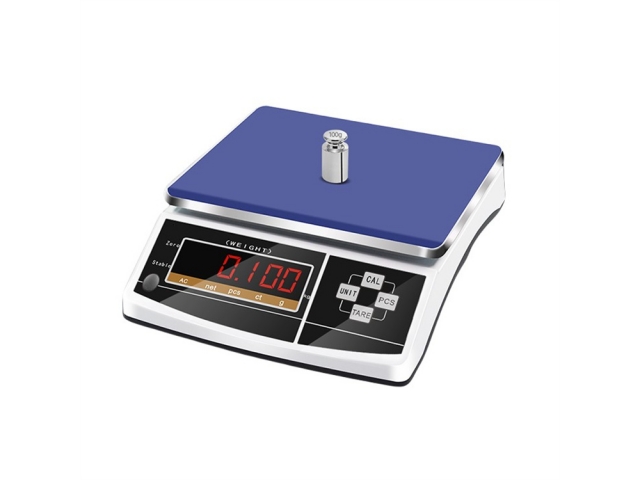
As essential desktop weighing equipment in modern industrial scenarios, industrial bench scales stand out for their perfect balance of compact structure and professional weighing performance. Unlike large floor-mounted weighing devices suitable for heavy cargo measurement, these scales are tailored for bench-top working environments, adapting to limited operating spaces in production workshops, quality control rooms, and packaging stations. Their overall structure is highly integrated, combining a flat weighing platform, internal sensing components, digital processing modules, and intelligent display terminals into a unified portable unit. This structural design not only saves valuable workshop space but also allows operators to complete weighing operations at close range, greatly improving the convenience of daily batch detection and sampling inspection. Whether for routine material weighing before production or finished product verification after processing, these scales can quickly respond to operational needs and provide stable measurement support for standardized industrial workflows.
The core working mechanism of industrial bench scales relies on high-performance load cell sensing technology, which determines their excellent measurement accuracy and operational stability. Most mainstream industrial bench scales adopt strain gauge sensing principles. When objects are placed on the weighing platform, the platform bears pressure and transmits subtle mechanical deformation to the internal strain gauges. This deformation changes the resistance value of the strain gauges, thereby adjusting the internal current and generating weak analog electrical signals. The built-in analog-to-digital conversion module of the scale instantly converts these collected analog signals into identifiable digital signals, which are further optimized and calibrated by the built-in microprocessor. After eliminating subtle interference from environmental factors, the system converts the processed signals into intuitive weight values and displays them on the high-definition screen. The whole signal conversion and calculation process is completed in milliseconds, ensuring both rapid response and high precision of each weighing result.
Durable structural construction is a key advantage of industrial bench scales, enabling them to adapt to complex and harsh industrial working environments. The weighing platform is mostly made of high-strength stainless steel or industrial alloy materials, which have excellent corrosion resistance, impact resistance, and wear resistance. These materials can effectively resist damage from industrial dust, liquid splashes, and frequent friction during long-term continuous operation, avoiding platform deformation that affects weighing accuracy. The internal core components are equipped with professional shockproof and anti-interference structures, which can buffer vibration impacts generated by on-site mechanical equipment operation and reduce the interference of electromagnetic signals on data transmission. The shell adopts an integrated sealing design, which prevents dust and moisture from entering the interior and protects the precision sensing and circuit modules. Such robust construction ensures that the scale can maintain stable working performance during long-term uninterrupted industrial operation and extend its overall service life.
Industrial bench scales support a wide range of weighing capacities and flexible functional configurations, meeting diversified industrial measurement demands. In terms of weighing range, the equipment covers multiple intervals from small precision measurement to medium-load weighing, which can adapt to the detection of tiny precision parts, conventional industrial accessories, and packaged finished products. In addition to basic weight display functions, it integrates multiple practical intelligent functions required for industrial operations. The tare clearing function can automatically deduct the weight of packaging boxes, trays, and other containers, realizing accurate net weight measurement of materials. The cumulative weighing function can record and summarize the weight of multiple batches of goods continuously, which is convenient for statistical sorting of batch materials. The component counting function can calculate the number of small parts through unit weight conversion, greatly improving the efficiency of manual counting and reducing statistical errors in industrial inventory management.
Intelligent data transmission and system compatibility make industrial bench scales an important part of intelligent industrial production. Modern industrial bench scales are equipped with diverse data interface modules, which can realize stable data transmission with terminal devices such as computers, printers, and industrial control systems through multiple connection modes. The real-time weighing data can be directly uploaded to the production management system to realize automatic recording, sorting, and archiving of measurement information, completely changing the traditional manual recording mode that is inefficient and prone to errors. While supporting wired stable transmission, many optimized models also support wireless data transmission, which breaks the limitation of wire distance and facilitates flexible mobile operation in multi-area workshop environments. This seamless data docking capability realizes the integration of weighing links and production, inventory, and quality management links, laying a foundation for digital and intelligent industrial production management.
The application scenarios of industrial bench scales cover multiple links of industrial production and operation, with strong practicality and universality. In the processing and manufacturing industry, they are used for raw material proportioning and semi-finished product testing, ensuring consistent material usage and stable product quality in each production link. In the packaging and logistics industry, the equipment is applied to finished product weighing before delivery, realizing weight inspection of packaged goods to avoid unqualified products caused by insufficient or excessive loading. In quality inspection departments, staff use the scales for random sampling inspection of products, providing accurate data support for product quality evaluation and qualification screening. In warehouse inventory management, the scales assist in weight statistics of stored materials and parts, realizing precise inventory counting and helping enterprises optimize material scheduling and resource allocation.
Operation simplicity and humanized design greatly reduce the use threshold of industrial bench scales and improve on-site work efficiency. The equipment is equipped with a high-clear digital display screen with high brightness and wide viewing angle, which can clearly display weight data even in strong light or dim workshop environments, ensuring operators can quickly read accurate values. The physical buttons or touch control panels are designed in line with industrial operation habits, with simple and intuitive functional partitions, enabling staff to master basic operation steps in a short time without professional training. The equipment also has automatic zero tracking and overload protection functions. It can automatically correct tiny zero drift caused by environmental changes, and automatically trigger protection prompts when exceeding the weighing range, effectively avoiding equipment damage caused by overload operation and reducing the failure rate of daily use.
Environmental adaptability is another important feature of industrial bench scales, ensuring stable operation in complex industrial environments. The equipment can maintain accurate measurement performance within a conventional temperature and humidity fluctuation range, adapting to the variable temperature and humid environment of production workshops. The internal circuit modules have undergone professional anti-electromagnetic interference processing, which can resist the signal interference generated by surrounding industrial equipment such as motors and electrical appliances, avoiding data jitter and inaccurate measurement results. Meanwhile, the dust-proof and splash-proof structural design enables the equipment to work stably in dusty workshops and slightly humid processing environments, without frequent failure or accuracy deviation due to environmental factors. This excellent environmental adaptability ensures the continuity and stability of industrial weighing work and avoids production delays caused by equipment adaptation problems.
Regular maintenance and standardized use can effectively prolong the service life and maintain the long-term accuracy of industrial bench scales. Daily maintenance mainly includes regular cleaning of the weighing platform to remove accumulated dust, residual materials, and stains, preventing foreign matter from affecting the contact state of the platform and sensing components. Operators need to avoid placing overweight items on the equipment for a long time and prevent sharp objects from scratching or impacting the platform to keep the structural integrity of the equipment. Regular calibration is also essential; periodic accuracy calibration can eliminate subtle measurement errors caused by long-term use and environmental changes, ensuring the consistency and reliability of weighing data. In addition, regular inspection of data interfaces and circuit connections can avoid poor contact and ensure stable data transmission and normal equipment operation.
With the continuous upgrading of industrial intelligent manufacturing technology, industrial bench scales are also evolving towards higher precision, stronger intelligence, and better integration. Future optimization directions include more sensitive sensing components to achieve ultra-precision measurement of micro-weight objects, more intelligent algorithm systems to realize automatic identification and adaptive detection of different materials, and more open system interfaces to adapt to more complex industrial intelligent management systems. As a basic industrial measuring device, industrial bench scales will continue to play an irreplaceable role in improving production standardization, ensuring product quality, and promoting digital upgrading of industrial production, becoming an indispensable auxiliary tool for modern industrial efficient operation.
