





Changzhou Veidt Weighing Co., Ltd. © 2022 ALL RIGHTS RESERVED Privacy Policy | Calibration Weight | Test Weights | Cast Iron Weights | Standard Weights | Laboratory Weights | XML | SITEMAP
NEWS LIST
Digital Bench Scale
Friday 09th October 2026 Back to list
Digital bench scales are compact, high-precision electronic weighing devices designed for desktop use across commercial, laboratory and industrial scenarios. Featuring advanced sensor technology and digital processing systems, they deliver fast, accurate weight readings with user-friendly functions and durable structural design for daily and professional weighing tasks.
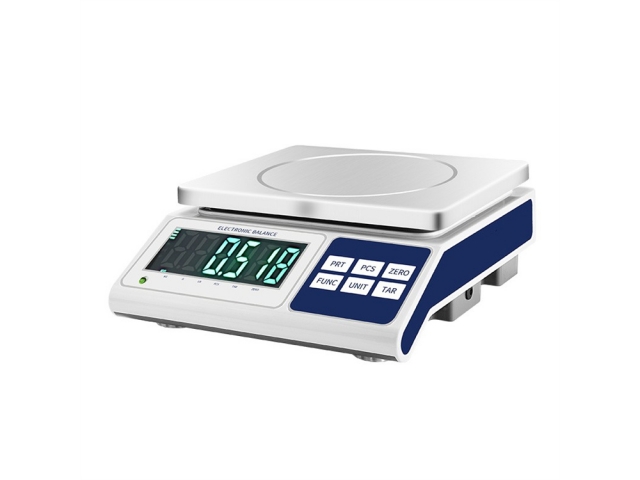
Digital bench scales stand out from traditional mechanical weighing tools mainly due to their core electronic sensing system, which lays the foundation for their superior weighing performance. At the heart of each device lies a high-sensitivity load cell embedded with precision strain gauges, the key component that realizes mechanical-to-electrical signal conversion. When an object is placed steadily on the scale’s weighing platform, the slight pressure generated by the object’s weight triggers tiny elastic deformation of the load cell. This microscopic deformation immediately alters the electrical resistance of the internal strain gauges, producing a subtle analog electrical signal that corresponds proportionally to the object’s actual weight. Built-in circuit modules then capture and transmit this signal to the integrated microprocessor, which processes, calibrates and converts the original analog data into intuitive digital weight values within milliseconds. This entire automatic operation process eliminates the manual reading errors common in mechanical scales, ensuring every measurement result is stable and repeatable even during long-term continuous use.
The structural design of modern digital bench scales focuses on a perfect balance of durability, practicality and ease of maintenance, adapting to various complex usage environments. Most weighing platforms are crafted from high-quality stainless steel materials, which boast excellent corrosion resistance, wear resistance and oxidation resistance. This material choice not only prevents surface damage from long-term friction, liquid splashes or material contact but also enables effortless cleaning, making the scales suitable for scenarios with strict hygiene requirements. The base of the scale adopts a reinforced rugged structure with anti-slip foot pads installed at the bottom, which effectively fixes the device position, prevents sliding during weighing, and buffers subtle vibrations from the external environment that may affect measurement accuracy. The overall compact desktop structure saves valuable workspace, allowing the scale to be flexibly placed on workbenches, laboratory tables and operating counters without occupying excessive space. Meanwhile, the streamlined integrated design reduces internal structural gaps, lowering the risk of dust and debris accumulation and extending the service life of internal precision components.
Equipped with intuitive and humanized display and operation systems, digital bench scales greatly simplify the weighing operation process for users of all skill levels. The devices are fitted with high-definition LCD or LED digital display screens that present weight data in clear, large fonts, enabling users to read accurate values quickly even in dim light or long-distance viewing conditions. Unlike mechanical scales that require visual alignment of pointers and scales, the digital display directly outputs precise numerical results, completely avoiding visual deviation and reading ambiguity. The simple button operation panel integrates all core functional keys, supporting one-key tare zeroing, unit switching, data holding and other commonly used functions. The tare function is particularly practical, allowing users to automatically deduct the weight of containers, packaging or auxiliary tools, so as to accurately obtain the net weight of target items. The data hold function can lock the measured weight value on the screen after weighing, facilitating users to record data or replace measured items without missing key information.
Diverse intelligent extended functions make digital bench scales highly adaptable to multi-scenario and multi-purpose weighing needs beyond basic weight measurement. One of the most widely used auxiliary functions is piece counting, which enables the scale to calculate the total quantity of batch small parts by sampling the weight of a single item. This function replaces tedious manual counting work, greatly improving the efficiency of inventory statistics, accessory sorting and batch material inspection. The percentage weighing function is another practical feature, which can set a standard weight value in advance and display the proportion of the measured item relative to the standard value, helping users quickly screen unqualified products and control product uniformity. In addition, most modern digital bench scales support multi-unit conversion, freely switching between different weight measurement units to meet the diverse statistical and recording habits of different industries. These intelligent functions integrate measurement, calculation and screening, turning a single weighing tool into a comprehensive data processing auxiliary device.
Excellent measurement stability and anti-interference performance ensure the long-term reliable operation of digital bench scales in daily and professional work scenarios. In actual use, external factors such as slight environmental vibration, air flow and temperature change often affect weighing accuracy, but the built-in intelligent anti-interference program of digital bench scales can effectively filter these subtle interferences. The internal microprocessor is programmed with adaptive calibration algorithms, which can automatically fine-tune measurement parameters according to minor environmental changes to maintain consistent weighing precision. After long-term use or frequent repeated weighing, the device can also maintain stable data output without frequent manual calibration. Even in scenarios with continuous high-frequency weighing operations, the scale will not produce data drift or inaccurate readings due to equipment fatigue. This stable performance ensures the consistency and credibility of measurement data, which is crucial for industries that require strict data standardization and repeatable detection results.
Digital bench scales have become indispensable basic equipment in laboratory research and testing fields due to their high precision and stable performance. In scientific research experiments, precise weight data is the basic guarantee for accurate experimental results, and digital bench scales can meet the fine measurement requirements of various experimental samples, from tiny reagent particles to medium-sized experimental materials. Researchers can use the scale to accurately weigh experimental raw materials, configure experimental proportions and record sample weight changes before and after reactions, providing reliable data support for experimental data analysis and result verification. In quality testing links, the scale is used to detect the weight compliance of test samples, screen unqualified samples that do not meet preset weight standards, and assist laboratories in completing product performance testing and quality evaluation. The fast response speed of the scale also improves the overall efficiency of experimental testing, shortening the waiting time for data reading in batch testing work.
Commercial and logistics industries also rely heavily on digital bench scales to optimize daily operation processes and improve work efficiency. In commodity packaging, sorting and warehousing links, staff use digital bench scales to weigh packaged goods, ensure the net weight compliance of single products, and avoid insufficient or excessive filling problems. For batch inventory management, the piece counting and statistical functions of the scale help staff quickly count and sort goods, realize efficient inventory checking, and reduce manual counting errors and time costs. In express and logistics sorting scenarios, the compact and portable features of the scale enable flexible weighing of small and medium-sized parcels, providing accurate weight basis for parcel billing and sorting classification. The simple operation mode allows front-line staff to get started quickly without complex training, effectively improving the overall operating efficiency of commercial and logistics front-line work.
The food and catering industry benefits greatly from the hygienic design and precise measurement capabilities of digital bench scales. Food processing and catering production have strict requirements on material proportioning and hygiene management, and the stainless steel platform of the scale is easy to clean and disinfect, effectively avoiding residual material contamination and meeting industry hygiene standards. In food processing factories, staff use the scale to accurately weigh raw materials, auxiliary materials and additives, ensuring the precise proportion of each ingredient in the production formula, so as to stabilize product taste and quality consistency. In bakery, beverage and catering production scenes, accurate weighing of ingredients helps standardize production processes, reduce material waste caused by inaccurate proportioning, and control production costs. At the same time, the zero-tare function can adapt to various container weighing needs, realizing convenient and fast measurement of different food materials.
With the continuous upgrading of industrial intelligent manufacturing, digital bench scales are gradually realizing efficient data connection and intelligent system integration. Many modern digital bench scales are equipped with diversified data transmission interfaces, which can stably connect with computers, data terminals and industrial management systems. The measured weight data can be automatically uploaded and stored in the system, realizing real-time data recording, statistical analysis and traceability management, completely changing the traditional manual recording mode that is inefficient and prone to errors. In automated production lines, the scale can cooperate with other intelligent equipment to complete automatic weighing, screening and data reporting of products, realizing unmanned operation of partial production links. This intelligent connection ability makes the scale an important part of industrial data collection and intelligent production, helping enterprises realize refined production management.
Compared with traditional mechanical bench scales, digital bench scales have obvious comprehensive advantages in use experience and application value. Mechanical scales rely on mechanical pointer transmission, which is prone to mechanical wear, pointer jitter and reading deviation after long-term use, while digital bench scales adopt fully electronic measurement and transmission, with no mechanical wear parts, reducing equipment failure rate and maintenance cost. The response speed of digital scales is far faster than that of mechanical equipment, which can complete stable weighing and data output in a very short time, suitable for high-frequency operation scenarios. In addition, digital bench scales have richer functional expansion and stronger environmental adaptability, which can meet the differentiated needs of multiple industries. Their compact structure, low energy consumption and long service life also make them more cost-effective in long-term use.
As industrial refinement, commercial standardization and laboratory precision research continue to advance, the market demand for digital bench scales will keep growing, and the equipment itself will usher in continuous technological optimization. Future upgrading directions will focus on higher measurement precision, more stable anti-interference performance and more diversified intelligent functions, adapting to increasingly complex and refined weighing scenarios. Meanwhile, the integration of wireless transmission, intelligent data analysis and remote monitoring functions will further enhance the intelligent level of the scale, making it more suitable for modern intelligent production and precise management. With its reliable performance and flexible applicability, digital bench scales will continue to serve as a core basic weighing device in various industries, providing stable and accurate measurement support for daily production and professional research work.
