





Changzhou Veidt Weighing Co., Ltd. © 2022 ALL RIGHTS RESERVED Privacy Policy | Calibration Weight | Test Weights | Cast Iron Weights | Standard Weights | Laboratory Weights | XML | SITEMAP
Product Category
Precision Balance
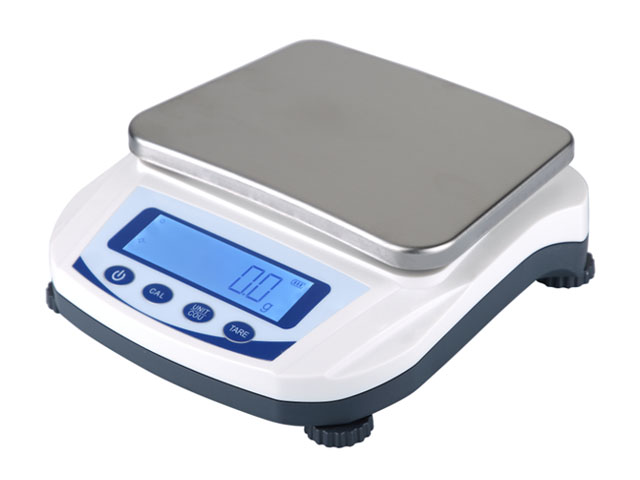
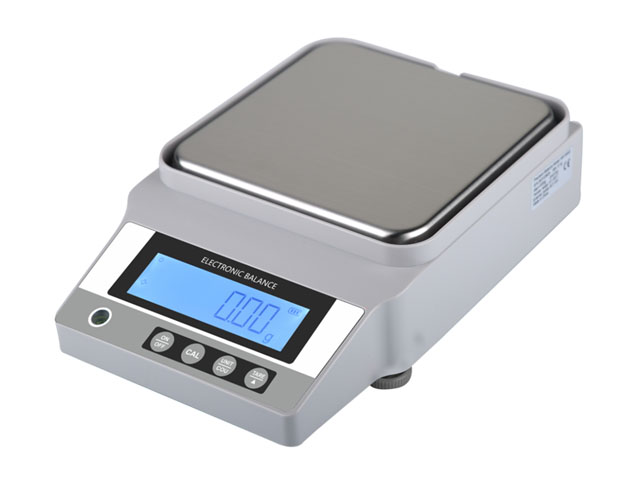
Precision balances stand as indispensable high-precision weighing instruments widely deployed in scientific research, industrial manufacturing, pharmaceutical production, agricultural testing, and daily laboratory analysis, serving as a core tool for accurate mass measurement in fine quantitative work. Unlike ordinary commercial scales and industrial platform scales that prioritize load capacity over measurement fineness, precision balances are engineered to balance reliable weighing accuracy, stable operational performance, and flexible application adaptability, filling the functional gap between ultra-high-precision analytical balances and conventional general-purpose weighing equipment. These instruments are designed to capture subtle mass changes of objects, enabling quantitative analysis and quality detection that require strict data accuracy, and their overall operational stability and measurement repeatability lay a solid foundation for standardized experimental operations and industrial quality control. In practical application scenarios, precision balances are favored by professional users for their moderate measurement range, accessible operating threshold, and durable structural performance, becoming one of the most commonly used basic instruments in modern precision measurement systems.
The classification of precision balances follows multiple dimensional standards, with functional positioning, measurement accuracy grade, and structural design being the most mainstream classification methods, forming a complete product matrix adapted to diverse application scenarios. In terms of measurement precision and resolution, precision balances can be divided into conventional precision balances, high-resolution precision balances, and multi-range adjustable precision balances, each with distinct applicable measurement scenarios and data output characteristics. Conventional precision balances feature moderate resolution, usually meeting the basic fine weighing needs of routine laboratory experiments and industrial sampling detection, with stable data output and low environmental adaptability requirements. High-resolution precision balances adopt optimized internal sensing structures and signal processing systems, capable of capturing smaller mass changes and delivering more refined measurement data, suitable for semi-micro sample weighing and high-precision formulation proportioning. Multi-range adjustable precision balances integrate multiple weighing modes, allowing users to switch measurement ranges and resolution levels according to sample weight, effectively solving the problem of single functional limitation of traditional single-mode weighing equipment and improving the overall utilization efficiency of the instrument.
From the perspective of structural form, precision balances are mainly categorized into top-loading precision balances and enclosed precision balances, which differ significantly in structural layout, anti-interference ability, and application environments. Top-loading precision balances adopt an open platform structure with the weighing pan exposed directly to the external environment, featuring simple structure, convenient sample placement and cleaning, and fast weighing response speed. This structural type is more suitable for weighing large-volume, non-volatile, and non-dust-prone samples, and is widely used in industrial production line sampling, agricultural grain detection, and daily reagent proportioning. Enclosed precision balances are equipped with a fully enclosed or semi-enclosed windproof cover, which can effectively isolate the interference of external air flow, dust, and subtle temperature changes on weighing results. Although their operation steps are slightly more complicated, their measurement stability and data repeatability are significantly improved, making them ideal for weighing lightweight, easily disturbed, and high-precision required samples in professional laboratory environments.
The material selection of precision balances directly determines their structural stability, wear resistance, anti-corrosion performance, and long-term measurement accuracy, and all core components are made of high-precision, high-stability professional materials after strict screening. The weighing pan, as the direct bearing component of the sample, is mostly made of high-grade stainless steel alloy materials, which have excellent corrosion resistance, oxidation resistance, and mechanical hardness. This material can resist the erosion of common chemical reagents, acidic and alkaline substances, and daily dust pollution, and is not easy to deform after long-term bearing, ensuring the flatness of the weighing surface and the consistency of bearing force, thus avoiding measurement errors caused by structural deformation. Some high-end models adopt polished stainless steel or special alloy coating treatment on the surface of the weighing pan, which further enhances anti-fouling performance and facilitates daily cleaning and maintenance.
The internal core sensing components and bearing structures of precision balances mainly adopt high-precision aluminum alloy and special copper alloy materials, which have outstanding mechanical stability and stress balance performance. These metal materials feature low thermal expansion coefficient, meaning their structural size will not change significantly with ambient temperature fluctuations, effectively avoiding measurement deviation caused by thermal expansion and cold contraction of internal components. Meanwhile, the materials have good elastic recovery performance, which can maintain stable structural state after long-term repeated bearing and pressure relief, ensuring the long-term precision and durability of the sensor. The shell part of precision balances is mostly made of high-strength engineering plastic and aluminum alloy composite materials. The engineering plastic shell is lightweight, anti-collision, and anti-aging, which can protect internal precision components from external collision and vibration damage; the local aluminum alloy reinforcement structure improves the overall stability of the instrument and reduces the vibration amplitude during operation.
The application fields of precision balances cover almost all scenarios that require fine mass measurement and quantitative control, with extremely high industry universality and practical value. In scientific research and laboratory fields, precision balances are used for sample pretreatment, reagent proportioning, experimental sample weighing, and data calibration, providing accurate mass data support for chemical analysis, physical property testing, biological experiment research, and material science research. In pharmaceutical and biochemical industries, they are applied to the precise weighing of pharmaceutical raw materials, auxiliary materials, and microbial culture samples, ensuring the accurate proportion of drug formulas and the stability of experimental culture conditions, which is crucial for drug quality control and biochemical experiment repeatability.
In industrial manufacturing and quality inspection fields, precision balances undertake core tasks such as incoming material inspection, production process proportioning control, finished product quality sampling, and packaging weight detection. In fine chemical industry, they are used for accurate weighing of various chemical raw materials and additives to ensure the accuracy of chemical reaction formulas and product batch consistency; in food processing industry, they complete the detection of raw material proportioning and finished product net content, meeting the fine production and quality supervision requirements of food processing; in new material and electronic manufacturing industries, they are used for weighing tiny accessories and new material samples, providing accurate data support for the research and development and production of high-precision electronic components and new functional materials. In addition, precision balances also play an important role in agricultural detection, environmental monitoring, and jewelry detection, realizing quantitative analysis of agricultural products, environmental samples, and precious metal samples.
Precision balances possess multiple core performance advantages that distinguish them from ordinary weighing equipment, making them the preferred equipment for medium and high-precision weighing scenarios. First of all, they have excellent measurement accuracy and repeatability, with tiny allowable measurement errors and highly consistent repeated weighing data of the same sample, which can meet the strict data accuracy requirements of professional experiments and industrial production. Secondly, precision balances have strong environmental adaptability, with optimized internal temperature compensation and vibration resistance structures, which can effectively offset the interference of ambient temperature changes, slight vibration, and air flow fluctuations on weighing results, maintaining stable measurement performance in conventional laboratory and industrial production environments.
In terms of operational performance, precision balances feature fast response speed and high measurement efficiency, realizing rapid data stabilization and reading output after sample placement, which greatly improves the efficiency of batch sample weighing and detection. Meanwhile, modern precision balances are equipped with intelligent operation systems, supporting functions such as automatic zero tracking, tare weighing, data storage, and unit conversion, which simplify complex weighing operations, reduce manual operation errors, and improve the standardization of weighing work. In terms of durability and maintenance, precision balances adopt integrated structural design and high wear-resistant materials, with low failure rate and long service life; the detachable weighing pan and simple internal structure design facilitate daily cleaning, fault inspection, and routine maintenance, reducing the later use and maintenance cost of the equipment.
The specification and model system of precision balances is rich and complete, with differentiated parameter configurations to meet the diversified weighing needs of different samples and scenarios. The core specification indicators mainly include maximum weighing capacity, division value (resolution), repeatability error, linear error, and weighing platform size, forming a complete parameter gradient from small-range high-precision models to large-range conventional models. In terms of maximum weighing capacity, the mainstream specifications cover multiple gradients from 100g, 200g, 310g, 500g to 1kg, 2kg, 5kg, 10kg, and individual customized models can reach higher load ranges, covering the weighing needs of tiny trace samples to medium-volume conventional samples.
The division value, which represents the minimum readable mass of the precision balance, is a key parameter reflecting instrument precision, with mainstream configurations including 0.001g, 0.01g, and 0.1g. Models with a division value of 0.001g belong to high-resolution precision balances, suitable for semi-micro sample weighing and high-precision formulation experiments; models with 0.01g division value are the most widely used conventional models, balancing precision and weighing range, applicable to most laboratory and industrial routine detection scenarios; models with 0.1g division value are mainly used for large-batch conventional sample weighing with low precision requirements but high efficiency requirements. In terms of structural specifications, the size of the weighing pan matches the weighing range, with small circular or rectangular pans adapted to small-range high-precision models and large-size widened pans matching large-range models, ensuring stable placement of samples of different volumes and shapes.
In addition to the core basic parameters, precision balances also have complete auxiliary performance parameters and functional configuration parameters that support their stable and efficient operation in complex scenarios. The temperature working range of conventional precision balances covers the conventional indoor environmental temperature interval, with built-in temperature sensing and automatic compensation modules, which can adjust internal signal parameters in real time according to ambient temperature changes to avoid temperature drift errors. The repeatability error parameter of mainstream models is far lower than the basic use requirement, ensuring that the data fluctuation of multiple repeated weighings of the same sample is controlled within a tiny range; the linear error parameter ensures that the instrument can maintain accurate measurement accuracy in the full weighing range, without obvious data deviation in low-load, medium-load, and high-load states. Meanwhile, modern precision balances are equipped with standardized data transmission interfaces, supporting real-time data output and remote recording, and can be connected with computer terminals and data acquisition systems to realize automatic recording, sorting, and analysis of weighing data, further improving the intelligence and standardization level of precision weighing work. With the continuous upgrading of precision manufacturing technology, the structural optimization, parameter accuracy, and functional diversity of precision balances are constantly improved, making them more adaptable to the increasingly refined and intelligent development needs of modern scientific research and industrial production.
