





Changzhou Veidt Weighing Co., Ltd. © 2022 ALL RIGHTS RESERVED Privacy Policy | Calibration Weight | Test Weights | Cast Iron Weights | Standard Weights | Laboratory Weights | XML | SITEMAP
Product Category
Moisture Analyzer
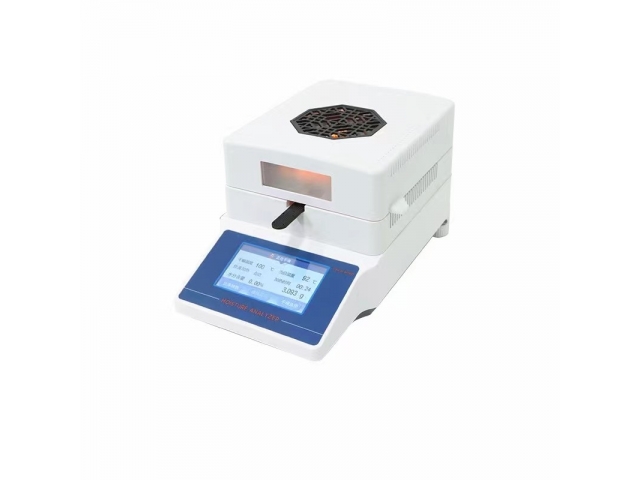
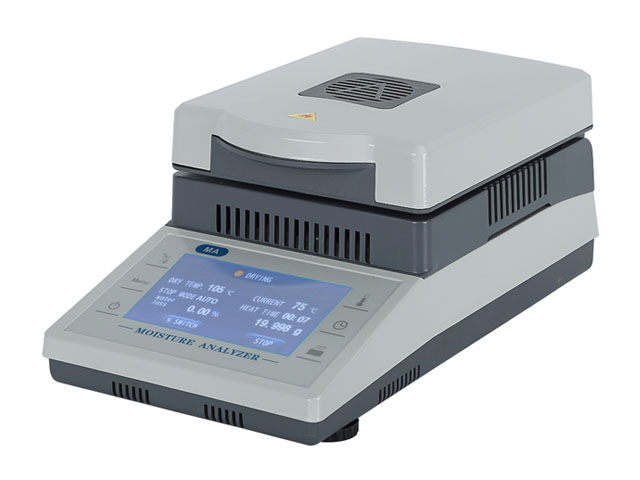
Veidt Weighing is a Moisture Analyzer factory in china. Moisture Analyzer is a precision instrument specifically used to determine the moisture content in substances, widely used in various fields such as agriculture, food processing, pharmaceuticals, chemical engineering, building materials, and environmental protection. Modern moisture measurement technology has evolved from traditional empirical judgment to high-precision digital measurement, providing scientific basis for quality control in various industries.
According to different measurement principles, Moisture Analyzers can be divided into the following categories: dry weight loss method Moisture Analyzer, Karl Fischer method Moisture Analyzer, near-infrared spectroscopy Moisture Analyzer, capacitance/resistance method Moisture Analyzer, and microwave Moisture Analyzer. Each type has its specific scope of application and measurement accuracy, and users can choose the most suitable instrument based on the characteristics of the tested material and measurement requirements.
Principle of mainstream moisture measurement technology
The drying weight loss method is the most traditional and direct moisture measurement method, which involves heating the sample to evaporate moisture and calculating the moisture content based on the difference in mass before and after heating. This method has simple equipment, low cost, but longer measurement time and is not suitable for thermosensitive substances.
The Karl Fischer method is the gold standard for determining trace amounts of moisture, particularly suitable for measuring moisture in organic solvents and oils. This method is based on the quantitative chemical reaction of iodine with water and sulfur dioxide in the presence of pyridine and methanol, and determines the moisture content through titration with an accuracy of up to ppm.
Near infrared spectroscopy technology is a fast and non-destructive measurement method for determining moisture content by analyzing the absorption characteristics of substances in near-infrared light. Modern NIR Moisture Analyzers combined with chemometric methods can complete measurements within seconds and are suitable for online detection.
The capacitance/resistance method utilizes the strong polarity and high dielectric constant of water molecules to indirectly reflect the moisture content by measuring changes in material capacitance or resistance. This type of instrument has a simple structure and fast response, and is commonly used for detecting moisture in grains and soil.
The microwave moisture analyzer measures moisture by measuring the attenuation or phase shift of microwaves propagating in materials, and has the advantages of strong penetration and the ability to measure large volume samples. It is particularly suitable for moisture detection of industrial raw materials such as coal and mineral powder.
To evaluate the performance of a Moisture Analyzer, the following key parameters need to be considered:
Measurement range: The range of moisture content that the instrument can accurately measure includes different ranges such as 0-5% (trace moisture), 5-40% (moderate moisture), and 40-100% (high moisture).
Measurement accuracy: Refers to the degree to which the measurement result is close to the true value, usually expressed in absolute error or relative error. The precision of high-end laboratory grade Moisture Analyzers can reach ± 0.01%, while industrial online instruments generally have a precision of ± 0.1% -0.5%.
Repeatability: The consistency of results obtained from multiple measurements of the same sample under the same conditions is an important indicator of instrument stability.
Resolution: The minimum amount of moisture change that an instrument can distinguish, typically represented as 0.01% or 0.1% for digital display instruments.
Measurement time: The time required from the start of measurement to obtaining stable results, and the rapid moisture analyzer can complete the measurement within 1-3 minutes.
Temperature control accuracy: For the heating method Moisture Analyzer, the accuracy of temperature control directly affects the measurement results, and the temperature control accuracy of high-quality instruments can reach ± 0.5 ℃.
Industry application of moisture measuring instrument
In the field of agriculture, soil moisture measurement is crucial for precise irrigation, and portable soil Moisture Analyzers can monitor the moisture status of different soil layers in real time. Grain Moisture Analyzers are widely used in grain procurement and storage, and can quickly measure the moisture content of crops such as corn, wheat, and rice. National standards have clear regulations on the safe moisture content of various types of grains.
Food industry: From raw materials to finished products, moisture content directly affects food quality and shelf life. Meat moisture detector can prevent water injected meat from entering the market; The milk powder moisture analyzer ensures that the product meets national standards; The moisture control of brittle foods such as biscuits and potato chips is related to their taste.
Pharmaceutical industry: The moisture content of drugs is an important indicator for certification. Excessive moisture content can lead to a decrease in drug stability, while insufficient moisture content may affect drug efficacy.
Building materials industry: The moisture content of cement, mortar, and concrete directly affects the construction quality and strength development. The new non-contact microwave Moisture Analyzer can monitor the moisture content of building materials in real time during the construction process.
Energy and chemical industry: The calorific value of coal is closely related to its moisture content, and online coal quality analysis systems usually integrate moisture detection modules. Trace amounts of moisture in petroleum products may cause electrochemical corrosion and require strict monitoring with high-precision Moisture Analyzers.
The selection of a suitable Moisture Analyzer should consider the following factors:
Sample characteristics: solid, liquid, or semi-solid? Is it heat sensitive? Is it conductive? These characteristics determine the applicable measurement principles.
Moisture range: Trace moisture (<1%) requires Karl Fischer method, medium high moisture (1-40%) can be dried or NIR, and extremely high moisture may require pre-treatment.
Measurement environment: Laboratory analysis requires high-precision instruments, while online testing on production lines requires speed, durability, and ease of integration.
Compliance requirements: Some industries (such as pharmaceuticals and food) have special requirements for instrument certification, and products that meet relevant standards must be selected.
Budget considerations: From portable instruments costing thousands of yuan to online detection systems costing hundreds of thousands of yuan, the price range is wide and should be reasonably selected based on actual needs.
After sales service: High quality suppliers should provide installation training, regular calibration, and maintenance services to ensure the long-term stable operation of the instrument.
To ensure the long-term accurate operation of the Moisture Analyzer, users should pay attention to:
Regular calibration: Use standard samples for calibration according to the manufacturer's recommended cycle, especially for temperature sensors that require regular calibration.
Sample preparation: Solid samples should be thoroughly mixed and have consistent particle size; Avoid the influence of bubbles on liquid samples; Samples that are prone to oxidation require rapid measurement.
Environmental control: Avoid strong electromagnetic interference, maintain a constant laboratory temperature, and some precision instruments require anti vibration table support.
Daily maintenance: Clean up sample residues in a timely manner, replace desiccants, check the status of heating elements, and keep the optical window clean.
Data management: Establish complete measurement records, including environmental conditions, instrument status, and operator information, for easy traceability and analysis.
With the continuous improvement of quality control requirements in various industries, moisture measurement technology will continue to innovate, providing more accurate and convenient detection methods for production practice. Choosing a suitable moisture measurement solution is of great significance for enterprises to optimize processes, reduce costs, and enhance product competitiveness.
Learn more about halogen moisture analyzer, digital moisture analyzer, portable moisture analyzer, laboratory moisture analyzer, moisture analyzer calibration, infrared moisture analyzer, moisture analyzer accuracy, moisture analyzer for food, moisture analyzer weight, moisture analyzer maintenance, moisture analyzer specification, industrial moisture analyzer, moisture analyzer calibration standard, moisture analyzer procedure, moisture analyzer for grain, moisture analyzer accessories, moisture analyzer sensitivity, moisture analyzer verification, moisture analyzer for soil, moisture analyzer calibration weight, moisture analyzer software, moisture analyzer price, moisture analyzer for plastic, moisture analyzer calibration method, moisture analyzer error, moisture analyzer for pharmaceutical, moisture analyzer calibration service, moisture analyzer user manual, moisture analyzer for textile, moisture analyzer parts, moisture analyzer for wood, moisture analyzer calibration frequency, moisture analyzer for chemicals, moisture analyzer traceability, moisture analyzer for paper, moisture analyzer calibration kit, moisture analyzer for feed, moisture analyzer calibration check, moisture analyzer heating element, moisture analyzer for building materials, moisture analyzer calibration record, moisture analyzer for rubber, moisture analyzer repeatability test, moisture analyzer for cosmetics, moisture analyzer anti-interference, moisture analyzer for quality control, moisture analyzer calibration solution, moisture analyzer for agricultural products, pls contact us.
Moisture content stands as one of the most critical physical indicators for countless materials and products across global industrial chains, agricultural production, laboratory research and daily commodity processing. Whether it is raw materials entering the production line, semi-finished products undergoing process optimization, or finished products waiting for storage and delivery, accurate measurement and control of moisture can directly determine product quality, service life, processing performance, storage stability and even production safety. In this context, the moisture analyzer has evolved from a simple laboratory testing tool into an indispensable precision instrument that runs through the entire process of material research and development, production supervision and quality inspection. It integrates multiple disciplines such as precision mechanics, thermal engineering, electronic engineering and data analysis, breaking through the limitations of traditional manual moisture testing methods, and providing efficient, stable and repeatable moisture detection solutions for various scenarios. Unlike traditional testing methods that require long waiting times and complex manual operations, modern moisture analyzers achieve automated integration of sample testing, data calculation and result output, greatly improving the efficiency of moisture detection while reducing human errors caused by manual operation, making it a core equipment for maintaining standardized production and quality consistency in various fields.
To understand the application value and working logic of moisture analyzers, it is necessary to start with their core working principles, which are divided into multiple technical routes according to different testing requirements, sample characteristics and accuracy standards, each with unique adaptability and application scenarios. The most widely used principle in daily industrial and laboratory testing is the thermogravimetric drying method, which relies on the physical property that moisture will evaporate rapidly under a specific heating environment. This type of moisture analyzer combines a high-precision weighing system and a controllable heating system, completing the entire testing process through four coherent steps: sample weighing, uniform heating, continuous weight monitoring and data calculation. Before testing, the operator places the sample into a dedicated testing container, and the instrument's built-in high-sensitivity weighing sensor quickly captures the initial weight of the sample and records the data stably. Subsequently, the heating module starts to work, providing a stable and controllable heat source to ensure that the moisture in the sample is fully evaporated without causing thermal decomposition, carbonization or chemical changes of other components in the sample. During the heating process, the weighing system runs continuously, synchronously collecting the real-time weight changes of the sample until the weight of the sample remains stable for a period of time, which means that all removable moisture in the sample has been completely volatilized. At this point, the instrument's built-in data processing system automatically calculates the moisture content based on the difference between the initial weight and the final dry weight of the sample, converting the data into intuitive moisture percentage values for operators to view and record.
In addition to the thermogravimetric drying method, there are other technical principles applied in moisture analyzers to meet the testing needs of special samples and ultra-high precision requirements. For samples with extremely low moisture content, such as industrial oils, chemical reagents and pharmaceutical raw materials, moisture detection often requires reaching the trace level, and the thermogravimetric method is difficult to meet the accuracy requirements. At this time, moisture analyzers based on chemical reaction principles show unique advantages, relying on specific chemical reactions that only target moisture in the sample to achieve quantitative analysis. This type of instrument realizes the accurate conversion of moisture content into measurable chemical signals through strictly controlled reaction conditions and reagent ratios, and can capture trace moisture that is difficult to detect by physical methods, ensuring the accuracy and reliability of test results. There are also moisture analyzers designed based on optical and electrical principles, using the differences in optical absorption or electrical conductivity between moisture and sample matrices to achieve non-destructive testing. These instruments do not need to heat the sample or consume chemical reagents during the testing process, avoiding damage to the sample structure and performance, making them suitable for samples that are expensive, easily damaged or require rapid on-site testing. The diversification of technical principles makes moisture analyzers break through the limitations of single testing scenarios, and can flexibly adapt to the testing characteristics of solid, paste, liquid and other different forms of samples, covering almost all types of materials that need moisture detection.
The operating procedure of a standard moisture analyzer is designed to be simple and efficient, while ensuring the accuracy of test results through standardized steps, which is convenient for both professional laboratory technicians and on-site production operators to master. Before formal testing, instrument preheating and calibration are essential preparatory work, which can eliminate the test errors caused by environmental temperature changes and instrument standby state. Most modern moisture analyzers are equipped with an automatic calibration function, which can complete self-calibration quickly with the help of standard weighing components, reducing the manual operation steps and improving calibration accuracy. After calibration, sample preparation needs to follow uniform standards: the sample volume should be controlled within the range recommended by the instrument to avoid incomplete moisture evaporation caused by excessive sample accumulation or large data errors caused by too small sample volume. For solid samples, they need to be evenly tiled in the testing container to ensure full contact with the heat source and uniform heating; for paste or liquid samples, they need to be evenly distributed to avoid splashing during the heating process, which not only affects the test results but also may cause damage to the instrument components.
During the testing process, parameter setting is a key link that directly affects the accuracy and efficiency of the test. Operators can adjust the heating temperature, heating time, drying termination conditions and other parameters according to the material properties of the sample. For heat-sensitive samples that are prone to deterioration at high temperatures, a lower heating temperature and a gentle drying mode are selected to extend the drying time appropriately while ensuring that the sample itself does not change; for samples with stable properties and high moisture content, a suitable higher temperature can be set to speed up the moisture evaporation rate and shorten the testing cycle. The drying termination condition can be set according to the testing requirements, such as stopping heating when the weight change within a certain period of time is lower than a fixed value, or stopping after reaching a preset drying time, both of which can ensure that the moisture in the sample is fully removed. During the entire testing process, the instrument runs automatically without manual real-time monitoring, and after the test is completed, it will automatically store the test data and display it on the screen clearly. Some advanced models can also realize data export and wireless transmission, facilitating operators to sort out test reports, conduct data comparison and archive management, which is convenient for subsequent production adjustment and quality traceability.
The application fields of moisture analyzers cover almost all industries related to material production and processing, and each field has its unique testing focus and demand scenarios, reflecting the instrument's wide adaptability and important practical value. In the food and agricultural product industry, moisture control is related to food safety, taste and shelf life, which is a core quality indicator that cannot be ignored. For grains, oils, fruits and vegetables, meat products, dairy products, snack foods and other products, excessive moisture content will lead to microbial reproduction, mildew, deterioration, shorten the shelf life of products, and may produce harmful substances that affect consumer health; too low moisture content will affect the taste and texture of food, reduce product quality and consumer acceptance. For example, in grain storage and processing, accurate moisture detection can help farmers and processing enterprises judge whether the grain meets the storage standards, avoid grain mildew caused by excessive moisture during storage, and reasonably control the drying process to reduce energy consumption. In the production of baked goods, the moisture content of flour, dough and finished products directly affects the softness, crispness and molding effect of the product. The use of moisture analyzers for real-time detection can help enterprises adjust production processes in a timely manner, maintain consistent taste and quality of each batch of products, and reduce the production of unqualified products caused by moisture fluctuations.
In the pharmaceutical industry, the control of moisture content is more stringent, which is directly related to the efficacy, stability and safety of drugs. Pharmaceutical raw materials, intermediates and finished preparations all have clear moisture content requirements. Excessive moisture will accelerate the chemical reaction of drug ingredients, leading to drug degradation, failure or even production of toxic and side effects, affecting the therapeutic effect and bringing safety risks to patients. For this reason, pharmaceutical production and testing links have extremely high requirements for the accuracy and repeatability of moisture detection, and moisture analyzers have become essential testing equipment in pharmaceutical laboratories and production lines. These instruments can provide accurate and reliable test data, helping pharmaceutical enterprises strictly control the moisture index of raw materials and finished products, meet the quality control standards of drug production, ensure that each batch of drugs has stable quality and reliable efficacy, and safeguard the safety of drug use. At the same time, in the research and development of new drugs, moisture analyzers also play an important role in the stability test of drug samples, helping researchers understand the changes in moisture content of drugs under different storage conditions, and providing data support for the optimization of drug formulas and the design of storage and packaging schemes.
The chemical industry and new material manufacturing industry also rely heavily on moisture analyzers for quality control and process optimization. In the production of chemical raw materials, plastic particles, rubber products, coatings, resins and other materials, moisture content will affect the chemical reaction process, polymerization effect and physical properties of materials. For example, excessive moisture in plastic raw materials will lead to bubbles, cracks and rough surfaces on the surface of plastic products during processing, reducing the mechanical strength and service life of the products; in the production of coatings and paints, unreasonable moisture content will affect the uniformity, adhesion and drying speed of the coating, affecting the decorative effect and protective performance of the coating. For new energy materials, electronic chemicals and other high-precision materials, trace moisture may lead to material performance failure, affecting the performance and service life of electronic components and new energy products. Moisture analyzers can achieve accurate detection of trace moisture in such materials, helping enterprises find problems in the production process in a timely manner, adjust process parameters, optimize production links, improve the qualification rate of materials and products, reduce production costs and avoid resource waste caused by unqualified products.
In addition, moisture analyzers are widely used in construction materials, textile, papermaking, environmental testing and other fields. In the construction industry, the moisture content of cement, sand, wood and other building materials affects the strength of concrete, the molding effect of building components and the service life of wooden materials. Excessive moisture in wood will lead to deformation, cracking and mildew after construction, affecting the quality and safety of construction projects; in the textile and papermaking industry, the moisture content of fibers and pulp directly affects the spinning effect, paper molding and product softness. In environmental monitoring and soil research, moisture analyzers can detect the moisture content of soil, sludge and other samples, providing basic data for agricultural planting, soil improvement and environmental governance. The wide distribution of application scenarios fully proves that moisture analyzers are not only simple testing instruments, but also an important tool to ensure industrial production quality, improve production efficiency, protect product safety and promote technological progress, playing an irreplaceable role in the development of various industries.
The daily maintenance and upkeep of moisture analyzers are crucial to prolong the service life of the instrument, maintain testing accuracy and ensure the smooth progress of testing work. As a precision instrument integrating weighing, heating and electronic systems, the moisture analyzer needs standardized maintenance operations to avoid performance degradation and accuracy deviation caused by improper use and environmental factors. After each test, the testing container, heating chamber and other components that contact the sample should be cleaned in a timely manner to remove sample residues, avoid cross-contamination between different samples and affect the accuracy of subsequent test results. When cleaning, suitable cleaning tools and methods should be selected according to the instrument's requirements to avoid damage to the instrument's internal sensors and heating components. At the same time, the instrument should be placed in a dry, ventilated and stable environment, away from strong magnetic fields, high temperature sources and corrosive gases, so as to avoid interference with the weighing sensor and electronic system, resulting in data drift and testing errors.
Regular calibration and inspection are also important parts of moisture analyzer maintenance. Even if the instrument has an automatic calibration function, regular professional calibration is needed to verify the accuracy of the weighing system and heating system, especially after the instrument is moved, used for a long time or maintained, calibration should be carried out in a timely manner to ensure that the test data is always within the allowable error range. Operators should also regularly check the working status of the instrument's heating module, weighing sensor, display screen and other components, find abnormal problems such as unstable heating, inaccurate weighing and screen display failure in a timely manner, and carry out professional maintenance and repair to avoid affecting the normal progress of testing work. In addition, reasonable use habits can also reduce the failure rate of the instrument: avoid placing overload samples on the weighing platform, prevent violent vibration and collision during the instrument's operation, and strictly follow the operating specifications for parameter setting and operation to avoid damage to the instrument's internal system caused by improper operation.
With the continuous development of science and technology and the upgrading of industrial intelligence, the technical performance and functional design of moisture analyzers are also constantly innovating and optimizing, moving towards a more intelligent, efficient and precise development direction. Traditional moisture analyzers focus on completing basic moisture testing functions, while modern instruments integrate more intelligent technologies, such as automatic sample feeding, one-key testing, intelligent parameter matching and other functions. The instrument can automatically match the optimal testing parameters according to the type of sample input by the operator, without manual repeated adjustment, which reduces the operation difficulty and improves the testing efficiency. At the same time, the combination with Internet of Things technology makes remote monitoring and data management possible: operators can remotely view the instrument's working status and test data through mobile terminals and computer terminals, realize remote parameter adjustment and data analysis, and meet the needs of intelligent management of modern production lines.
The improvement of testing accuracy and speed is also an important direction for the technological upgrading of moisture analyzers. The continuous iteration of high-sensitivity sensors and optimized data processing algorithms makes the instrument's response speed faster and the test data more accurate, which can capture tiny weight changes and trace moisture content, meeting the increasingly stringent testing requirements of various industries for materials and products. The design of the instrument is also more user-friendly and portable: desktop models are suitable for fixed testing in laboratories, with stable performance and complete functions; portable models are small in size and easy to carry, suitable for on-site testing in production workshops, agricultural bases, construction sites and other scenarios, realizing rapid moisture detection anytime and anywhere, breaking the limitations of fixed laboratory testing. The integration of multiple testing functions is also a major trend, some moisture analyzers can realize the simultaneous detection of multiple indicators such as moisture content and dry matter content on the basis of ensuring basic moisture testing, providing more comprehensive data support for material analysis and quality control.
Looking forward to the future development of moisture analyzers, with the deepening of industrial digital transformation and the continuous improvement of quality control standards in various industries, the demand for moisture detection will continue to increase, and the requirements for instrument performance, functionality and applicability will be more stringent. In the future, moisture analyzers will further integrate with artificial intelligence, big data analysis and other technologies, realize intelligent judgment of sample characteristics, automatic optimization of testing processes, predictive maintenance of instrument faults and other functions, and truly realize the transformation from automated testing to intelligent testing. At the same time, the research and development of green and low-carbon design will be paid more attention, reducing the energy consumption of the instrument in the heating and working process, reducing the generation of waste in the testing process, and meeting the development requirements of green production and environmental protection. For special extreme environments, special materials and emerging industries, targeted moisture analyzer products will continue to emerge, solving the testing difficulties in special scenarios and filling the technical gaps in related fields.
From traditional manual testing to modern intelligent automatic testing, the development of moisture analyzers has always been closely linked to the progress of industrial production, scientific research and commodity quality control. It takes accurate moisture detection as the core, escorts the quality and safety of various materials and products, helps enterprises optimize production processes, reduce production costs, improve product competitiveness, and provides reliable data support for scientific research work and industrial technological innovation. Although there are differences in technical principles, functional configurations and application scenarios among different types of moisture analyzers, their core value remains consistent: to achieve accurate quantification of moisture content, help various fields realize refined control of production and research links, and promote the stable improvement of product quality and industrial development level. In the increasingly fierce market competition and the continuous improvement of quality requirements, moisture analyzers will continue to play their important role as a precision testing instrument, constantly breaking through technical limitations, expanding application fields, and providing solid technical support for the high-quality development of various industries around the world.
In the daily production and research process, the correct selection and reasonable use of moisture analyzers are equally important. Enterprises and research institutions need to select suitable instrument models and technical routes based on their own testing needs, sample characteristics, accuracy requirements and application scenarios, instead of blindly pursuing multi-functional and high-configuration instruments. For enterprises with single sample types and conventional testing requirements, moisture analyzers with stable performance, simple operation and easy maintenance can meet the needs; for research institutions and enterprises with diverse sample types, high accuracy requirements and complex testing scenarios, it is necessary to select intelligent, high-precision and multi-functional instruments to adapt to different testing tasks. Only by selecting the right instrument, mastering standardized operating methods and doing a good job in daily maintenance can the moisture analyzer exert its maximum detection efficiency, provide stable and reliable test data for production and research, and create greater value for industrial development and scientific and technological progress.
